


This is part of Arvada Lifestyle Hub → [Arvada Lifestyle Hub] & Arvada Real Estate Guide → [Arvada Real Estate Guide]
Written by: Chad Cabalka
To live in Arvada is to live near the trails. Whether you’re tucked into the foothills around West Woods, walking your dog on Ralston Creek Trail, or cycling through the greenbelts that run parallel to big arteries like 64th or Kipling, trails are the threads that tie this community together.
Unlike newer suburban developments elsewhere, Arvada’s trail system wasn’t built as an afterthought. It’s part of the town’s long-term planning, connecting people to open spaces, parks, and even commercial areas in a way that keeps residents active and grounded in place. For homeowners, that connectivity isn’t just about recreation—it’s about quality of life that holds up over decades, not just during your first few years in a house.
A Year-Round Landscape, Not Just a Summer Amenity
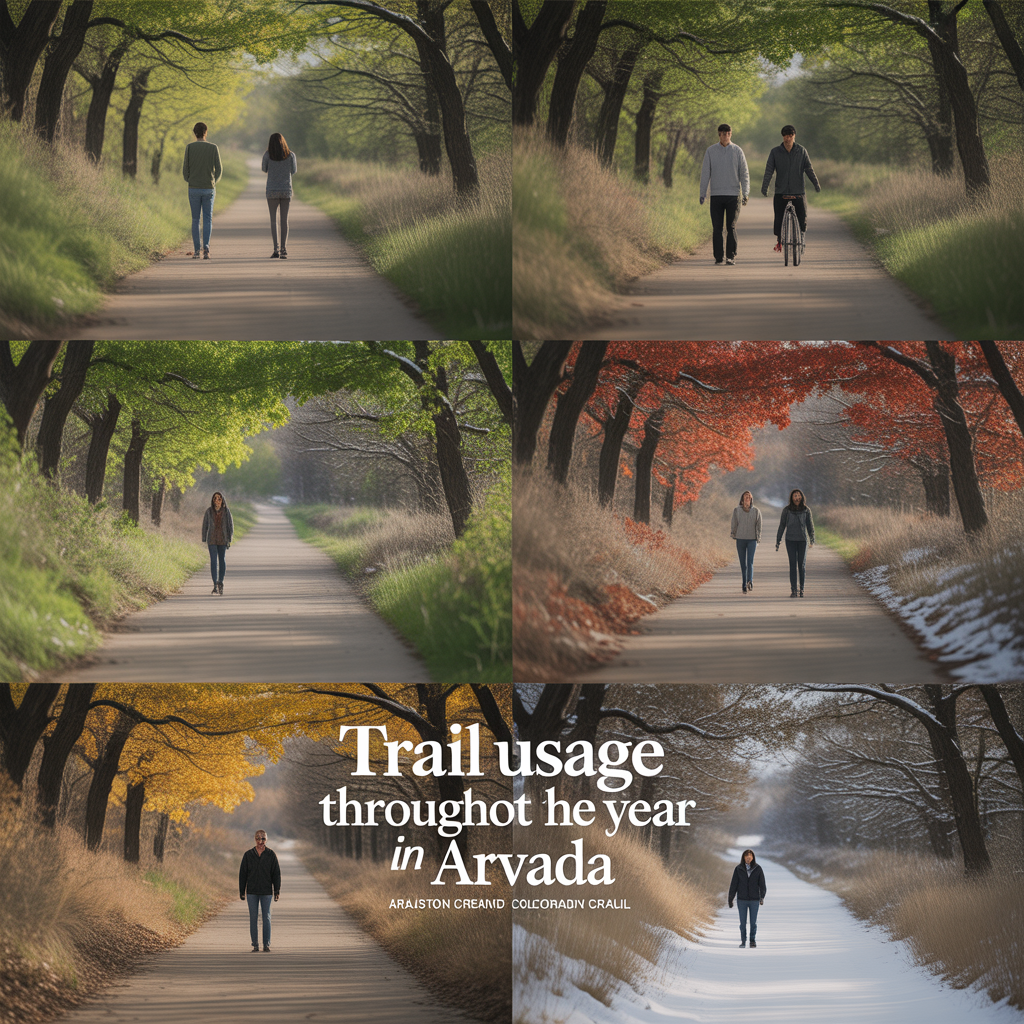
One of the most misunderstood aspects of living near Arvada’s trail system is the assumption that it’s only valuable in spring and summer. In reality, trail life in this part of the Denver metro area is year-round, changing character with the seasons.
In January and February, when frost lines the edges of Ralston Creek and the cottonwoods stand bare, you’ll still see locals walking or cross-training in cold-weather gear. The trails are usually clear of heavy snow within days of a storm, thanks to Colorado’s pattern of sunny, dry days even in midwinter. By March and April, cyclists begin returning, and green grass starts creeping back into the edges.
In summer, trails become part of daily routines—early morning jogs before the heat, family bike rides to Van Bibber Park, weekend catch-ups between old friends who walk instead of scheduling coffee. Then as autumn arrives, the same people you met in shorts and T-shirts are now layered in flannel and fleece, pausing to admire gold and rust-colored cottonwoods before the first frost.
Trail usage here mirrors Arvada’s rhythm itself—a place that doesn’t pause with the weather, but adapts and keeps moving.
Trails as a Measure of Community Design
When evaluating life in Arvada, buyers often focus on schools or commute times first. But long-time residents know that the character of a neighborhood often comes down to how easily you can get outside without getting into your car.
The city’s network of trails—especially the Ralston Creek Trail, Van Bibber Creek Trail, and the connection to the Clear Creek greenway—acts as an invisible infrastructure supporting mental health, physical well-being, and neighborly connection.
In neighborhoods like Five Parks, Leyden Rock, and Candlelight Valley, trails don’t just connect homes to open space; they connect people to one another. You might wave to the same couple walking their dog every evening or chat with a neighbor jogging by. That kind of informal contact builds a subtle sense of stability—something that’s easy to underestimate until you leave it behind.
Why Homebuyers Value Trail Access in Arvada
For years, I’ve walked new buyers through the process of choosing between two seemingly similar homes—same square footage, similar finishes, comparable prices—and watched how quickly people light up when they realize one home is directly linked to a trail system.
Trail proximity adds a sense of immediacy and dimension to daily life. Parents appreciate it for safe biking routes for kids. Dog owners love it for easy access to shaded walks. Retirees see it as an essential feature for maintaining an active lifestyle. Even investors understand trails as a quietly powerful appeal factor for long-term tenants.
While few listings explicitly quantify the financial value of being near a trail, homes with that kind of walkable open-space access tend to hold steady during softer market cycles. It’s not an emotional purchase—it’s a rational one rooted in years of livability.
The Daily Reality of Trail Life
Sometimes people imagine trail-centered living as scenic but distant—a nice-to-have, not a day-to-day feature. But for much of Arvada, trail access is as ordinary as having a nearby grocery store.
Take the Ralston Creek Trail again. Stretching more than 13 miles, it cuts right through the heart of town, often just a few houses away from quiet residential streets. For many homeowners, the sound of cyclists at sunrise or joggers chatting as they pass has become background music.
In newer communities like Candelas and Leyden Rock, the integration of trail systems feels deliberate and modern. Paved and gravel paths weave through open prairie and foothill terrain, providing both breathtaking views and a practical escape route for evening stress. In more mature neighborhoods like Allendale or Scenic Heights, small trail connections open up to larger greenways, giving residents a chance to explore the city in sections—a few miles each weekend at a time.
Understanding What Trails Do for Home Value
Not every buyer appreciates trails in the same way. Some focus on square footage, finishes, or garage space, while others think first about school boundaries or tax districts. But smart buyers often realize that proximity to trails offers a kind of “soft equity.”
That equity doesn’t always show up as a number in an appraisal. Instead, it shows up in how homes near trails weather shifting markets. During strong economies, trail-adjacent homes sell quickly. When the market slows, they tend to hold buyer interest longer.
There’s also the factor of neighborhood endurance. Communities near green infrastructure feel quieter, cleaner, and more connected, all of which supports property stability over time. For families, that means a home that grows with them without requiring constant upgrades just to maintain satisfaction.
In short, trail access reinforces what many people move to Arvada for in the first place: an attainable quality of life that doesn’t fade.
The Intangible Value: Health and Connection
Beyond property metrics, trails add something less measurable but more essential—balance.
Many Denver-area residents spend long hours commuting to work or managing busy schedules. Arvada’s trails give them a practical, close-to-home outlet for unwinding. A 20-minute evening walk under the cottonwoods does more for long-term happiness than most of us realize at first.
Over time, these small moments—watching kids ride ahead on training wheels, stopping to chat with a neighbor about spring runoff, seeing red-tailed hawks near Blunn Reservoir—become the backdrop to homeownership itself. It’s part of why people who settle near Arvada’s trails so often stay put for decades.
The trails also foster informal networking. Whether you’re retired or raising a young family, you begin to meet people whose lives overlap yours in subtle ways. That sense of ongoing connection is something Denver’s western suburbs do particularly well, and Arvada’s trail system is one of the anchors that makes it happen.
Seasonal Realities: How Arvada Residents Actually Use Trails Through the Year
To live near a trail in Arvada means learning to adapt to Colorado’s rhythm of quick-change seasons. Understanding those patterns helps both new residents and longtime homeowners appreciate the trails’ enduring role.
- Winter (December–February): Expect brisk walks in mid-afternoon sunlight and compact snow on shaded stretches. Most trails remain usable, especially after city crews clear bridges and underpasses. You’ll see joggers layering up rather than staying indoors.
- Spring (March–May): Runoff season brings full creeks and wild grasses. Trails can be muddy—but also lively. It’s when you start to notice new faces as neighbors return outdoors.
- Summer (June–August): Early mornings and late evenings are golden hours. Heat drives midday users away, but shaded segments like those near Oak Park or along the creek beds stay comfortable.
- Autumn (September–November): The most scenic and often least crowded stretch of the year. Trails take on warm light, crunchy leaves, and calm temperatures, drawing both photographers and casual walkers.
Each season asks for small adjustments—different footwear, hydration, timing—but the continuity matters. The people you see in winter are often the same you’ll greet in July. That consistency builds neighborhood familiarity that no amount of formal HOA planning could ever produce.
Planning Ahead: What to Consider if You Want Trail Access
If you’re exploring a move within Arvada or considering your first purchase here, think about more than the distance to downtown. Instead, look at how your daily habits align with nearby trails.
When walking through a neighborhood, notice how trails connect to street patterns. Are they easily accessible, or fenced off behind backyards? Is there public parking nearby that might make the area busier on weekends? Does the neighborhood design integrate the trail naturally, or is it more of a boundary line at the edge?
A practical tip: bring shoes you can walk in during showings. Step onto the nearest trail entrance, even for five minutes. You’ll quickly sense whether the atmosphere feels right for you—quiet and neighborly, or perhaps more active and social. Both styles exist here; it depends on which rhythm fits your life best.
Long-Term Perspective: Stability Over the Decades
After several decades helping people buy and sell in the Denver metro area, one pattern stands out: homeowners who choose based on daily quality of life—not short-term features—tend to be the most satisfied in the long run.
Trail access is one of those quiet quality-of-life features that doesn’t lose relevance. Your knees might get older, the kids might move out, but the ability to walk a few steps outside and feel open sky never loses its worth.
On the market side, as metro growth continues pushing outward, Arvada’s established trail network becomes even more valuable. Future development can build houses and retail, but it’s nearly impossible to retrofit a mature, connected trail system. That gives Arvada neighborhoods a built-in advantage for decades to come.
And for those living here already, this kind of community planning pays personal dividends every day—a sunset stroll instead of a freeway drive, a moment of quiet instead of congestion.
The Heart of the Matter
At its core, trail life in Arvada reflects what many of us value most about Colorado living: movement, connection, and balance. It’s about having access to nature without needing to drive into the mountains every weekend. It’s about still being able to wave to someone you recognize on your morning walk after 20 years in the same house. And it’s about understanding that what sustains community isn’t just new construction or appreciation curves—it’s shared spaces that keep us moving, season after season.
If you’re thinking about how trail access fits into your current home or next move, I’d be glad to talk through it. After decades of helping people settle into the neighborhoods along Ralston Creek, Van Bibber, and beyond, I’ve seen firsthand how these spaces shape daily life in ways that last far beyond the closing table. There’s no pressure, just a conversation about what makes sense for you and your lifestyle here in Arvada.
Get the full Denver Market Insights → [Market Insights]



Littleton’s Ken Caryl for Lockheed Relocations
This is part of Lockheed Martin Relocation → [Lockheed Martin Relocation Hub] & the larger Denver Relocation Hub → [Denver Relocation Hub] Written by: Chad Cabalka Ken Caryl is one of the best-kept “family first” relocation options for Lockheed Martin employees who want foothills scenery, strong neighborhood appeal, and a real suburban lifestyle that still feels connected…


Centennial & Parker for Lockheed Relocations
This is part of Lockheed Martin Relocation → [Lockheed Martin Relocation Hub] & the larger Denver Relocation Hub → [Denver Relocation Hub] Written by: Chad Cabalka Centennial and Parker are two of the smartest suburban choices for Lockheed Martin employees relocating with families because they give you a strong balance of commute flexibility, good neighborhood variety, and…

Highlands Ranch for Family-Friendly Lockheed Relocations
This is part of Lockheed Martin Relocation → [Lockheed Martin Relocation Hub] & the larger Denver Relocation Hub → [Denver Relocation Hub] Written by: Chad Cabalka Highlands Ranch is one of the strongest choices for Lockheed Martin employees relocating with families because it delivers exactly what most parents want after a big move: stable neighborhoods, strong community…