


This is part of Arvada Lifestyle Hub → [Arvada Lifestyle Hub] & Arvada Real Estate Guide → [Arvada Real Estate Guide]
Written by: Chad Cabalka
Every community has its own pace, and if you’ve lived in the Denver metro area for a while, you know Arvada’s rhythm changes with the seasons. In winter, the streets feel quiet — kids walking to the neighborhood sled hill, neighbors chatting as they shovel driveways. But once spring arrives and the foothills start to lose their snow, the city shifts. Farmers markets reopen, live music pops up on Friday nights, and weekend calendars book up fast.
That surge of activity — the spring and summer event density that defines Arvada from March through September — isn’t just a civic perk. It has real influence on neighborhood life, local property values, and even how buyers and long-term residents perceive the feel of different pockets of the city.
Let’s take a closer look at what this pattern means, both practically and emotionally, for those who live or plan to live here.
Understanding Arvada’s Seasonal Energy
Arvada’s municipal motto, “A City with a Heart,” makes more sense once you’ve experienced its seasonal cycle. After a relatively quiet winter, the community comes alive from late March through early fall.
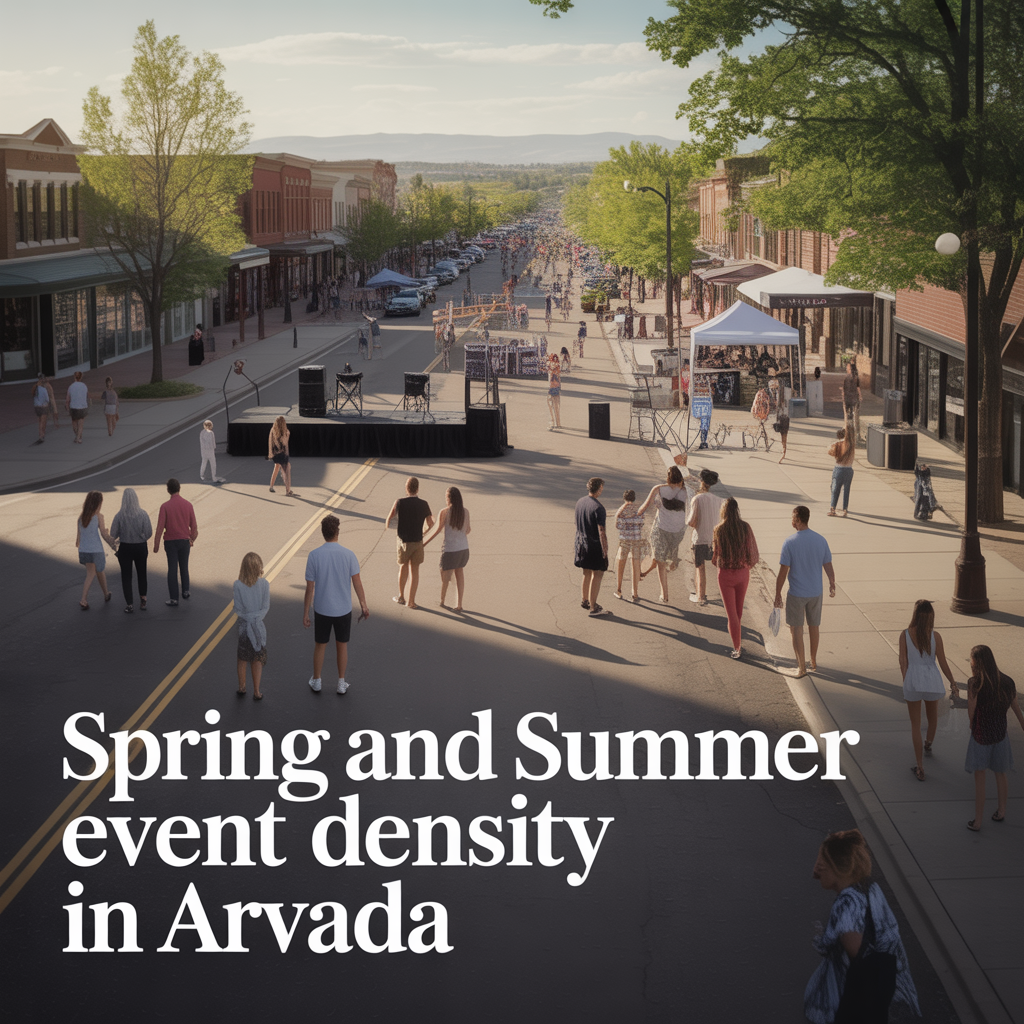
Olde Town becomes the center of gravity. Sidewalk patios fill during the St. Patrick’s Day Festival, then seamlessly roll into the A Taste of Arvada, Autumn Art Walk, and weekly Sunday Farmers Market. You can hear live music drifting from several corners almost any weekend by May.
West of Wadsworth, neighborhoods around Ralston Creek Trail and Apex Park host everything from 5k charity runs to food truck rallies. Over in Candelas and Leyden Rock, newer subdivisions organize smaller-scale block events or outdoor movie nights, often led by local homeowners’ associations. Even quiet areas like Club Crest or Scenic Heights feel buzzier — not from traffic, but from families spending more time outdoors or strolling to community events.
This flow of rhythm transforms Arvada each year: slow and reflective in winter, social and outward-looking in summer.
Why Event Density Matters for Homeowners
For many homeowners, these seasonal changes influence daily experience as much as nearby parks or school ratings. The frequency and density of local events can quietly shape everything from perceived neighborhood charm to long-term market appeal.
Living Amid Activity
When you live near the heart of Arvada — especially within walking distance of Olde Town — you feel the seasons differently. Streets fill with foot traffic, music carries late into the evening, and parking gets tricky on Saturday mornings. Some residents see that as a small price for vibrancy; others prefer a quieter block just a few miles away.
That’s the tradeoff every city dweller eventually calibrates: how much energy is “just right.” For those who crave connection and easy access to amenities, Arvada’s denser event schedule is a major plus. For others, particularly families with young children or those who prioritize calm weekends, balance matters more than proximity.
Cues for Home Value and Demand
Homes near event hubs often track slightly higher in demand, not because they’re bigger or newer, but because they tap into what many buyers now seek — a walkable, active lifestyle. Arvada’s redevelopment of Olde Town and the expanded RTD G Line access have reinforced that pattern.
Buyers touring Olde Town in July or August often fall in love with the energy: the food tents, small bands, the sense of community. But that same environment can feel over-stimulating to others when traffic spikes. As a result, home value appreciation follows a nuanced pattern. The most walkable blocks near Olde Town see steady, incremental appreciation, while outlying neighborhoods offer more stability and less short-term volatility from changing market interests.
The Connection Between Events and Buyer Psychology
In today’s Denver metro market, buyers don’t just look for square footage or finishes — they look for a lifestyle that fits them. Arvada’s spring and summer event calendar plays a quiet but meaningful role in shaping that perception.
For younger buyers or those relocating from urban Denver neighborhoods like LoHi or Wash Park, Arvada’s event density represents familiarity: vibrant yet more accessible, social but less hectic. They see Olde Town’s spring-through-summer activity as proof the city has soul, not just rooftops.
For long-term residents or those downsizing, the equation shifts. Many appreciate being close enough to attend community events but far enough to retreat afterward — a balance embodied by mid-range neighborhoods like Allendale, Indian Tree, or Ralston Valley.
The key takeaway is that “busy” means different things to different people. The smart move, whether buying or selling, is recognizing how that seasonal rhythm aligns with personal comfort levels over time.
A Closer Look at Arvada’s Event Hotspots
Olde Town Arvada
From May through September, Olde Town functions almost like Denver’s small-scale version of South Pearl Street or Belmar. The Farmers Market, Second Saturdays, Oktoberfest, and Flicks in the Square pull steady weekly attendance from across the metro area. Homeowners nearby enjoy unparalleled convenience — but they also navigate temporary noise, detours, and increased foot traffic.
In my years helping clients buy and sell in this area, I’ve seen both sides. One family wanted to move closer to the action so they could enjoy short walks to concerts. Another sold their Olde Town bungalow after a few summers, preferring more breathing room and parking near Ralston Road. Neither was right or wrong — they simply valued different versions of “home.”
West Arvada and the Foothill Fringe
West Arvada tells a different story. Neighborhoods like Candelas, Leyden Rock, and Whisper Creek experience fewer city-organized festivals but thrive on community-initiated events: weekly food trucks, summer movie nights, and Fourth of July gatherings. The feel is suburban-organic — more about shared space than large crowds.
These communities attract homeowners who want lively yet contained experiences — social connection without street congestion. That blend keeps west Arvada appeal high, especially for families who enjoy outdoor recreation but prefer calmer evenings.
Parks and Community Corridors
Arvada’s park network — especially Ralston Central Park and Majestic View Nature Center — bridges those two worlds. With its outdoor stages, shaded trails, and event pavilions, Ralston Central offers small-town charm moments right in the center of modern suburbia.
During peak summer weekends, you’ll find yoga groups at sunrise, birthday parties midafternoon, and small concerts at dusk — all within earshot of established, tree-lined neighborhoods. For nearby homeowners, that’s part of the value proposition: access to community life within walking distance, without committing to urban density.
The Hidden Layer: Local Economics and Stability
Events aren’t only about entertainment; they create layered economic and psychological effects that ripple through the local housing market.
Seasonal gatherings drive consistent traffic to small businesses, sustaining restaurants, boutiques, and service shops through slower months. That commercial stability matters to real estate because thriving local business corridors often correlate with steady home values. When retailers thrive, streets stay vibrant, public spaces are maintained, and residents feel anchored.
The City of Arvada, in coordination with the Arvada Chamber of Commerce, intentionally maintains this cadence to keep the local economy cycling year-round. From a homeowner’s perspective, that rhythm translates into a neighborhood that feels alive even as Denver’s broader market goes through its usual ups and downs.
Long-Term Trends: How Arvada Balances Growth and Livability
As the broader Denver area continues to expand westward, Arvada faces the same balancing act many maturing suburbs experience: how to grow engagement without overloading infrastructure. The city’s approach — concentrating densest events and activity around Olde Town and keeping peripheral neighborhoods quieter — has kept that balance surprisingly stable.
In real terms, this means you can live in Arvada and choose your pace. Walkable-energy near the G Line. Family stillness near Standley Lake. Or something transitional in between. That spectrum makes Arvada particularly resilient, both emotionally and economically.
Homebuyers sense that adaptability, whether or not they can articulate it. Communities where residents can choose their preferred lifestyle — from festival-front porch to quiet cul-de-sac — tend to weather market cycles better than those built around a single tone of living.
Common Misunderstandings About “Busy” Neighborhoods
A frequent concern I hear from prospective buyers new to Arvada is the fear that living near event venues means relentless noise or parking battles. The reality is more measured.
Events in Olde Town, for example, operate under strict city guidelines — hours, road closures, and sound levels are well-regulated. Even during high season, disruptions are temporary. In most cases, the livelier atmosphere is balanced by the convenience of nearby shops, restaurants, and transit.
Conversely, some buyers assume quieter neighborhoods mean isolation. Yet in Arvada’s west side communities, “quiet” doesn’t mean disconnected. It often means neighborhood-led gatherings rather than city-sponsored festivals — more backyard potlucks than full-block parades.
Understanding that distinction helps homeowners make peace with their preferences and plan property choices accordingly.
Navigating Home Decisions Through the Lens of Local Rhythm
Whether you’re assessing home values, thinking about downsizing, or eyeing Arvada for relocation, factoring in event density and seasonality is as practical as considering square footage.
Ask yourself: how do you want to experience your weekends between May and September? Are you drawn to patio lounging where you can stroll to concerts, or do you prefer a short drive to enjoy the scene, then retreat to calm streets?
From decades of experience working with clients through this very question, I’ve found that aligning a home’s location with a homeowner’s social comfort level tends to create the deepest satisfaction — and ultimately, the longest ownership tenure. The families who thrive here year after year are those who understood not only what they were buying, but how it would feel through every season.
A City Best Understood by Experience
Arvada isn’t just a suburb; it’s a living pattern of weekends and seasons. From the first outdoor concerts on the square to the final food truck rally before fall, the city’s collective calendar shapes daily life more than most residents realize.
That’s part of what keeps Arvada distinctive within the Denver Metro fabric — not a single defining landmark, but the pulse of shared spaces that return every spring. And whether you live near the festivals or on a quiet ridge overlooking them, that pulse provides steady reassurance: community still matters here.
It’s visible in the volunteers setting up tents at dawn, the teens selling handmade goods at summer markets, and the older neighbors who still remember when the festivals were just a handful of booths. That interwoven spirit is the real measure of value — one that rarely fluctuates, no matter what the real estate charts say.
A Word from a Longtime Neighbor
After living and working in this community for decades, I’ve come to view Arvada’s spring and summer activity not as background noise but as a kind of heartbeat. It reminds us why living here feels balanced — steady enough to rest, lively enough to grow.
If you’ve been thinking about how neighborhood energy affects your day-to-day life, or you simply want to better understand how event patterns might influence your next real estate decision, I’d be glad to talk it through. Arvada’s rhythm shifts season by season, and finding your perfect fit within it starts with a real conversation — one neighbor to another.
Get the full Denver Market Insights → [Market Insights]



Littleton’s Ken Caryl for Lockheed Relocations
This is part of Lockheed Martin Relocation → [Lockheed Martin Relocation Hub] & the larger Denver Relocation Hub → [Denver Relocation Hub] Written by: Chad Cabalka Ken Caryl is one of the best-kept “family first” relocation options for Lockheed Martin employees who want foothills scenery, strong neighborhood appeal, and a real suburban lifestyle that still feels connected…


Centennial & Parker for Lockheed Relocations
This is part of Lockheed Martin Relocation → [Lockheed Martin Relocation Hub] & the larger Denver Relocation Hub → [Denver Relocation Hub] Written by: Chad Cabalka Centennial and Parker are two of the smartest suburban choices for Lockheed Martin employees relocating with families because they give you a strong balance of commute flexibility, good neighborhood variety, and…

Highlands Ranch for Family-Friendly Lockheed Relocations
This is part of Lockheed Martin Relocation → [Lockheed Martin Relocation Hub] & the larger Denver Relocation Hub → [Denver Relocation Hub] Written by: Chad Cabalka Highlands Ranch is one of the strongest choices for Lockheed Martin employees relocating with families because it delivers exactly what most parents want after a big move: stable neighborhoods, strong community…