


This is part of Arvada Lifestyle Hub → [Arvada Lifestyle Hub] & Arvada Real Estate Guide → [Arvada Real Estate Guide]
Written by: Chad Cabalka
For a long-time Arvada resident, the G Line doesn’t feel like a revolution; it feels like another useful tool in the west metro toolkit. It’s not a magic wand that turns Arvada into a car-free, urban downtown, but it is a solid piece of infrastructure that works well when treated realistically: as a commuter rail that’s best for a few specific, predictable patterns, not for every random trip a family makes in a week. Over the years, I’ve seen how families actually use it, and the ones who are happiest with the train are those who fit it into a narrow, consistent rhythm rather than trying to force it into every part of their schedule.
When the G Line Makes Daily Life Easier
The G Line is at its best when it serves a simple, repeating commute: home → work → home, especially into downtown Denver, LoDo, Union Station, and the Golden Triangle. For those who work a steady 9-to-5 (or similar) schedule, the train offers a real advantage.
From Olde Town Arvada, Arvada Ridge, or 60th & Sheridan (Arvada Gold Strike), the ride into Union Station takes about 20–25 minutes, and it’s fast, predictable, and mostly immune to the traffic and snow that can turn I-70 into a multi-lane tangle. It removes the mental load of merging, navigating through downtown’s one-way streets, and hunting for a parking spot, especially in the core business and convention areas. For households that want to keep just one car or reduce wear on a vehicle, the G Line can be a serious cost-saver over time, and for families who live near a station, it’s an easy way to lock in a sane, consistent route into the city.
The train also creates a nice separation between “home mode” and “work mode.” Being physically on the rail, away from email and calls for a solid 20–30 minutes, gives a built-in transition time to focus, decompress, or just be present. That shift can be a small but meaningful quality-of-life improvement, especially for high-demand jobs.
For Whom It Works Best
From a practical standpoint, the G Line is most useful for:
- Downtown Denver commuters who travel into the core business district, Union Station, Civic Center, or the Ballpark area.
- Frequent downtown users who regularly attend events, shows, or games at Ball Arena, the Convention Center, or Union Station.
- Airport trips connecting via Union Station to DEN on the A Line, especially when traveling with carry-on luggage and a clear schedule.
- Remote or hybrid workers who only need to go into the city 1–2 days a week and want a stress-free way to get there.
For these groups, the train is a clear upgrade: less driving, less stress, and a more predictable schedule, especially in bad weather or during major events.
Where It Doesn’t Fit the Daily Pattern
Arvada families, however, rarely live inside that narrow routine. Most households have a mix of work, school, kids’ sports, after-school programs, doctor appointments, shopping, and errands, and that’s where the G Line’s limitations become clear.
It doesn’t work well for:
- School drop-off and pickup — there’s no practical way to get kids to and from Arvada’s schools via rail, and it doesn’t handle after-school clubs, tutoring, or activities.
- Errand runs and errands — grabbing groceries, going to the doctor, or stopping at a hardware store usually requires a car, and the train is too slow and indirect for multiple-purpose trips.
- Weekend and evening spontaneity — if plans change because of weather, traffic, or a last-minute invitation, the train’s fixed schedule is much less flexible than pulling out of the driveway.
- Off-peak or irregular hours — for night shifts, early morning trips, or variable work times, the G Line’s hours and frequency often don’t align with the real schedule, and a car is still the default.
For the typical Arvada family with kids and a busy, unpredictable life, the train is better viewed as a supplement, not a replacement. It’s a relief on a known downtown commute, but it doesn’t free them from the need for at least one car, and often two.
How It Changes Neighborhood Life in Practice
Living near a G Line station (Olde Town, Arvada Ridge, 60th & Sheridan) changes the neighborhood feel in subtle but real ways.
- Homes near the stations are often prized by families where one adult works downtown, and those buyers are willing to pay a bit more for the convenience of a short walk or drive to the platform.
- The areas around the stations tend to feel a bit more connected to Olde Town, with easier access to the Arvada Center, concerts, and restaurants, and that walkability adds to the neighborhood’s long-term appeal.
- On the flip side, noise and vibration from trains, especially during early-morning testing and late-night runs, can be noticeable in homes very close to the tracks, and that’s something to walk around and listen to before buying.
For families, the strongest benefit is often psychological: knowing they have a reliable, low-stress option for a downtown day, which takes the edge off the thought of “I have to drive into the city.”
A Local Perspective on Using the G Line in Daily Life
If you’re thinking about staying in Arvada or choosing a home near the G Line, the best way to use it is to be honest about your real routine. Ask yourself:
- Do you or another adult in the household work a consistent 1–5 days per week in downtown Denver or Union Station?
- How often do you actually go downtown, and is it for a structured event or a flexible, changeable plan?
- Does your family’s schedule revolve around school, kids’ sports, and errands that require a car, or is it centered on a predictable downtown commute?
For people whose lives are built around that downtown pattern, the G Line is a powerful piece of Arvada’s regional access, and it can make life noticeably easier. For everyone else, it’s a convenient perk to use on the right days, but not the backbone of daily life.
If you’d like to talk through how the G Line fits into your work schedule, home location, and family rhythm in Arvada, I’d be glad to walk through it — not with a sales pitch, but as a long-time Denver area resident who’s lived this balance for decades. I can help you see how the train actually plays out in different parts of the city and how to choose a home that feels like a calm, grounded fit for the long term.
Get the full Denver Market Insights → [Market Insights]


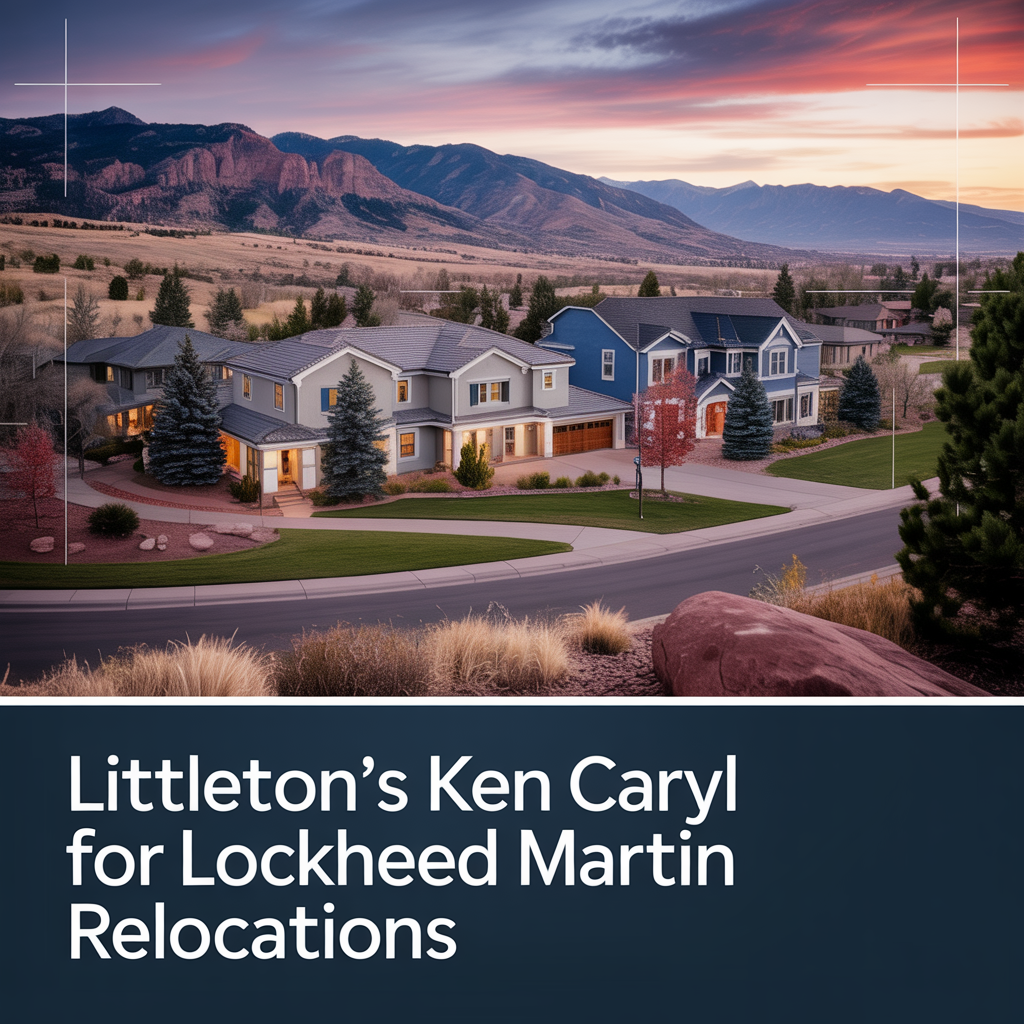
Littleton’s Ken Caryl for Lockheed Relocations
This is part of Lockheed Martin Relocation → [Lockheed Martin Relocation Hub] & the larger Denver Relocation Hub → [Denver Relocation Hub] Written by: Chad Cabalka Ken Caryl is one of the best-kept “family first” relocation options for Lockheed Martin employees who want foothills scenery, strong neighborhood appeal, and a real suburban lifestyle that still feels connected…


Centennial & Parker for Lockheed Relocations
This is part of Lockheed Martin Relocation → [Lockheed Martin Relocation Hub] & the larger Denver Relocation Hub → [Denver Relocation Hub] Written by: Chad Cabalka Centennial and Parker are two of the smartest suburban choices for Lockheed Martin employees relocating with families because they give you a strong balance of commute flexibility, good neighborhood variety, and…

Highlands Ranch for Family-Friendly Lockheed Relocations
This is part of Lockheed Martin Relocation → [Lockheed Martin Relocation Hub] & the larger Denver Relocation Hub → [Denver Relocation Hub] Written by: Chad Cabalka Highlands Ranch is one of the strongest choices for Lockheed Martin employees relocating with families because it delivers exactly what most parents want after a big move: stable neighborhoods, strong community…