


This is part of Arvada Lifestyle Hub → [Arvada Lifestyle Hub] & Arvada Real Estate Guide → [Arvada Real Estate Guide]
Written by: Chad Cabalka
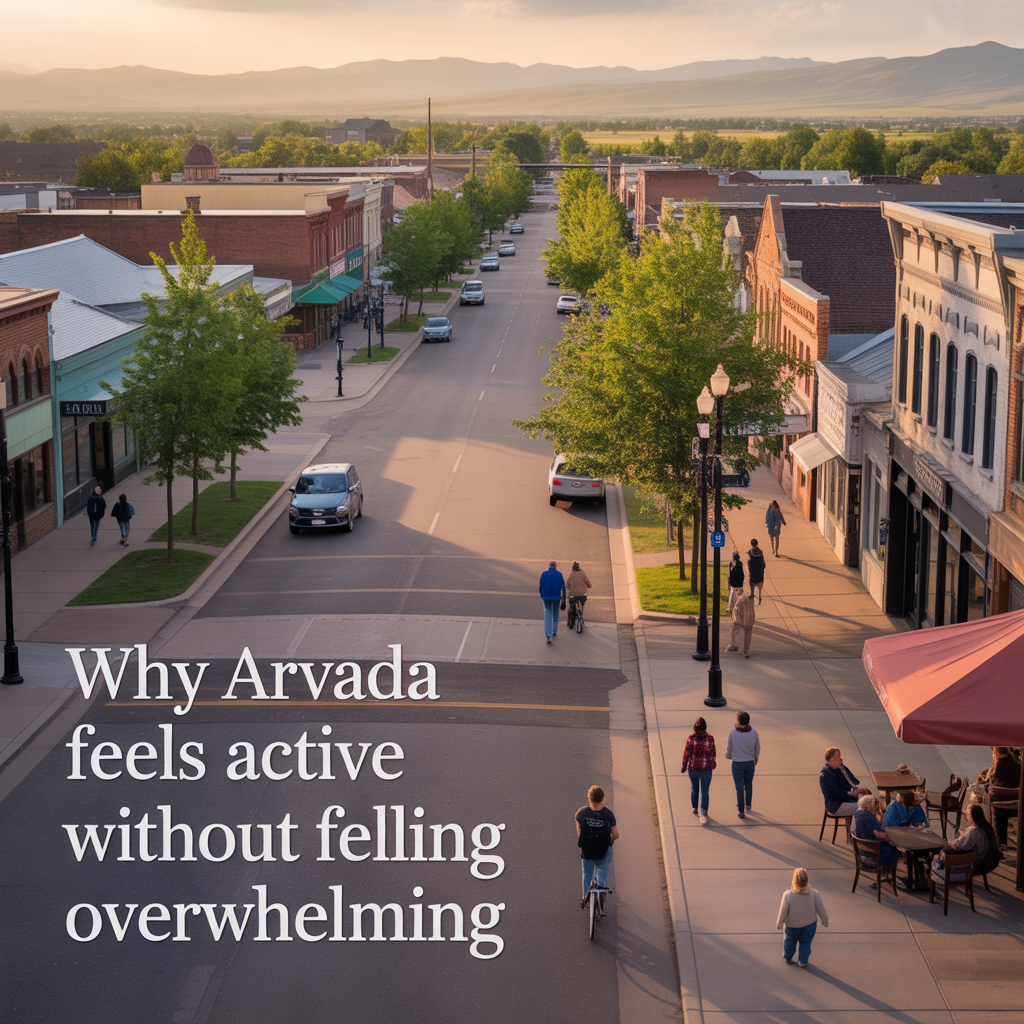
Living in Arvada feels like having your cake and eating it too: a city that’s visibly active, culturally engaged, and well connected to the west metro, but still calm enough that most days feel like home, not a performance. It’s a place where families can go to the Arvada Center for the Arts, hit a brewery patio, shop at the farmers market, and attend a proper festival, all without the constant noise, congestion, or intensity that defines many downtowns. That balance — active, but not overwhelming — is not accidental; it’s baked into how Arvada is laid out, how it hosts events, and how families actually live here day to day, and understanding that pattern is one of the quiet keys to choosing a home that feels like a true, long‑term fit.
Arvada’s “Neighborhood‑Scale” Rhythm
Arvada feels active because it is active, but that activity is distributed across a suburban grid, not concentrated in a single, hyper‑intense downtown core. The city has a clear downtown (Olde Town), a strong cultural anchor (the Arvada Center), a network of parks and trails, and a full calendar of community events, but those amenities are spread out, connected by neighborhoods rather than wall‑to‑wall urban density.
This means that:
- Families who want to be in the middle of it can choose a home within walking or biking distance of Olde Town, the Arvada Center, or the G Line, where restaurants, music, theater, and events are right there on the map.
- Families who want more space, privacy, and a quieter evening can choose a home in a more traditional subdivision, where the same parks, trails, and schools are still accessible, but the daily rhythm feels more like a classic suburb.
The city doesn’t force everyone into a high‑energy, downtown‑style lifestyle; it lets residents choose their level of engagement, and that flexibility is a big reason why Arvada feels comfortable and settled over the long run.
Olde Town and the Arvada Center as Defined Hubs
The heart of Arvada’s “active” feel is its two main hubs: Olde Town Arvada and the Arvada Center for the Arts and Humanities. These are not just tourist spots; they’re working, breathing parts of the city’s calendar, and they’re used heavily by residents.
- Olde Town is the neighborhood social and business core, with Main Street restaurants, breweries, shops, and the Olde Town Square stage for concerts, movies, and seasonal events.
- The Arvada Center is a professional arts and culture venue, with a strong season of theater, music, dance, and lectures, and many families treat it as their “downtown” for a night out or a cultural outing.
Because these hubs are clearly defined, residents can choose to engage heavily (regular dinners, shows, events, date nights) or stay on the periphery, relying on neighborhood parks, trails, and the Apex Center instead. That clear separation between the “active downtown” and the “quiet residential” areas is what keeps Arvada from feeling like a chaotic, 24/7 party; it’s a city where the energy is available, but not mandatory.
A Robust Event Calendar That Doesn’t Dominate Life
Arvada’s calendar of festivals, markets, concerts, and community events gives it a strong sense of seasons and rhythm, but those events are designed to complement neighborhood life, not replace it. The city hosts a handful of signature festivals each year — Arvada Winterfest, the Kite Festival, Arvada Summerfest, and the Harvest Festival — plus a steady schedule of farmers markets, Second Saturdays, and outdoor performances, but those are spread out and mostly family‑friendly.
What makes this work for long‑term comfort is:
- The events are generally walkable, low‑pressure, and low‑cost, so families can choose to attend without feeling like they’re in a party district.
- Most are seasonal or weekend‑based, so the week‑to‑week rhythm still feels very suburban, with the events acting as punctuated highlights, not a constant disruption.
- Neighborhoods further from the core can still access these events, but they’re not subjected to the noise, traffic, and parking issues on a nightly basis.
For families, this is a huge advantage: it’s easy to build a routine that feels culturally rich and connected without feeling like life is constantly on display or that the neighborhood is always “in event mode.”
Parks, Trails, and the “Quiet Activity” Foundation
Beyond the downtown hubs and festivals, Arvada’s daily active feel is grounded in its parks, trails, and rec centers, and that’s where the real magic happens for most residents. The city has a dense network of neighborhood parks, plus the Ralston Creek Trail and the large Van Bibber Open Space, and those give families a way to stay active and outdoors without ever needing to drive into a crowded downtown district.
For families, this means:
- Kids can walk or bike to nearby parks for playdates, sports, and after‑school activities.
- Adults can build a routine around morning or evening walks, runs, or bike rides on the trails without that routine feeling like a production.
- The Apex Center, swimming pools, and rec programs offer a structured, low‑stress indoor option for school‑age kids and adults, especially in winter.
This “quiet activity” layer is what makes Arvada feel like a healthy, active place to raise a family while still preserving that suburban sense of calm and normalcy most long‑term residents value.
Why Arvada Doesn’t Feel Overwhelming
The reason Arvada feels active without feeling overwhelming is that it’s a city of zones, not a single, all‑consuming downtown. The active downtown, arts, and event scene is present and accessible, but it’s contained enough that families can choose:
- How close they want to live (walkable Olde Town vs. a quiet subdivision).
- How much they want to engage (frequent theater, breweries, and events vs. a low‑key routine of parks, trails, and home life).
- How much of the “downtown” energy they want in their daily life (near the center vs. a few blocks back, where the neighborhood feels more residential).
Over the years, I’ve seen that families who are happiest in Arvada are the ones who understand and appreciate that zoning. They see that the city is built to support a strong cultural and social life, but not at the expense of a peaceful, predictable, family‑friendly neighborhood, and they choose a home that lines up with that balance.
A Local Advisor’s Perspective on Arvada’s Balanced Lifestyle
If you’re thinking about staying in Arvada or choosing a home here, and especially how “active but not overwhelming” actually feels in daily life, I’d be glad to walk through that neighborhood‑by‑neighborhood. I can help you see how Olde Town, the Arvada Center, the parks, and the west‑side open spaces actually play out for families in different parts of the city, and how to choose a home where the balanced, grounded Arvada lifestyle feels like a natural fit for years in the city, not just a good idea on paper.
Get the full Denver Market Insights → [Market Insights]



Littleton’s Ken Caryl for Lockheed Relocations
This is part of Lockheed Martin Relocation → [Lockheed Martin Relocation Hub] & the larger Denver Relocation Hub → [Denver Relocation Hub] Written by: Chad Cabalka Ken Caryl is one of the best-kept “family first” relocation options for Lockheed Martin employees who want foothills scenery, strong neighborhood appeal, and a real suburban lifestyle that still feels connected…


Centennial & Parker for Lockheed Relocations
This is part of Lockheed Martin Relocation → [Lockheed Martin Relocation Hub] & the larger Denver Relocation Hub → [Denver Relocation Hub] Written by: Chad Cabalka Centennial and Parker are two of the smartest suburban choices for Lockheed Martin employees relocating with families because they give you a strong balance of commute flexibility, good neighborhood variety, and…

Highlands Ranch for Family-Friendly Lockheed Relocations
This is part of Lockheed Martin Relocation → [Lockheed Martin Relocation Hub] & the larger Denver Relocation Hub → [Denver Relocation Hub] Written by: Chad Cabalka Highlands Ranch is one of the strongest choices for Lockheed Martin employees relocating with families because it delivers exactly what most parents want after a big move: stable neighborhoods, strong community…