


This is part of Highlands Ranch Lifestyle Guide → [Highlands Ranch Lifestyle Hub] & Highlands Ranch Real Estate Guide → [Highlands Ranch Real Estate Guide]
Written by: Chad Cabalka
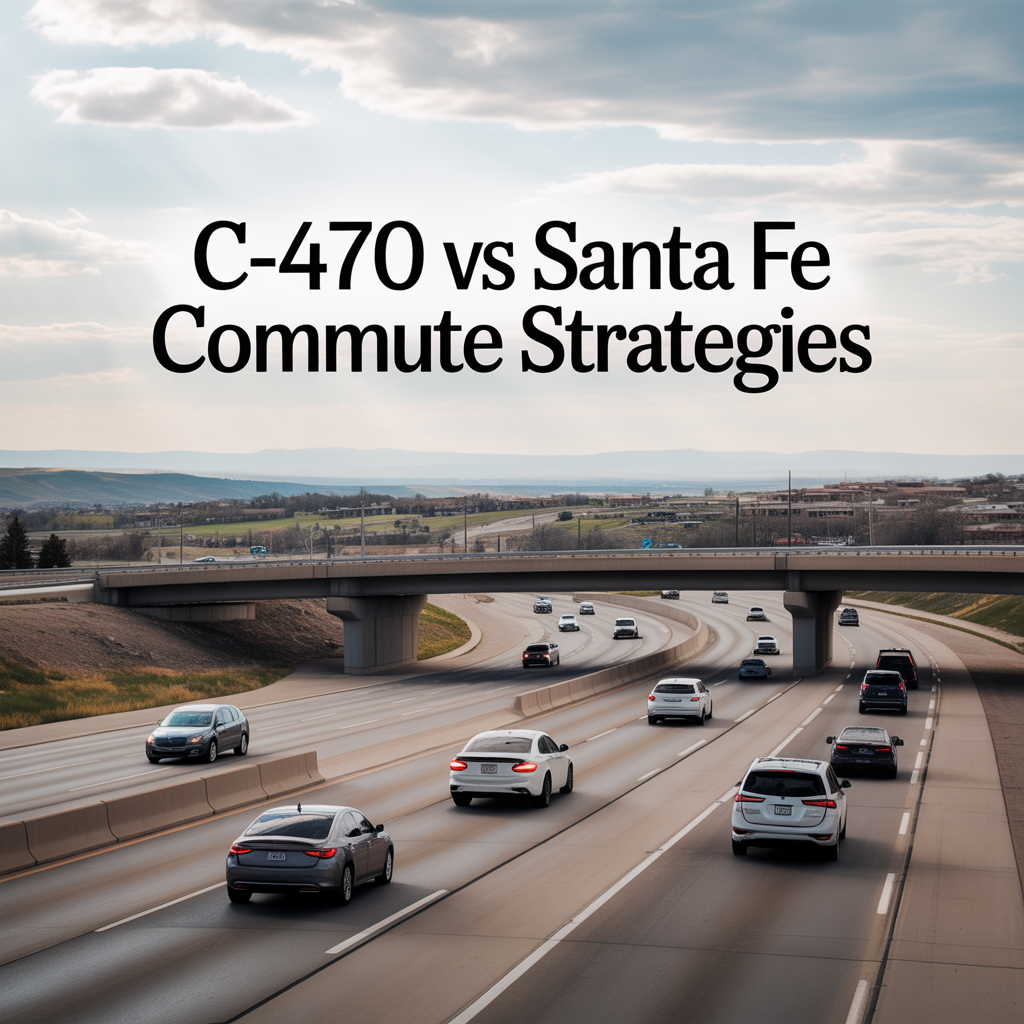
For families in Highlands Ranch, one of the most personal and long-lasting decisions about home location isn’t just which school, or which neighborhood, but which way to face the metro area: toward C‑470 and the west/northwest, or toward Santa Fe Drive and the south/southeast. These two arteries define the commute reality for Highlands Ranch residents heading to Denver, the Tech Center, Englewood, Littleton, and the growing foothills corridors.
After decades of guiding families in this area, I’ve seen how the choice between the C‑470 and Santa Fe corridors plays out over the long haul: not just in travel time, but in stress levels, flexibility, and how a home’s location feels over ten years of work, school, and family life. This isn’t about a single “right” route; it’s about understanding the patterns, the trade‑offs, and the real rhythm that will shape daily life.
How the Two Corridors Shape the Region
C‑470 and Santa Fe Drive (US 85) serve very different roles for Highlands Ranch, and that shapes how families actually use them.
C‑470 is the regional freeway: a broad, limited‑access route that connects the southern and western suburbs to the Denver Tech Center, the southwest metro, and Downtown Denver. It’s the highway option for peaks and valleys in the distance, and for families who work west, north, or near the Tech Center, it’s often the only serious option. It’s not a scenic drive, but it’s the fastest way to cover a lot of ground quickly when traffic is light.
Santa Fe Drive is the classic arterial road: a multi‑lane surface street that threads through the suburban and more built‑up areas, connecting Highlands Ranch to Lone Tree, the Park Meadows area, and on down into Littleton and beyond. It’s slower, more stop‑and‑go, and it’s more vulnerable to construction, accidents, and special events, but it’s also more flexible. It connects to shopping, restaurants, and many workplaces without needing to get on and off the highway at a narrow off‑ramp.
For someone in the Highlands Ranch area, the difference is like this: C‑470 is for distance, Santa Fe is for proximity. Each has its own rhythm, and the right choice depends on work location, tolerance for highway vs. stop‑light annoyances, and how much flexibility is needed for pickups, drop‑offs, and after‑work errands.
C‑470: The Freeway Reality
For families in the western ridge areas of Highlands Ranch — South Ridge, Westridge, BackCountry, and any home near the main RidgeGate Parkway and C‑470 intersections — the C‑470 corridor is the primary commute.
In the morning, C‑470 is a mixed picture. Northbound into the Tech Center and Denver tends to be congested but relatively predictable from Parker and Lone Tree all the way to the 25 intersection. The main pinch points are:
- The C‑470/I‑25 interchange, which is notorious for bottlenecks, especially at rush hour
- The stretch between Santa Fe and Union Boulevard, where traffic tends to back up, particularly when school buses are out or during poor weather
What C‑470 does well is speed when traffic is light. A family in the western Highlands Ranch neighborhoods can often get to jobs in the Tech Center, in the southwest corridor, or even to the western edge of Denver in 30–45 minutes on a good day, which is a major advantage over a mostly surface‑street commute.
The downside is the loss of flexibility. Once you’re on the freeway, it’s difficult to make a quick stop, pick up a child, or reroute due to an appointment change. For families with older kids, dual careers, and tight schedules, that can be a real constraint. It also means that any accident, ice, snow, or construction on the freeway can turn a 30‑minute commute into an hour or more, and that kind of variability can be hard to plan around for drop‑offs and pickups.
Santa Fe: The Arterial Life
For families in the southern and more central parts of Highlands Ranch, especially those near the Town Center, Village Center, and the southern neighborhoods near Wildcat Reserve Parkway, the Santa Fe corridor is the dominant commute route south toward Littleton, the City of Centennial, and the southern foothills.
Santa Fe is what I’d call the “arterial commute”: it’s not fast, but it’s rarely a true gridlock like I‑25 in the morning. It’s a surface street with many lights, but it also offers a lot of flexibility.
The pros of Santa Fe:
- Easier access to shopping, restaurants, and services without leaving the main corridor
- Better access to drop‑off and pickup zones during school events or practices that are on the south side of the community
- Closer line of sight to many employers in the southern metro, in the Park Meadows/Centennial area, and in the southern foothills
The cons:
- More stop‑and‑go, which can be more fatiguing than a (relatively smooth) freeway drive
- Very sensitive to construction and accidents, especially around the Santa Fe/C‑470 interchange, County Line, and the Highlands Ranch Parkway corridor
- Generally slower; a 30‑minute C‑470 drive might be 40–50 minutes on Santa Fe, even when traffic is “normal”
The trade‑off is classic: Santa Fe is slower, but more forgiving of schedule changes and easier for families who need to run errands, pick up teens, or change lanes quickly when plans shift.
How Choice Depends on Work Location
The most practical way to think about the C‑470 vs. Santa Fe decision is to start with the office.
- Denver Tech Center / Southwest Metro / Evergreen: C‑470 is almost always the faster, more predictable route. Families in South Ridge, Westridge, and BackCountry typically accept the freeway rhythm because it gives them a reasonable commute into these areas.
- Littleton / South Denver / City of Centennial: For these areas, the choice is more balanced. A family in the Santa Fe corridor can often reach Littleton and the southern edge of Denver in a similar amount of time as someone on C‑470, but with more flexibility for errands and last‑minute changes.
- Downtown Denver: Both corridors can be used, but C‑470 often feels more efficient if traffic is manageable, while Santa Fe is a backup when the freeway is congested or closed.
- Southwest Slopes / Foothills: Homes and jobs in the Evergreen, Conifer, and foothills areas are almost always best served by the C‑470 corridor, which offers a more direct, though less predictable, connection to the hills.
For families who work from home or hybrid, this calculus shifts. Freeway stress may matter less if the commute is only a few days a week, but highway variability may still push them toward a neighborhood that’s more centrally located, with easy access to both corridors.
Neighborhood Location and Long‑Term Comfort
After years of matching families with homes in Highlands Ranch, one of the most consistent patterns is that families tend to stay longest in homes that align with their commute reality.
Families in the western ridge neighborhoods (South Ridge, Westridge, BackCountry) tend to:
- Prefer the C‑470 corridor because it gives them a fast, direct route to the Tech Center and the west
- Value a more “suburban‑luxury” feel, with trails, parks, and quieter streets, and accept the freeway rhythm as part of that lifestyle
- Often stay in their homes for 10–20 years, because the neighborhood, schools, and commute all feel like a good long‑term fit
Families in the more central and southern neighborhoods, especially near the Village Center, Town Center, and Santa Fe corridor, tend to:
- Lean toward the Santa Fe route because it connects them to the core of the southern metro and gives more flexibility for errands and pickups
- Value a more “connected neighborhood” feel, with easy access to shops, restaurants, and the community cores, and accept the slower, more stop‑and‑go commute
- Often stay 7–12 years, then move again when they’re ready for a different dynamic (different schools, more downtown access, or a different commute pattern)
Practical Tips for Minimizing Commute Stress
Whatever route is used, the Highland Ranch commute is most manageable when it’s thought of as a long‑term lifestyle, not just a daily chore. A few practical patterns that make a big difference:
- Leave before the crush, if possible. For C‑470, even 15–20 minutes earlier can make a big difference in morning congestion. For Santa Fe, it’s about avoiding the very worst of the school and rush hour overlap.
- Use the “combination” route when it works. Some families use C‑470 to get out of the worst bottlenecks, then switch to Santa Fe to reach a specific destination in the south. Others use Santa Fe early, then hit C‑470 later in the morning when traffic is lighter.
- Plan for variability. A home in a neighborhood with easy access to more than one route (e.g., a short drive to both C‑470 and Santa Fe) gives more flexibility on bad days and during construction.
- Factor in family logistics. If the commute is only a few days a week, the neighborhood location may matter more than the commute. If it’s daily, the commute may be the deciding factor in where to live.
A Local Conversation About Your Ideal Commute Path
If you’re thinking about where your family’s commute will land in the Highlands Ranch area, I’d be glad to talk through the different neighborhoods and micro‑areas to show how the C‑470 and Santa Fe corridors line up with specific work locations, schools, and family routines.
The right home isn’t just about square footage and price; it’s about finding a place where the commute feels sustainable day after day, and where the neighborhood and schools support a life that feels balanced and grounded.
Reach out when you’re ready to talk about more than just the checklist — about the kind of neighborhood and rhythm that will truly support your family for years to come.
Get the full Denver Market Insights → [Market Insights]



Littleton’s Ken Caryl for Lockheed Relocations
This is part of Lockheed Martin Relocation → [Lockheed Martin Relocation Hub] & the larger Denver Relocation Hub → [Denver Relocation Hub] Written by: Chad Cabalka Ken Caryl is one of the best-kept “family first” relocation options for Lockheed Martin employees who want foothills scenery, strong neighborhood appeal, and a real suburban lifestyle that still feels connected…


Centennial & Parker for Lockheed Relocations
This is part of Lockheed Martin Relocation → [Lockheed Martin Relocation Hub] & the larger Denver Relocation Hub → [Denver Relocation Hub] Written by: Chad Cabalka Centennial and Parker are two of the smartest suburban choices for Lockheed Martin employees relocating with families because they give you a strong balance of commute flexibility, good neighborhood variety, and…

Highlands Ranch for Family-Friendly Lockheed Relocations
This is part of Lockheed Martin Relocation → [Lockheed Martin Relocation Hub] & the larger Denver Relocation Hub → [Denver Relocation Hub] Written by: Chad Cabalka Highlands Ranch is one of the strongest choices for Lockheed Martin employees relocating with families because it delivers exactly what most parents want after a big move: stable neighborhoods, strong community…