


This is part of Centennial Lifestyle Guide → [Centennial Lifestyle Hub] & Centennial Real Estate Guide → [Centennial Real Estate Guide]
Written by: Chad Cabalka
The High Line Canal is one of those everyday amenities that quietly shapes how life feels in Centennial. It’s not flashy, but if you use it regularly, it anchors your routines, your stress level, and even how connected you feel to your neighborhood.
What the High Line Canal Is
The High Line Canal is a historic 71‑mile waterway that now doubles as a multi‑use trail running through Denver’s southside suburbs, including key stretches in and around Centennial. Built in the late 1800s to carry South Platte River water to farms, it’s now owned and operated by Denver Water but managed for recreation by various local districts along the route. The trail itself is generally flat, dropping only about 2 feet per mile, which makes it accessible for walkers, joggers, cyclists, and, in some segments, horseback riders.
Through Centennial, the canal takes on the feel of a green ribbon threading behind parks, schools, and neighborhoods — more like a continuous linear park than a single “destination.” You’ll see it linking places like DeKoevend Park, Cherry Knolls, and The Streets at SouthGlenn to other parks and trail systems, giving residents ways to move without getting in the car every time. That quiet connectivity is exactly what makes it so valuable for daily life.
How Centennial Residents Actually Use It
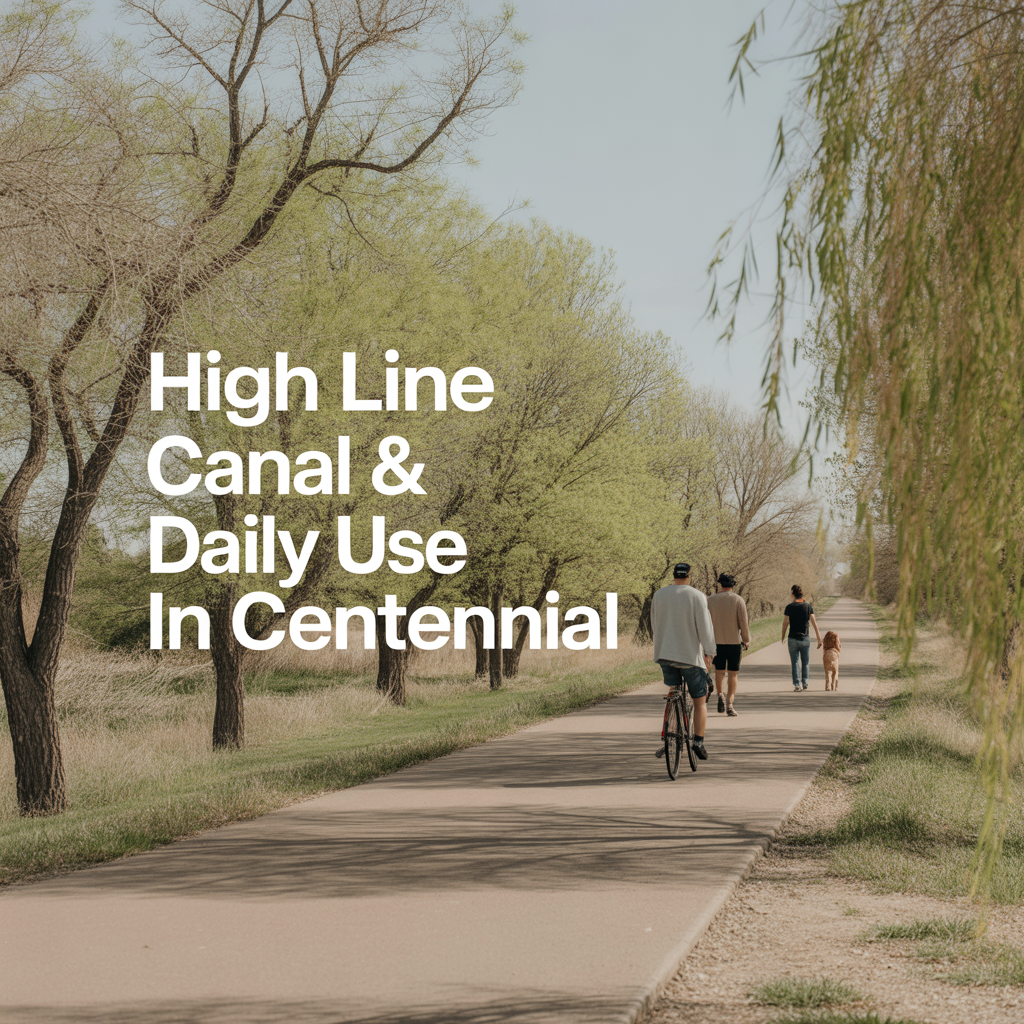
Daily use of the High Line Canal in Centennial tends to fall into a few very practical patterns. Early in the morning and after work, you’ll see walkers, runners, and cyclists using it for low‑stress exercise — the flat grade and soft surface in many segments are easier on knees than concrete sidewalks or road shoulders. Parents push strollers, older adults walk dogs, and youth teams sometimes warm up along short stretches before practice.
During the day, it becomes a backdrop for local life. Remote workers take walking meetings, retirees use it as a regular “get out of the house” loop, and kids use it to bike between parks in summer. Because so much of it runs behind homes and schools instead of along busy streets, it feels safer and more peaceful than trying to walk next to traffic. Over time, many Centennial residents develop “their” default segment — a familiar out‑and‑back distance they know by heart.
On weekends, it becomes a family asset. You’ll see parents teaching kids to ride bikes, couples taking long walks that start from the driveway instead of a trailhead parking lot, and groups linking the canal with other trails to make longer loops. For people who grew up here or have lived in Centennial for years, certain mile markers and underpasses become landmarks in their personal history — where they used to jog in high school, or where their kids picked dandelions when they were toddlers.
Connectivity, Access Points, and Everyday Convenience
One of the canal’s biggest strengths in Centennial is how it connects into other systems. The High Line intersects with trails like the Centennial Link Trail and various local greenways, and the Conservancy’s map breaks the full route into 27 segments, each a few miles long. In practice, that means you can choose short, predictable stretches for daily walks or combine segments when you want a longer ride or run.
Access is easier than many new residents realize. Trail maps and printed guides are available through local governments and the High Line Canal Conservancy, with Centennial’s Civic Center on East Arapahoe listed as a pickup location. There are numerous neighborhood access points where the trail crosses local streets, plus park‑based parking options that make it simple to hop on for a quick 30‑minute outing. Because the route is mostly flat and shaded in many sections, it works well for everything from early‑morning jogs to after‑dinner family walks in summer.
For day‑to‑day life, this connectivity does two things. First, it gives you a built‑in, car‑free way to get movement in without planning a “hike day.” Second, it quietly expands your sense of neighborhood — you’re not limited to your block; your “front yard” becomes the entire canal corridor you can reach within 10–15 minutes.
How the Canal Shapes Neighborhood Feel
From a housing and lifestyle standpoint, proximity to the High Line Canal often matters more than people expect. Homes that back to or sit near the canal tend to feel more “park‑adjacent,” even if the yard itself isn’t huge, because you have instant access to long, green corridors just beyond the fence. For many Centennial homeowners, this becomes part of their everyday mental health routine: a quick walk to clear your head, a reliable bike path for the kids, or a place to catch fall colors without driving to the foothills.
It also affects how social a neighborhood feels. When you and your neighbors regularly use the same segment at the same times of day, you start to recognize each other — dogs, strollers, and all. That casual, repeated contact often does more for community than any formal event. Over years, these micro‑interactions turn into real relationships: the neighbor you first saw on the canal becomes the one you trade snow‑shoveling favors with later.
For long‑term residents, the canal becomes part of how they measure change and continuity. They notice new surface improvements, underpass upgrades, and signage, but they also notice that the core experience — trees, quiet, birds, distant mountain views — stays stable even as roads widen and new development appears nearby. That sense of a fixed, natural spine through a growing suburb is one of the reasons people stay loyal to this part of the metro area.
Practical Tips for Making It Part of Your Daily Routine
If you already live near the High Line Canal in Centennial, one of the simplest ways to upgrade your daily life is to formalize a routine around it. Choose a segment that’s easy to reach from your front door or a consistent parking spot and set a realistic pattern: 20–30 minutes after dinner, a short loop after morning coffee, or a weekend “family walk” that becomes non‑negotiable. Predictability matters more than distance.
If you’re considering a move within Centennial, I’d encourage you to drive or bike along the canal and note where your favorite segments intersect with neighborhoods you’re considering. Ask yourself: Could I walk here without crossing major roads? Would I actually use this at 6:30 a.m. on a workday or after a long commute? Those honest answers often do more to predict long‑term satisfaction than any staged listing photos.
And if you’re new to the area, picking up a map or using the Conservancy’s segment guide is an easy way to find a starting point that matches your fitness level and schedule. Begin with short, shaded segments, give yourself time to learn the mile markers, and let your routine evolve from there rather than trying to “do the whole thing” at once.
After decades of living and working in this corridor, I’ve seen how the High Line Canal quietly becomes the backdrop to people’s everyday stories — early‑morning runs before school drop‑off, stroller walks that become dog walks, and evening chats that happen because two neighbors chose the same path home. If you’re trying to figure out which pocket of Centennial best fits the way you actually want to live your days, I’m always glad to sit down and talk through it with you — ideally after a walk along the canal itself. No pressure, just a thoughtful, local conversation about aligning your home, your routines, and the green spaces you’ll lean on for years.
Get the full Denver Market Insights → [Market Insights]



Littleton’s Ken Caryl for Lockheed Relocations
This is part of Lockheed Martin Relocation → [Lockheed Martin Relocation Hub] & the larger Denver Relocation Hub → [Denver Relocation Hub] Written by: Chad Cabalka Ken Caryl is one of the best-kept “family first” relocation options for Lockheed Martin employees who want foothills scenery, strong neighborhood appeal, and a real suburban lifestyle that still feels connected…


Centennial & Parker for Lockheed Relocations
This is part of Lockheed Martin Relocation → [Lockheed Martin Relocation Hub] & the larger Denver Relocation Hub → [Denver Relocation Hub] Written by: Chad Cabalka Centennial and Parker are two of the smartest suburban choices for Lockheed Martin employees relocating with families because they give you a strong balance of commute flexibility, good neighborhood variety, and…

Highlands Ranch for Family-Friendly Lockheed Relocations
This is part of Lockheed Martin Relocation → [Lockheed Martin Relocation Hub] & the larger Denver Relocation Hub → [Denver Relocation Hub] Written by: Chad Cabalka Highlands Ranch is one of the strongest choices for Lockheed Martin employees relocating with families because it delivers exactly what most parents want after a big move: stable neighborhoods, strong community…