


This is part of Centennial Lifestyle Guide → [Centennial Lifestyle Hub] & Centennial Real Estate Guide → [Centennial Real Estate Guide]
Written by: Chad Cabalka
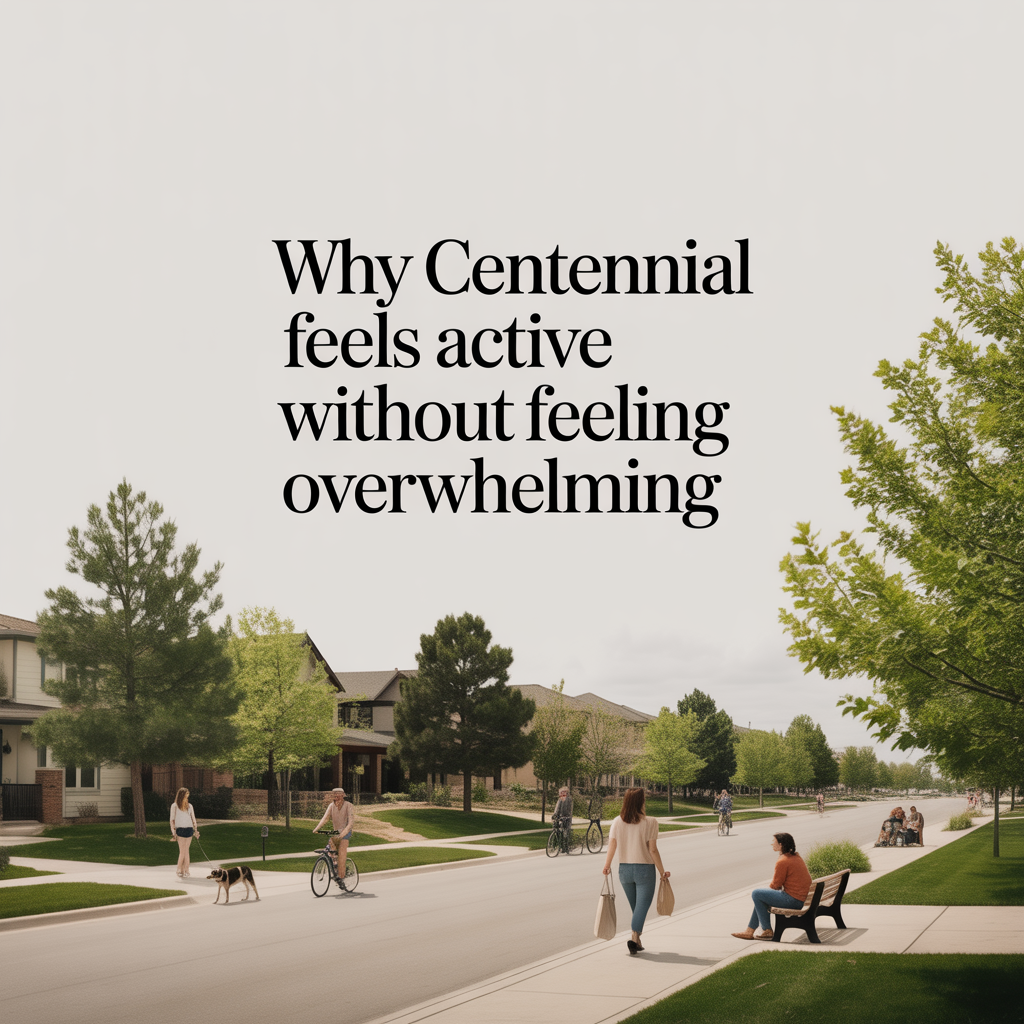
Centennial feels active without feeling overwhelming because the city layers everyday amenities, parks, and events into a suburban framework that still moves at a human pace. You always have something to do, but you rarely have to fight through big‑city chaos to get there.
“Best of Both Worlds” Layout
Centennial was built as a suburb first, so its major roads, shopping centers, and housing were laid out to keep daily life convenient rather than compressed into a downtown grid. Shopping centers were intentionally placed at key intersections on the arterial grid, which means you can usually reach groceries, restaurants, and basic services within a short drive without navigating a true urban core.
At the same time, the city sits right next to major job and entertainment hubs like the Denver Tech Center, Cherry Creek State Park, and the south‑Denver retail corridors. That proximity gives residents access to “big city” culture, sports, and dining when they want it, while Centennial itself stays slower, greener, and more spread out.
Parks, Trails, and Recreation as Everyday Backdrop
Centennial’s trail network, neighborhood parks, and regional assets like Cherry Creek State Park make the city feel busy in a healthy way — people are out walking, biking, and playing sports — rather than clogged with nightlife or traffic. Guides point to hundreds of miles of nearby trails, local treasures like Cherry Creek State Park, and city parks such as Centennial Center Park and DeKoevend as key reasons residents experience the area as active but not crowded.
Neighborhoods like Heritage Greens, Cherry Knolls, and other pool‑and‑tennis communities layer in swim teams, tennis leagues, and regular HOA events, which give families and adults plenty to do without leaving their immediate area. You see people outside, but you rarely feel packed into shared space the way you might in denser Denver neighborhoods.
Local Businesses Over Big Nightlife
Instead of a single nightlife strip, Centennial leans on a mix of small, locally owned businesses, family‑friendly restaurants, and low‑key entertainment. Articles about living in Centennial highlight “quaint, locally owned small businesses,” chic boutiques, indoor ski and snowboard training centers, rec centers, and movie theaters rather than late‑night bar districts.
Streets at SouthGlenn, Cornerstar, and similar centers function as “mini‑town centers”: outdoor shopping, restaurants, a movie theater, and occasional community events. They’re lively in the evenings and on weekends but designed around strolling, errands, and family outings, not crowds spilling out of clubs at 1 a.m. That keeps the energy high enough to feel active while preserving the quieter, suburban baseline most residents want day‑to‑day.
Strong Community Vibe Without Constant Events
Centennial ranks well in “best places to live” lists because of its community feel: friendly residents, well‑used parks, good schools, and a wide range of housing options. Residents describe it as “definitely suburban in feel” with “enough to do that’s non‑nightlife,” emphasizing that you don’t have to go downtown to stay busy, but you also don’t deal with the same level of urban stressors.
City and neighborhood events — from swim meets and youth sports at places like South Suburban’s complexes to concerts and water‑play days at Centennial Center Park — keep the calendar full without demanding that everyone descend on one big venue every weekend. People engage at the level that fits their life stage: families around schools and rec centers, professionals around DTC‑adjacent spots, retirees around parks and community programs.
Easy Access Out, Comfortable Pace at Home
Finally, Centennial’s location makes it easy to tap into more intense activity when you want it and retreat when you don’t. You’re a short drive from downtown Denver, major sports venues, mountain foothill trailheads, and DIA, yet most of the time you live in a “dense suburban” environment with tree‑lined streets and quiet cul‑de‑sacs.
That combination — suburban layout, strong recreation, local business character, and quick access to bigger hubs — is why so many long‑time residents describe Centennial as active but not overwhelming. You can fill your days and evenings as much as you like, but when you come home, it still feels like a neighborhood, not a downtown.
Get the full Denver Market Insights → [Market Insights]


Littleton’s Ken Caryl for Lockheed Relocations
This is part of Lockheed Martin Relocation → [Lockheed Martin Relocation Hub] & the larger Denver Relocation Hub → [Denver Relocation Hub] Written by: Chad Cabalka Ken Caryl is one of the best-kept “family first” relocation options for Lockheed Martin employees who want foothills scenery, strong neighborhood appeal, and a real suburban lifestyle that still feels connected…

Centennial & Parker for Lockheed Relocations
This is part of Lockheed Martin Relocation → [Lockheed Martin Relocation Hub] & the larger Denver Relocation Hub → [Denver Relocation Hub] Written by: Chad Cabalka Centennial and Parker are two of the smartest suburban choices for Lockheed Martin employees relocating with families because they give you a strong balance of commute flexibility, good neighborhood variety, and…

Highlands Ranch for Family-Friendly Lockheed Relocations
This is part of Lockheed Martin Relocation → [Lockheed Martin Relocation Hub] & the larger Denver Relocation Hub → [Denver Relocation Hub] Written by: Chad Cabalka Highlands Ranch is one of the strongest choices for Lockheed Martin employees relocating with families because it delivers exactly what most parents want after a big move: stable neighborhoods, strong community…