


This is part of Lakewood Lifestyle Guide → [Lakewood Lifestyle Hub] & Lakewood Real Estate Guide → [Lakewood Real Estate Guide]
Written by: Chad Cabalka
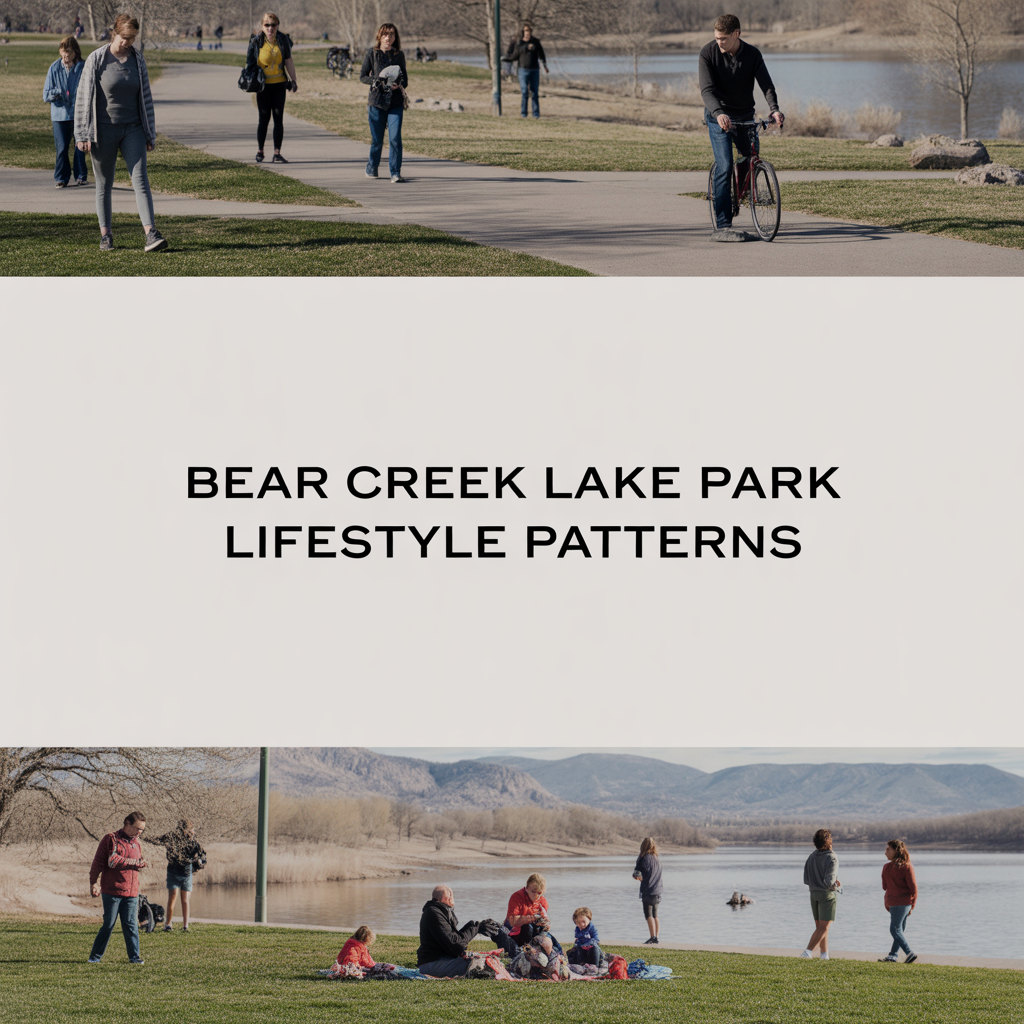
Bear Creek Lake Park is one of those places that quietly shapes how people in southwest Lakewood live day to day. It’s not just a place you visit once a summer; if you’re anywhere near Fox Hollow, Solterra, or the Bear Creek corridor, it can become your default backdrop for walks, bike rides, swims, and low‑key gatherings over many years.
What Bear Creek Lake Park Actually Is
Bear Creek Lake Park spans about 2,600 acres on Lakewood’s southwest edge, tucked between C‑470, Morrison, and the foothills. It’s centered on three main bodies of water: Bear Creek Lake itself, plus Big Soda Lake and Little Soda Lake. The park was built around flood control for the Denver metro, but what you feel when you’re there is open space: water, rolling prairie, cottonwoods along the creek, and long views to Red Rocks and the Front Range.
Because it’s city‑managed open space with a day‑use fee at the entrance, it’s cleaner and more intentional than a random reservoir — with maintained facilities, staffed entry, and clear rules. That setup is a big reason it works so well for repeat, everyday use instead of just one‑off outings.
Everyday Patterns on Land: Trails, Bikes, and Short Walks
On land, Bear Creek Lake Park has roughly 15 miles of soft‑surface trails that loop around the lakes, connect into the foothills edge, and tie into regional paved systems like the Bear Creek and C‑470 trails. The dirt routes are multi‑use: hikers, runners, mountain bikers, and equestrians share most of the same paths.
For nearby residents, those trails get used in a few predictable ways:
- Short loops from the main entrance or Pelican Point – 30–45 minute walks or runs that circle part of Bear Creek Lake or Big Soda, good for after‑work decompression or weekend strolls.
- Longer 5–8 mile circuits that link multiple lakes and upland segments, popular with runners and cross‑country style riders who want time on dirt without driving into the foothills.
- Horseback riding, especially from the south side near Bear Creek Stables and the public horse arena, where people trailer in and then head out on mellow, rolling routes.
The paved connections matter too. Because the park ties into regional trails that are plowed in winter, it becomes a year‑round option for road bikes, longer walks, and training runs, even when higher elevation routes are buried or muddy. For homeowners nearby, that means you can leave from your driveway and end up at the lake or on a longer path without ever loading a bike rack.
Everyday Patterns on Water: Swim Beach, Paddling, and “Lake Days”
On the water, Bear Creek Lake Park supports three distinct habits, depending on which lake you’re actually using.
Bear Creek Lake (the reservoir) is the biggest and allows motorized boating during the main season, plus fishing from shore and watercraft. It’s stocked with species like rainbow trout, saugeye, and smallmouth bass, and even hosts a trout fishing tournament each May. For day‑to‑day life, this is where anglers and boat owners build their routines: early morning launches, evening trolling laps, and weekend half‑days on the water.
Big Soda Lake is non‑motorized and functions as the main swim and paddle hub. From roughly Memorial Day to Labor Day, the swim beach operates daily with a roped‑off area, sand, shade, restrooms, and seasonal concessions. You can rent paddleboards, kayaks, and pedal boats from the Soda Lakes Marina in season, or bring your own paddlecraft after the required inspections. For many Lakewood families, summer means a rhythm of:
- Weeknight “mini‑lake days” after work, where you hit the swim beach for a couple of hours instead of a full‑day mountain trip.
- Standing weekend meetups with friends — everyone brings coolers and chairs, kids rotate between water and sand, and nobody has to drive far.
Little Soda Lake is reserved for the water ski school, with private boats and structured lessons and camps. That niche use shapes things in a different way: if someone in your household is into water skiing or wake sports, you can realistically build that hobby into your life without owning a big wake boat or trekking to distant reservoirs.
Camping, Events, and “Close‑To‑Home Vacations”
One of the most powerful lifestyle features of Bear Creek Lake Park is its campground. The park offers 47 campsites, plus two yurts and three cabins, making it one of the closest full‑service camping options to Lakewood and Red Rocks.
People use it in a few key ways:
- “Practice camping” for families with young kids — you’re 10–20 minutes from home if someone melts down, but you still get the fire, the tent, and the stars.
- Red Rocks show weekends, where you camp rather than fight traffic home after a late concert.
- Quick one‑ or two‑night staycations where you completely change the feel of the weekend without spending three hours on I‑70.
The park also runs a steady calendar of programs: full moon hikes, a Haunted Trail Adventure in the fall, naturalist‑led walks, and school and scout programs that use the park as an outdoor classroom. For residents with kids, that means your local park can be both a playground and a place where your children learn about ecosystems, wildlife, and outdoor skills without leaving the city.
Seasonal Lifestyle: How Use Changes Through the Year
Because Bear Creek Lake Park is open year‑round (with seasonal hours and activity windows), it quietly changes your options in every season.
Spring
As trails dry and water levels stabilize, locals start using the park for early‑season runs and rides when foothills trails are still sloppy. Anglers hit the lake as waters warm, and families begin scouting the swim beach and marina for the upcoming season.
Summer
This is the high‑use season: swim beach every day, paddlecraft rentals, motorized boating windows on the reservoir, outdoor classes and camps, archery, and long, light evenings on the trails. If you live nearby, it’s very easy for “let’s just go down for a bit” to become a weekly habit.
Fall
As days cool, the emphasis shifts back to trails, fishing, and camping. The crowds at the swim beach fade, but the park is still very much alive with hikers, bikers, and people using the quieter shoreline. Park events like haunted trails or themed hikes add some structure to October weekends.
Winter
Conditions permitting, the park supports ice fishing, snowshoeing, and cross‑country skiing, along with cold‑weather hikes and wildlife viewing. Because it’s lower than many foothills parks, it often melts out faster after storms, giving locals a way to stay outside even in the off‑season.
Over a decade of living near the park, you can cycle through all of those modes many times — it becomes a year‑round backdrop instead of a single‑season destination.
Who Tends to Use Bear Creek Lake Park Most
You see a mix of users, but a few groups rely on it heavily:
- Families who want kid‑friendly water and open space without a long drive. The swim beach, playgrounds, and short shoreline trails make it easy to “go to the lake” even with toddlers.
- Runners and cyclists using the regional trail connections for training loops that feel more like the foothills than city sidewalks.
- Paddle and water‑sports people who build regular SUP, kayak, or ski sessions into their weekly schedule.
- Schools and scout groups using the park’s naturalist programs as an outdoor extension of the classroom.
If you fall into any of those categories, living within a short drive—or bike ride—of the park tends to matter more than it looks on a paper map.
How the Park Shapes Nearby Neighborhood Life
From a lifestyle and housing standpoint, Bear Creek Lake Park does a few quiet but important things for the surrounding neighborhoods:
- It guarantees a permanent open‑space buffer on the southwest side of Lakewood, which changes both views and long‑term feel.
- It gives residents a “default destination” for weekends: instead of debating what to do, you just go to the park and decide water, trails, or playground once you’re there.
- It supports a more outdoors‑anchored routine without requiring full mountain‑town living — you can work downtown or in the Tech Center and still be on the lake or a dirt trail within minutes after work.
For some people, that’s a nice bonus. For others, especially those who value being outside more than being in the middle of restaurants and nightlife, it’s the reason they choose this side of Lakewood over other parts of the metro.
If you ever want to walk through which specific neighborhoods and streets actually make Bear Creek Lake Park part of your everyday life — instead of just a place you drive to a few times a year — I’m always open to that conversation. We can match your actual routines and priorities to the corners of Lakewood where “let’s just run down to the park” is a weekly reality, not just a good intention.
Get the full Denver Market Insights → [Market Insights]



Littleton’s Ken Caryl for Lockheed Relocations
This is part of Lockheed Martin Relocation → [Lockheed Martin Relocation Hub] & the larger Denver Relocation Hub → [Denver Relocation Hub] Written by: Chad Cabalka Ken Caryl is one of the best-kept “family first” relocation options for Lockheed Martin employees who want foothills scenery, strong neighborhood appeal, and a real suburban lifestyle that still feels connected…


Centennial & Parker for Lockheed Relocations
This is part of Lockheed Martin Relocation → [Lockheed Martin Relocation Hub] & the larger Denver Relocation Hub → [Denver Relocation Hub] Written by: Chad Cabalka Centennial and Parker are two of the smartest suburban choices for Lockheed Martin employees relocating with families because they give you a strong balance of commute flexibility, good neighborhood variety, and…

Highlands Ranch for Family-Friendly Lockheed Relocations
This is part of Lockheed Martin Relocation → [Lockheed Martin Relocation Hub] & the larger Denver Relocation Hub → [Denver Relocation Hub] Written by: Chad Cabalka Highlands Ranch is one of the strongest choices for Lockheed Martin employees relocating with families because it delivers exactly what most parents want after a big move: stable neighborhoods, strong community…