


This is part of Lakewood Lifestyle Guide → [Lakewood Lifestyle Hub] & Lakewood Real Estate Guide → [Lakewood Real Estate Guide]
Written by: Chad Cabalka
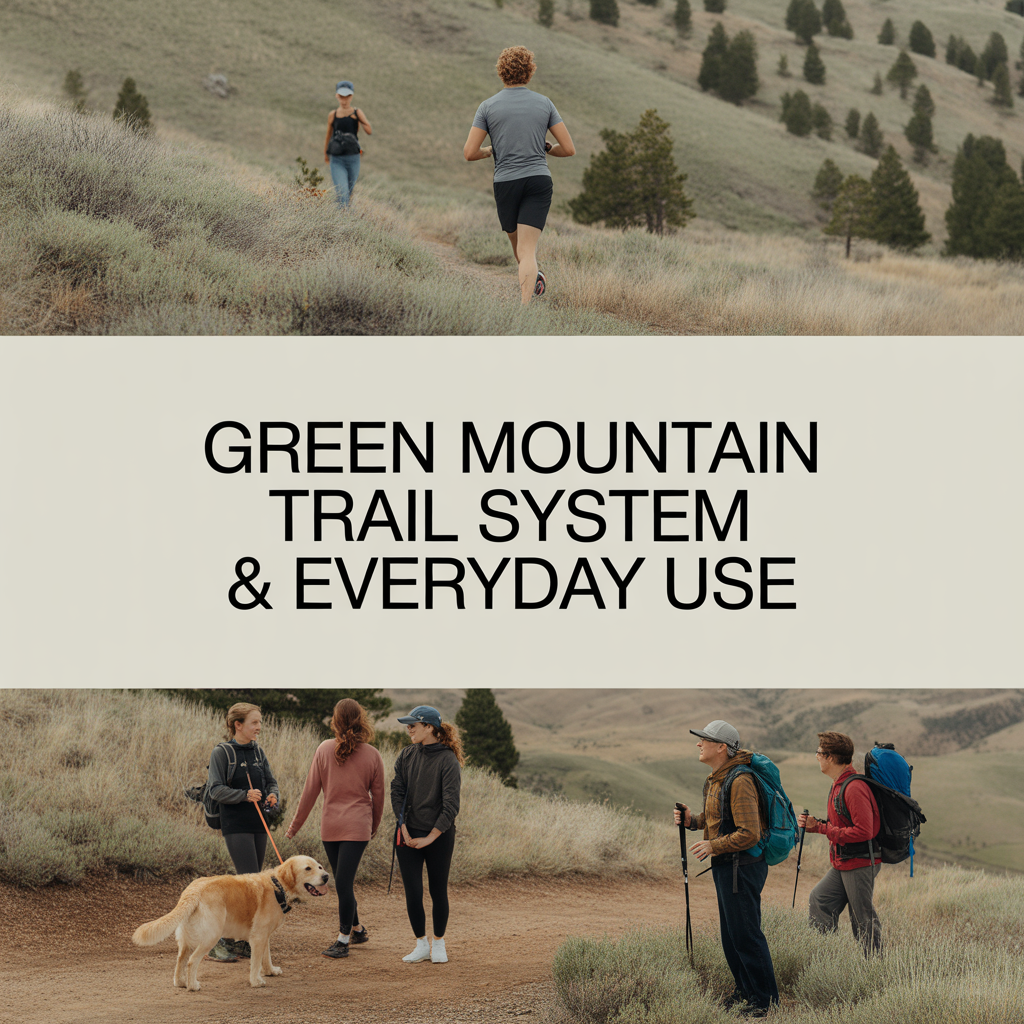
Green Mountain isn’t just a backdrop on the west side of Lakewood — it’s where a lot of people actually live their everyday “outside life.” The trail system on William F. Hayden Park becomes part of your routine if you’re anywhere near Green Mountain, Rooney Valley, or the Union corridor.
What the Green Mountain Trail System Really Is
William F. Hayden Park on Green Mountain is more than 2,400 acres of city‑managed open space, making it Lakewood’s second‑largest park. The summit tops out around 6,800 feet and gives you big views east over Denver and west toward the foothills and high peaks. Trails are multi‑use: hikers, runners, mountain bikers, and, to a lesser degree, equestrians all share the same network.
Most routes are moderate rather than extreme: generally green and blue‑rated trails with some more technical sections, especially on certain bike lines. From a typical trailhead, you can be on top in under two hours on foot, or much faster if you’re moving at a running or biking pace. It’s close enough to town that you can see office buildings and neighborhoods below, but once you’re on the ridgeline, it feels surprisingly separate.
Key Access Points and Everyday Loops
The main vehicle access is from the Rooney Road trailhead on the south/east side of the park (1000 S. Rooney Road), which has parking and restrooms. From there, the Green Mountain Trail climbs toward the summit on a mix of singletrack and service road. Other neighborhood trailheads on the north and east sides connect into the system via routes like the Utah Trail and North Access Trail, giving nearby residents multiple ways to build loops without driving.
Common everyday uses look like:
- A quick out‑and‑back climb after work from Rooney or Utah, up to a viewpoint and back in under an hour if you move consistently.
- A 5–7 mile loop circling part or all of the mountain, often using Green Mountain Trail plus a summit or ridge loop for variety.
- Mountain bike circuits that link Green Mountain Road, Rooney Valley, and more technical lines like Box‑o‑Rox or lower singletrack sections.
Because the park has several loop options and interconnecting trails, regulars often “build their own” circuits based on time and energy rather than repeating a single prescribed route.
Everyday Use: Hikes, Runs, and Rides
For many Lakewood residents, Green Mountain is an “after work and before dinner” kind of place. You’ll see:
- Hikers using it as a daily or weekly fitness climb — enough uphill that you feel it, but short enough to fit into a busy schedule.
- Trail runners doing laps on the base or full loops, taking advantage of semi‑smooth dirt and long sightlines.
- Mountain bikers working on fitness and skills, especially advanced beginners stepping up to green/blue singletrack.
Compared with higher foothills parks, Green Mountain tends to dry out earlier in spring and after storms, and it’s specifically noted as a good winter destination when many other trails are still muddy or snow‑covered. That makes it one of the few places you can reliably ride or run dirt most of the year, which is a big reason it’s so popular on weeknights and weekends.
The trade‑off is exposure: there’s very little shade, and the sun and wind are real factors. Regulars bring hats, sunscreen, and layers and treat summer midday outings with respect, especially when bringing kids or dogs.
Trail Character and Notable Segments
A few pieces of the trail system stand out in how locals talk about everyday use:
- Green Mountain Trail: The primary climbing and looping route, with sections that are smoother and others that share the park service road near the towers. It’s a workhorse trail for both hikers and bikers.
- Utah Trail / Southern Switchbacks: An alternate climb from the south that’s a bit gentler than going straight up Green Mountain Trail, popular with both hikers and bikers looking for a less direct grind.
- Summit / Ridge Loop: Trails circling around the top area, offering big views north and west and access into side trails like Box‑o‑Rox. These are the “victory lap” segments once you’ve done the main climb.
- Box‑o‑Rox and Rooney Valley singletrack: More technical bike‑friendly trails with rock features and a sense of remoteness, considered local favorites for riders stepping up from smooth loops.
Together, they create a system where you can do mellow base loops, steady fitness climbs, or more advanced riding, all without leaving city limits.
Rules, Hours, and Practical Realities
The park is open daily from 5 a.m. to 10 p.m., which is later than many foothills open spaces that close at sunset. That extended evening access is part of why it’s popular for after‑work hikes, sunset runs, and even after‑dark rides for riders with lights. Dogs are allowed on leash, and the city specifically reminds visitors to stay on designated trails and avoid muddy conditions to protect resources.
Wildlife is present and visible: coyotes, mule deer, hawks, rabbits, rattlesnakes, and the occasional mountain lion have been documented in the park. That doesn’t make it unsafe in normal use, but it does mean locals stay aware — especially in warmer months and at dawn/dusk. The city posts trail condition updates and rules, and there are reminders to report hazards and stay clear of any leftover historical ordnance related to nearby former training uses.
On busy weekends, especially nice winter days and shoulder seasons, the main lots can fill and trails can feel crowded. Regulars often time their outings for early mornings, later evenings, or weekdays to catch quieter windows and cooler temps.
How Green Mountain Shapes Everyday Life if You Live Nearby
If you live in Green Mountain, Rooney Valley, Lakewood proper along Alameda, or even parts of Union and Bear Creek, Green Mountain is less of a destination and more of a backdrop for your routine. It can quietly change how you live in a few ways:
- Fitness without logistics: You don’t have to plan a full mountain day; a 45–90 minute loop gives you meaningful elevation and views with almost no drive time.
- Mental reset: Being able to get from home office or I‑70/6th Avenue traffic to open ridgeline in 15–20 minutes is a big quality‑of‑life upgrade over years of living here.
- Anchoring kids and teens: For families, Green Mountain becomes a place for after‑school hikes, early fitness habits, and simple weekend outings that don’t require a big schedule shift.
From a housing perspective, having regular, easy access to this trail system is one of the reasons Green Mountain and surrounding neighborhoods hold long‑term appeal even when newer subdivisions appear farther out. The ability to see a hill from your window and be on a dirt trail on that hill within minutes is not something every part of the metro can offer.
If you ever want to talk through which specific streets and pockets around Lakewood actually make Green Mountain a realistic “everyday trail” versus a “good intention,” I’m always open to that conversation. Matching your home location to the way you actually want to use this trail system — early runs, family hikes, or quick evening rides — goes a long way toward making Lakewood feel like it truly fits your life over the long term.
Get the full Denver Market Insights → [Market Insights]



Littleton’s Ken Caryl for Lockheed Relocations
This is part of Lockheed Martin Relocation → [Lockheed Martin Relocation Hub] & the larger Denver Relocation Hub → [Denver Relocation Hub] Written by: Chad Cabalka Ken Caryl is one of the best-kept “family first” relocation options for Lockheed Martin employees who want foothills scenery, strong neighborhood appeal, and a real suburban lifestyle that still feels connected…


Centennial & Parker for Lockheed Relocations
This is part of Lockheed Martin Relocation → [Lockheed Martin Relocation Hub] & the larger Denver Relocation Hub → [Denver Relocation Hub] Written by: Chad Cabalka Centennial and Parker are two of the smartest suburban choices for Lockheed Martin employees relocating with families because they give you a strong balance of commute flexibility, good neighborhood variety, and…

Highlands Ranch for Family-Friendly Lockheed Relocations
This is part of Lockheed Martin Relocation → [Lockheed Martin Relocation Hub] & the larger Denver Relocation Hub → [Denver Relocation Hub] Written by: Chad Cabalka Highlands Ranch is one of the strongest choices for Lockheed Martin employees relocating with families because it delivers exactly what most parents want after a big move: stable neighborhoods, strong community…