


This is part of Parker Lifestyle Guide → [Parker Lifestyle Hub] & Parker Real Estate Guide → [Parker Real Estate Guide]
Written by: Chad Cabalka
If you’ve lived in the Denver metro area for a while, you already know that the Front Range has a way of drawing people outside. Whether it’s the sunshine, the wide-open landscapes, or that unmistakable mountain view, outdoor life is part of daily life here. But in Parker — a town where community and convenience meet open space — nowhere represents that balance better than the Cherry Creek Trail system.
As a Denver-area real estate professional who’s watched Parker grow over the past few decades, I often tell clients: the Cherry Creek Trail isn’t just a place to ride your bike — it’s an entire way of living. Understanding how this trail system connects to the town, the neighborhoods, and everyday routines can tell you a lot about what it really means to live here long-term.
A Trail That Defines a Town
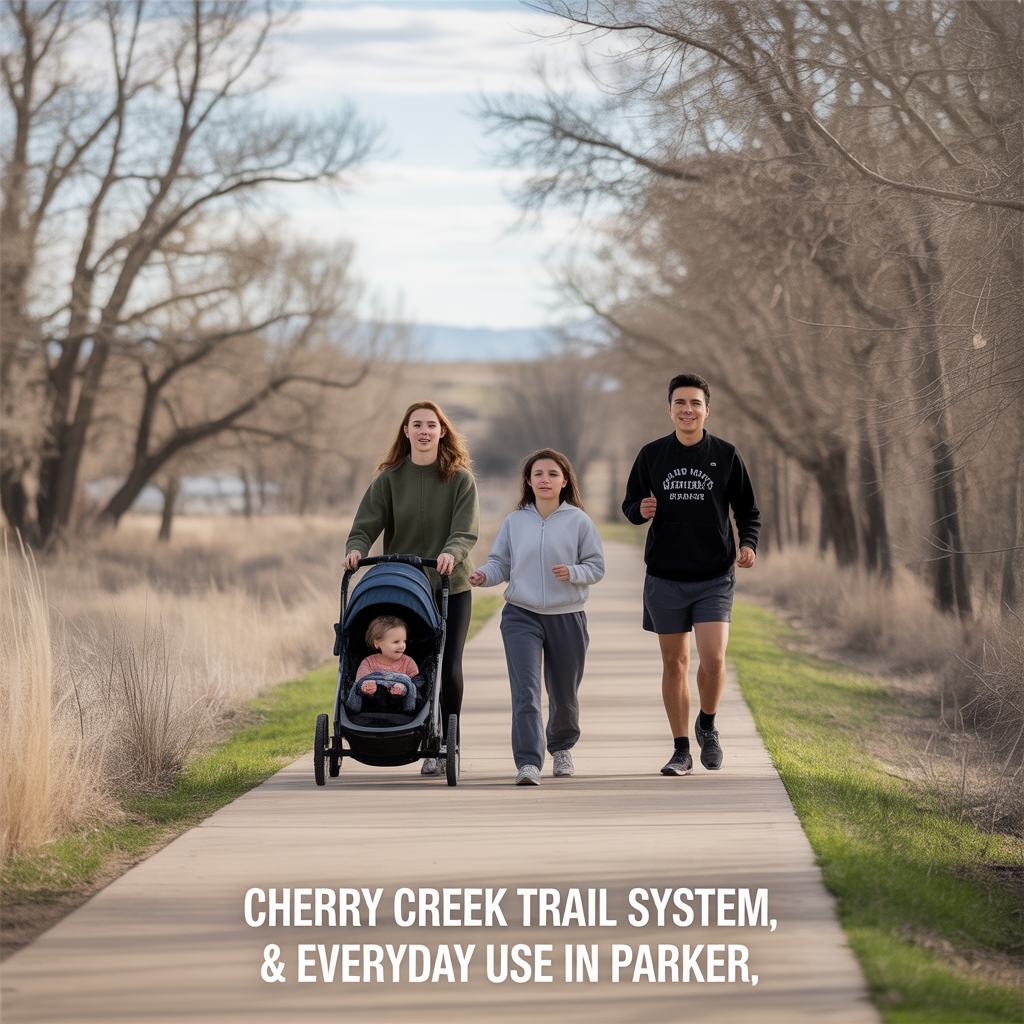
The Cherry Creek Trail runs more than 40 miles from downtown Denver to Castlewood Canyon, weaving right through Parker before continuing south toward the foothills. It’s part of a regional backbone of trails that link multiple cities, but Parker treats it differently — here, the trail isn’t just scenic infrastructure; it’s the town’s rhythm. You’ll see commuters on e-bikes, parents pushing strollers, kids walking to school, and dog walkers greeting the same faces every morning.
What makes it so distinct in Parker is accessibility. Many local neighborhoods — like Stroh Ranch, Stonegate, Canterberry Crossing, and The Pinery — are deliberately connected to the trail system through paved spur pathways and greenbelt corridors. That means you can step outside your door and, within minutes, find yourself on a winding, shaded path that connects you not only to nature, but to coffee shops, parks, and even downtown Parker itself.
This blend of mobility and leisure is subtle but important. Homeowners around here don’t just talk about “trail access” in listing descriptions as a bonus — they talk about it as an everyday advantage that’s felt in small moments: a morning jog before work, teenagers biking to a friend’s house, or weekend rides down to Cherry Creek Reservoir without getting in the car.
More Than Recreation: A Backbone for Lifestyle and Connection
From a real estate perspective, the Cherry Creek Trail system adds value in ways that aren’t always captured by price per square foot. Yes, homes near the trail tend to hold value well, but the deeper impact comes from how the trail shapes daily rhythm and neighborhood connection.
Longtime residents often mention the feeling of living near the trail — the sense that you’re part of a community that’s active, calm, and intentional. Morning traffic feels lighter because people can bike or walk for short errands. School routes become part of the outdoors. Even social life shifts naturally onto the path, with spontaneous block meet-ups or evening strolls that end at a local brewery or restaurant on Mainstreet.
Over time, these experiences compound. A homeowner who buys near the Cherry Creek Trail might not think about long-term resale at first, but the sustained desirability of access to outdoor amenities creates steady demand, especially among families and remote-working professionals who prioritize quality of life over square footage alone.
In neighborhoods like Newlin Meadows or Heirloom, where the trail’s proximity enhances that “connected quiet” feeling, buyers often describe the experience as having “urban access with rural calm.” It’s hard to quantify that balance, but anyone who’s lived here understands it immediately.
A Thread Through Parker’s Growth
To understand Parker’s relationship to the Cherry Creek Trail, it helps to remember how the town developed. Decades ago, much of Parker’s landscape was open ranchland centered around the creek itself. The early town planners preserved large green corridors instead of selling off every acre for housing, which gave future neighborhoods space to breathe — and ensured the trail could remain a defining feature rather than a boundary.
That foresight continues to pay off as Parker grows. The town’s expansion south and east has been shaped by these open spaces, allowing developers to integrate trail access naturally rather than as an afterthought. When you see new subdivisions marketing “connectivity” today, it often traces directly back to how residents value the Cherry Creek Trail as an anchor — not a separate amenity, but part of their front yard.
For homeowners who bought here 15 or 20 years ago, this planning decision has meant appreciating not just financially, but experientially. The quiet mornings, preserved natural areas, and ease of mobility have remained constant, even as Parker itself has evolved into a bustling part of the Denver Metro fabric.
How the Trail Shapes Real Estate Value Over Time
It’s tempting to look at trail proximity purely in market terms — as in, “Does it raise property values?” In Parker’s case, the answer is yes, but that’s only the surface. The trail influences three long-term forces that matter more than short-term fluctuations:
- Stable buyer demand. Homes near accessible outdoor amenities tend to attract consistent interest regardless of market cycles. Even when interest rates or inventory shift, properties with trail access still draw attention because they appeal to enduring lifestyle preferences.
- Lifestyle retention. Residents who live near the trail tend to stay longer. That sense of daily connection and convenience encourages stability in the neighborhood, which helps preserve property values naturally through low turnover and strong community upkeep.
- Functional benefits. Beyond perception, practical advantages — reduced car reliance, better air quality, lower traffic stress — contribute quietly to how residents evaluate the worth of staying put.
In other words, the Cherry Creek Trail system supports property value not by being flashy, but by making life easier and more enjoyable. It’s a kind of infrastructure that rewards patience — the longer you live near it, the more it gives back.
The Emotional Terrain of Everyday Use
Real estate often focuses on numbers: square footage, lot size, price per foot. But the emotional terrain of living near the Cherry Creek Trail is just as real — and arguably more important for long-term satisfaction.
For example, a family in Stroh Ranch might start each Saturday with a bike ride to Bar CCC Park, stopping at a local shop on the way home. Over the years, that simple routine becomes part of their sense of place — something that roots them emotionally in Parker. A retiree in The Pinery might take daily morning walks that double as neighborly check-ins, keeping the social experience of aging active and engaged. These aren’t marketing angles; they’re lived truths that build a deeper attachment to the home and neighborhood over time.
When people talk about loving Parker, they’re often describing the feeling of being surrounded by trails, trees, and familiar faces — all traveling the same quiet paths. That sense of belonging is remarkably durable.
Everyday Functionality: Not Just for Cyclists
A common misunderstanding among newcomers is that trail living is mostly for cyclists or runners. While it certainly supports both, the Cherry Creek Trail system is far broader in its appeal.
For many Parker residents, the trail is how they take the dog out, how kids learn to navigate independence safely, or how grandparents stroll to town on warm afternoons. It connects directly to parks such as McCabe Meadows and Challenger Regional Park, and it threads through areas near local schools and shopping centers. In practice, the trail is both recreation and infrastructure — a low-stress alternative route that weaves through daily life.
With electric bikes and scooters becoming common, more residents even use the trail for short commutes or errands. Parker’s thoughtful layout — combining residential access points with local destinations — makes that entirely feasible.
Over time, this kind of quiet convenience becomes a hidden advantage for homeowners. It’s one thing to have a nice yard; it’s another to have a path that leads you somewhere meaningful without ever getting in your car.
The Parker Mindset: Living Intentionally in Motion
Part of what distinguishes Parker from other Denver suburbs is its mindful relationship to growth. Even as the town expands, there’s a prevailing philosophy that living well here means staying active, connected, and present. The Cherry Creek Trail mirrors that philosophy perfectly — it allows you to move quickly when you want, or slow down when you need to.
That mindset shows up in how residents use the space year-round. In the winter, you’ll still find joggers bundled up, parents pushing strollers along snow-dusted paths, and wildlife watchers taking advantage of the open views. In spring and summer, it becomes almost an outdoor living room for the town — a place to meet, unwind, and reconnect.
When clients ask me whether trail access really matters to resale, I often tell them this: it matters not because it changes your listing price tomorrow, but because it shapes how deeply you’ll enjoy — and therefore maintain and invest in — your home over the years. That’s the part buyers can feel when they walk through a neighborhood, often before they realize why.
Choosing a Home Near the Trail: What to Keep in Mind
If you’re considering a move within Parker and you value easy trail access, a few details can make a difference in your long-term satisfaction.
First, think about orientation and noise. Proximity should mean convenience, not commotion. Homes with trail access behind them often enjoy added privacy and open views, but some may face more foot or bike traffic. Walking the area yourself at different times of day helps you understand the rhythm of the space.
Second, remember that connectivity beats direct adjacency. You don’t always need a backyard gate opening to the trail to enjoy the benefits. Properties within a few minutes’ walk often balance peace and convenience perfectly — especially in family-oriented neighborhoods like Clarke Farms or Stonegate.
Finally, consider seasonal maintenance. Some trail-adjacent homes back to open space areas owned by the town or HOA, which manage weed and snow control differently. It’s worth understanding those responsibilities up front so you know what to expect through the year.
Choosing the right location along the Cherry Creek Trail isn’t about chasing a prestige factor — it’s about aligning your home with your lifestyle. And in Parker, lifestyle and location often mean the same thing.
Parker’s Long Game: Stability Through Connection
Real estate decisions in Parker have always been about more than transaction timing. The town’s real strength lies in its steady, livable growth — and the Cherry Creek Trail represents that same steady value. It’s not new, but it remains timeless. While Denver’s core has evolved dramatically, Parker’s open spaces and trails continue to deliver the same thing they always have: daily access to calm, nature, and genuine community.
As the metro area keeps densifying, it’s reasonable to expect that homes with direct connections to the Cherry Creek system will only become more desirable. But beyond investment potential, the trail’s real presence is emotional — it represents how Parker manages to feel both modern and timeless at once.
Living near the Cherry Creek Trail means you’re part of something grounded and enduring, a local legacy that supports balance across generations. That’s what makes Parker unique, and it’s what keeps residents here through every stage of life.
A Conversation Worth Having
If you’re thinking about buying, selling, or simply understanding how your location interacts with the Cherry Creek Trail, it helps to have local context — not just maps and data, but lived perspective. I’ve spent decades helping clients navigate Parker’s neighborhoods, and these trails have been a constant thread through nearly every conversation.
Whether you’re considering a move or just curious how your home fits into Parker’s long-term landscape, I’m always happy to talk. This isn’t a sales pitch — it’s a neighbor’s invitation. Let’s discuss what matters most to your next chapter and how the everyday rhythm of Parker living fits into it.
Get the full Denver Market Insights → [Market Insights]



Littleton’s Ken Caryl for Lockheed Relocations
This is part of Lockheed Martin Relocation → [Lockheed Martin Relocation Hub] & the larger Denver Relocation Hub → [Denver Relocation Hub] Written by: Chad Cabalka Ken Caryl is one of the best-kept “family first” relocation options for Lockheed Martin employees who want foothills scenery, strong neighborhood appeal, and a real suburban lifestyle that still feels connected…


Centennial & Parker for Lockheed Relocations
This is part of Lockheed Martin Relocation → [Lockheed Martin Relocation Hub] & the larger Denver Relocation Hub → [Denver Relocation Hub] Written by: Chad Cabalka Centennial and Parker are two of the smartest suburban choices for Lockheed Martin employees relocating with families because they give you a strong balance of commute flexibility, good neighborhood variety, and…

Highlands Ranch for Family-Friendly Lockheed Relocations
This is part of Lockheed Martin Relocation → [Lockheed Martin Relocation Hub] & the larger Denver Relocation Hub → [Denver Relocation Hub] Written by: Chad Cabalka Highlands Ranch is one of the strongest choices for Lockheed Martin employees relocating with families because it delivers exactly what most parents want after a big move: stable neighborhoods, strong community…