


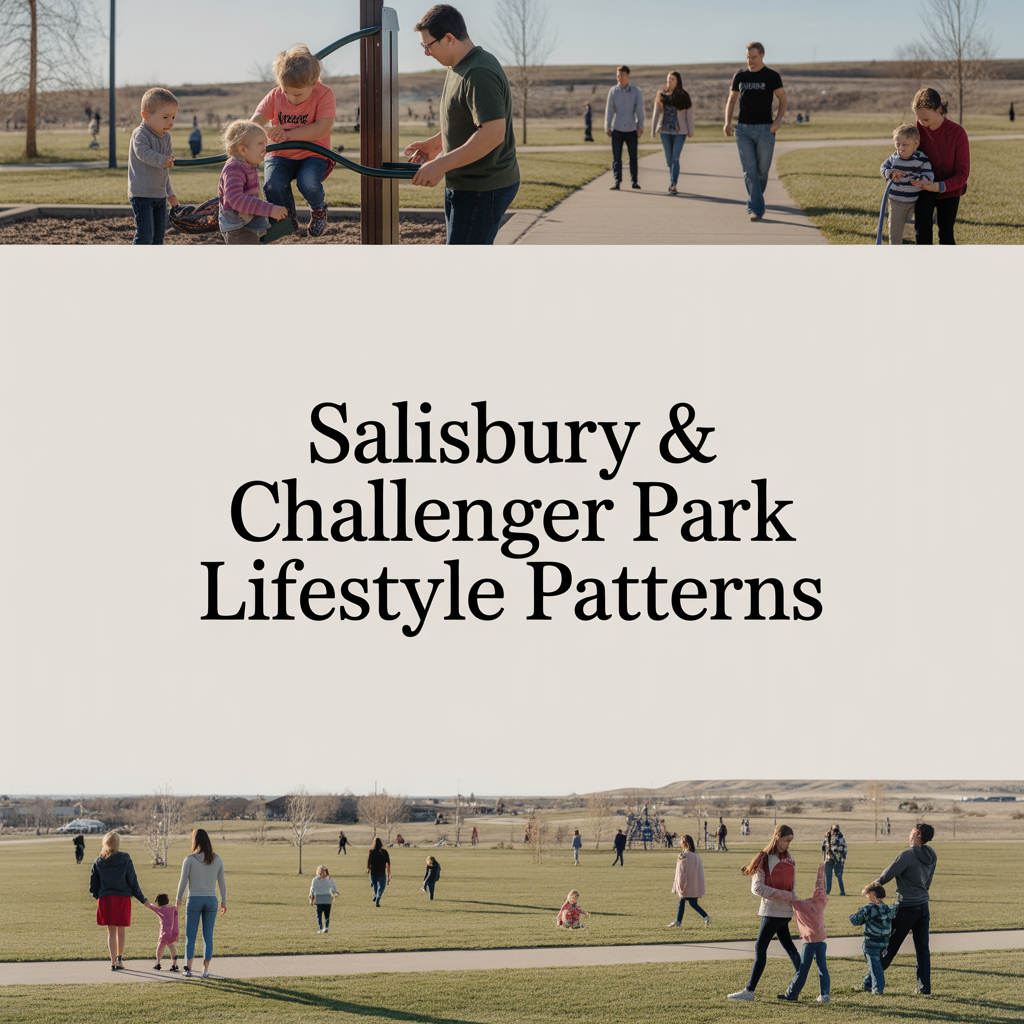
This is part of Parker Lifestyle Guide → [Parker Lifestyle Hub] & Parker Real Estate Guide → [Parker Real Estate Guide]
Written by: Chad Cabalka
If you live in Parker, you already know that this town doesn’t just have parks — it lives through them. Salisbury Regional Park and Challenger Regional Park aren’t just dots on a map; they’re where weekends begin, where kids learn to swing a bat, and where neighbors bump into each other on weekday evenings. As someone who’s watched Parker grow from a quieter bedroom community into one of the most desirable parts of the Denver Metro area, I can tell you that these two parks help define what it actually feels like to raise a family, stay active, and age in place here.
More than almost any other amenity, Salisbury and Challenger shape the rhythm of daily life for the neighborhoods around them. They’re not just “nice to have”; they’re the kind of infrastructure that quietly supports stability, connection, and long‑term satisfaction in a home.
Salisbury Regional Park: Open Space, Sports, and Horses
Salisbury Regional Park sits just north of the town’s Parks and Fleet/Facilities campus, tucked along Motsenbocker Road in a part of Parker that still feels a little more relaxed than the busier corridors near Mainstreet. At 160 acres, it’s one of the larger open‑space anchors in town, with roughly 30 acres of undeveloped land that give the whole area a sense of breathing room.
The park is best known for its sports fields and equestrian facilities. Youth baseball and softball fields — including some sponsored by the Colorado Rockies — draw leagues from across Parker and beyond, while a lighted arena, warm‑up ring, and multi‑use equestrian field make Salisbury a hub for the town’s horse community. That combination of youth sports and equestrian use creates a very specific kind of energy: early‑morning riders, weekend tournaments, and families camping out under shade structures with grills and folding chairs.
For homeowners in nearby neighborhoods like Stroh Ranch, Stonegate, and parts of Canterberry Crossing, Salisbury isn’t just a destination; it’s part of the daily landscape. You can walk or bike in from the Cherry Creek Trail via the McCabe Meadows trailhead, which means you’re never more than a short ride from a game, a lesson, or an evening at the arena. That kind of access changes how people use their homes — instead of driving across town, they treat the park as an extension of their backyard.
Challenger Regional Park: The Community Sports Hub
Challenger Regional Park, located just west of the Cherry Creek Trail along Lincoln Avenue, plays a slightly different but equally important role. Owned and managed by Douglas County Parks, it’s one of Parker’s busiest regional facilities, with three lighted ball fields, a multi‑purpose soccer field area, three outdoor inline hockey rinks, and a children’s playground.
Families in neighborhoods such as Challenger Park Estates, Heirloom, and parts of Newlin Meadows often plan their weekends around Challenger. Spring and fall mean constant youth games under the lights, with concession stands open and pavilions booked for birthday parties. The park’s layout — with multiple fields, picnic shelters, and restrooms — makes it easy to host everything from a single‑game turnout to a full‑day tournament, which is why so many local leagues and school‑adjacent programs choose it as their home base.
What sets Challenger apart is how it connects to the Cherry Creek Trail system. You can access the park directly from the trail, which means kids can ride their bikes from neighborhoods like Challenger Park Estates straight into the fields without ever crossing a busy road. That kind of safe, car‑light mobility is exactly the kind of detail that makes Parker feel like a place where families can relax a little more and worry a little less.
Lifestyle Patterns: How Residents Actually Use These Parks
If you ask Parker residents what they love about living here, a surprising number of answers circle back to Salisbury and Challenger. The pattern is consistent: families with school‑age kids tend to live within a short drive or bike ride of one or both parks, and then they build their routines around them.
On weekday evenings, you’ll see parents dropping kids off at practices, teenagers meeting up at the skate area or basketball hoops, and retirees taking evening walks along the perimeter paths. Weekends are louder and busier — ball games, soccer matches, and equestrian events draw people from across the county, but the scale still feels manageable. Unlike some larger metro‑area facilities, these parks don’t feel overwhelming; they feel like yours, even if you’re only there once a month.
Over time, that consistency creates a kind of neighborhood memory. The same faces show up at the same fields. Kids grow up playing in the same dugouts. Parents who once watched tee‑ball games now coach older‑league teams. That continuity is subtle, but it’s one of the reasons so many Parker families stay put for a decade or more — the parks become part of their story.
Real Estate Implications: More Than Just “Near a Park”
From a real estate standpoint, proximity to Salisbury and Challenger isn’t just about having a pretty view. It’s about predictable, long‑term lifestyle value. Homes within easy walking or biking distance of these parks tend to attract steady interest because they appeal to the same kinds of buyers year after year: families with active kids, people who work from home and want nearby recreation, and empty‑nesters who still enjoy being around community energy.
One common misunderstanding is that “near a park” automatically means more noise and traffic. In Parker’s case, the parks are large enough and well‑designed enough that the impact is usually positive rather than disruptive. Many homes near Salisbury and Challenger back to open space or quieter side streets, so you get the benefit of activity without feeling like you’re living in a parking lot.
Another misconception is that only sports‑oriented families care about these facilities. In reality, the parks serve a broader role: they’re places to walk the dog, meet friends, host small gatherings, or simply escape the house for a change of scenery. That versatility makes them valuable even to buyers who don’t plan to attend every game.
Long‑Term Living: Stability, Connection, and Routine
What really distinguishes Salisbury and Challenger is how they support long‑term living. In a town that’s grown quickly, these parks have remained stable, well‑maintained fixtures. The town and county have invested in lighting, restrooms, concession areas, and trail access, which signals that they’re not going anywhere.
For homeowners, that stability translates into confidence. You can buy a home near Salisbury or Challenger knowing that the surrounding environment is likely to stay active, cared‑for, and community‑oriented for years to come. That kind of predictability matters when you’re thinking about a 10‑, 15‑, or 20‑year horizon — it’s easier to commit to a neighborhood when you know the core amenities will remain consistent.
Over time, these parks also help maintain neighborhood cohesion. When kids grow up playing in the same fields, when families gather for the same annual events, and when retirees keep walking the same paths, the community doesn’t fragment as easily. That cohesion, in turn, supports property values and quality of life in a quiet, organic way.
Choosing a Home Near Salisbury or Challenger
If you’re considering a move in Parker and you value access to Salisbury or Challenger, a few practical considerations can make a big difference in how you experience daily life.
First, think about orientation and noise. Homes that back directly to fields or arenas may hear more activity on game nights, while those a block or two away often enjoy the benefits without the constant sound. Walking the area at different times of day — early morning, late afternoon, and evening — helps you get a sense of the rhythm.
Second, consider trail connectivity. Neighborhoods like Challenger Park Estates and parts of Stroh Ranch connect directly to the Cherry Creek Trail, which makes it easy to reach both parks without getting in the car. That kind of low‑stress mobility is especially valuable for families with kids who bike or walk to games and practices.
Finally, look at seasonal use. Salisbury’s equestrian facilities and Challenger’s lighted fields mean activity year‑round, even in winter. If you prefer a quieter environment, you might lean toward homes that are close enough for convenience but oriented away from the main event areas.
A Conversation About Your Parker Lifestyle
Salisbury and Challenger Regional Parks are more than just amenities; they’re living rooms for the town. They shape how families spend their weekends, how kids grow up, and how long‑term residents stay connected to their community. If you’re thinking about buying, selling, or simply understanding how your neighborhood fits into Parker’s larger fabric, these parks are worth factoring into the conversation.
As a lifelong Denver‑area resident who’s watched Parker evolve, I’m always happy to talk through what these parks mean for your lifestyle and your long‑term plans. This isn’t about pushing a sale; it’s about helping you find a home that fits how you actually live — today and ten years from now.
Get the full Denver Market Insights → [Market Insights]


Littleton’s Ken Caryl for Lockheed Relocations
This is part of Lockheed Martin Relocation → [Lockheed Martin Relocation Hub] & the larger Denver Relocation Hub → [Denver Relocation Hub] Written by: Chad Cabalka Ken Caryl is one of the best-kept “family first” relocation options for Lockheed Martin employees who want foothills scenery, strong neighborhood appeal, and a real suburban lifestyle that still feels connected…

Centennial & Parker for Lockheed Relocations
This is part of Lockheed Martin Relocation → [Lockheed Martin Relocation Hub] & the larger Denver Relocation Hub → [Denver Relocation Hub] Written by: Chad Cabalka Centennial and Parker are two of the smartest suburban choices for Lockheed Martin employees relocating with families because they give you a strong balance of commute flexibility, good neighborhood variety, and…

Highlands Ranch for Family-Friendly Lockheed Relocations
This is part of Lockheed Martin Relocation → [Lockheed Martin Relocation Hub] & the larger Denver Relocation Hub → [Denver Relocation Hub] Written by: Chad Cabalka Highlands Ranch is one of the strongest choices for Lockheed Martin employees relocating with families because it delivers exactly what most parents want after a big move: stable neighborhoods, strong community…