


This is part of Lakewood Lifestyle Guide → [Lakewood Lifestyle Hub] & Lakewood Real Estate Guide → [Lakewood Real Estate Guide]
Written by: Chad Cabalka
School schedules in Lakewood don’t just determine when kids show up for class — they set the rhythm for everything from commutes and childcare to when you can comfortably schedule showings, contractors, or even quiet time at home. Over years of working with Lakewood families, I’ve seen that the bell schedule you live with daily often matters as much as the school name on the report card.
Why Bell Times Matter More Than You Think
Most Lakewood schools start sometime between about 7:30 and 8:30 in the morning and wrap up between 2:30 and 3:30 in the afternoon, with small variations by campus and grade level. On paper, those windows don’t look dramatic, but in real life they determine whether you’re battling westbound 6th Avenue at 7:45 a.m. or sliding in after the worst of the rush. A 20‑minute swing in start time can be the difference between an easy commute and a daily stress point.
For dual‑income households, those schedules are the backbone of everything else: when you can leave for work, who does drop‑off and pick‑up, and whether you need before‑ or after‑care to fill the gaps. Over time, families often tell me that they value “predictable mornings” just as much as academic programs. You can adjust to curriculum; it’s much harder to adjust to a daily routine that never quite fits your work life.
Elementary Schedules: The Early Rhythm of the Neighborhood
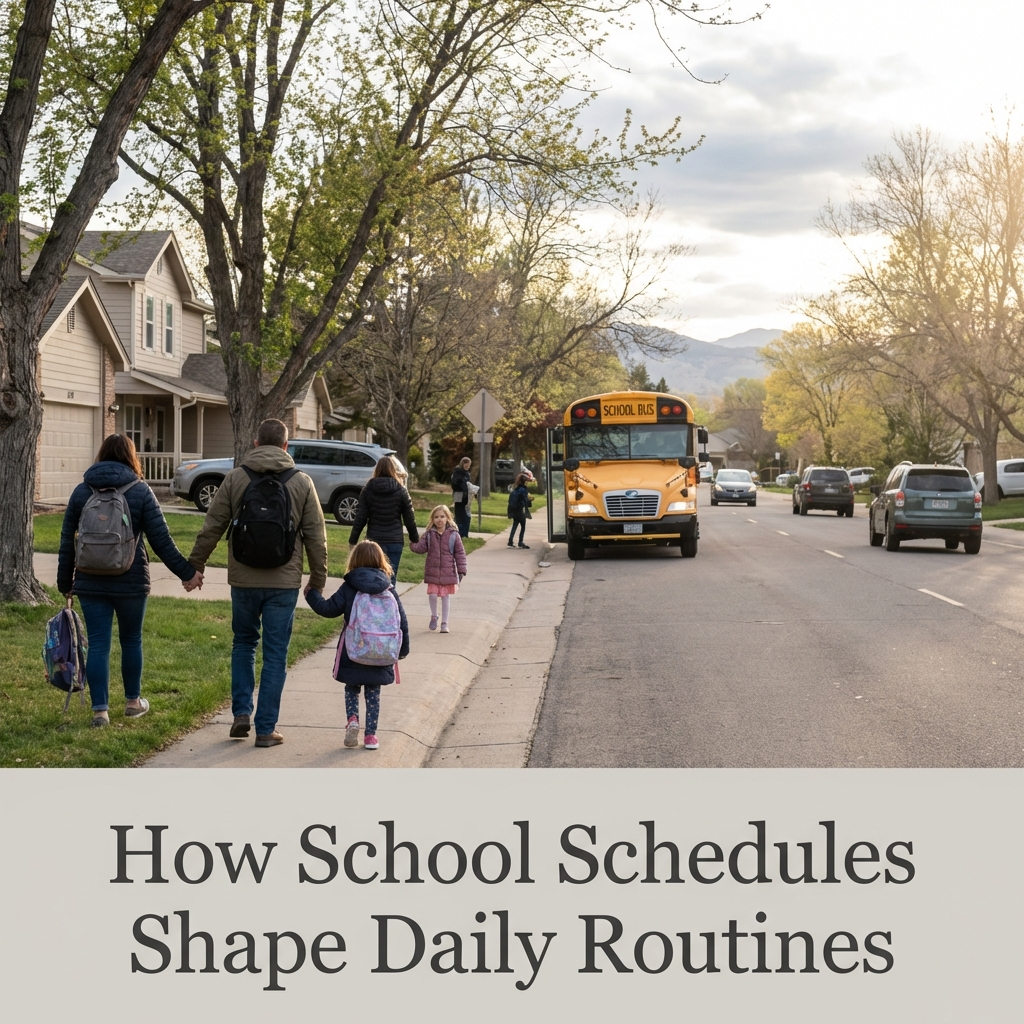
Elementary schools in Lakewood often start on the earlier end of the spectrum, with breakfast served before the first bell and students dismissed by mid‑afternoon. That creates a natural early‑morning buzz in nearby streets: kids walking or biking with parents, short car lines, and a very specific “rush” around the school zone that lasts 20–30 minutes. If you live within a few blocks, you’ll feel that rhythm whether you have kids in school or not.
For parents, this early schedule means:
- Workdays may need to begin later or rely on before‑care.
- Mid‑afternoon pickups can conflict with traditional 8–5 jobs.
- After‑school activities often start while daylight and energy levels are still high.
From a housing perspective, I see many Lakewood buyers purposely choosing homes within walking distance of their preferred elementary campus so they can avoid the car line and reclaim those extra 15–20 minutes each morning. Over years, that simple decision can make the difference between rushed, stressful mornings and something much more sustainable.
Middle and High School: Different Day, Different Commute
By the time students hit middle and high school, bell schedules typically shift later, and the school day stretches out. At Lakewood High, for example, classes are structured into longer “blocks” across the day, with staggered lunches that keep many students on campus into the later afternoon. For families, that means a few key changes in routine: less involvement in morning drop‑offs, but more driving around practices, clubs, and evening events.
Older students often handle their own transportation — walking farther, biking, or driving themselves — which changes how traffic flows through a neighborhood. Streets near high schools can be noticeably busier right at dismissal but quieter than elementary zones in the early morning. Over time, some homeowners grow to appreciate the “late peak” pattern: calmer mornings, with most activity compressed into one mid‑afternoon burst.
If you work a flexible schedule or from home, these patterns matter. Many Lakewood homeowners tell me they plan calls, focused work, or contractor visits around the predictable quiet stretches between the morning wave and the after‑school return.
The Hidden Layer: Preschool, Childcare, and Wraparound Hours
For families with younger kids, the actual school day is only part of the equation. Preschools and childcare centers in and around Lakewood often operate on longer schedules, commonly opening around 7:30 a.m. and closing around 5:30 p.m. Those hours are what make a standard workday possible for many parents, and they heavily influence which neighborhoods feel realistic.
If you have a mix of preschoolers and older kids, you may find yourself weaving together multiple schedules: elementary start times, older siblings’ later days, and a childcare pickup deadline that can’t be missed. Over a decade, that daily choreography becomes a big part of how you experience your neighborhood. Some families prioritize living near a single hub — a school cluster and a trusted childcare center — to compress all that movement into a small radius.
How Schedules Shape After‑School Life and Home Energy
When schools dismiss, neighborhoods change character. In areas near elementary schools, you see kids outside earlier in the afternoon: scooters, bikes, and pickup games happening while adults are still working. Near high schools, activity ramps up later as sports practices end and teenagers head home, often bringing more cars and friends into the mix.
Those patterns can influence how you use your own home:
- If you work from home, a nearby school dismissal may dictate when you don’t schedule a big presentation or conference call.
- If you crave a steady hum of neighborhood activity, living near an elementary or middle school might feel energizing rather than disruptive.
- If you prefer quiet in the late afternoon, you might gravitate to pockets of Lakewood that sit just outside the main school traffic paths.
These are the “quality of life” details that rarely show up in listings but matter tremendously once you’re living in a home year after year.
Planning Around Schedules When You’re Buying or Selling
For buyers, one of the best things you can do is visit a prospective neighborhood at different times of day. Drive by the nearest school at start and dismissal times. Park on a side street and simply watch what happens: how long the car line is, whether kids are walking in groups, and how easily you could get in and out of your own driveway during those windows. That 30‑minute slice of life often tells you more about your future routine than any school rating.
For sellers, it’s helpful to understand how your home aligns with local schedules. If you’re close to a school, being upfront about walkability, crossing guards, and typical traffic patterns can actually reassure buyers who are trying to picture their mornings. Many Lakewood families appreciate knowing, “Yes, it’s busy for 20 minutes, but here’s how we’ve learned to work with it.”
Matching Your Daily Rhythm to the Right Lakewood Micro‑Area
Ultimately, school schedules in Lakewood create a series of “time zones” within the city. In one area, mornings start early and everything quiets by mid‑afternoon. In another, the day feels later, with activity spiking around evening games and events. As a homeowner, you’re choosing not just a house and a school, but a daily rhythm.
When I sit down with clients, we don’t just talk about which school they like — we talk about:
- What time they realistically want to leave the house each day.
- How comfortable they are with multiple trips in and out for activities.
- Whether they’d rather live on a quiet back street or embrace the energy of a school‑adjacent block.
Those answers often point us toward certain pockets of Lakewood just as clearly as price and bedroom count.
A Local Invitation to Talk Through Your Routine
If you’re looking at a move in Lakewood and trying to balance bell schedules, commutes, kids’ activities, and your own sanity, you’re not alone. These are exactly the kinds of practical, lived‑in questions I’ve been walking through with Denver‑area families for years. The right fit isn’t just about being “in the right school” — it’s about your days feeling workable and your home supporting the life you want to live.
If you’d like to talk through how specific Lakewood schools, schedules, and neighborhoods might shape your daily routine, I’m always open to a straightforward conversation. No scripts, no pressure — just a local who knows how these patterns play out over time and can help you match your real life to the right corner of Lakewood.
Get the full Denver Market Insights → [Market Insights]



Littleton’s Ken Caryl for Lockheed Relocations
This is part of Lockheed Martin Relocation → [Lockheed Martin Relocation Hub] & the larger Denver Relocation Hub → [Denver Relocation Hub] Written by: Chad Cabalka Ken Caryl is one of the best-kept “family first” relocation options for Lockheed Martin employees who want foothills scenery, strong neighborhood appeal, and a real suburban lifestyle that still feels connected…


Centennial & Parker for Lockheed Relocations
This is part of Lockheed Martin Relocation → [Lockheed Martin Relocation Hub] & the larger Denver Relocation Hub → [Denver Relocation Hub] Written by: Chad Cabalka Centennial and Parker are two of the smartest suburban choices for Lockheed Martin employees relocating with families because they give you a strong balance of commute flexibility, good neighborhood variety, and…

Highlands Ranch for Family-Friendly Lockheed Relocations
This is part of Lockheed Martin Relocation → [Lockheed Martin Relocation Hub] & the larger Denver Relocation Hub → [Denver Relocation Hub] Written by: Chad Cabalka Highlands Ranch is one of the strongest choices for Lockheed Martin employees relocating with families because it delivers exactly what most parents want after a big move: stable neighborhoods, strong community…