


This is part of Parker Lifestyle Guide → [Parker Lifestyle Hub] & Parker Real Estate Guide → [Parker Real Estate Guide]
Written by: Chad Cabalka
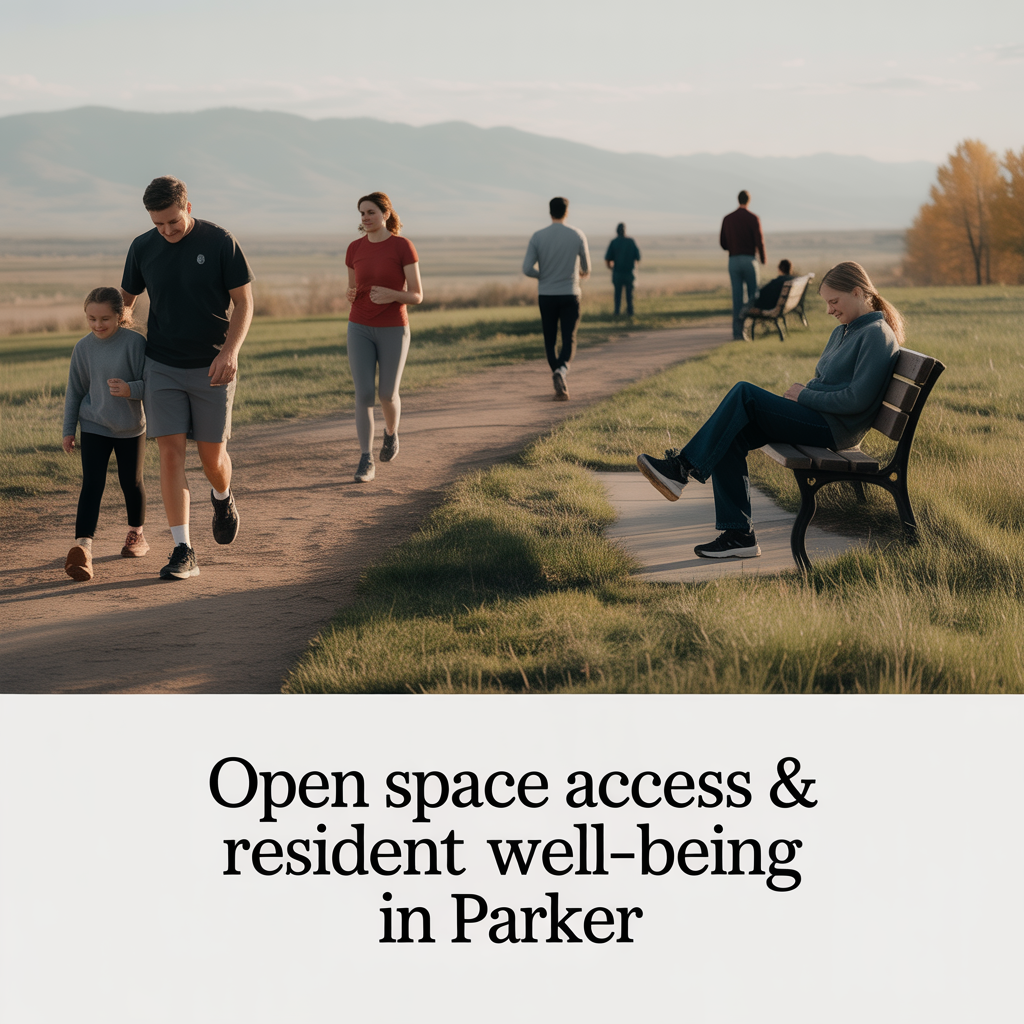
If you’ve spent much time in Parker, you’ve probably noticed something quietly remarkable: you don’t have to drive far to feel like you’re away from it all. Within a few minutes of almost any neighborhood, you can find yourself on a trail, in a field, or beside a creek with nothing but trees and sky. As a lifelong Denver‑area resident who’s watched Parker grow from a smaller town into one of the most amenity‑rich communities in the metro, I can tell you that this open‑space network isn’t just scenery — it’s a core part of how people actually feel day to day.
Parker’s approach to open space is deliberate and unusually generous. The town maintains more than 1,100 acres of open space within its boundaries, with roughly 95 percent of residents living within a 10‑minute walk of a park, trail, or open‑space area. That kind of access doesn’t happen by accident; it’s the result of planning choices that prioritize green space, trails, and buffers over maximizing every square foot for development.
What “Open Space Access” Actually Looks Like
When I talk about open space access in Parker, I’m referring to more than just big regional parks. It includes the wide‑open fields behind neighborhoods like Stroh Ranch and The Pinery, the grassy corridors along the Cherry Creek Trail, the undeveloped stretches of Salisbury and Bayou Gulch, and the smaller open‑space pockets that back up to subdivisions such as Heirloom, Newlin Meadows, and parts of Stonegate.
These spaces are designed to be used in low‑friction ways. You can walk out your front door and be on a soft‑surface path within a few minutes. You can bike to a ball field without crossing a busy road. You can take your dog to a quiet field instead of a crowded lot. That ease of access matters more than it sounds: it means people actually do get outside, even on busy days, because the barrier to entry is so low.
From a resident‑well‑being standpoint, this kind of environment supports a rhythm that’s hard to replicate in more built‑up suburbs. You’re not choosing between “drive to a park” and “stay home”; you’re choosing between “a five‑minute walk” and “a five‑minute walk.” That subtle difference encourages more outdoor time, which in turn supports physical health, mental clarity, and social connection.
How Open Space Shapes Daily Life and Mental Health
One of the most consistent patterns I’ve seen over the years is how open space in Parker becomes part of people’s routines — not as a special outing, but as an everyday habit. Parents walk their kids to school along tree‑lined paths. Remote workers take short breaks to walk the trails behind their neighborhoods. Retirees use the same open‑space loops every morning, often greeting the same neighbors along the way.
Research and common sense both point to the same conclusion: regular exposure to green space reduces stress, improves mood, and supports better sleep. In Parker, that plays out in quiet but meaningful ways. A family in Canterberry Crossing might use the open fields behind their neighborhood for after‑school play, while a household in The Pinery might rely on the larger, more secluded stretches of open space for longer weekend walks.
Over time, that kind of routine access creates a sense of stability and calm. You don’t have to “escape” the town to feel like you’re away from it all; you can step outside and be in it. That balance between convenience and tranquility is one of the reasons so many Parker residents feel like they’ve found a place that works for them long‑term.
The Role of Trails and Greenways
Parker’s open‑space network is stitched together by an extensive trail system that connects neighborhoods to parks, schools, and regional facilities. The town maintains nearly 90 miles of trails, including major corridors like the Cherry Creek Trail and the Bayou Gulch Trail, which link residential areas to larger open‑space hubs.
These trails do more than just provide recreation; they function as low‑stress transportation routes. Families can bike to school or to the library without getting in the car. Commuters can use the trails for short errands or as part of their daily commute. Even in winter, when the snow dusts the fields, you’ll still see joggers, dog walkers, and parents pushing strollers along the cleared paths.
From a well‑being perspective, that kind of connectivity matters. It reduces reliance on cars, which lowers stress and air pollution. It increases physical activity, which supports long‑term health. And it creates opportunities for casual social interaction — the kind of small, unplanned encounters that build a sense of community.
Real Estate Implications: Stability, Comfort, and Long‑Term Value
From a real estate standpoint, open‑space access in Parker is one of the most durable advantages a home can have. Homes that back to open space or are within easy walking distance of trails and fields tend to attract steady interest because they appeal to buyers who value quality of life over square footage alone.
One common misunderstanding is that “open space” automatically means more wildlife or maintenance issues. In Parker’s case, the town’s Forestry and Open Space Division actively manages these areas, including weed control, re‑vegetation, and tree care, which helps keep them healthy and attractive. That proactive management means residents enjoy the benefits of open space without the burden of constant upkeep.
Another misconception is that only nature‑lovers care about open space. In reality, these areas serve a broader role: they’re places to walk the dog, meet friends, host small gatherings, or simply escape the house for a change of scenery. That versatility makes them valuable even to buyers who don’t plan to spend hours hiking every weekend.
Planning for Long‑Term Well‑Being
When I work with clients in Parker, one of the first questions I ask is how they actually plan to use outdoor space over the next 10–15 years. Are they looking for a quiet, low‑maintenance lifestyle with easy access to walks and trails? Or are they raising active kids who will spend a lot of time in organized sports and programs?
The answer often points them toward one of two patterns:
- Open‑space‑centric living tends to suit empty‑nesters, remote workers, and families who value calm, everyday access over big events. These buyers often prioritize proximity to trails, fields, and quiet streets, and they’re willing to drive a bit for larger tournaments or regional events.
- Park‑and‑trail‑centric living tends to appeal to families with school‑age kids, sports‑oriented households, and people who enjoy being around community energy. These buyers often want to be within a short drive of Salisbury, Challenger, Bayou Gulch, or similar hubs, even if it means a bit more activity nearby.
Neither pattern is “better” in an absolute sense; they’re just different. What matters is matching the environment to how you actually live — and how you want to live over the long term.
A Conversation About Your Parker Lifestyle
Parker’s network of open space, parks, and trails is one of the town’s quiet strengths. It offers a rare combination: the peace and convenience of close‑to‑home green space plus the energy and programming of larger hubs. If you’re thinking about buying, selling, or simply understanding how your neighborhood fits into Parker’s larger fabric, that balance is worth factoring into the conversation.
As a lifelong Denver‑area resident who’s watched Parker evolve, I’m always happy to talk through what these spaces mean for your lifestyle and your long‑term plans. This isn’t about pushing a sale; it’s about helping you find a home that fits how you actually live — today and ten years from now.
Get the full Denver Market Insights → [Market Insights]



Aurora Southlands Living For Aerospace And Defense Families
This is part of Lockheed Martin Relocation → [Lockheed Martin Relocation Hub] & the larger Denver Relocation Hub → [Denver Relocation Hub] Written by: Chad Cabalka Relocating to Denver for Lockheed Martin changes the home search fast, because Waterton Canyon is not the kind of campus you casually “figure out later.” The southwest metro drives the whole…

Best Neighborhoods For Buckley Space Force Base Commuters
This is part of Lockheed Martin Relocation → [Lockheed Martin Relocation Hub] & the larger Denver Relocation Hub → [Denver Relocation Hub] Written by: Chad Cabalka If Buckley Space Force Base is the anchor of your move, the best neighborhoods are usually in east and southeast Aurora, with the strongest practical options around Southlands, Murphy Creek, East…
C-470 Commuting Strategy For South Denver Aerospace Workers
This is part of Lockheed Martin Relocation → [Lockheed Martin Relocation Hub] & the larger Denver Relocation Hub → [Denver Relocation Hub] Written by: Chad Cabalka If you work at Waterton, split time between Waterton and the DTC, or live anywhere in the south metro with a Lockheed Martin paycheck attached to it, C-470 is the corridor…