


This is part of Parker Lifestyle Guide → [Parker Lifestyle Hub] & Parker Real Estate Guide → [Parker Real Estate Guide]
Written by: Chad Cabalka
If you live in Parker, you’ve probably noticed something subtle but important: there are parks everywhere, but they don’t all feel the same. Some are the kind of place you pass through on your way to school drop‑off; others are destinations you drive across town for. As someone who’s watched Parker grow from a quieter town into one of the most amenity‑rich parts of the Denver Metro area, I’ve come to see that difference as one of the most meaningful distinctions in how people actually live here day‑to‑day.
At its core, Parker offers two kinds of outdoor access: neighborhood parks, which are smaller, close‑to‑home spaces that serve daily routines, and regional recreation facilities, which are larger, more specialized hubs that draw people from across the town and county. Understanding how these two layers work together — and what each one offers you over time — can help you make smarter, more comfortable decisions about where to live and how to use your home.
What “Neighborhood Parks” Really Mean in Parker
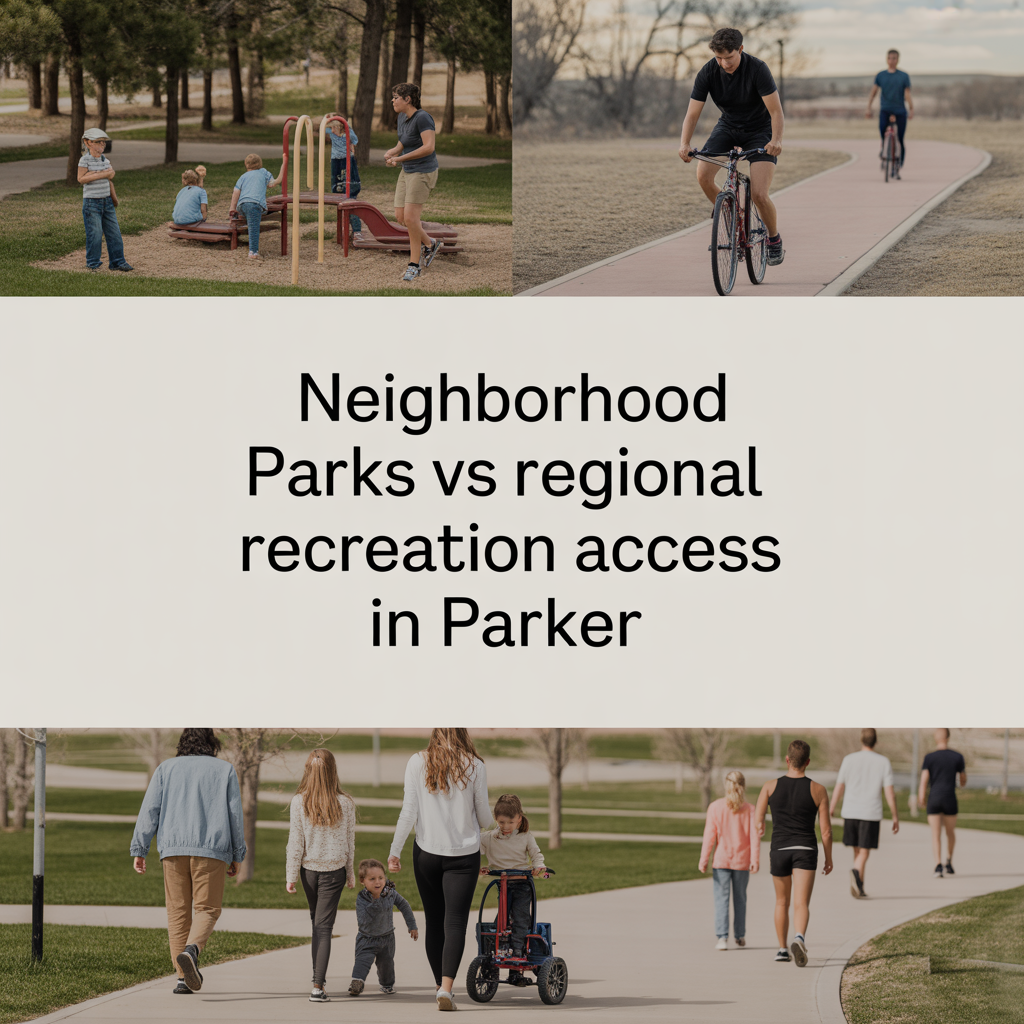
When I talk about neighborhood parks in Parker, I’m referring to the smaller, more localized green spaces that are embedded within subdivisions and residential corridors. These include places like Deer Trail Park in Canterberry Crossing, Auburn Hills Community Park near Prairie Crossing Elementary, Tallman Meadow Park in Idyllwilde, and the various HOA‑maintained open spaces that back up to the Cherry Creek Trail.
These parks are designed for convenience and low‑friction use. You can walk out your front door and be on a playground, a soft‑surface path, or a small sports field within a few minutes. That proximity matters more than it sounds: it means kids can ride their bikes to the park after school, parents can push a stroller without getting in the car, and retirees can take a quick loop without planning a “trip.”
From a lifestyle standpoint, neighborhood parks support routine rather than events. They’re where you go when you don’t want to drive, when you only have 20 minutes, or when you just need a change of scenery. Over time, that kind of easy access encourages more outdoor time, which in turn makes neighborhoods feel safer, more connected, and more pleasant to live in.
The Role of Regional Recreation Facilities
Regional recreation facilities in Parker are the larger, more heavily programmed spaces that serve the whole town — and often parts of Douglas County — rather than just one subdivision. These include Salisbury Regional Park, Challenger Regional Park, Bayou Gulch Regional Park, Iron Horse Park, Railbender Skate & Tennis Park, and other county‑owned or town‑owned hubs that host leagues, tournaments, and organized activities.
These parks are different in scale and intensity. They feature multiple ball fields, lighted courts, skate areas, disc golf courses, and sometimes concessions or event spaces. Because of that, they attract people from farther away and tend to be busier on evenings and weekends, especially during sports seasons.
What they offer is capacity and specialization. If your child plays competitive soccer, baseball, or hockey, or if you’re into disc golf, skateboarding, or equestrian events, you’re likely going to spend a lot of time at these regional facilities. They’re where leagues meet, where tournaments are held, and where larger community events unfold.
How Each Type of Park Shapes Daily Life
The practical difference between neighborhood parks and regional recreation access becomes clear when you think about how you actually spend your time. Neighborhood parks are where you go for short, spontaneous moments — a quick walk, a 30‑minute playground stop, or a casual game of catch. Regional parks are where you go for planned, longer‑duration activities — a full game, a practice, or a weekend event.
For families with school‑age kids, this often plays out as a rhythm: weekdays revolve around the smaller, closer‑to‑home parks, while weekends and evenings shift toward the regional hubs. A family in Stroh Ranch might send the kids to the nearby Stroh Ranch Soccer Fields for casual pickup games, then drive to Challenger Regional Park for official matches. A household in Heirloom might use Discovery Park or O’Brien Park for after‑school hangs, but head to Salisbury or Bayou Gulch for larger tournaments or seasonal events.
Over time, that pattern creates a kind of balance. You get the calm, everyday ease of a neighborhood park plus the energy and programming of a regional facility. That combination is one of the reasons so many Parker families feel like they “have it all” — local convenience without sacrificing access to higher‑level recreation.
Real Estate Implications: Location, Noise, and Long‑Term Comfort
From a real estate perspective, the distinction between neighborhood parks and regional recreation access matters more than you might think. Homes that back directly to a small neighborhood park often enjoy quiet, green views and easy walking access, with relatively low traffic and noise. These tend to appeal to buyers who value peace, privacy, and a slower pace of life.
Homes near regional recreation facilities, on the other hand, may be closer to fields, courts, or event spaces that see heavier use on evenings and weekends. That can mean more cars, more activity, and more sound during peak times, but it also means you’re within a short drive — or sometimes a short bike ride — of organized sports, tournaments, and community events.
One common misunderstanding is that “near a park” automatically means more noise and less value. In Parker’s case, the impact depends heavily on which kind of park you’re near and how your home is oriented. Many homes near regional facilities back to open space or quieter side streets, so you get the benefit of access without feeling like you’re living in a parking lot.
Another misconception is that only sports‑oriented families care about regional recreation. In reality, these facilities serve a broader role: they’re places to walk the dog, meet friends, host small gatherings, or simply escape the house for a change of scenery. That versatility makes them valuable even to buyers who don’t plan to attend every game.
Planning for Stability and Lifestyle Fit
When I work with clients in Parker, one of the first questions I ask is how they actually plan to use outdoor space over the next 10–15 years. Are they looking for a quiet, low‑maintenance lifestyle with easy access to walks and playgrounds? Or are they raising active kids who will spend a lot of time in organized sports and programs?
The answer often points them toward one of two patterns:
- Neighborhood‑park‑centric living tends to suit empty‑nesters, remote workers, and families who value calm, everyday access over big events. These buyers often prioritize proximity to small parks, trails, and quiet streets, and they’re willing to drive a bit for larger tournaments or regional events.
- Regional‑recreation‑centric living tends to appeal to families with school‑age kids, sports‑oriented households, and people who enjoy being around community energy. These buyers often want to be within a short drive of Salisbury, Challenger, Bayou Gulch, or similar hubs, even if it means a bit more activity nearby.
Neither pattern is “better” in an absolute sense; they’re just different. What matters is matching the park environment to how you actually live — and how you want to live over the long term.
A Conversation About Your Parker Lifestyle
Parker’s network of neighborhood parks and regional recreation facilities is one of the town’s quiet strengths. It offers a rare combination: the peace and convenience of close‑to‑home green space plus the energy and programming of larger hubs. If you’re thinking about buying, selling, or simply understanding how your neighborhood fits into Parker’s larger fabric, that balance is worth factoring into the conversation.
As a lifelong Denver‑area resident who’s watched Parker evolve, I’m always happy to talk through what these parks mean for your lifestyle and your long‑term plans. This isn’t about pushing a sale; it’s about helping you find a home that fits how you actually live — today and ten years from now.
Get the full Denver Market Insights → [Market Insights]



Littleton’s Ken Caryl for Lockheed Relocations
This is part of Lockheed Martin Relocation → [Lockheed Martin Relocation Hub] & the larger Denver Relocation Hub → [Denver Relocation Hub] Written by: Chad Cabalka Ken Caryl is one of the best-kept “family first” relocation options for Lockheed Martin employees who want foothills scenery, strong neighborhood appeal, and a real suburban lifestyle that still feels connected…


Centennial & Parker for Lockheed Relocations
This is part of Lockheed Martin Relocation → [Lockheed Martin Relocation Hub] & the larger Denver Relocation Hub → [Denver Relocation Hub] Written by: Chad Cabalka Centennial and Parker are two of the smartest suburban choices for Lockheed Martin employees relocating with families because they give you a strong balance of commute flexibility, good neighborhood variety, and…

Highlands Ranch for Family-Friendly Lockheed Relocations
This is part of Lockheed Martin Relocation → [Lockheed Martin Relocation Hub] & the larger Denver Relocation Hub → [Denver Relocation Hub] Written by: Chad Cabalka Highlands Ranch is one of the strongest choices for Lockheed Martin employees relocating with families because it delivers exactly what most parents want after a big move: stable neighborhoods, strong community…