


This is part of Lakewood Lifestyle Guide → [Lakewood Lifestyle Hub] & Lakewood Real Estate Guide → [Lakewood Real Estate Guide]
Written by: Chad Cabalka
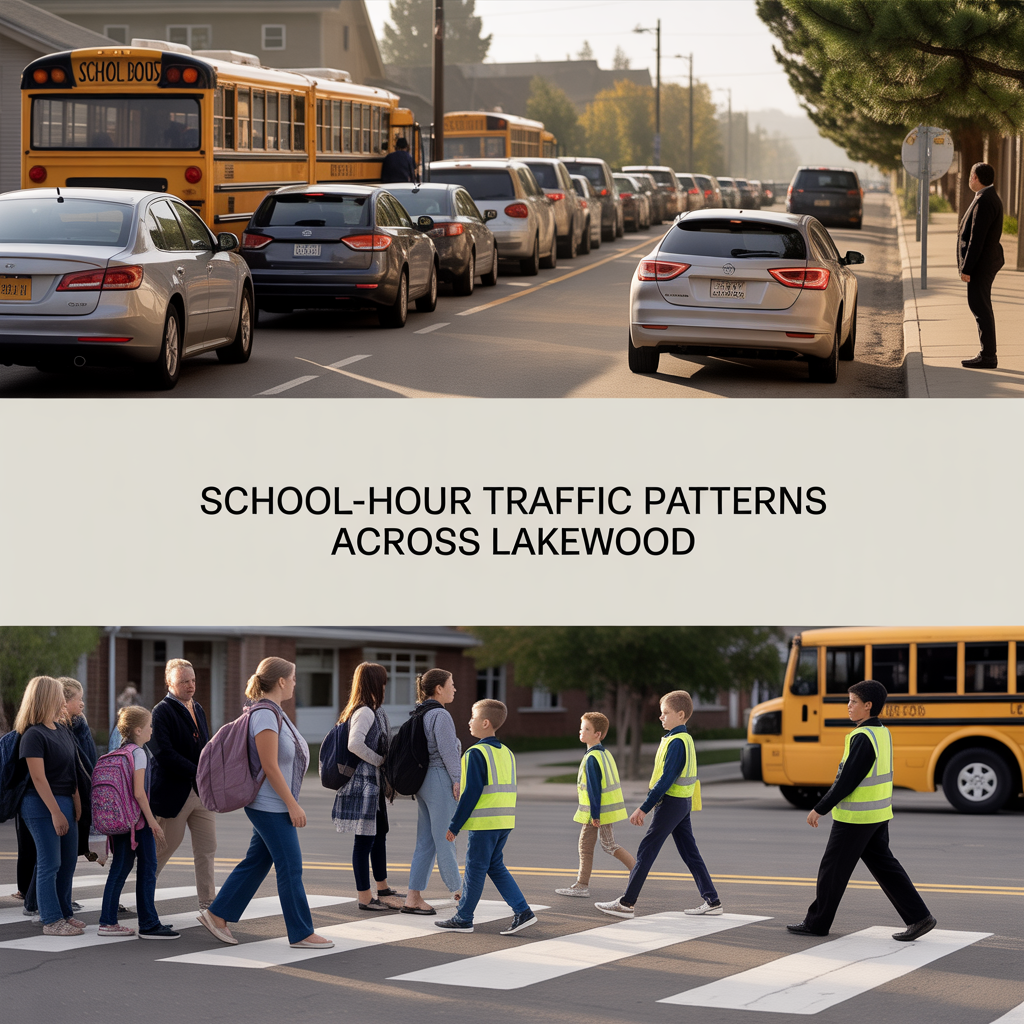
School-hour traffic in Lakewood isn’t random congestion; it follows pretty predictable patterns tied to bell times, site design, and a handful of key corridors. Understanding those rhythms ahead of time makes a big difference in how your day feels, especially if you live near a school or rely on the same arteries they do.
The Big Picture: When and Where It Backs Up
Most Lakewood schools cluster their start and end times in fairly tight windows, which means short, intense bursts of traffic around campuses and on the streets that feed them. Morning drop-off typically creates a 20–30 minute surge before the first bell, and afternoon pickup does the same thing at dismissal. That pattern repeats across elementary, middle, and high schools, with slightly staggered times but overlapping effects along major streets (Alameda, Jewell, Mississippi, Yale, Wadsworth, Kipling, Union, and Colfax).
You feel it most if:
- You live on or just off a collector street that serves multiple schools in a chain.
- Your commute overlaps exactly with bell times in one or more zones.
- You are trying to move east–west across Lakewood using the same surface routes parents use to get to 6th Avenue or C‑470.
The good news is that outside those windows, most of these school-adjacent streets settle into normal flow.
What It Looks Like Right at the Schools
If you zoom in from the corridors to the school sites, you see the same issues repeated: tight sites, multiple uses (cars, buses, walkers), and parents all arriving at once.
Bear Creek K‑8 is a good example. The school explicitly warns families that traffic is heavy at both drop-off and pickup and asks for patience as everyone learns the routines at the start of the year. To keep kids safe, they close the main south parking lot entrance to regular cars during morning drop-off while buses unload; only handicapped and daycare vehicles are allowed. The west parking lot becomes the “hug and go” zone, with two lanes feeding in, one reserved for through access to parking, and clear rules that drivers must pull forward, stay with their vehicles, and not park in the drop-off lane.
In the afternoon, that south lot remains closed until buses have left (typically a few minutes after dismissal), pushing almost all parent pickup traffic into the west lot. The school emphasizes no unattended vehicles in pickup lanes, keeping a second lane open for through traffic, and using crosswalks and low speeds on the adjacent street. Variations of this same pattern—dedicated bus area, one main parent loop, strict no‑parking zones, and posted school‑zone speed limits—show up across Lakewood.
For residents living near schools like this, those 20–30 minute windows feel like mini-rush hours: cars stacking onto side streets, people making U‑turns where they shouldn’t, and kids crossing in unpredictable places if they’re running late or meeting rides.
City and Police Response: School Zones as a Safety Focus
Lakewood has actively responded to resident concerns about speed and driver behavior in school zones. The police department launched “Operation School Zone Slowdown” in fall 2025, explicitly saying they had heard community complaints about speed and traffic safety around schools and were stepping up enforcement. The message was straightforward: drivers need to slow down, pay attention, and expect visible enforcement in and near school zones.
That emphasis shows up on the ground as:
- More consistent school-zone speed enforcement during bell windows.
- Reminders to put phones down and focus entirely on pedestrians and crosswalks in front of schools.
- Extra patrols or presence at problem locations at the start of the year and after complaints spike.
For homeowners, that means two things: you’re likely to see more police presence on those streets at those times, and if you’re using those corridors as “cut-throughs” to avoid larger roads, you need to treat them as true school zones, not shortcuts.
Corridors That Feel It Most
While almost every neighborhood school generates some traffic, a few types of corridors tend to feel the impact more:
- Two-lane residential collectors that weren’t built with parent-queueing in mind. These can jam quickly when cars line both sides and people stop in travel lanes.
- Arterials with multiple schools staggered along them, like Alameda or Jewell, where you hit one set of queues after another.
- Streets near light rail or major commuting routes, where school traffic and work traffic stack on each other at the same time.
Bear Creek K‑8’s safety page highlights W. Dartmouth as a school-zone street with a 20 mph limit and specific warnings about using crosswalks and hanging up cell phones. Many Lakewood school frontages have similar constraints: one or two legal drop-off configurations, a hard speed limit, and no room for improvisation.
Citywide, Lakewood’s transportation planning work—like the West Colfax Transportation Safety Project—shows the same focus on reducing conflicts between turning vehicles, pedestrians, and through traffic near schools and transit. Those projects aren’t just for students, but improvements like continuous sidewalks, better lighting, and simplified access points directly help school-hour safety along corridors where kids and parents are walking to and from campuses and bus stops.
How It Feels if You Live Near a School
If you live a block or two from a Lakewood school, school-hour traffic becomes part of your daily soundtrack. Most residents describe it as:
- Predictable peaks: a rush just before the bell and right after dismissal, with the rest of the day relatively calm.
- Short-term blockages: driveways momentarily blocked by parents waiting in line, or visibility issues when cars crowd too close to corners.
- Noise bursts: car doors, buses, and occasional horns in a tight time window, especially on days with weather or events.
You can usually mitigate the stress by:
- Planning your own departures and arrivals just outside the 15–20 minute bell windows.
- Using side streets that avoid the main queueing routes during peak times.
- Advocating for clear signage, striping, and crosswalk enforcement if you see patterns that feel unsafe.
Over years, some homeowners grow to appreciate the energy: kids walking, families out, and a clear rhythm to the neighborhood day. Others decide they prefer a couple of blocks of separation from the busiest frontage, especially if they work from home or have limited tolerance for twice-daily congestion.
Strategies for Residents and Commuters
If you’re already in Lakewood or considering a move, there are a few practical ways to work with school-hour traffic instead of fighting it:
- Map your nearest schools and bell times. Even if you don’t have kids at home, knowing when nearby campuses start and end helps you avoid getting stuck behind pickup lines.
- Test your routes during real bell windows. Drive your prospective morning and afternoon routes at actual school start and end times. If you find yourself behind a long “hug and go” queue, that’s useful information before you buy.
- Use arterials and freeways strategically. Sometimes adding a minute to get to 6th Avenue or C‑470 is faster overall than threading through multiple school zones on local streets.
- If you’re a parent driver, follow the school’s circulation plan. Schools like Bear Creek K‑8 design those patterns to manage heavy traffic as safely and efficiently as possible; ignoring them multiplies congestion and risk for everyone.
- Expect start-of-year bumps. Early in the school year, traffic is always worse as new families learn the routines, and districts routinely remind drivers to allow extra time and patience in those first days.
If you want to factor school-hour traffic into a Lakewood move—whether you’re looking to be right next to a campus or intentionally a couple of blocks away—I’m glad to walk through it with you. We can look at specific streets, probable traffic windows, and how those patterns will interact with your commute, your kids’ schedules, and your work-from-home reality so that your daily drives feel manageable, not like a twice-daily battle.
Get the full Denver Market Insights → [Market Insights]



Littleton’s Ken Caryl for Lockheed Relocations
This is part of Lockheed Martin Relocation → [Lockheed Martin Relocation Hub] & the larger Denver Relocation Hub → [Denver Relocation Hub] Written by: Chad Cabalka Ken Caryl is one of the best-kept “family first” relocation options for Lockheed Martin employees who want foothills scenery, strong neighborhood appeal, and a real suburban lifestyle that still feels connected…


Centennial & Parker for Lockheed Relocations
This is part of Lockheed Martin Relocation → [Lockheed Martin Relocation Hub] & the larger Denver Relocation Hub → [Denver Relocation Hub] Written by: Chad Cabalka Centennial and Parker are two of the smartest suburban choices for Lockheed Martin employees relocating with families because they give you a strong balance of commute flexibility, good neighborhood variety, and…

Highlands Ranch for Family-Friendly Lockheed Relocations
This is part of Lockheed Martin Relocation → [Lockheed Martin Relocation Hub] & the larger Denver Relocation Hub → [Denver Relocation Hub] Written by: Chad Cabalka Highlands Ranch is one of the strongest choices for Lockheed Martin employees relocating with families because it delivers exactly what most parents want after a big move: stable neighborhoods, strong community…