


Home Inspections Guide -> [Home Inspections Guide] & For more info on Buying in the Denver Metro Area → [Denver Metro Home Buying Process]
Written by: Chad Cabalka
Radon and indoor air quality testing in Colorado are really about one thing: understanding the invisible conditions in your home so you can make clear, steady decisions about your health and your investment over time. In a state where roughly half of homes test above the EPA’s radon action level, ignoring this piece of the puzzle is like driving the I‑70 corridor in winter without checking the weather.
What Radon Is And Why Colorado Cares
Radon is a colorless, odorless radioactive gas that comes from the natural breakdown of uranium in soil and rock, and it can seep into homes through foundations and slab openings. Long‑term exposure to elevated radon is a proven risk factor for lung cancer, and Colorado’s geology puts us in a higher‑risk category than many other states.
State and federal health agencies classify most of Colorado, including the Denver metro, as a Zone 1 area, meaning average indoor radon levels are likely to exceed 4.0 pCi/L — the EPA’s recommended action level. Studies here have shown average indoor levels around 6 pCi/L, and about one out of every two homes tested comes back high enough to warrant mitigation. That’s true whether the home is new construction in Parker or a mid‑century ranch in Lakewood; radon risk doesn’t respect age or price point.
How Radon Testing Works In Practice
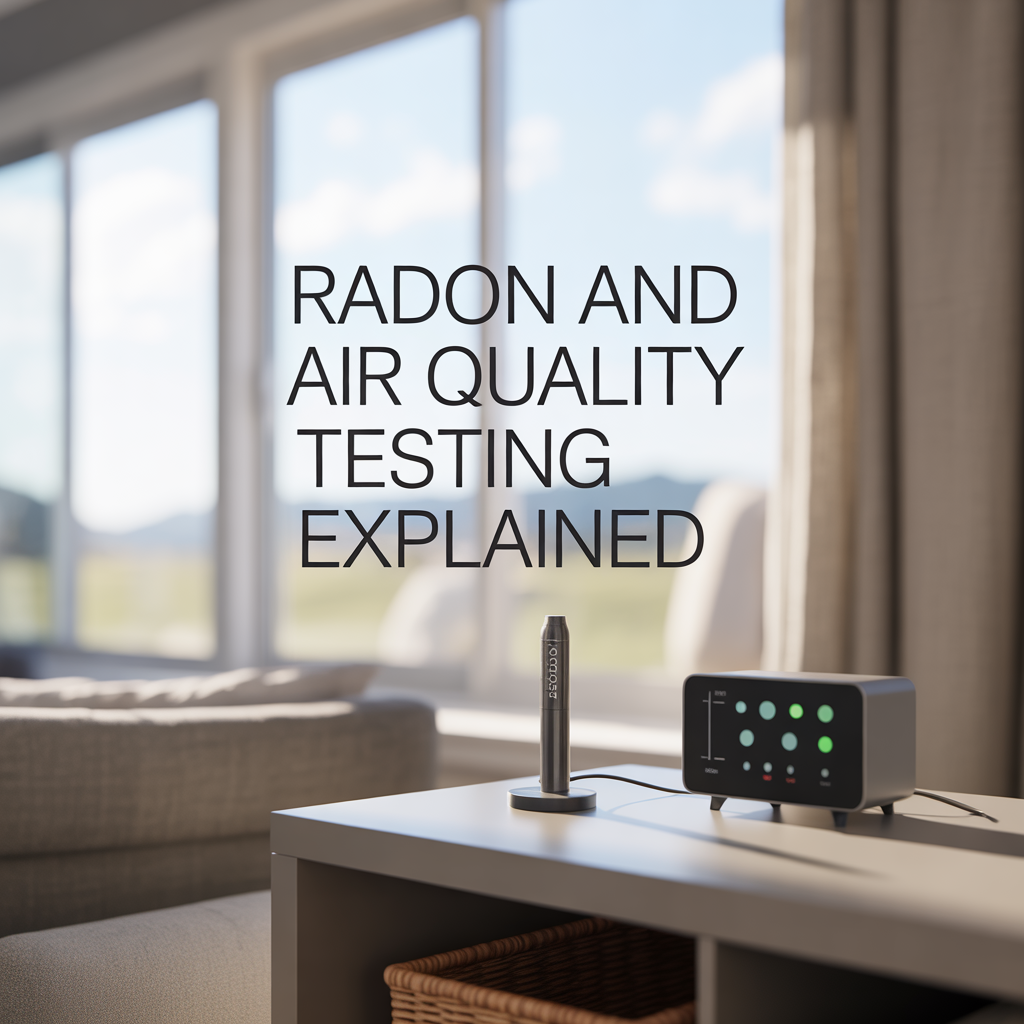
Radon testing is simple from the homeowner’s perspective, but there are a few key details that matter. Short‑term tests, which are common in real estate transactions, usually run 48 to 120 hours with the home in “closed‑building” conditions — windows and exterior doors kept closed except for normal entry and exit. The device sits in the lowest level that is lived in, or could reasonably be finished in the future, such as a basement.
Long‑term tests run from 91 days up to a year and are typically used when you’re already living in the home and want a more complete picture of your average exposure over different seasons. In Colorado, health agencies recommend testing all homes every few years because radon levels can change over time with building modifications, soil moisture, and ventilation patterns. For real estate deals, buyers are encouraged to test during the inspection window, then negotiate mitigation or plan for it if levels come back high.
What Happens If Levels Are High
If a test shows radon above 4.0 pCi/L, the standard recommendation is to install a mitigation system rather than panic. Most systems in Colorado use sub‑slab depressurization: a fan pulls radon‑laden air from beneath the foundation and vents it safely above the roofline, reducing indoor concentrations.
Properly designed systems often bring levels well below the action threshold and are relatively low‑maintenance, though they should be retested after installation and then periodically to confirm performance. In our market, a documented, functioning mitigation system is generally seen as a plus, not a black mark; it signals that the issue was recognized and handled correctly rather than ignored.
Recent Colorado Rules And Buyer Rights
Colorado does not require every home to be radon‑tested, but the regulatory landscape has shifted in ways buyers and homeowners should understand. The state now licenses radon measurement and mitigation professionals and requires them to follow national ANSI/AARST standards, raising the bar for how testing and repairs are done.
For real estate and rentals, recent legislation requires sellers and landlords to disclose known radon information: prior test results, any mitigation systems, and state‑approved educational materials about risk. Tenants have the right to test their units and, if elevated levels are confirmed and not addressed within a reasonable timeframe, can in some cases terminate a lease without penalty. The theme is consistent: the law leans toward transparency so you can make informed decisions about where you live.
Beyond Radon: Other Air Quality Concerns
While radon is the headline issue in Colorado, broader indoor air quality also matters, especially in tighter, energy‑efficient homes. Common concerns include excess moisture that can lead to mold, combustion byproducts from gas appliances, and fine particulates from outdoor pollution or indoor activities.
Formal air quality testing can range from targeted mold sampling after a known leak to broader VOC or particulate assessments in homes where occupants experience unexplained symptoms. The science and methods vary more than with radon, so it’s important to match the test to a clear concern rather than chasing every possible metric. In many Denver‑area homes, the most practical first steps are simple: manage humidity, ensure proper ventilation, maintain combustion appliances, and address obvious moisture issues promptly.
How To Decide What Testing You Need
For most Denver‑area owners and buyers, radon testing belongs in the “standard practice” category, not the luxury add‑on list. It’s relatively inexpensive, easy to perform, and directly tied to long‑term health. If you’re under contract on a home, it usually makes sense to combine a short‑term radon test with your general inspection and then decide, based on results, whether to ask for mitigation or factor it into your plans.
Broader air quality testing is more situational. It tends to be most helpful when there’s a specific trigger — visible mold, a history of water intrusion, or persistent respiratory complaints that don’t square with what you can see. In those cases, a thoughtful, stepwise approach with qualified professionals can give you clearer answers and a roadmap for improvements rather than a stack of confusing lab numbers.
If you’d like to talk through what makes sense for your particular home or a property you’re considering — neighborhood, age, construction type, and your long‑term plans — I’m always glad to have that conversation. We can look at radon and air quality as part of your overall strategy for living comfortably and safely in Colorado, without drama and without losing sight of your bigger goals in homeownership.
This is offered as general education only. If you are already under contract with another agent, nothing here is meant to override their guidance or solicit you as a client; I fully respect those boundaries and would encourage you to defer to their advice.
Get the full Denver Market Insights → [Market Insights]



Littleton’s Ken Caryl for Lockheed Relocations
This is part of Lockheed Martin Relocation → [Lockheed Martin Relocation Hub] & the larger Denver Relocation Hub → [Denver Relocation Hub] Written by: Chad Cabalka Ken Caryl is one of the best-kept “family first” relocation options for Lockheed Martin employees who want foothills scenery, strong neighborhood appeal, and a real suburban lifestyle that still feels connected…


Centennial & Parker for Lockheed Relocations
This is part of Lockheed Martin Relocation → [Lockheed Martin Relocation Hub] & the larger Denver Relocation Hub → [Denver Relocation Hub] Written by: Chad Cabalka Centennial and Parker are two of the smartest suburban choices for Lockheed Martin employees relocating with families because they give you a strong balance of commute flexibility, good neighborhood variety, and…

Highlands Ranch for Family-Friendly Lockheed Relocations
This is part of Lockheed Martin Relocation → [Lockheed Martin Relocation Hub] & the larger Denver Relocation Hub → [Denver Relocation Hub] Written by: Chad Cabalka Highlands Ranch is one of the strongest choices for Lockheed Martin employees relocating with families because it delivers exactly what most parents want after a big move: stable neighborhoods, strong community…