


Home Inspections Guide: Value, Timing, and Ownership Strategy
This Hub is part of the Denver Home Buying Process -> [Denver Home Buying Process]
Reliability – Transparency – Maintenance Leverage – Risk Prevention – Long-Term Confidence
Overview
The Home Inspections Guide is a practical, experience-based resource for buyers and homeowners who want to understand not just how inspections work — but how inspection insights evolve with time, ownership, and maintenance decisions.
A home inspection often feels like a one-time event.
You schedule it, review the report, negotiate repairs — and move on. Because of that simplicity, many see inspections as an isolated transaction rather than a long-term ownership tool.
That’s where missed opportunities begin.
Inspections are powerful because they combine transparency with foresight. They reveal how a property performs today, but also how it’s likely to behave tomorrow. Used strategically, inspections protect value, guide maintenance, and strengthen every stage of ownership — from purchase to resale.
This guide explores how inspection insights can become part of an ongoing property framework — not just a closing-day checklist.
Important Disclosure for Readers Under Contract
Because home inspections occur mid-transaction, this content serves purely as general education and local Denver context—not personalized advice or solicitation. If you’re currently under contract, please direct all inspection-related questions, decisions, and next steps to the real estate agent you have an agreement with. This is not an attempt to “steal” clients, interfere with existing relationships, or gain clout—only to provide clear, factual information that helps you understand the process better. Chad Cabalka and team fully respect professional boundaries and hold ourselves harmless from any actions taken based on this educational content alone. For pre-purchase planning or general real estate questions outside active transactions, feel free to reach out.
Initial Home Inspection Questions Answered:
Which Home Inspections Do I Need Done in CO
What a Home Inspection Includes (and Why It Matters)
How to Choose a Qualified Home Inspector
Should You Still Inspect a New Construction Home?
Explore This Guide
Last updated: January 2026
How Inspections Add Value Over Five, Ten, and Fifteen Years

Home inspections don’t lose value after closing — they gain it.
- After five years, the original inspection becomes a roadmap for proactive maintenance.
- After ten, it identifies the systems nearing replacement and trends in wear and performance.
- After fifteen, patterns reveal how the home’s upkeep has either protected or undermined its equity.
What defines long-term inspection value isn’t the report itself, but how owners act on its findings.
Key factors include:
- Maintenance timing and consistency
- System upgrades versus deferred repairs
- Environmental exposure (moisture, foundation shift, etc.)
- Periodic update or reinspection frequency
Homeowners who use inspection insights as a maintenance plan often preserve more resale value and avoid costly surprises.
Common Inspection Assumptions Buyers Make

Most inspection frustrations stem from misconceptions about what an inspection can — and cannot — do.
Many buyers assume:
- Inspectors predict how long systems will last
- Every issue found must be repaired by the seller
- Reports guarantee “move-in perfect” condition
- Visual inspections catch everything behind walls or underground
The truth is, inspections identify visible, testable issues — not unseen or future failures. Their power lies in awareness, not guarantees.
Related deep dives:
Common Myths About Home Inspections
Negotiating Repairs Without Overreach
Understanding Inspection Limitations
Why “Minor” Issues Deserve Documentation
Inspection Objectivity and Buyer Confidence
Planning Beyond the Closing Report

An inspection should start an ongoing maintenance relationship — not end at closing.
Too often, buyers focus exclusively on:
- Getting through negotiation
- Reducing immediate repair costs
- Using the report as leverage, not information
Strong long-term outcomes come from treating the inspection as an ownership tool:
- Use the report to build a maintenance calendar
- Revisit it before major seasonal changes
- Schedule periodic reinspections (every 3–5 years) for accountability
- Share it with future contractors for context and consistency
In short, plan for inspection follow-ups the same way you plan for mortgage renewals or insurance updates.
Related deep dives:
How to Turn an Inspection Report Into a Maintenance Plan
Annual Reinspection Strategies
Balancing Repair Urgency vs. Longevity
Why a Second Opinion Can Prevent Major Repairs
Strategic Timing for Pre-Renovation Inspections
Property Condition, Maintenance, and Inspection Timing

Inspection flexibility depends heavily on property type, age, and use.
Unlike appraisals or loan approvals, inspections are discretionary tools — but choosing when to inspect can dramatically affect outcomes.
Key scenarios include:
- Pre-Purchase Inspections: Establish baseline condition and negotiation leverage
- Pre-Listing Inspections: Equip sellers with proactive transparency
- Maintenance Inspections: Check high-cost systems mid-ownership
- Post-Renovation Inspections: Verify work quality and safety compliance
Owners who time inspections strategically can identify problems early — and often avoid expensive surprises.
Related deep dives:
When Mid-Ownership Inspections Are Worth It
Seasonal Timing for Inspections and Testing
How Age Affects Inspection Focus
Tracking Property Performance Over Time
Documentation and Insurance Benefits of Routine Inspections
Strategic Uses of Home Inspections Over Time
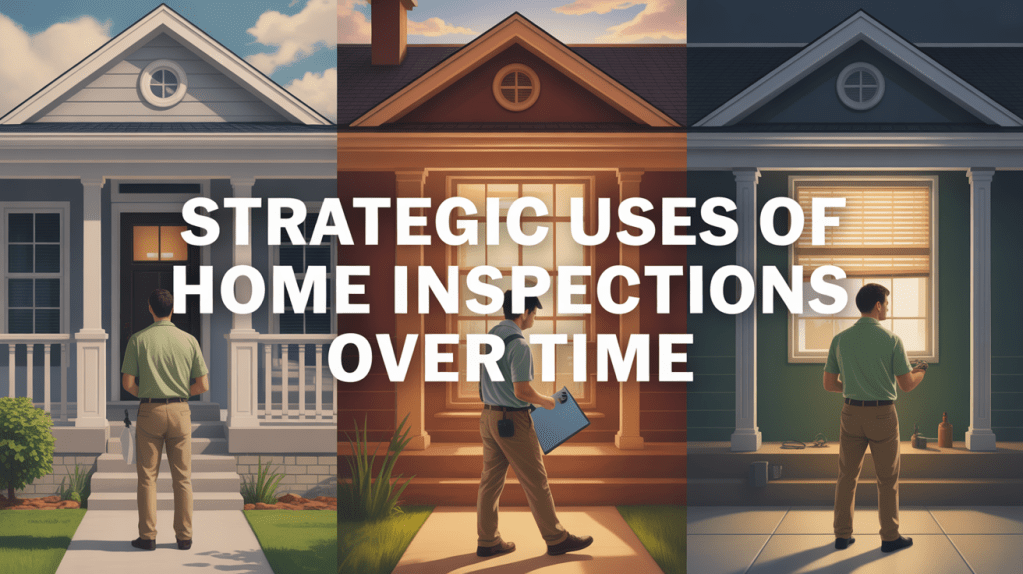
The best homeowners use inspections to drive decision-making, not react to emergencies.
Examples include:
- Establishing a long-term maintenance log
- Estimating system lifespans before costly replacements
- Supporting renovation budgets with verified data
- Enhancing resale credibility with historical inspection records
- Tracking inspection results to spot recurring issues
Inspections are more than compliance—they’re a lens for smarter ownership.
Related deep dives:
Integrating Inspection History Into Resale Strategy
Using Inspection Reports for Insurance and Claims
Inspection Documentation As a Value Add
Predictive Maintenance Using Past Reports
Inspection-Informed Renovation Planning
Inspection Deal-Breakers: When Walking Away Is the Right Move
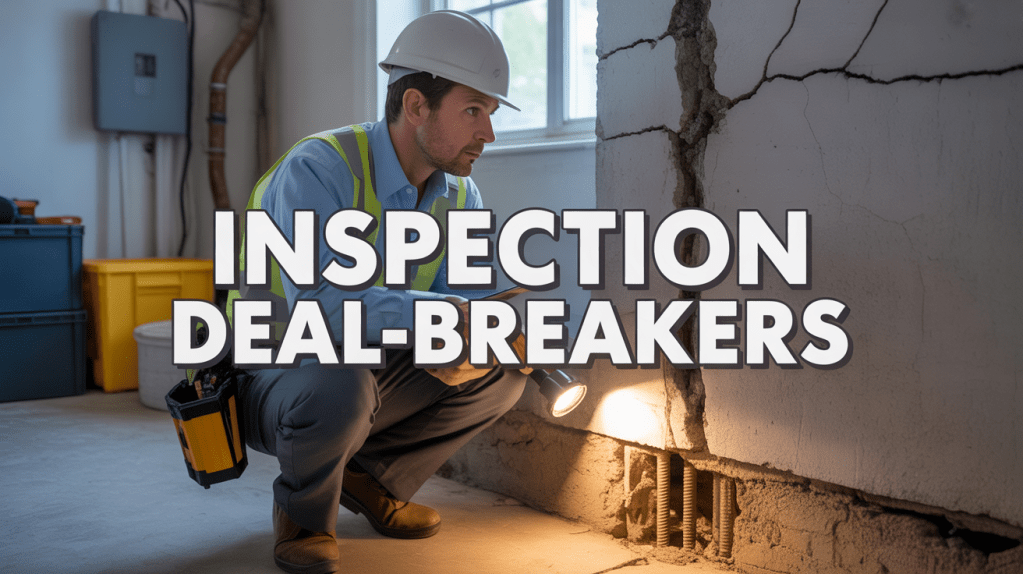
Not every inspection issue is negotiable—and not every problem should be solved with a credit or repair request. True inspection deal-breakers are conditions that materially change the risk, cost, or long-term viability of the home.
These typically include issues that affect:
- Structural integrity, such as foundation movement, framing failure, or unresolved settlement
- Major systems nearing end-of-life, where replacement costs meaningfully exceed expectations
- Health or safety concerns that cannot be reasonably mitigated before closing
- Hidden defects that signal broader neglect or unknown scope, rather than isolated repairs
- Cost uncertainty, where the true extent of repairs can’t be confidently defined
In these situations, the inspection isn’t about negotiating—it’s about clarity. If the findings introduce risk that can’t be accurately priced, financed, or responsibly accepted, walking away may be the smartest decision, even in a competitive market.
Deal-breakers aren’t about being overly cautious. They’re about recognizing when a home no longer aligns with your financial boundaries, risk tolerance, or long-term plans.
The goal of the inspection is not to make every home work—it’s to ensure the one you move forward with is a decision you won’t regret later.
Related deep dives:
When Inspection Findings Justify Walking Away vs Renegotiating
Structural vs Cosmetic Issues: How Buyers Misjudge Severity
How Unquantifiable Repair Risk Becomes a Financing Problem
Why Some “Fixable” Issues Still Create Long-Term Ownership Risk
The Hidden Cost of Unknowns: When Inspection Scope Can’t Be Defined
Unique Tools and Modern Inspection Techniques

Technology and reporting standards have evolved dramatically in recent years.
Modern inspections often include enhancements far beyond traditional visual reviews:
- Thermal imaging to detect moisture or insulation gaps
- Sewer line scoping for older properties
- Drone or roof camera inspections
- Radon, mold, or air-quality testing
- Digital reports with integrated maintenance tracking
These tools expand the usefulness of inspections — giving homeowners data that directly supports energy efficiency, safety, and value protection.
The gap isn’t in access — it’s in awareness. Few homeowners take advantage of these optional diagnostics, even when they could prevent major surprises later.
Related deep dives:
How Thermal Cameras Revolutionized Home Inspections
Radon and Air Quality Testing Explained
Why Sewer Scope Inspections Save Thousands
Choosing Between Basic and Comprehensive Inspection Packages
Technology That Makes Inspections Smarter
What Inspections Can—and Cannot—Reveal

Home inspections can:
- Identify current safety or structural concerns
- Clarify long-term maintenance costs
- Support repair requests and pricing decisions
- Provide peace of mind before major investments
They cannot:
- Guarantee hidden or future issues won’t occur
- Replace professional specialty evaluations (e.g., HVAC, engineering)
- Predict exact lifespans of systems or finishes
- Replace homeowner maintenance diligence
Used realistically, inspections create clarity — not perfection.
Closing Perspective
Home inspections are one of the few tools that reward curiosity over assumption.
They shine a light on what’s known, and guide decisions around what’s next.
Buyers and owners who treat inspections as strategic checkpoints — not single events — consistently lower risk, preserve equity, and increase confidence in their property decisions.
This guide exists to help Colorado homeowners see inspections not as a box to check, but as a framework for safer, more informed homeownership anchored in transparency and timing.
Maintained by Chad Cabalka, Lead Broker of Mile High Home Group, drawing on extensive experience guiding Denver-area buyers and sellers through inspection analysis, repair negotiation, and ongoing property stewardship.