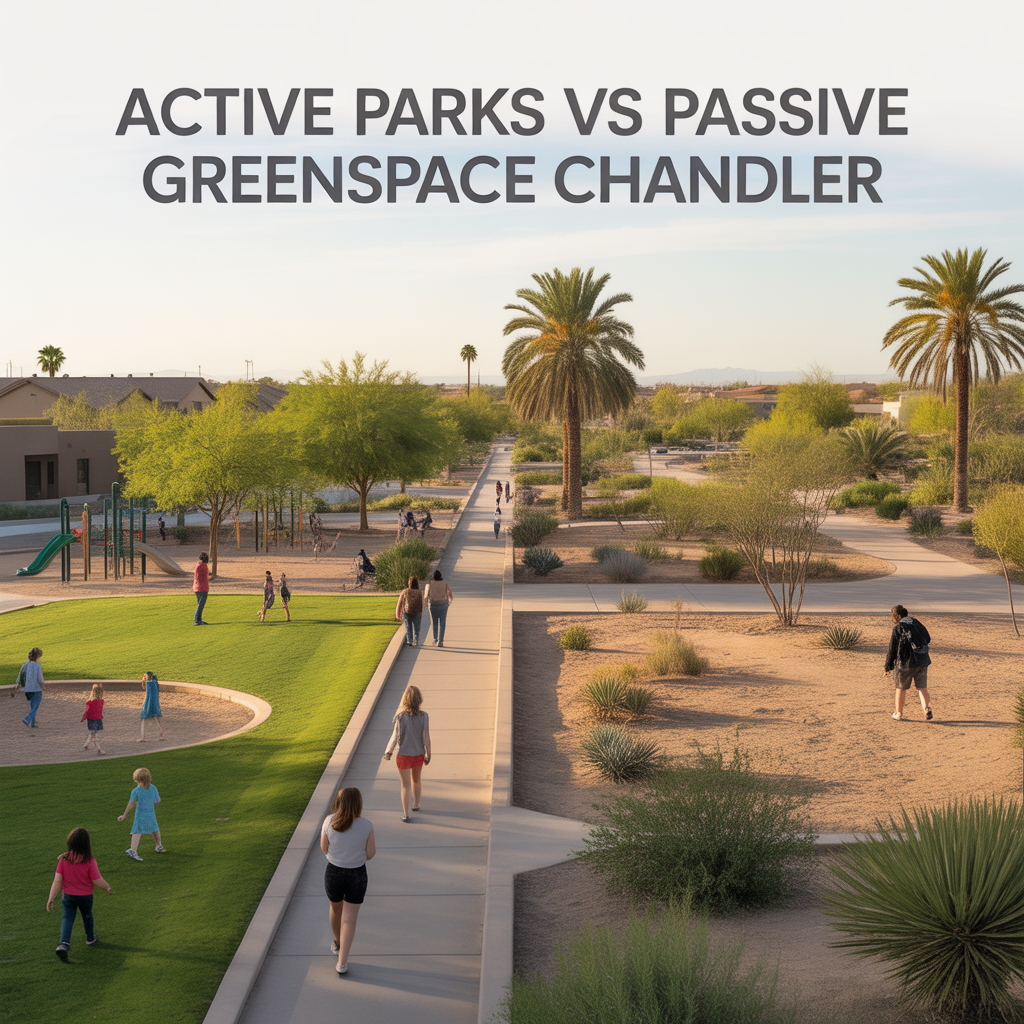
Active Parks vs Passive Greenspace Chandler

Written by Chad Cabalka → Meet the Expert

Written by Reneé Burke → Meet the Expert

Written by Hilary Marshall → Meet the Expert

Chandler Lifestyle Guide  [Chandler Lifestyle Guide] & For more info on Chandler Real Estate  [Chandler Real Estate Guide]

Written by: Renee Burke

​Chandler’s green spaces promise more than just grass on a map — they deliver real daily value, but only if you know which ones pull you outside versus those that sit quietly in the background. Active parks buzz with playgrounds, courts, and pavilions that families claim weekly, while passive greenspaces offer serene backdrops for walks or picnics without the crowds. I’ve watched clients light up when they realize their home backs to a usable active spot, turning ordinary days into something special.

The difference matters for lifestyle and market savvy: active parks drive foot traffic and home premiums in family zones, while passive areas preserve privacy in quieter enclaves. Let’s break it down by type and neighborhood, so you see what truly enhances living here.


Tumbleweed Park: Active Powerhouse

South Chandler’s Tumbleweed at 2250 S. McQueen Road defines active — 250 acres with Playtopia’s themed playgrounds, 11 lighted multipurpose fields for soccer or frisbee, tennis courts, covered ramadas, sand volleyball, horseshoes, and a zip line. Adjacent Recreation Center adds gyms and tracks, making it a full-day destination with restrooms and parking.

Families in Sun Groves host birthdays here weekly; it’s not passive scenery but a community engine. Homes nearby appreciate faster from the constant energy.


Veterans Oasis Park: Active Nature Blend

This 113-acre Ocotillo gem near Pathways Drive mixes active pursuits — 1-mile trails for jogging, archery range, disc golf, playground, frisbee golf, and birdwatching observatory — with shaded picnic spots. Restrooms and interpretive signs keep it practical, not just pretty.

Fulton Ranch walkers hit it daily; the active elements draw repeat visits without overwhelming tranquility.


Snedigar Sportsplex: Pure Active Sports

South at 4500 S. Basha Road, this 90-acre complex screams action — pro baseball/softball fields, 12 soccer pitches, skate park, cricket field, dog park, and Recreation Center. Lighted for evenings, it’s built for leagues and tournaments.

Cooper Commons families thrive on its variety; it’s a value booster for athletic households.


Dr. A.J. Chandler Park: Active Urban Core

Downtown’s 25 acres at Arizona Avenue blend splash pads, playgrounds, grassy fields, pavilions, and EV chargers — active enough for yoga or markets, walkable from historic homes.

San Marcos residents use it as an extension of their yard, bridging urban life with play.


Desert Breeze Park: Active Family Retreat

West Chandler’s 40 acres near Ray Road offer playgrounds, fishing lakes, train rides, sports fields, volleyball, and shaded picnic areas — fully equipped for daily fun.

Neighborhood kids own it; retirees fish mornings — versatile active appeal.


Passive Greenspaces: Quiet Neighborhood Buffers

Chandler’s passive areas — like canal-adjacent lots, small neighborhood greens, or buffered open fields — provide visual relief and privacy without amenities. Think grassy expanses for casual walks, no restrooms or courts, often flood-prone or unlighted. Examples dot maps around westside ranches or Ocotillo edges, preserving quiet for custom homes.

They’re map fillers that suit empty-nesters wanting peace over programming.


CategoryKey ExamplesActive AmenitiesPassive TraitsNeighborhood Fit 
Active ParksTumbleweed, Snedigar, Veterans OasisPlaygrounds, fields, courts, restrooms, lightedHigh energy, reservableFamilies, Sun Groves/Ocotillo (10-15% value lift)
Balanced ActiveDr. A.J., Desert BreezeSplash pads, trails, picnicsModerate use, shadedDowntown/West (steady demand)
Passive GreenspaceCanal lots, small fieldsNone/minimal (grass, paths)Low maintenance, privateQuiet edges, ranches (privacy premium)

Why Active vs Passive Shapes Your Chandler Choice

Active parks address that big buyer concern — “space for kids without driving everywhere?” — clustering in south and east family cores to foster routines and community. They correlate with higher walk scores and 10-15% better appreciation near top spots like Tumbleweed. Passive greenspaces, meanwhile, protect resale in serene pockets, avoiding noise bleed.

Chandler’s mix ensures no one feels shortchanged — active for energy, passive for calm.


Finding Your Green Space Sweet Spot

Chandler’s parks and greenspaces turn neighborhoods into livable havens, active or serene as you need.

If this helps you prioritize active playgrounds or passive privacy near your next home, you don’t have to sort the map alone. I’ve guided families to their perfect green escapes countless times. Reach out — let’s match your lifestyle to the spaces you’ll love daily, one peaceful path at a time.

Get the full Phoenix Market Insights  [Market Insights]

Button labeled 'Contact Renee directly' on a blue background.
Logo of RE/MAX featuring the text 'Signature | Renee Burke' with a smiling woman in a light blue blazer.
  • ALT TEXT Photorealistic Phoenix clay tile roof with cracked and shifted tiles while a contractor inspects from a ladder, illustrating warning signs that a Phoenix roof needs inspection or repair.

    Signs Your Phoenix Roof Needs Inspection or Repair

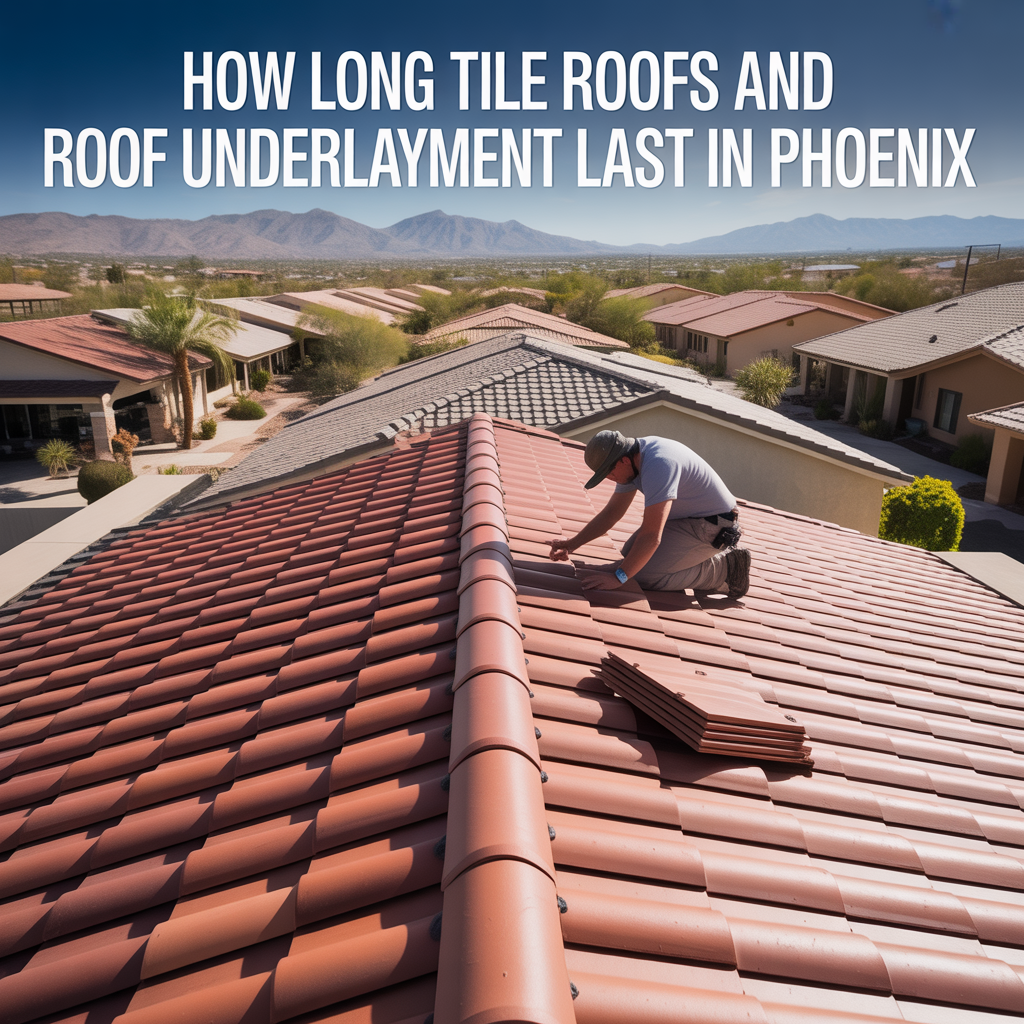
  • ALT TEXT Photorealistic Phoenix clay tile roof with lifted tiles exposing the underlayment during a roof inspection, illustrating how long tile roofs and roof underlayment last in Phoenix homes.

    How Long Tile Roofs and Roof Underlayment Last in Phoenix

  • ALT TEXT Photorealistic Phoenix home interior showing a smart thermostat being controlled from a smartphone, illustrating how smart thermostats improve cooling efficiency in Arizona homes.

    How Smart Thermostats Improve Cooling Efficiency in Arizona Homes

  • ALT TEXT Photorealistic Phoenix neighborhood during extreme summer heat with a temperature display showing 118°F and heat waves rising from rooftops, illustrating why AC systems struggle during Phoenix heat waves.

    Why AC Systems Struggle During Extreme Phoenix Heat Waves

  • ALT TEXT Photorealistic rooftop HVAC unit being inspected on a Phoenix home under intense desert sunlight, illustrating the typical lifespan of air conditioning systems in Phoenix homes.

    How Long Air Conditioning Units Last in Phoenix Homes

  • ALT TEXT Photorealistic Phoenix homeowner inspecting an outdoor air conditioning condenser beside a stucco home under intense desert sun, representing warning signs an air conditioner may be about to fail.

    Warning Signs Your Air Conditioner Is About to Fail

  • ALT TEXT Photorealistic HVAC technician servicing an outdoor air conditioning condenser beside a Phoenix stucco home under bright desert sun, illustrating how often Phoenix AC systems need maintenance.

    How Often Phoenix AC Systems Need Maintenance

  • ALT TEXT Photorealistic Phoenix home with a leaking irrigation drip line soaking soil near the foundation and desert landscaping, illustrating how irrigation leaks can damage foundations and landscaping in Arizona homes.

    How Irrigation System Leaks Damage Foundations and Landscaping

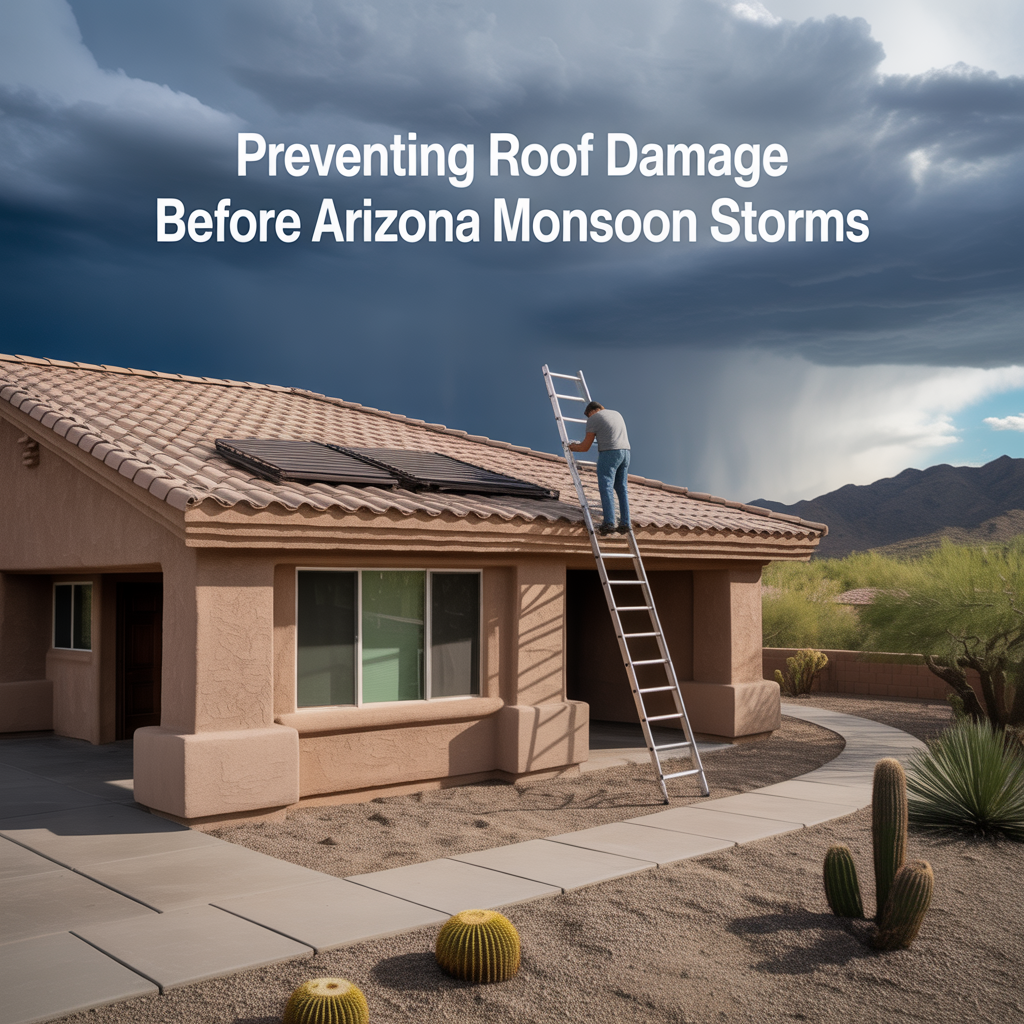
  • ALT TEXT Photorealistic Phoenix homeowner inspecting a clay tile roof with monsoon storm clouds forming in the background, illustrating how homeowners can prevent roof damage before Arizona monsoon storms.

    Preventing Roof Damage Before Arizona Monsoon Storms

  • ALT TEXT Photorealistic HVAC technician servicing an outdoor air conditioning condenser beside a Phoenix stucco home in bright desert sunlight, illustrating why AC tune-ups are critical for Phoenix homes.

    Why AC Tune-Ups Are Critical for Phoenix Homes

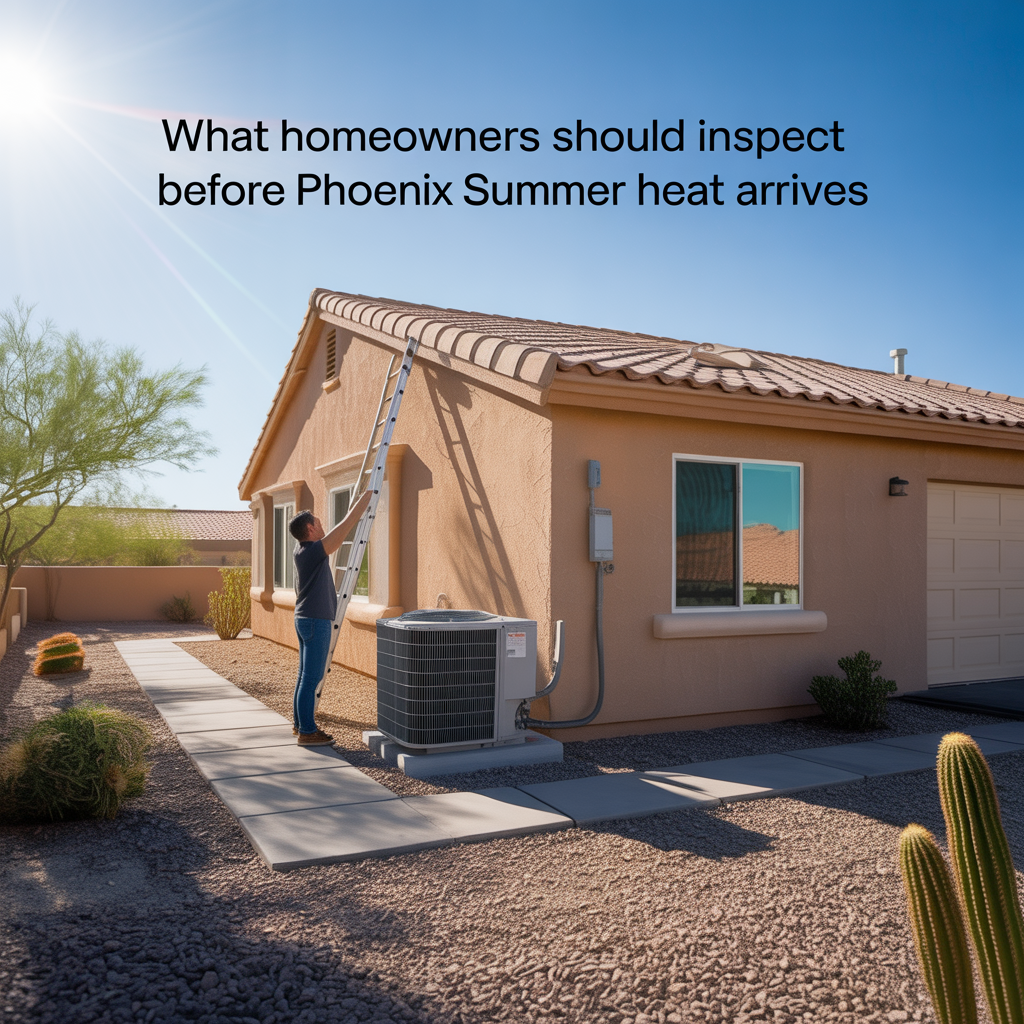
  • ALT TEXT Photorealistic Phoenix homeowner inspecting an outdoor HVAC unit and roof tiles beside a stucco home in bright desert sunlight, representing preparing a home before Phoenix summer heat arrives.

    What Homeowners Should Inspect Before Phoenix Summer Heat Arrives

  • ALT TEXT Photorealistic Phoenix home with a homeowner inspecting an HVAC unit and roof under bright desert sunlight, representing a seasonal home maintenance checklist for Phoenix homeowners.

    Seasonal Home Maintenance Checklist for Phoenix Homeowners

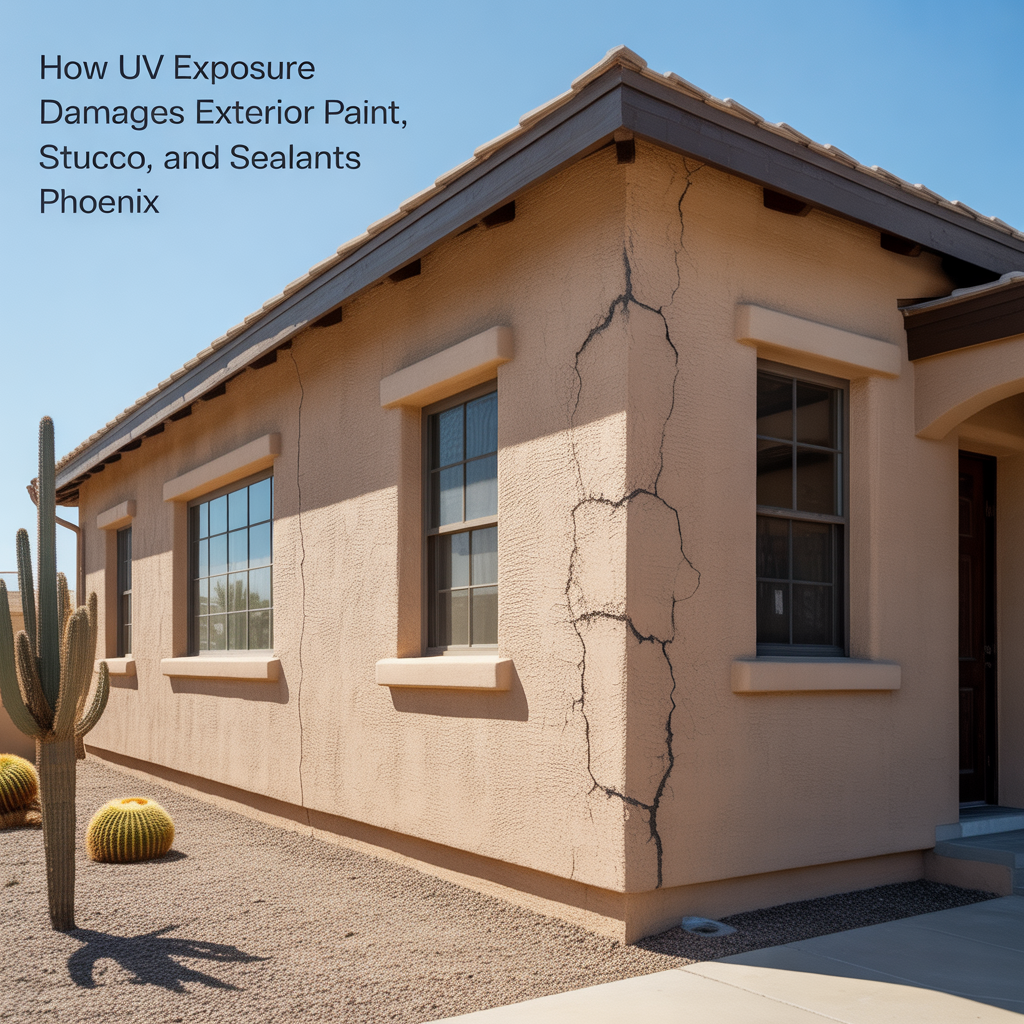
  • ALT TEXT Photorealistic Phoenix stucco home with faded paint and cracked sealant around windows under intense desert sunlight, illustrating how UV exposure damages exterior paint, stucco, and caulking in Arizona homes.

    How UV Exposure Damages Exterior Paint, Stucco, and Sealants

  • ALT TEXT Photorealistic Phoenix home with rooftop heat shimmer and air conditioning condenser running under intense desert sun, illustrating how extreme Arizona heat shortens the lifespan of home systems.

    How Extreme Heat Shortens the Lifespan of Home Systems

  • ALT TEXT Photorealistic Phoenix home with a clay tile roof under intense desert sun and heat shimmer, illustrating how extreme Arizona heat and UV exposure cause roofs to wear out faster than in other cities.

    Why Phoenix Roofs Wear Out Faster Than Many Other Cities

  • ALT TEXT Photorealistic image of a residential air conditioning condenser next to a stucco home in Phoenix with desert landscaping and bright sun, representing the lifespan of AC units in extreme Arizona heat.

    How Long AC Units Typically Last in Phoenix Homes

  • Alt Text: Photorealistic Phoenix Arizona homeowner standing in the driveway holding a clipboard while looking at a stucco home, representing a long-term strategy to protect and maintain the property.

    Building a Long-Term Protection Strategy

  • Alt Text: Photorealistic Phoenix Arizona homeowner repairing a small roof tile on a stucco home, illustrating how minor home maintenance prevents larger repair problems.

    How Small Repairs Prevent Larger Problems

  • Alt Text: Photorealistic older Phoenix Arizona stucco ranch-style home with mature desert landscaping and visible aging details representing maintenance and protection of older homes.

    Protecting Older Phoenix Homes

  • Alt Text: Photorealistic Phoenix Arizona stucco home with subtle warning signs like roof tile damage, small foundation crack, and water stains representing hidden risks homeowners may overlook.

    Warning Signs of Hidden Home Risks

  • Alt Text Phoenix homeowner inspecting roof tiles and clearing drainage areas around a desert landscaped home to perform preventative maintenance and reduce insurance claim risks.

    Preventative Maintenance That Reduces Insurance Claims

  • Alt Text Phoenix homeowner and insurance advisor inspecting pool fencing, walkways, and patio steps around a desert landscaped property to reduce liability risks.

    Reducing Liability Exposure Around Your Property

  • Alt Text Phoenix homeowner reviewing liability coverage limits with an insurance advisor using documents and a tablet inside a sunlit living room with desert landscaping outside.

    Liability Coverage Limits Explained

  • Alt Text Phoenix homeowner meeting with an insurance advisor in a bright home office reviewing umbrella insurance coverage documents and liability protection options.

    When Umbrella Insurance Makes Sense

  • Alt Text Phoenix backyard gathering where a homeowner reviews liability insurance paperwork with an advisor while guests socialize on a patio with a pool and desert landscaping.

    Protecting Yourself From Guest Injury Claims

More from Denver

Most recent posts
    Loading…

    Discover more from Lairio — Real Estate Intelligence

    Subscribe now to keep reading and get access to the full archive.

    Continue reading