Peak Traffic Directions in Chandler

Written by Chad Cabalka → Meet the Expert

Written by Reneé Burke → Meet the Expert

Written by Hilary Marshall → Meet the Expert

Chandler Lifestyle Guide  [Chandler Lifestyle Guide] & For more info on Chandler Real Estate  [Chandler Real Estate Guide]

Written by: Renee Burke

​Chandler’s traffic follows a predictable East Valley pulse — commuters streaming north to Phoenix offices in the morning, then southbound waves returning home by evening, all shaped by Intel campuses, Loop 202, and Price Road’s tech draw. I’ve timed countless showings around these flows over years here, helping clients pick homes that sidestep the worst snarls without isolating them from conveniences. Peak hours hit 6-9 a.m. and 3-6 p.m. weekdays, with Thursday’s 4-5 p.m. often the crunch point, though hybrid schedules have spread delays midday too.​​

Road diets and signal tweaks from the Traffic Management Center keep it manageable, but knowing directions matters for daily life and resale ease. Let’s map the hotspots by time and corridor.


Morning Rush (6-9 a.m.): North to Work

Northbound dominates as Chandler feeds into Phoenix — Loop 202 westbound from Price Road to I-10 clogs first, funneling Intel and Northrop workers toward Sky Harbor or downtown. Ray Road east to Loop 101 north sees backups from Fulton Ranch, while Price northbound swells with Ocotillo pros heading to tech parks.

Alma School and Dobson couplets crawl as families drop kids at Basha High en route. South Chandler escapes lightest; Sun Groves folks hop Loop 202 west smoothly before 7:30 a.m.


Evening Rush (3-6 p.m.): Southbound Homecoming

Reverse flows peak 4-5 p.m. Thursdays — Loop 202 eastbound from I-10 packs with reverse commuters, Price southbound from Fashion Center grinds as shoppers join workers. Ray west to Loop 202 south bottles at signals, Dobson and Alma School southbound swell from Mesa spillovers.​

Ocotillo’s lakefront sees lighter relief via backroads like Parkway — locals know to exit early. Downtown Chandler hums but clears faster, patios filling as cars thin.


Price Corridor: Tech Artery All Day

Price Road (north-south spine) peaks both ways — mornings north to Loop 101, evenings south past Fashion Center. Midday lunch runs from Intel add pulses 11 a.m.-1 p.m., hybrid shifts spreading Thursday’s 4 p.m. worst.

Townhomes here trade convenience for tolerance; buffered side streets shine for families.


Loop 202 Interchanges: Freeway Gateways

Westbound 202 from Chandler Blvd to I-10 morning-clogs, reversing eastbound evenings. Southbound ramps at Price and Ray bottleneck, but HOV lanes shave 10 minutes for carpools.

Sun Groves accesses quickest via McQueen; west Chandler dodges via Ray arterials.


Ray and Chandler Blvd: East-West Crossovers

Ray Road westbound mornings to Loop 202, eastbound evenings from Gilbert. Chandler Blvd mirrors it, signals optimized but peaking 7:30 a.m. and 5 p.m. as schools sync.

Downtown’s Arizona Ave stays serene; Ocotillo’s internal loops insulate lakefront homes.


Time/DirectionHotspot RoadsWorst BottlenecksDodge Tips 
Morning NorthLoop 202 W, Price NRay/Price, Alma NMcQueen early, Loop 101 HOV
Evening SouthLoop 202 E, Price SFashion Ctr, Dobson SParkway backroads, 4:30 exits
Midday PulsesPrice, Ray E/WLunch Intel runsSignals tuned; avoid 11a-1p
Thursday PeakAll south @ 4-5pLoop 202 rampsHybrid spread helps edges

Why Traffic Patterns Guide Chandler Homes

These flows reward smart siting — south homes near McQueen hop freeways fast, west ranches use Ray arterials calmly, downtown walkability trumps drives entirely. Hybrid shifts soften peaks (midday up, 5 p.m. down), but Thursday commutes still test patience, favoring townhomes over corridors. Park-proximate spots add walk-score value, turning traffic fears into non-issues.​

Buyers relax knowing Chandler’s TMC tweaks signals real-time, keeping 230 intersections flowing.


Navigate Your Chandler Commute

Chandler’s peaks are predictable, letting you choose homes that flow with — not fight — the rhythm.

If this clarifies routes near your target neighborhoods, you don’t have to time it alone. I’ve steered so many to traffic-smart havens. Reach out — let’s map your smooth path home, one open lane at a time.

Get the full Phoenix Market Insights  [Market Insights]

Button labeled 'Contact Renee directly' on a blue background.
Logo of RE/MAX featuring the text 'Signature | Renee Burke' with a smiling woman in a light blue blazer.
  • Alt Text Phoenix backyard swimming pool with safety fence and shaded patio where a homeowner discusses insurance liability with an agent in a desert suburban setting.

    Pool Liability and Insurance in Phoenix

  • Alt Text Phoenix backyard with a pergola and patio shade structure being inspected by a homeowner and contractor to maintain outdoor structures in a desert climate.

    Protecting Outdoor Structures and Shade Systems

  • Alt Text HVAC technician inspecting an outdoor air conditioning unit at a Phoenix home while a homeowner discusses system failure and potential insurance coverage.

    HVAC Failures and Insurance Coverage

  • Alt Text Roofing contractor inspecting clay tile roofing on a Phoenix home under bright desert sunlight with desert landscape visible in the background.

    Roof Maintenance for Phoenix Climate Conditions

  • Alt Text Phoenix desert yard with gravel landscaping and a dry riverbed drainage channel directing rainwater away from a home during a storm to prevent water damage.

    Preventing Water Damage in Desert Landscapes

  • Alt Text Phoenix suburban neighborhood during a monsoon storm with dark clouds, strong winds, and rain over desert homes and palm trees.

    How Monsoon Storms Affect Phoenix Homes

  • Alt Text Phoenix homeowner comparing two homeowners insurance policies at a dining table with an advisor, illustrating how coverage structure matters more than price alone.

    Why Policy Structure Matters More Than Premium

  • Alt Text Phoenix homeowner and insurance agent reviewing a homeowners insurance policy with highlighted coverage limits and exclusions at a desk in a bright home office.

    Understanding Coverage Limits and Exclusions

  • Alt Text Phoenix homeowner documenting household belongings such as electronics, furniture, and valuables in a bright living room to illustrate personal property insurance coverage.

    What Personal Property Coverage Actually Includes

  • Alt Text Phoenix homeowner reviewing liability insurance paperwork with an agent during a backyard gathering near a pool and shaded patio at sunset.

    How Liability Coverage Protects Homeowners

  • Alt Text Split scene showing a Phoenix home with a real estate sign representing market value and contractors with building materials representing replacement cost for insurance coverage.

    Replacement Cost vs Market Value in Phoenix Insurance

  • Alt Text Phoenix homeowner reviewing insurance documents on a laptop while calculating deductible options at a desk with desert sunlight coming through the window.

    Understanding Deductibles Before You Need Them

  • Alt Text Phoenix homeowner reviewing renovation plans and insurance paperwork inside a kitchen being remodeled with contractors installing cabinets and construction tools visible.

    How Renovations Affect Insurance Coverage

  • Alt Text Phoenix homeowner reviewing home insurance documents and renewal paperwork at a kitchen table with desert sunlight coming through large windows.

    When to Review Your Home Insurance Policy

  • Alt Text Contractors reviewing rebuilding plans inside a Phoenix home with construction materials and desert sunlight coming through large windows, illustrating the importance of replacement cost in insurance policies.

    Why Replacement Cost Matters in Phoenix Insurance Policies

  • Alt Text Cozy evening inside a Phoenix home with family relaxing in a warmly lit living room surrounded by personal decor and sunset light, representing the moment a house begins to feel like home.

    When a House Truly Starts to Feel Like Home

  • Alt Text Phoenix suburban neighborhood at sunset with neighbors talking on sidewalks and children riding bikes, illustrating how neighborhood living builds a sense of community and belonging.

    How Phoenix Neighborhood Living Builds a Sense of Belonging

  • Alt Text Long-term Phoenix homeowner relaxing on a front porch at sunset in a quiet suburban neighborhood with mature desert landscaping, representing stability and long-term home satisfaction.

    Why Stability Plays a Major Role in Long-Term Home Satisfaction

  • Alt Text Morning routine inside a Phoenix home with a homeowner making coffee in a sunlit kitchen surrounded by family photos and familiar living spaces, illustrating how familiarity shapes daily life in a home.

    How Familiarity Changes the Experience of Living in a Home

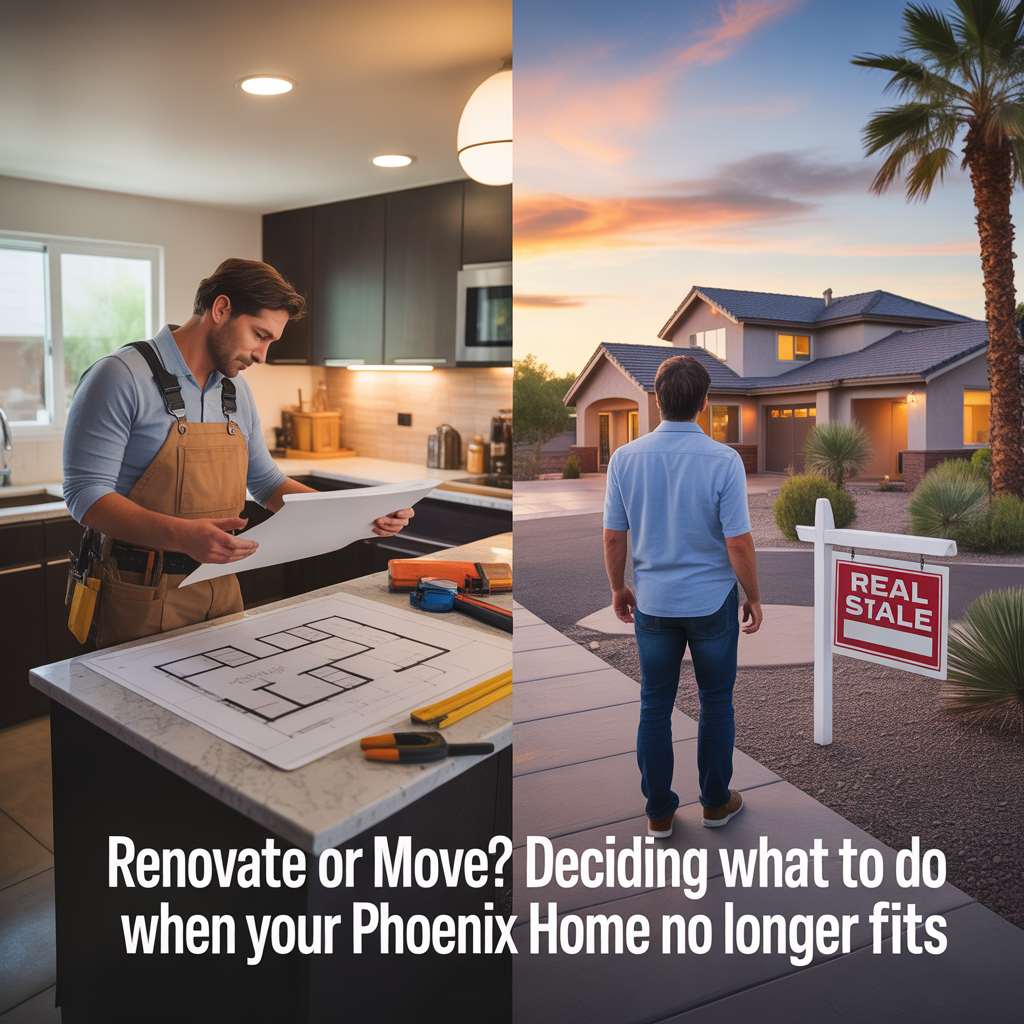
  • Alt Text Split scene showing a Phoenix homeowner considering renovation plans indoors while also looking at a larger home for sale outside, representing the decision between renovating or moving.

    Renovate or Move? Deciding What to Do When Your Phoenix Home No Longer Fits

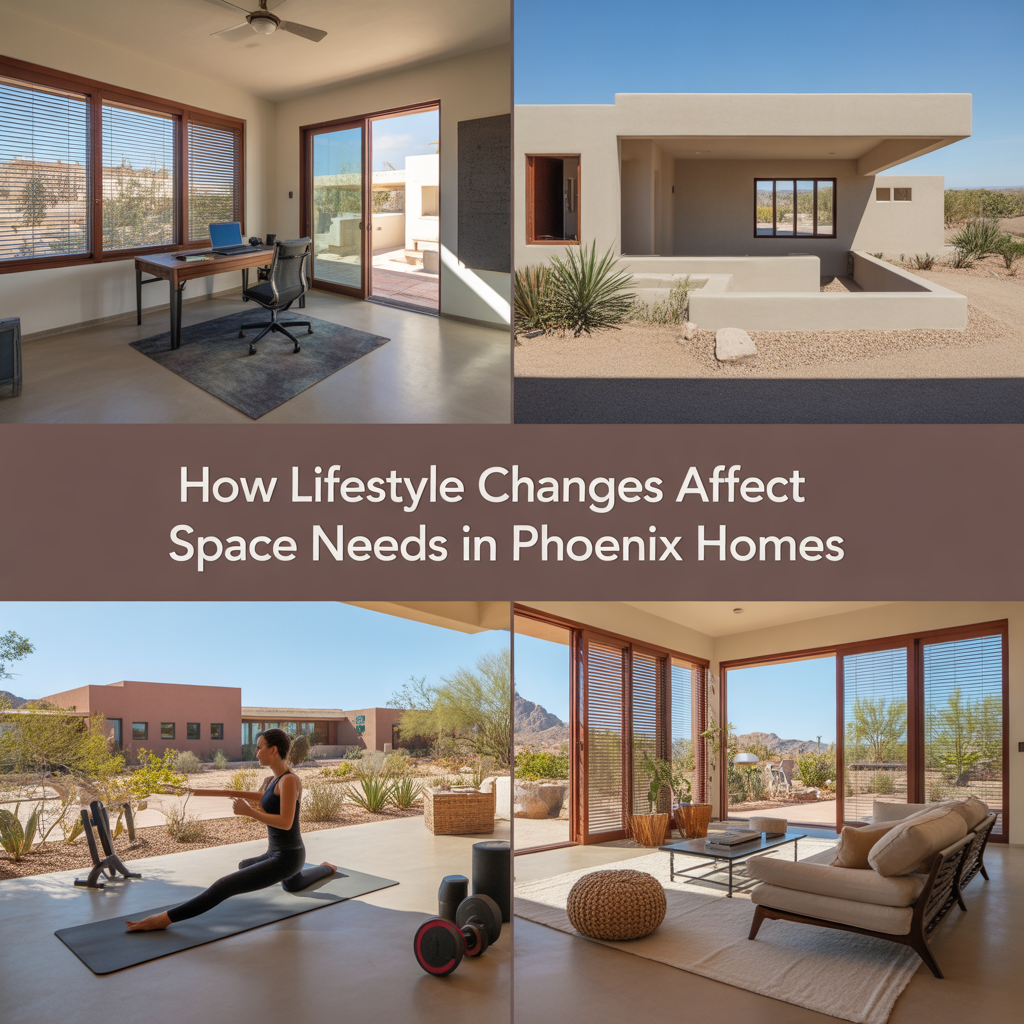
  • Alt Text Interior of a Phoenix home showing a flexible living space used as a home office, workout area, and lounge, illustrating how lifestyle changes influence space needs.

    How Lifestyle Changes Affect Space Needs in Phoenix Homes

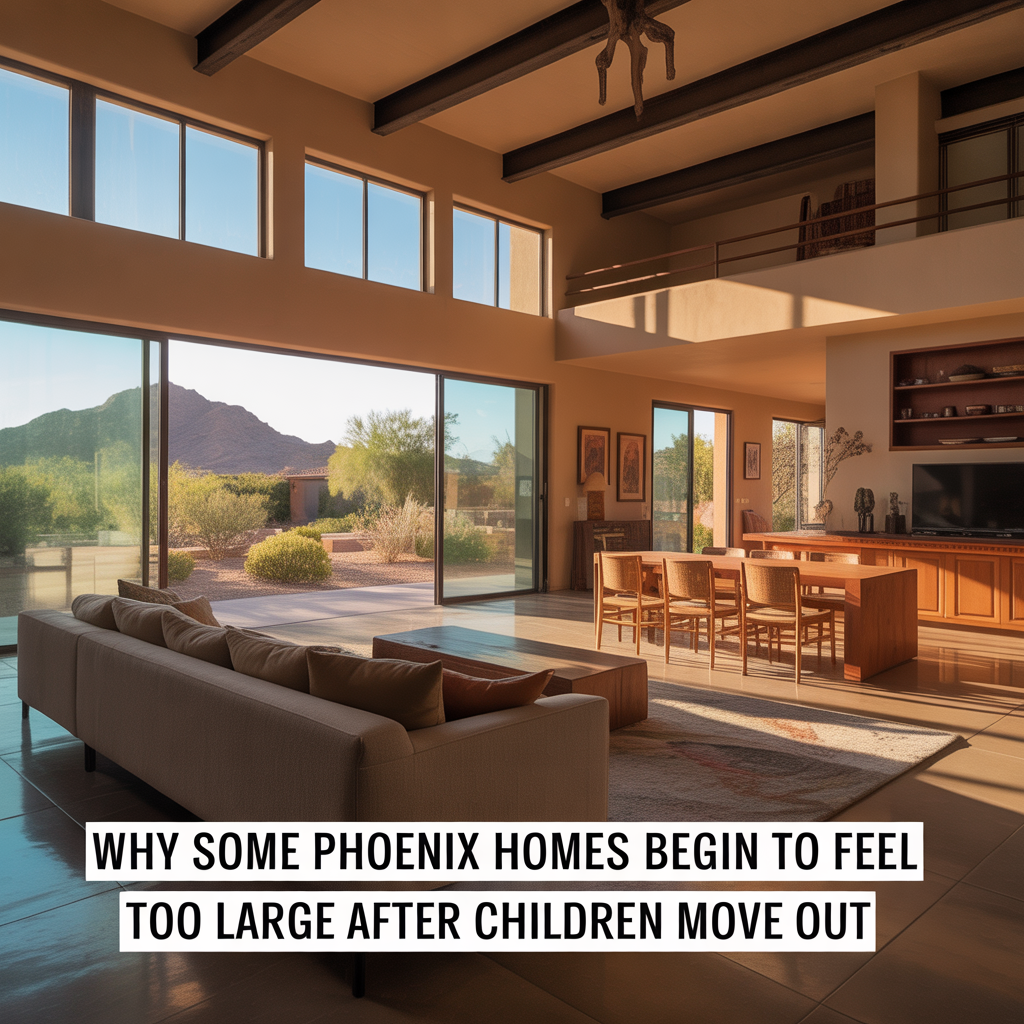
  • Alt Text Spacious Phoenix home interior with empty living and dining areas and desert sunlight through large windows, representing a house that feels too large after children move out.

    Why Some Phoenix Homes Begin to Feel Too Large After Children Move Out

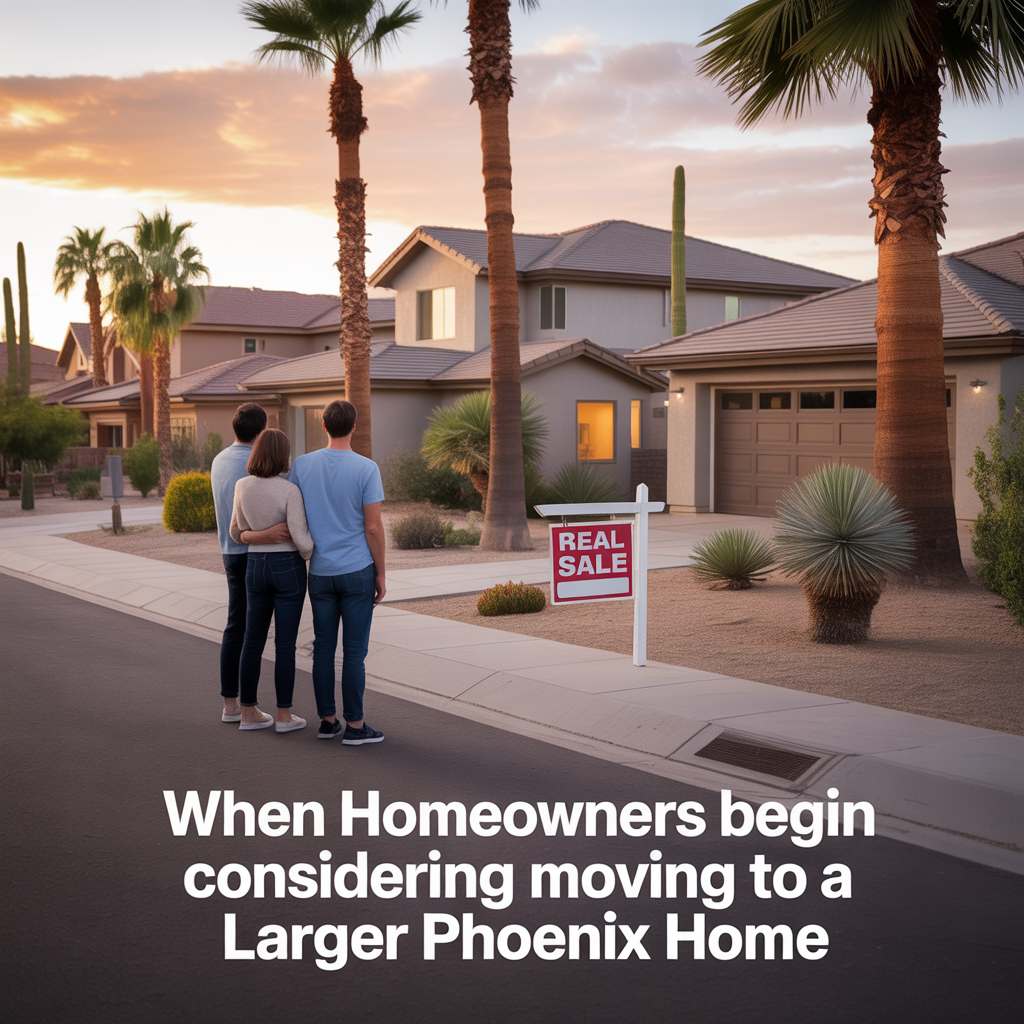
  • Alt Text Family standing outside their Phoenix home at sunset looking toward a larger nearby house with a real estate sign, representing homeowners beginning to consider upgrading to a bigger home.

    When Homeowners Begin Considering Moving to a Larger Phoenix Home

  • Alt Text Interior of a busy Phoenix family home with toys, school supplies, and workspaces crowded together, illustrating a growing family starting to outgrow their living space.

    Signs Your Phoenix Home Is Starting to Feel Too Small for Your Family

  • Ideogram Prompt (1:1) Side-by-side style desert yard evolution scene at a Phoenix home showing mature desert landscaping developed over many years: large established saguaro cactus, agave clusters, desert trees providing shade, natural stone pathways, and gravel xeriscape design surrounding a modern Southwestern home. Warm late-afternoon Arizona light, distant desert mountains, and a calm, well-established yard that reflects long-term homeownership and thoughtful landscape growth. Architectural landscape photography, wide-angle perspective, highly detailed. Text in image: "How Desert Landscaping Evolves Over Years of Phoenix Homeownership"

    How Desert Landscaping Evolves Over Years of Phoenix Homeownership

More from Denver

Most recent posts
    Loading…

    Discover more from Lairio — Real Estate Intelligence

    Subscribe now to keep reading and get access to the full archive.

    Continue reading