


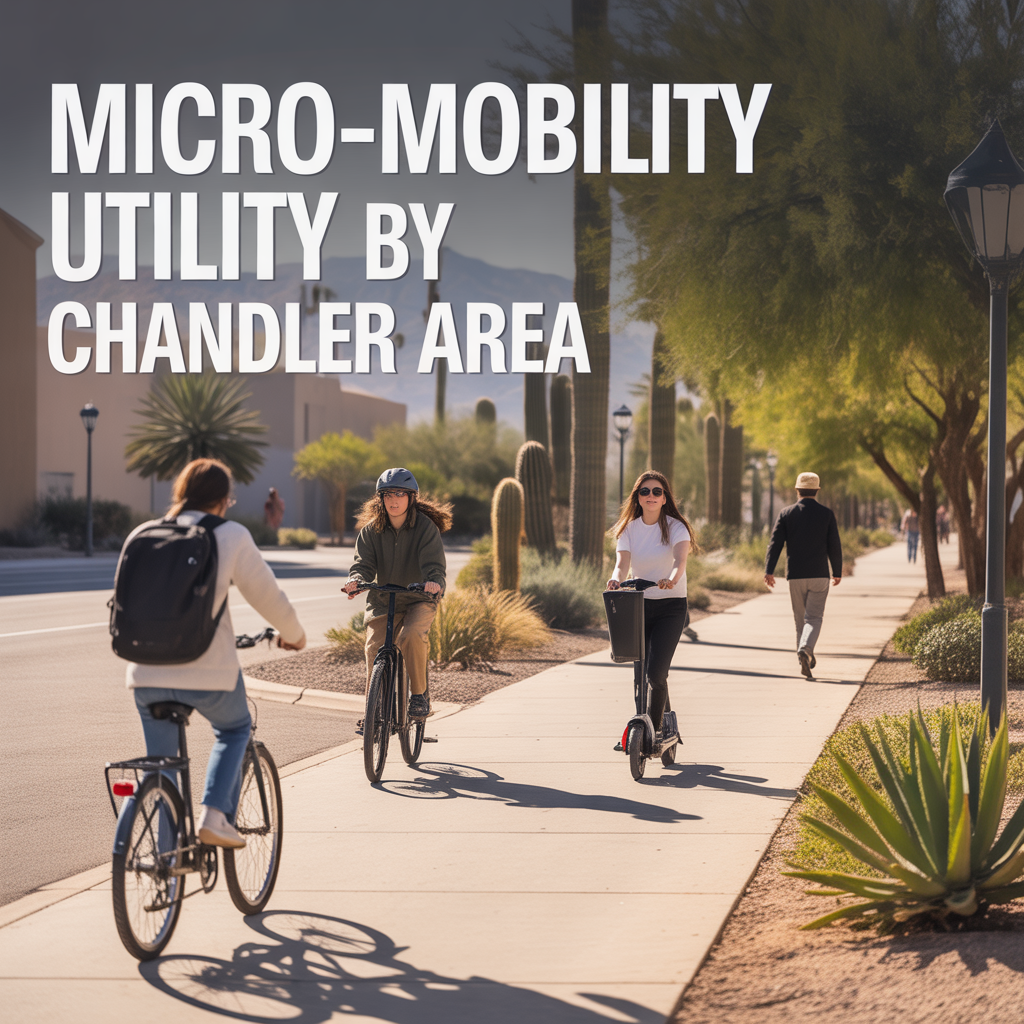
Chandler Lifestyle Guide → [Chandler Lifestyle Guide] & For more info on Chandler Real Estate → [Chandler Real Estate Guide]
Written by: Renee Burke
Micro‑mobility in and around Chandler has quietly become one of the most practical tools for everyday life here in the Southeast Valley — especially if you love Chandler’s suburban comfort but still need flexible, car‑lite ways to get around. It’s not about giving up your car; it’s about having more choices, so every errand, commute, or school day doesn’t automatically mean another solo drive on the 202.
Below is an expanded, in‑depth look at how micro‑mobility really works in the Chandler area, written in the same calm, guiding voice as the park‑and‑ride article and at a similar length.
Why Micro‑Mobility Matters in Chandler
If you’ve spent any time here, you know Chandler life stretches across wide, sunny boulevards and master‑planned neighborhoods that feel spacious and relaxed. That’s part of the charm. But it also means the distance between home, school, work, and errands can add up quickly if you rely on your car for every single trip.
Micro‑mobility steps in as a soft solution to that problem — not a dramatic lifestyle overhaul, just quiet, thoughtful options that fill the gaps. On‑demand shuttles, connections to park‑and‑ride, and bike‑friendly paths work together to make “How am I getting there?” a much easier question to answer. For busy parents, hybrid workers, students, and downsizing empty‑nesters, that flexibility can lower stress in a very real, everyday way.
Many people assume the suburbs mean “drive or stay home.” Around Chandler, that’s no longer quite true. The city has invested in tools that let you keep the breathing room you love, while still enjoying a network of shared, affordable, and increasingly high‑tech ways to move.
Chandler Flex: The Backbone of Local Micro‑Mobility
At the center of Chandler’s micro‑mobility story is a service called Chandler Flex. It’s the city’s on‑demand, app‑based public transit — essentially a shared ride you can summon when you need it, similar in feel to a rideshare but priced and structured like a neighborhood‑scale bus system.
You open the app, set your pickup and drop‑off within the service zone, and Chandler Flex matches you with a vehicle and a nearby “virtual bus stop” — usually just a short, easy walk. Rides are shared, so the route adapts dynamically to pick up and drop off other passengers, but you’re always heading in the general direction you requested. It’s designed to connect people with schools, jobs, medical offices, and shopping areas that are just a bit too far to walk, but not always worth a full drive of their own.
One of the thoughtful pieces here is the pricing and schedule. Fares are kept intentionally low, with significant discounts for seniors and riders using mobility devices, and free rides for middle and high school students traveling to and from school. Weekday service covers the typical work and school day, from early morning into the evening, so it can support both commuters and after‑school activities.
What really sets Chandler apart, though, is how this microtransit layer is evolving. The city has partnered with Waymo and Via so that, during busy times, some Chandler Flex trips can be fulfilled by fully autonomous Waymo vehicles instead of traditional shuttles. Practically, that means the same app you already use for Flex can sometimes match you with a driverless vehicle for the same short, local trips. It’s cutting‑edge technology, woven carefully into an existing public service so it feels more like an upgrade than an experiment.
Connecting to the Broader Valley: First‑ and Last‑Mile Utility
Micro‑mobility here isn’t meant to replace Valley Metro buses or the regional park‑and‑ride system; it’s meant to make them easier to use. Where the bus or light rail can’t quite reach your front door, Chandler Flex and other small‑scale options help with that “first‑mile/last‑mile” connection that usually pushes people back to their cars.
Picture this:
- You live in south Chandler, near Ocotillo, and work in downtown Phoenix once or twice a week. Instead of driving the whole way, you:
- Use Chandler Flex to get from your neighborhood to a key transit hub or park‑and‑ride area.
- Catch an express bus or RAPID line into the city.
- Reverse it at the end of the day, when you’re tired and traffic is thick.
Or maybe you’re a parent with a high‑schooler whose sports practice ends after your workday. Instead of scrambling to leave the office early or sitting in pickup lines, you can allow your teen to use Chandler Flex within the covered school zones, with clear pickup and drop‑off points and predictable routes. It’s a modest change with a big emotional payoff — a little less guilt, a little more breathing room.
This same logic applies to errands. Maybe you park once at a mixed‑use center, then take a quick microtransit hop to a nearby medical office or specialty store. Or you use a short shared ride from your home to connect to a bus headed to Tempe, ASU, or major employment corridors. The more you blend services, the less you feel tethered to a steering wheel for everything.
E‑Bikes, Scooters, and Trails: Quiet Support for Everyday Trips
The other side of micro‑mobility around Chandler is more familiar: bikes, e‑bikes, scooters, and the network of multi‑use paths that thread through the city. While we don’t see as many docked shared scooters or bikes as some dense urban cores, Chandler’s real strength lies in its paved paths, bike lanes, and neighborhood greenbelts that support personal micromobility devices.
Think about:
- Morning or evening rides on an e‑bike from your home to a nearby park, coffee shop, or community center.
- Using a scooter or bike to bridge the distance between a bus stop and your office building in the Price Road corridor.
- Weekend family rides along the canals or trail systems, which double as practical corridors during the week.
In a city where the summer sun is no joke, safety and comfort matter. That means:
- Sticking to designated paths where possible, especially for younger riders.
- Planning trips earlier or later in the day in the hottest months.
- Carrying water, wearing a helmet, and choosing routes that offer at least occasional shade.
What’s nice is that these bike‑friendly routes are increasingly connected to the same hubs served by Chandler Flex and Valley Metro. So if you’d rather not ride the entire way, you can pair a short e‑bike trip with a microtransit ride or bus connection, tailoring each day to how you’re feeling and what the weather is doing.
Safety, Comfort, and Common Concerns
Whenever micro‑mobility comes up, a few understandable worries tend to follow. You might be asking yourself:
- Is it safe to let my teenager ride Chandler Flex or an autonomous vehicle?
- Will I feel comfortable waiting at a virtual stop early in the morning or after work?
- Do these services really show up reliably, or will I end up calling for a ride anyway?
These are all reasonable questions, and you’re not alone in asking them. Chandler’s approach has been to treat micro‑mobility as a genuine extension of public transit — not a novelty. That means:
- Established hours, clear service zones, and published fare structures.
- Well‑defined pickup points, rather than random corners with no lighting or visibility.
- Integration with existing Valley Metro planning and reporting standards, including accessibility requirements.
On the user side, the biggest comfort comes from predictability. Once you’ve tried the system a few times — especially for routine routes like home‑to‑school or home‑to‑work — you’ll get a feel for timing, typical wait windows, and the specific stops that feel best for you. And remember, you don’t have to hand over your entire transportation life; you can start with one or two recurring trips per week and build from there if it suits you.
How Micro‑Mobility Supports Real Estate Decisions
From a housing standpoint, micro‑mobility is one of those subtle quality‑of‑life factors that doesn’t always show up on a listing sheet but absolutely matters once you’re living here. Homes and neighborhoods that sit within comfortable reach of:
- Chandler Flex zones
- Major park‑and‑ride facilities
- Established trail and bike networks
often feel more “plugged in” to the rest of the Valley, even if they’re technically in a quieter, more suburban pocket. That can make a big difference for:
- Remote or hybrid workers who commute only a couple of days a week.
- Families with teens who need safe ways to get to and from school and activities.
- Retirees who prefer to drive less but still want easy access to healthcare, shopping, and social outings.
Over time, as services like Chandler Flex deepen their coverage and partnerships with autonomous vehicles and regional transit, these connectivity advantages tend to support demand — and with it, property appeal. It’s not the only ingredient in value, of course, but it does contribute to a sense that a neighborhood is future‑ready and thoughtfully connected.
Weaving Micro‑Mobility Into Your Life
If you’re already living in Chandler or thinking about moving closer to the area, micro‑mobility doesn’t need to be an all‑or‑nothing commitment. You can treat it like a toolkit and pull out what you need:
- Use Chandler Flex for school commutes or a couple of workdays each week.
- Pair park‑and‑ride with microtransit for longer trips into Tempe or downtown Phoenix.
- Lean on e‑bikes, scooters, or simple bike rides for short hops when the weather cooperates.
Over time, many residents find that this mix lowers their dependence on multiple vehicles, trims gas and parking costs, and quietly returns a little time and energy back into their days.
And if you’re looking at a potential home and wondering, “Will this location actually work for my daily life?” — that’s exactly the kind of question I love to walk through with you.
If you’re thinking about making a move in the Phoenix area, especially around Chandler, you don’t have to figure all of this out alone. I’m here as a calm, long‑term advisor — someone who will help you look beyond the floor plan and see how your transportation options, commute patterns, and lifestyle really fit together. When you’re ready to talk through neighborhoods, micro‑mobility, and what will make everyday life feel easier, just reach out.
Get the full Phoenix Market Insights → [Market Insights]


-

Daily Outdoor Habits by Mesa Area
-
Map vs Usable Parks in Mesa
-

Weekly Go‑To Spots Around Mesa
-
Local‑Favorite Restaurants in Mesa
-

Hosting at Home vs Going Out Mesa
-
Family‑Friendly vs Nightlife Zones Mesa
-
How Late Mesa Areas Stay Active
-
Walkable Mesa Dining and Nightlife Pockets
-
Spontaneous vs Planned Dining in Mesa
-

Mesa Feeder Patterns and Predictability
-
District vs Charter Tradeoffs in Mesa
-

Weekend Events Around Mesa Schools
-

After‑School Sports and Activities Mesa
-

Parent and Community Networks in Mesa
-
Family Morning and Evening Routines
-

School‑Day Traffic in Mesa
-
How Lot Size, Zoning, and Layout Impact Investment Flexibility
-

Appreciation‑First vs Cash‑Flow‑First Investing in Chandler
-
Why Some Chandler Rentals Underperform Long‑Term
-

What First‑Time Buyers Regret After Buying in Chandler
-

Why First‑Time Buyers Overpay in Competitive Chandler Neighborhoods
-

The First‑Time Buyer Tradeoff Nobody Explains in Chandler
-

How Lifestyle Priorities Shift After Moving to Chandler
-
Why Some Relocating Buyers Choose Chandler First
-

What Relocating Buyers Misjudge About Chandler