


Buyer Fears→ [Buyer Fears] & For more info on other fears Phoenix Real Estate → [Phoenix Real Estate Fears Guide]
Written by: Renee Burke
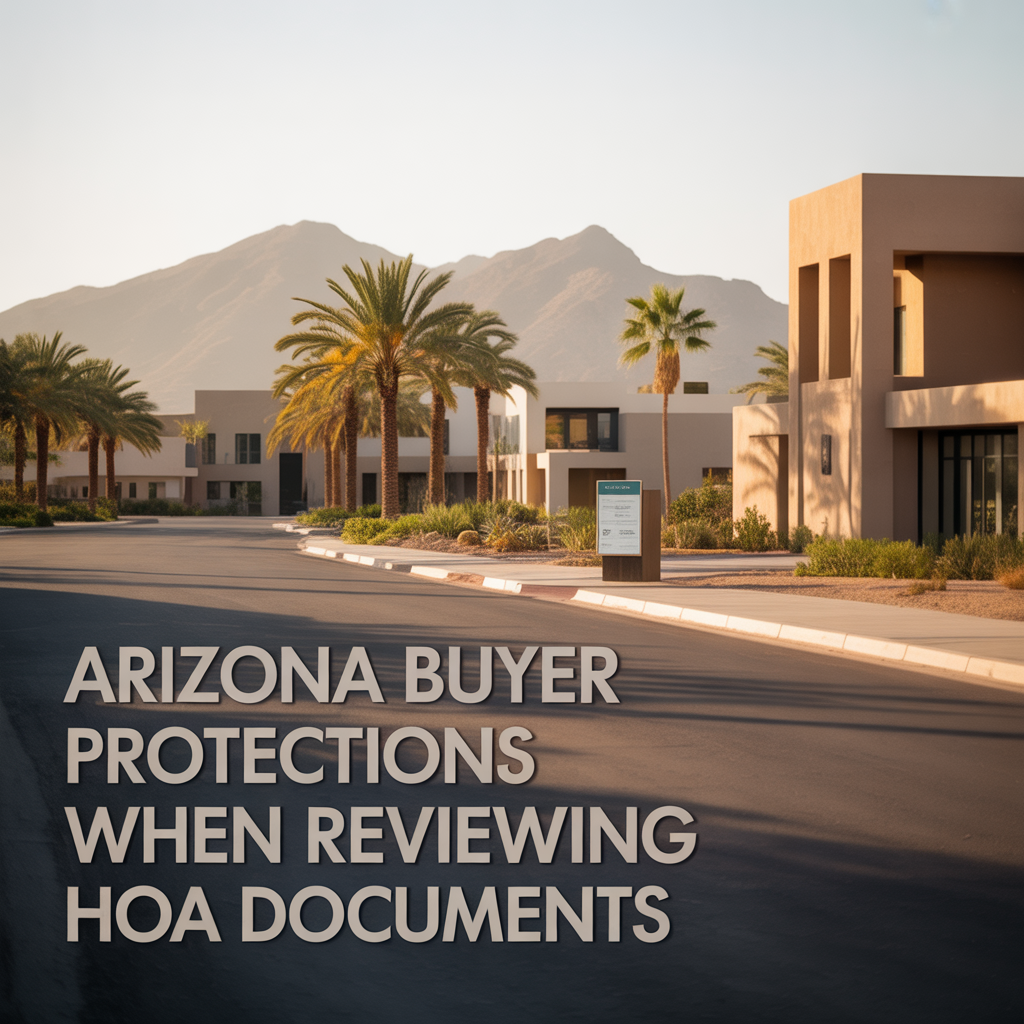
If you’ve ever fallen in love with a beautiful home nestled in one of Phoenix’s many planned communities or condo developments, you’ve likely encountered three little letters that carry a lot of weight: HOA. Homeowners’ Associations are woven into much of our lifestyle in the Valley — they shape how neighborhoods look, maintain shared spaces, and even influence how you live day-to-day. But they also come with governing documents, fees, and rules that can affect your decision to buy.
Arizona law recognizes that buyers need space and transparency to understand what they’re signing up for. That’s why our state offers specific legal protections during the review of HOA documents — giving you a chance to step back, breathe, and make an informed decision before moving forward.
Let’s take a closer look at what those protections include, and how to handle this part of your home purchase with confidence and peace of mind.
Why HOA Reviews Matter in Phoenix
Across the Phoenix metro area — from master-planned communities in Gilbert and Chandler to condo buildings in Scottsdale and urban infill projects downtown — HOAs are a standard part of ownership. While they keep communities well-kept and often enhance property values, each HOA is its own small government. They set rules about landscaping, exterior paint colors, parking, and even rental restrictions.
Because of that, the HOA’s health and rules are just as important as the house itself. You’re not only buying a property — you’re buying into a set of obligations and expectations.
For example:
- Some HOAs charge modest monthly dues that cover basic landscaping. Others might have higher fees due to resort-style amenities or larger reserves.
- A “special assessment” could come up if the association doesn’t have enough funds to cover a large repair or improvement.
- Certain bylaws may affect how you use your property — from whether you can rent out your home to how tall your trees can grow.
When these details aren’t fully understood, they can create frustration or financial stress later. That’s exactly why Arizona law gives buyers a cooling-off period to review and decide, without pressure.
The Arizona HOA Disclosure Requirement
Arizona’s HOA disclosure process is spelled out in A.R.S. §33‑1806 (for planned communities) and A.R.S. §33‑1260 (for condominiums). In plain terms: before your contract becomes binding, you must receive a full package of HOA documentation and have a chance to review it.
Depending on who manages the sale, one of two parties is responsible for providing those materials:
- If you’re buying a resale home, the seller must ensure you receive the HOA disclosure packet.
- If you’re purchasing in a new development directly from a builder, the association or developer must deliver it.
These packets typically include:
- The association’s CC&Rs (Covenants, Conditions & Restrictions)
- Bylaws and Articles of Incorporation
- The most recent financial statement and budget
- Current reserve study or reserve fund information
- Meeting minutes from recent board meetings
- Rules and regulations (things like parking, pets, and exterior modifications)
- Details on any ongoing or pending assessments or litigation
You have a right to every one of these documents, and the clock doesn’t start until they’ve been delivered in full.
Your Right to Review — and Rescind
Here’s where your buyer protection really takes shape: you have the right to cancel your purchase within five calendar days after receipt of the HOA documents. This is known as the HOA review period, and it exists specifically to protect you from getting locked into something that doesn’t fit your comfort level.
Those five days start the day after you actually receive the most recent complete set of documents. If something arrives late, the period extends automatically — you can’t be penalized for delays outside your control.
Most buyers use this time to:
- Read through the CC&Rs carefully
- Review the HOA’s financial health and reserves
- Check for potential red flags in recent meeting minutes
- Confirm that the rules line up with their lifestyle (pets, RV parking, rentals, solar panels, etc.)
If, after reviewing everything, you decide the HOA isn’t a good match, you can cancel the purchase with no penalty during that window. Your earnest money deposit must be refunded in full.
Many buyers don’t realize just how empowering this is. It’s your built-in safeguard to walk away — no questions, no drama.
How to Use the HOA Review Period Wisely
Rather than treating this as a mere formality, use those five days intentionally. A few practical tips:
- Start with the financials. A healthy reserve fund, clear budget, and absence of unexpected assessments show solid management. If the last reserve study is several years old, ask when the next one is due.
- Read the rules with everyday life in mind. Picture your real routine: Do you have guests staying for longer visits? A work truck or trailer? A dog over a certain weight limit? These little details matter.
- Pay attention to community tone in the minutes. The meeting notes can reveal more than numbers — how does the board handle homeowners’ concerns? Is there frequent conflict or talk of dues increases?
- Discuss findings with your agent. A seasoned Phoenix agent will recognize patterns — such as HOAs known for strong management versus those with recurring turnover or reserve shortages.
In short, don’t rush. This window is your time to verify that both the property and its governance align with your lifestyle and comfort level.
Understanding Special Assessments and Fee Increases
Arizona law also requires that the HOA packet disclose any pending or proposed special assessments known at the time of delivery. These can have significant budget impacts.
For example, a condo complex in Tempe might announce a $5,000 per-unit assessment to repave parking lots or replace roofs. If that’s in the works, you need to know before closing — because once you’re the owner, it’s your obligation too.
Similarly, examine how dues have changed in recent years. If you see steep annual increases, that may signal underfunded reserves or rising operational costs. Neither is necessarily a dealbreaker, but they’re good clues for budgeting and negotiation discussions.
Legal Timelines and Common Misunderstandings
A few timing nuances are worth noting:
- The five-day cancellation right only applies to resale transactions, not brand-new builds (which have their own disclosure timelines).
- The countdown starts once you actually receive the complete HOA packet, not when it’s requested.
- If your acceptance was contingent on HOA review, the seller cannot refuse to release your earnest money if you cancel properly within that window.
One common misconception: buyers sometimes think this five-day right resets if new information appears later. While that’s not automatically true, if the seller or HOA provides missing documents late — or material facts were withheld — your agent and possibly your attorney can guide next steps.
Phoenix Reality: What This Often Looks Like in Practice
In most parts of Phoenix, from Desert Ridge to Ahwatukee, HOAs are routine and professionally managed. Still, the range is wide — some are self-managed by resident volunteers, others are overseen by large management companies.
For example, larger suburban HOAs in places like Mesa’s Eastmark or Scottsdale’s DC Ranch often run with detailed budgets and strong reserves. In smaller communities with only a handful of homes, financial oversight may be more limited. Each scenario calls for different levels of scrutiny.
A thoughtful buyer will look beyond just the monthly dues amount to the overall sustainability of the HOA. Low fees may look appealing at first glance — but if reserves are underfunded, future assessments could surprise you.
That’s why the disclosure period exists: it slows things down just enough for you to confirm that both the home and the community structure fit your long-term comfort level.
Partnering with Your Agent During the Review
A good Phoenix agent won’t simply hand you a stack of PDFs; they’ll help you interpret what you’re seeing. Over time, we become familiar with particular management companies, neighborhood reputations, and board dynamics.
Here’s what I often do with clients: we go through the financials, look for assessments or unusual spending patterns, and talk through lifestyle restrictions that could cause friction down the road. It’s a calm, step-by-step conversation — not a crisis briefing. Most of the time, the result is reassurance. Occasionally, it’s a smart pause to reconsider before proceeding. Either way, the buyer walks forward with peace of mind, knowing there are no hidden surprises.
The Bottom Line
Arizona’s HOA review laws exist for one reason: to protect you. They’re not there to slow your purchase — they’re there to give you space to make a fully informed decision about the community you’re joining.
If you use that time wisely, you’ll avoid regrets and start your new chapter knowing exactly what kind of neighborhood culture, financial structure, and long-term stability you’re stepping into.
A Personal Note from Renee
Buying a home in the Phoenix metro area should never feel rushed or uncertain. If you’re looking at communities with HOAs, remember: this is your moment to pause, ask questions, and make sure everything aligns not just with your finances, but with your lifestyle and peace of mind.
If you’re thinking about making a move in Phoenix, you don’t have to figure it out alone. I’m here to walk you through every detail — from reviewing HOA documents to understanding neighborhood dynamics — so you can move forward with total confidence.
Get the full Phoenix Market Insights → [Market Insights]


-

Pool Liability and Insurance in Phoenix
-

Protecting Outdoor Structures and Shade Systems
-

HVAC Failures and Insurance Coverage
-

Roof Maintenance for Phoenix Climate Conditions
-

Preventing Water Damage in Desert Landscapes
-

How Monsoon Storms Affect Phoenix Homes
-

Why Policy Structure Matters More Than Premium
-

Understanding Coverage Limits and Exclusions
-

What Personal Property Coverage Actually Includes
-

How Liability Coverage Protects Homeowners
-

Replacement Cost vs Market Value in Phoenix Insurance
-

Understanding Deductibles Before You Need Them
-

How Renovations Affect Insurance Coverage
-

When to Review Your Home Insurance Policy
-

Why Replacement Cost Matters in Phoenix Insurance Policies
-

When a House Truly Starts to Feel Like Home
-

How Phoenix Neighborhood Living Builds a Sense of Belonging
-

Why Stability Plays a Major Role in Long-Term Home Satisfaction
-

How Familiarity Changes the Experience of Living in a Home
-

Renovate or Move? Deciding What to Do When Your Phoenix Home No Longer Fits
-

How Lifestyle Changes Affect Space Needs in Phoenix Homes
-
Why Some Phoenix Homes Begin to Feel Too Large After Children Move Out
-

When Homeowners Begin Considering Moving to a Larger Phoenix Home
-

Signs Your Phoenix Home Is Starting to Feel Too Small for Your Family
-

How Desert Landscaping Evolves Over Years of Phoenix Homeownership