Most Common Phoenix Home Inspection Issues (and Which Ones Really Matter)

Written by Chad Cabalka → Meet the Expert

Written by Reneé Burke → Meet the Expert

Written by Hilary Marshall → Meet the Expert

Phoenix Lifestyle Guide → [Phoenix Lifestyle Guide] & For more info on Phoenix Real Estate → [Phoenix Real Estate Guide]

Written by: Renee Burke

I’ve held my breath alongside countless buyers waiting for inspection reports on Valley homes—from newish builds in Buckeye to mid-century ranches in Arcadia. These reports often flag a laundry list of issues, but not all carry the same weight. In Phoenix, our desert extremes—scorching heat, hard water, and shifting soils—highlight what truly demands attention versus what’s just cosmetic noise.

Let’s sort the critical from the manageable, so you know what to negotiate hard on and what to let slide with a maintenance plan.


HVAC and Cooling Systems: Always a Top Priority

No surprise here—our AC units battle 8–10 months of heat yearly, and inspectors flag them first. Dirty coils, low refrigerant, or units over 10–12 years old top the list, especially in older Gilbert or Mesa homes.​

Why it matters: A failing system means $10k–$15k replacements mid-summer. Inconsistent cooling or rusted compressors signal end-of-life.
When to push: Near 15 years or major faults—request credits or escrow holds. Minor dirt? Seller cleans pre-closing. Newer variable-speed units in Peoria builds often pass easily.


Roofing Wear from UV and Monsoons

Phoenix roofs endure relentless sun and seasonal storms. Inspectors note granule loss on asphalt shingles, cracked tiles, or worn flat-roof coatings—common in 15–25-year-old Surprise or Chandler homes.

Why it matters: Leaks lead to mold and structural rot; full replacements hit $15k–$30k.
When to push: Active leaks, missing underlayment, or 20+ years old. Cosmetic cracks on tile? Often $2k–$5k repairs suffice—prioritize if hail history shows.


Electrical Panels and Safety Gaps

Outdated panels (Zinsco or Federal Pacific from pre-1980s), double-tapped breakers, or missing GFCIs near sinks/pools flag frequently in Central Phoenix infills.

Why it matters: Fire risks and insurance denials—upgrades run $3k–$6k but prevent disasters.
When to push: Non-compliant panels or no GFCIs in wet areas. Loose outlets? Minor, but bundle with panel work.


Plumbing and Water Heater Age

Hard water scales pipes and heaters fast. Corrosion at fittings, slow drains, or 8+ year-old tanks appear often, especially in block homes with galvanized lines.

Why it matters: Leaks flood slabs ($5k+ fixes); repiping older systems costs $7k–$12k.
When to push: Rust, leaks, or pre-2010 polybutylene pipes (recall-prone). Aging tanks? Negotiate if under 5 years left—tankless upgrades shine long-term.


Foundation and Drainage Red Flags

Bulging block walls, stair-step cracks, or soil grading toward the house scream soil expansion issues post-monsoon—rampant in West Valley clay-heavy lots.​

Why it matters: Major shifts mean $10k–$50k piers; ignored, they worsen.
When to push: Hairline cracks under 1/8-inch are monitorable; wider gaps or doors sticking demand engineers.


Issues That Rarely Break Deals

Critical (Negotiate Hard)Cosmetic/ManageablePhoenix Cost Range
HVAC failure ​Stucco cracks$10k–$15k vs $1k
Roof leaks ​Grout wear$15k+ vs $500
Electrical panels ​Window seal fog$3k–$6k vs $5k
Foundation shiftsPool pump noise$10k+ vs $2k
Plumbing corrosion ​Paint fading$7k+ vs $3k

Pools often flag aging pumps or plaster ($3k–$6k)—matter if you swim, less if not. Mold or pests in flips warrant specialists.​


Valley-Specific Watchpoints

Our climate amplifies: dust-clogged HVAC, UV-brittled roofs, mineral buildup everywhere. Inspectors prioritize habitability—cooling, waterproofing, safety—over aesthetics. SRP rebates offset efficient fixes; HOAs may mandate exteriors.

Flipped homes hide hasty patches—request original permits. New builds flag builder oversights like unsealed ducts, covered under warranties.


Turning Reports into Wins

Every issue isn’t a killer—focus on safety, systems, and structures (the “big three”). I help clients prioritize: $20k HVAC/roof credits on a $450k home? Walk if refused. $2k stucco? Live with it.

Arm yourself: attend inspections, video findings, get specialist quotes. Sellers fix 70–80% when reasonable.


Let’s Make Your Inspection Worry-Free

Inspections illuminate, not intimidate—spotting true risks keeps you safe in our heat. I’ve coached buyers through hundreds, turning flags into fair deals.

Share your report; we’ll sort priorities together.

If you’re thinking about a home in Phoenix, you don’t have to figure it out alone. Reach out—I’m here to guide you through every line, ensuring your Valley home is solid where it counts.

Get the full Phoenix Market Insights → [Market Insights]

Button labeled 'Contact Renee directly' on a blue background.
Logo of RE/MAX featuring the text 'Signature | Renee Burke' with a smiling woman in a light blue blazer.
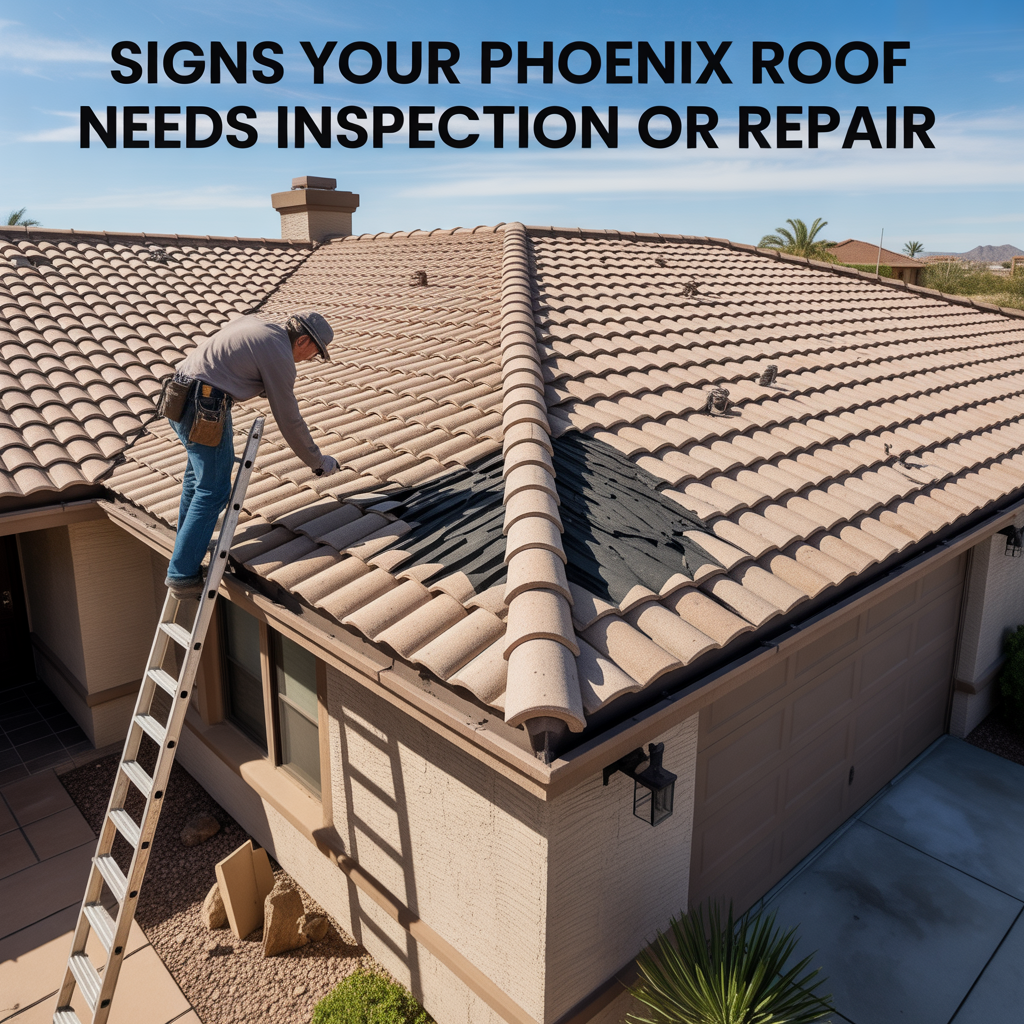
  • ALT TEXT Photorealistic Phoenix clay tile roof with cracked and shifted tiles while a contractor inspects from a ladder, illustrating warning signs that a Phoenix roof needs inspection or repair.

    Signs Your Phoenix Roof Needs Inspection or Repair

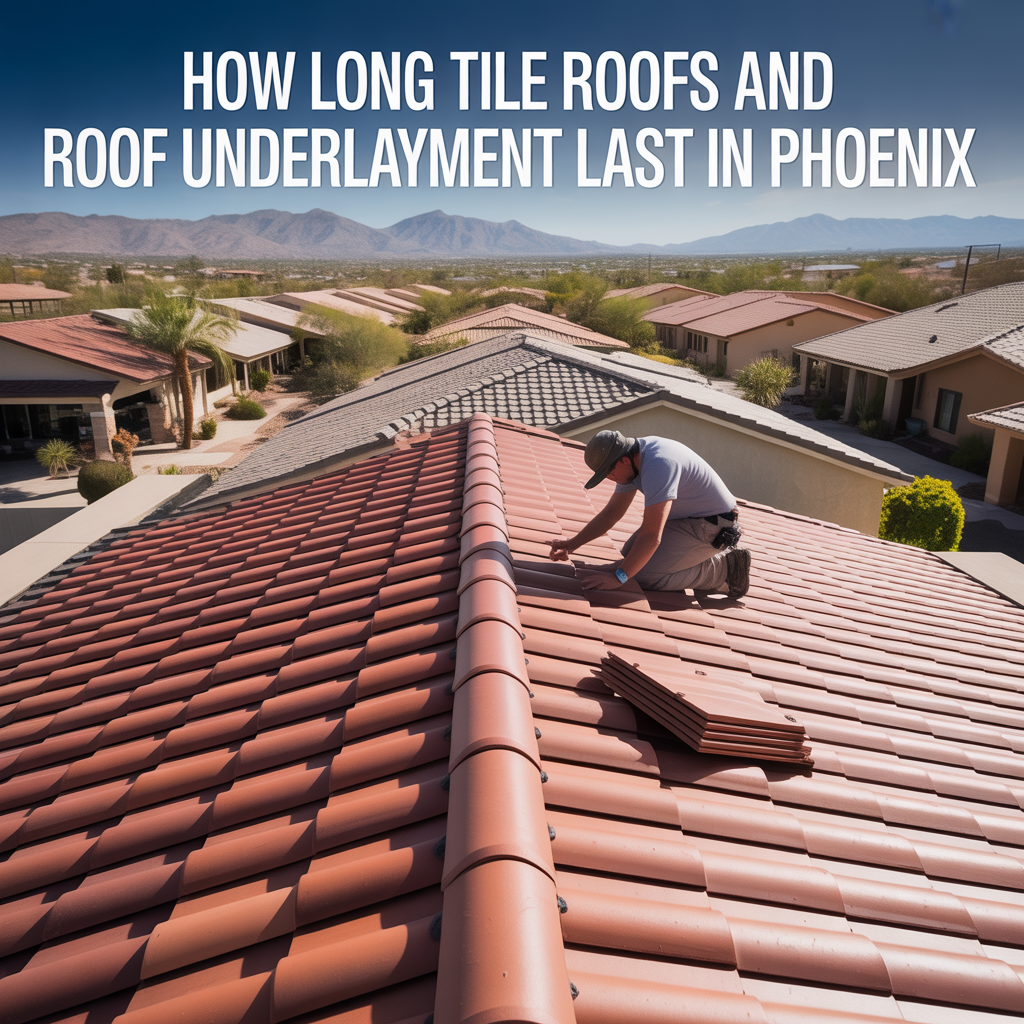
  • ALT TEXT Photorealistic Phoenix clay tile roof with lifted tiles exposing the underlayment during a roof inspection, illustrating how long tile roofs and roof underlayment last in Phoenix homes.

    How Long Tile Roofs and Roof Underlayment Last in Phoenix

  • ALT TEXT Photorealistic Phoenix home interior showing a smart thermostat being controlled from a smartphone, illustrating how smart thermostats improve cooling efficiency in Arizona homes.

    How Smart Thermostats Improve Cooling Efficiency in Arizona Homes

  • ALT TEXT Photorealistic Phoenix neighborhood during extreme summer heat with a temperature display showing 118°F and heat waves rising from rooftops, illustrating why AC systems struggle during Phoenix heat waves.

    Why AC Systems Struggle During Extreme Phoenix Heat Waves

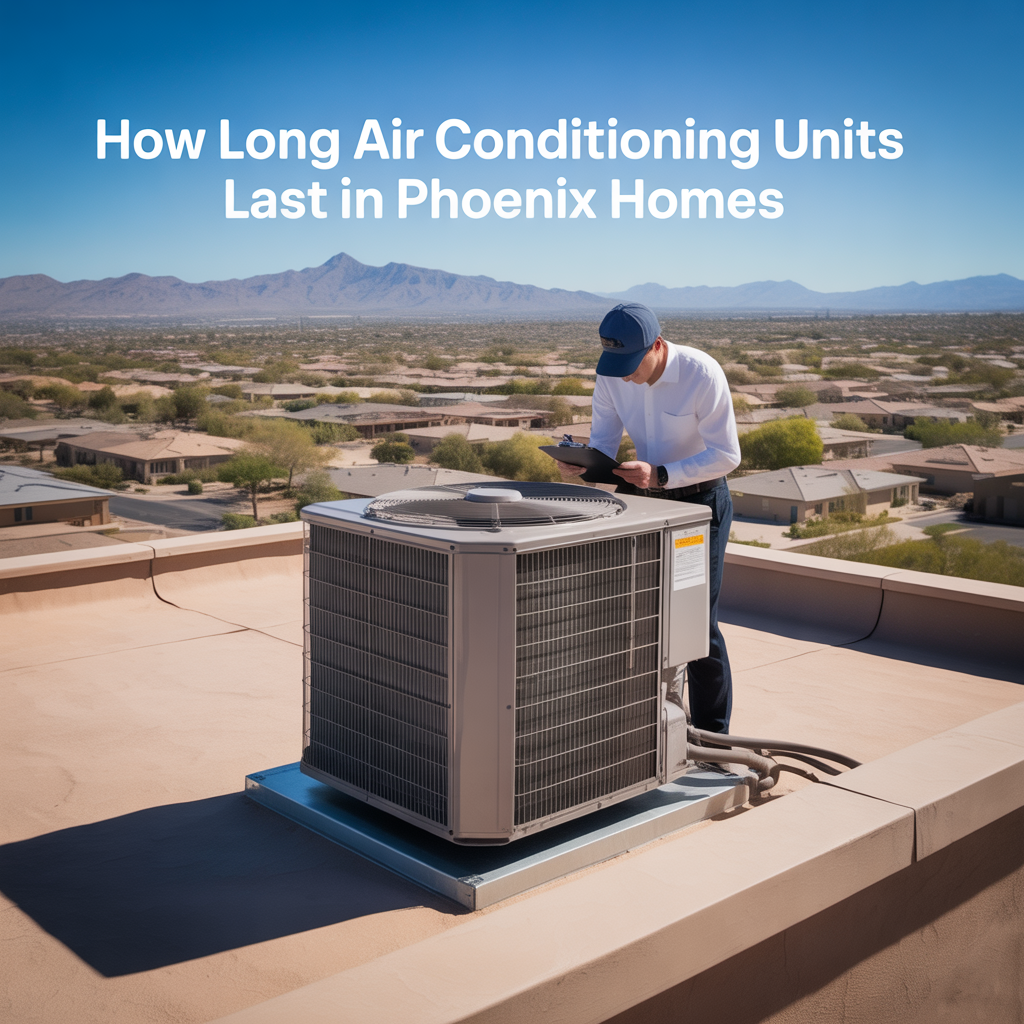
  • ALT TEXT Photorealistic rooftop HVAC unit being inspected on a Phoenix home under intense desert sunlight, illustrating the typical lifespan of air conditioning systems in Phoenix homes.

    How Long Air Conditioning Units Last in Phoenix Homes

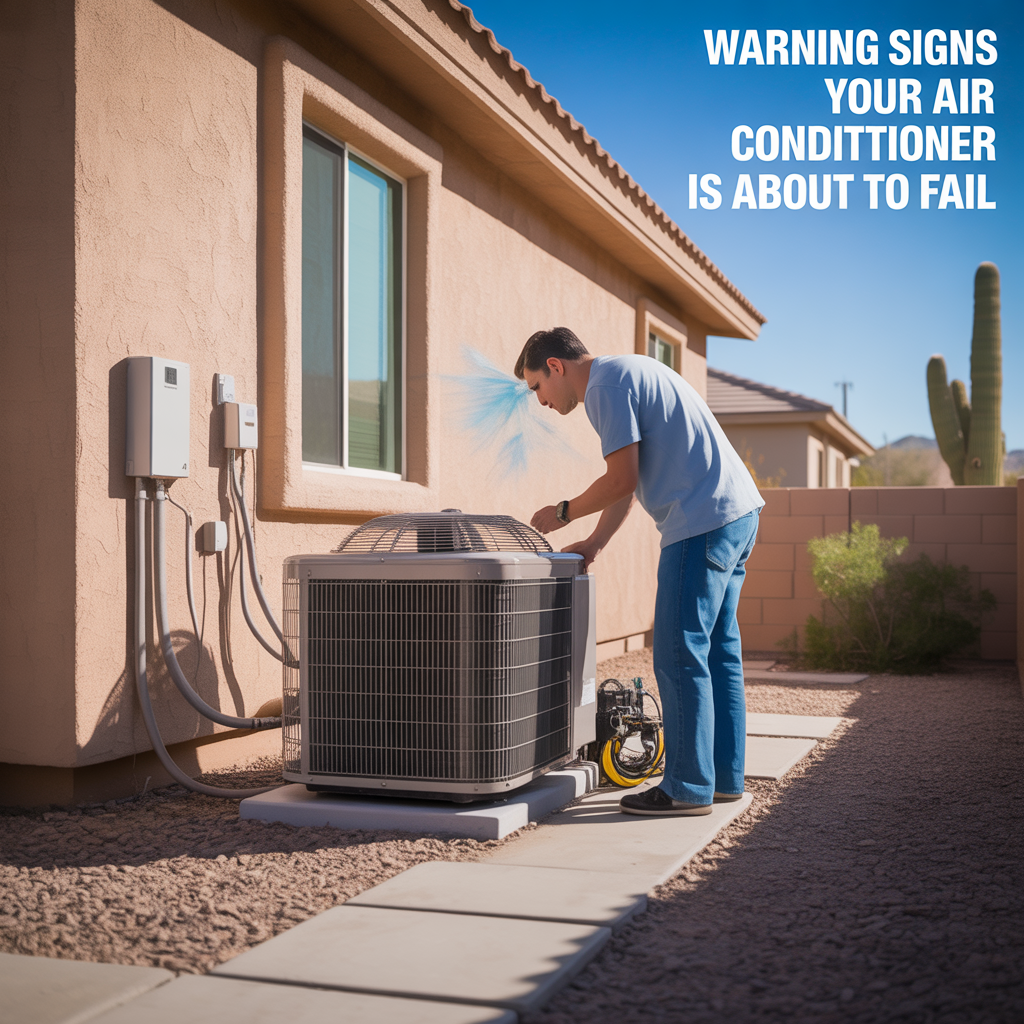
  • ALT TEXT Photorealistic Phoenix homeowner inspecting an outdoor air conditioning condenser beside a stucco home under intense desert sun, representing warning signs an air conditioner may be about to fail.

    Warning Signs Your Air Conditioner Is About to Fail

  • ALT TEXT Photorealistic HVAC technician servicing an outdoor air conditioning condenser beside a Phoenix stucco home under bright desert sun, illustrating how often Phoenix AC systems need maintenance.

    How Often Phoenix AC Systems Need Maintenance

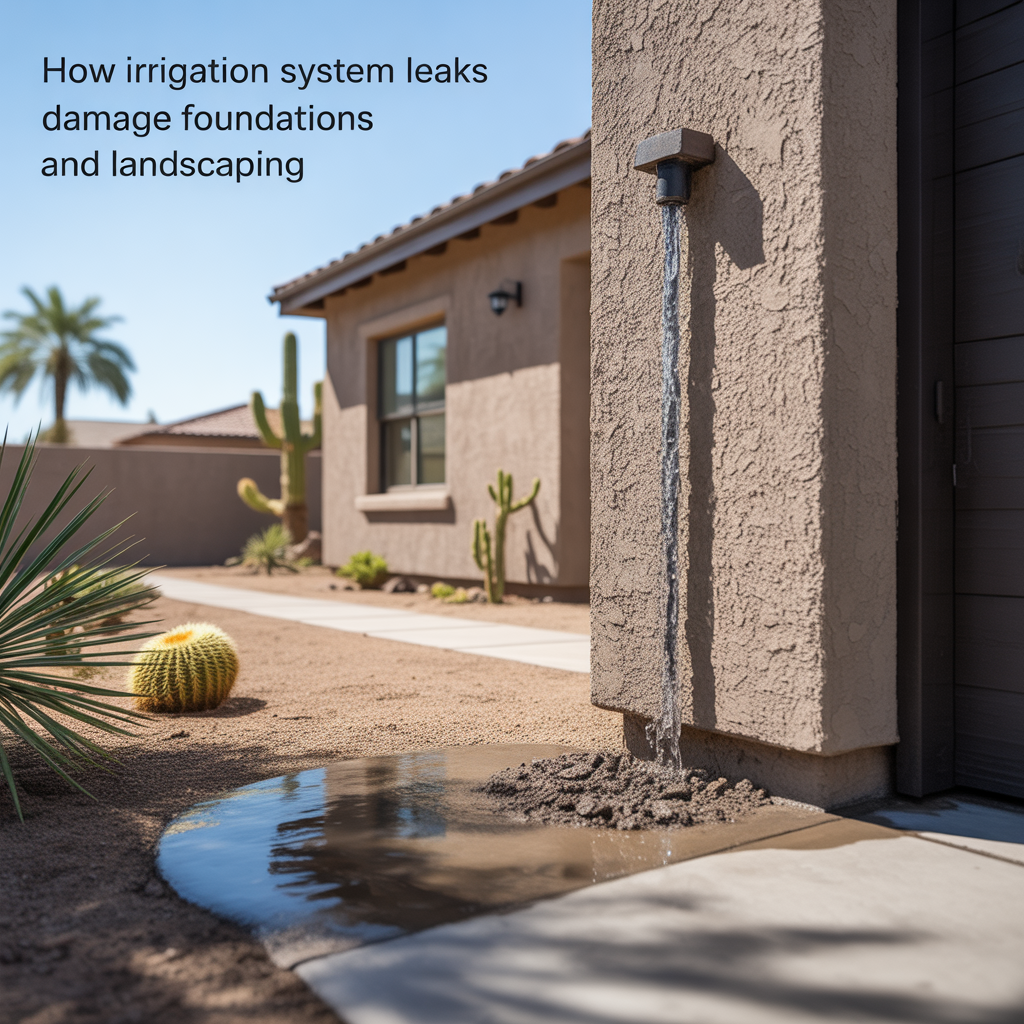
  • ALT TEXT Photorealistic Phoenix home with a leaking irrigation drip line soaking soil near the foundation and desert landscaping, illustrating how irrigation leaks can damage foundations and landscaping in Arizona homes.

    How Irrigation System Leaks Damage Foundations and Landscaping

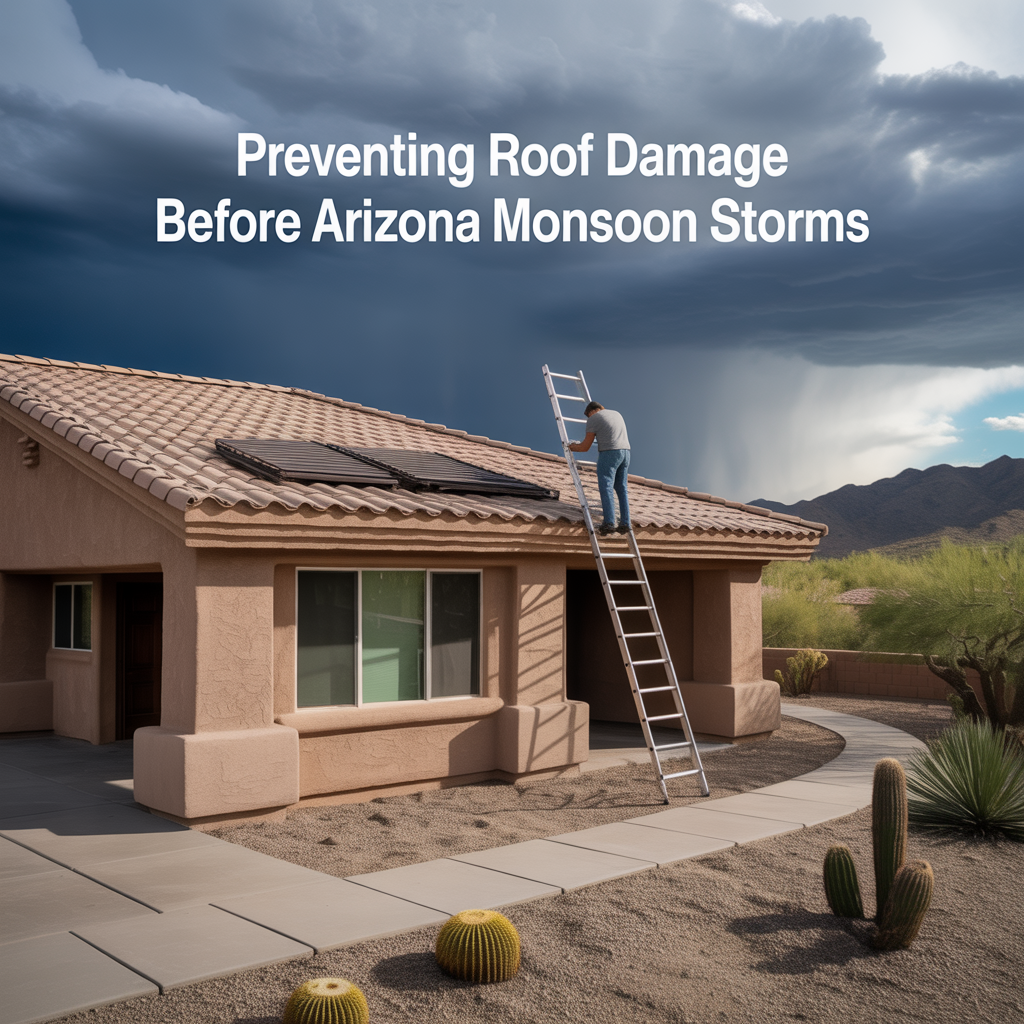
  • ALT TEXT Photorealistic Phoenix homeowner inspecting a clay tile roof with monsoon storm clouds forming in the background, illustrating how homeowners can prevent roof damage before Arizona monsoon storms.

    Preventing Roof Damage Before Arizona Monsoon Storms

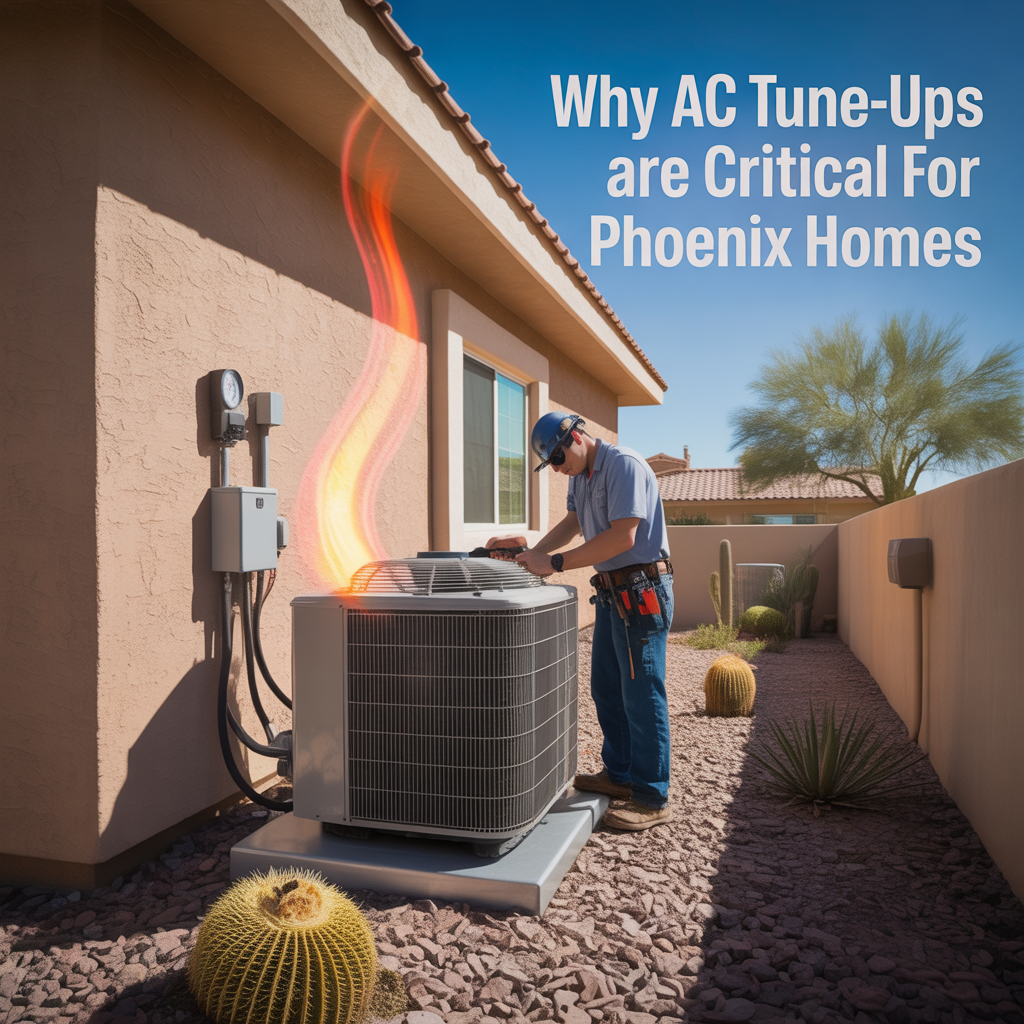
  • ALT TEXT Photorealistic HVAC technician servicing an outdoor air conditioning condenser beside a Phoenix stucco home in bright desert sunlight, illustrating why AC tune-ups are critical for Phoenix homes.

    Why AC Tune-Ups Are Critical for Phoenix Homes

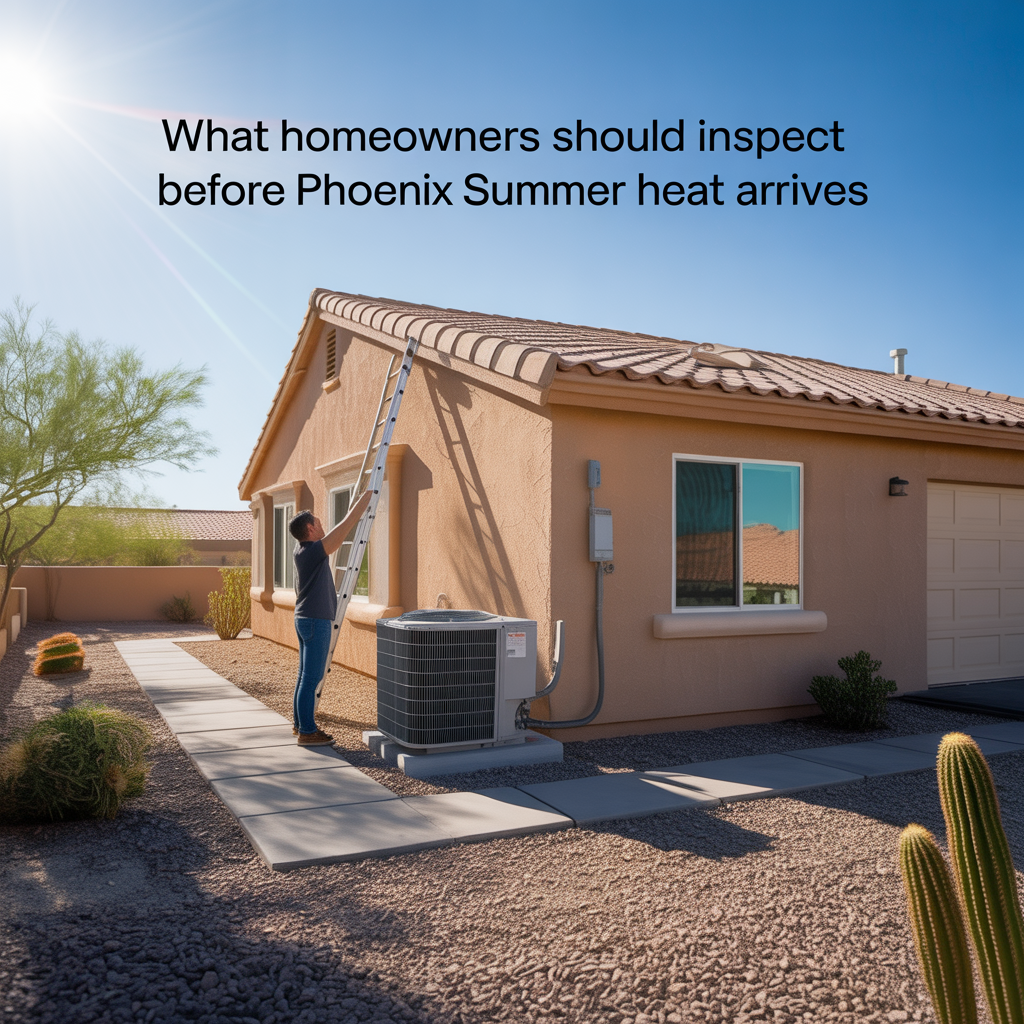
  • ALT TEXT Photorealistic Phoenix homeowner inspecting an outdoor HVAC unit and roof tiles beside a stucco home in bright desert sunlight, representing preparing a home before Phoenix summer heat arrives.

    What Homeowners Should Inspect Before Phoenix Summer Heat Arrives

  • ALT TEXT Photorealistic Phoenix home with a homeowner inspecting an HVAC unit and roof under bright desert sunlight, representing a seasonal home maintenance checklist for Phoenix homeowners.

    Seasonal Home Maintenance Checklist for Phoenix Homeowners

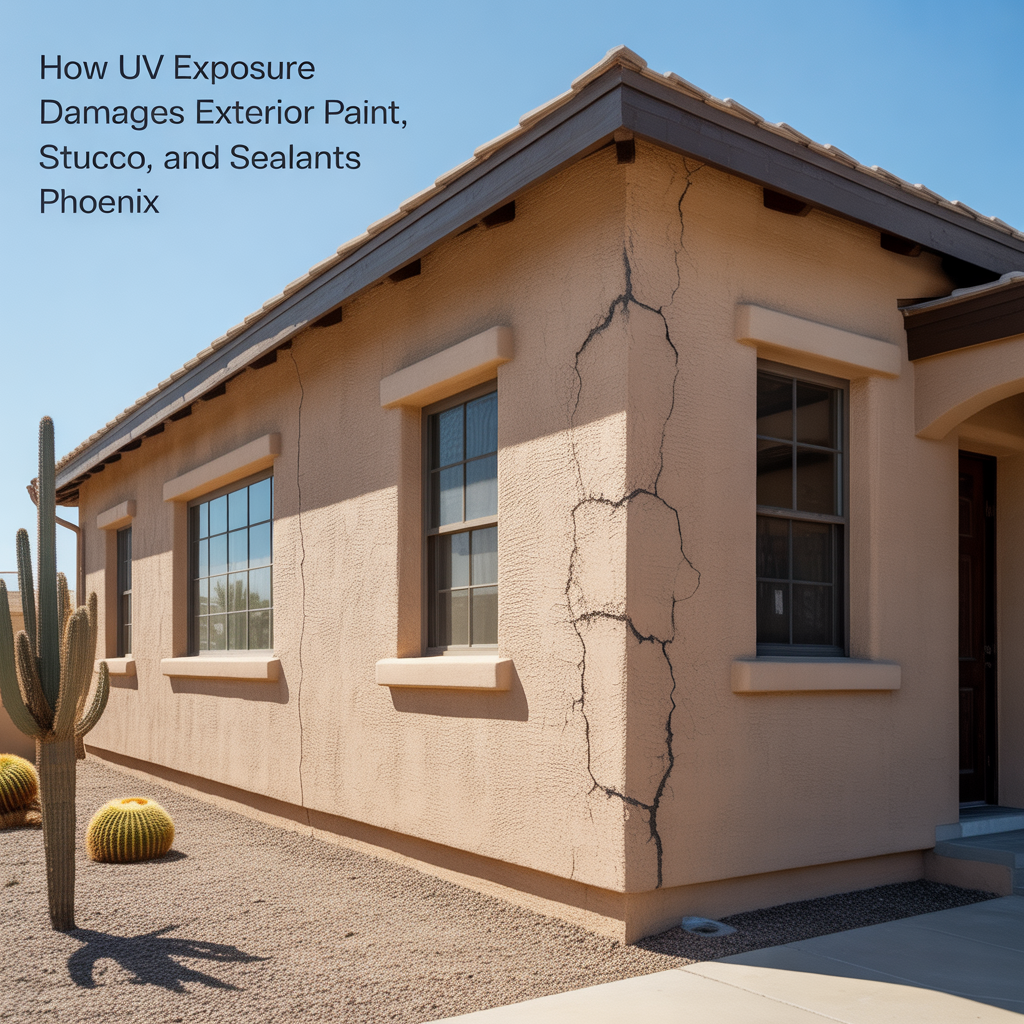
  • ALT TEXT Photorealistic Phoenix stucco home with faded paint and cracked sealant around windows under intense desert sunlight, illustrating how UV exposure damages exterior paint, stucco, and caulking in Arizona homes.

    How UV Exposure Damages Exterior Paint, Stucco, and Sealants

  • ALT TEXT Photorealistic Phoenix home with rooftop heat shimmer and air conditioning condenser running under intense desert sun, illustrating how extreme Arizona heat shortens the lifespan of home systems.

    How Extreme Heat Shortens the Lifespan of Home Systems

  • ALT TEXT Photorealistic Phoenix home with a clay tile roof under intense desert sun and heat shimmer, illustrating how extreme Arizona heat and UV exposure cause roofs to wear out faster than in other cities.

    Why Phoenix Roofs Wear Out Faster Than Many Other Cities

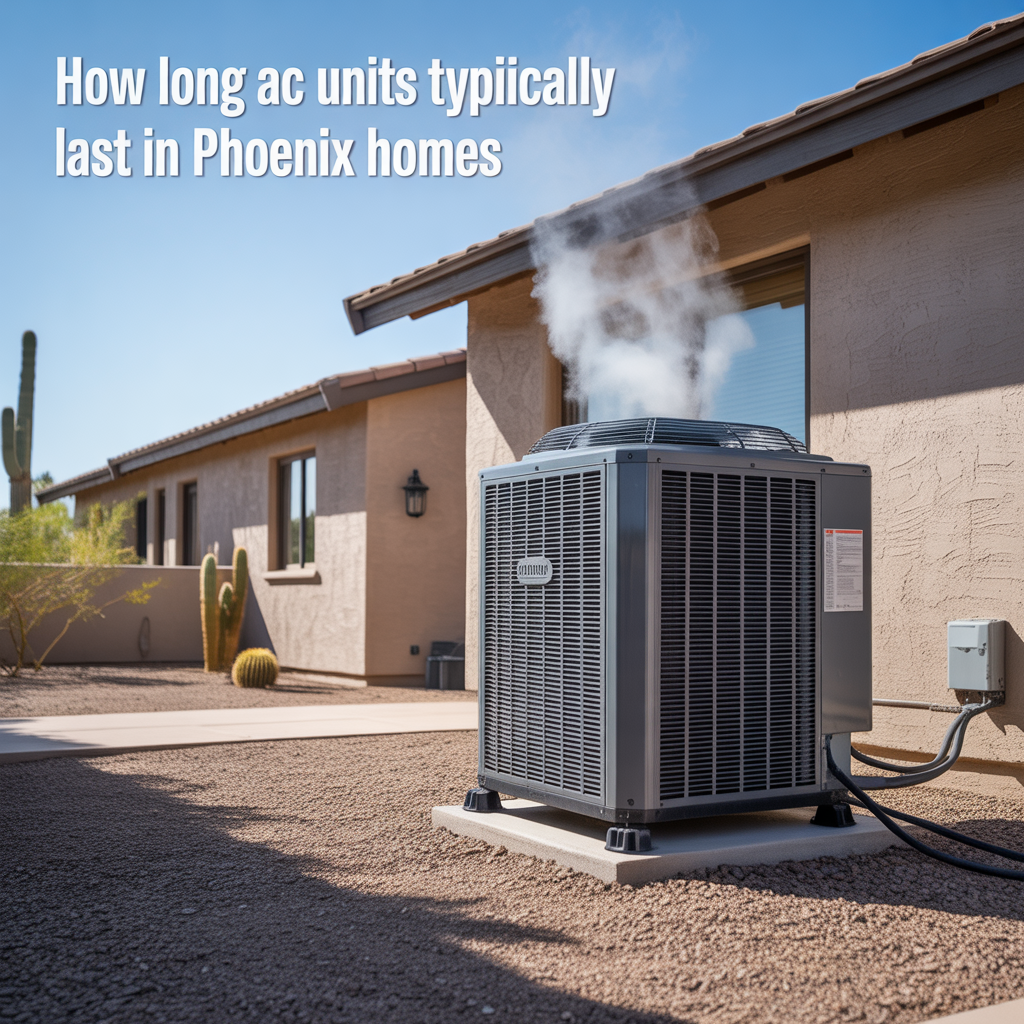
  • ALT TEXT Photorealistic image of a residential air conditioning condenser next to a stucco home in Phoenix with desert landscaping and bright sun, representing the lifespan of AC units in extreme Arizona heat.

    How Long AC Units Typically Last in Phoenix Homes

  • Alt Text: Photorealistic Phoenix Arizona homeowner standing in the driveway holding a clipboard while looking at a stucco home, representing a long-term strategy to protect and maintain the property.

    Building a Long-Term Protection Strategy

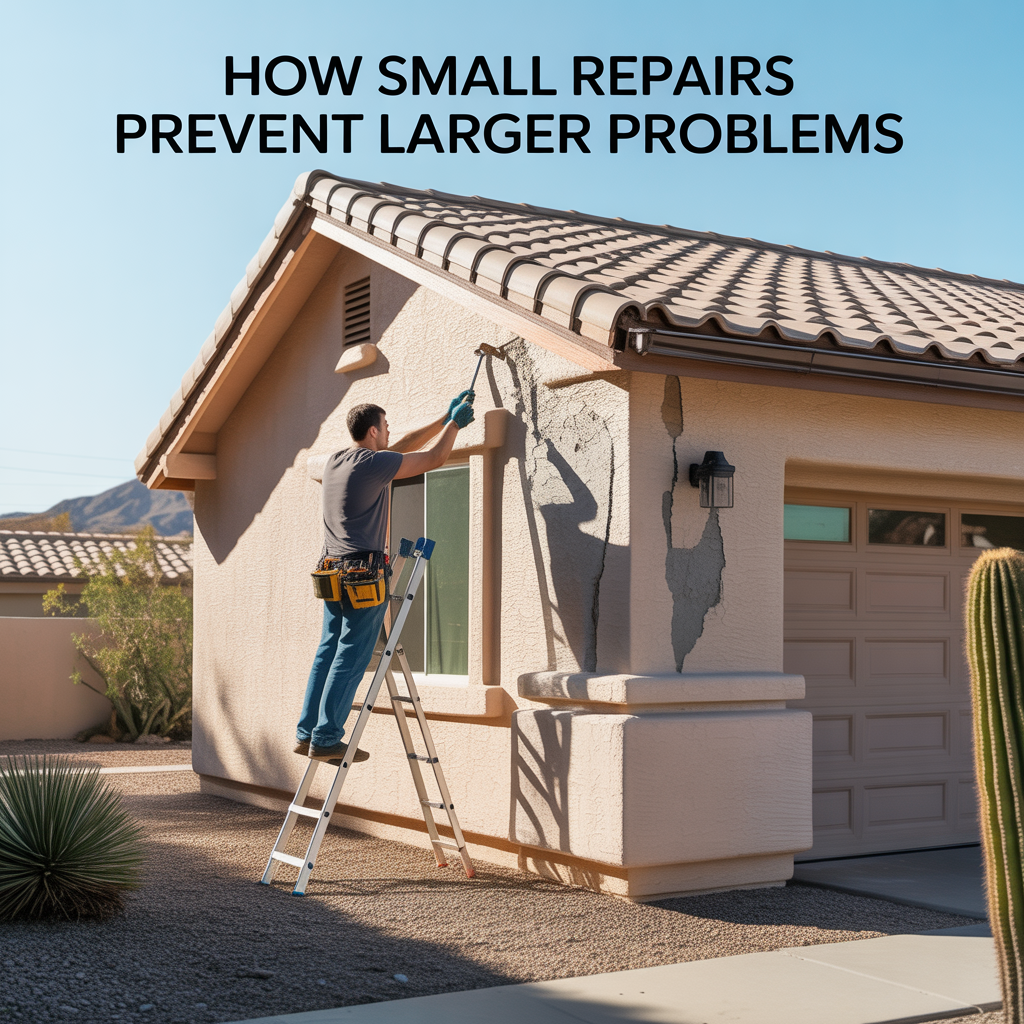
  • Alt Text: Photorealistic Phoenix Arizona homeowner repairing a small roof tile on a stucco home, illustrating how minor home maintenance prevents larger repair problems.

    How Small Repairs Prevent Larger Problems

  • Alt Text: Photorealistic older Phoenix Arizona stucco ranch-style home with mature desert landscaping and visible aging details representing maintenance and protection of older homes.

    Protecting Older Phoenix Homes

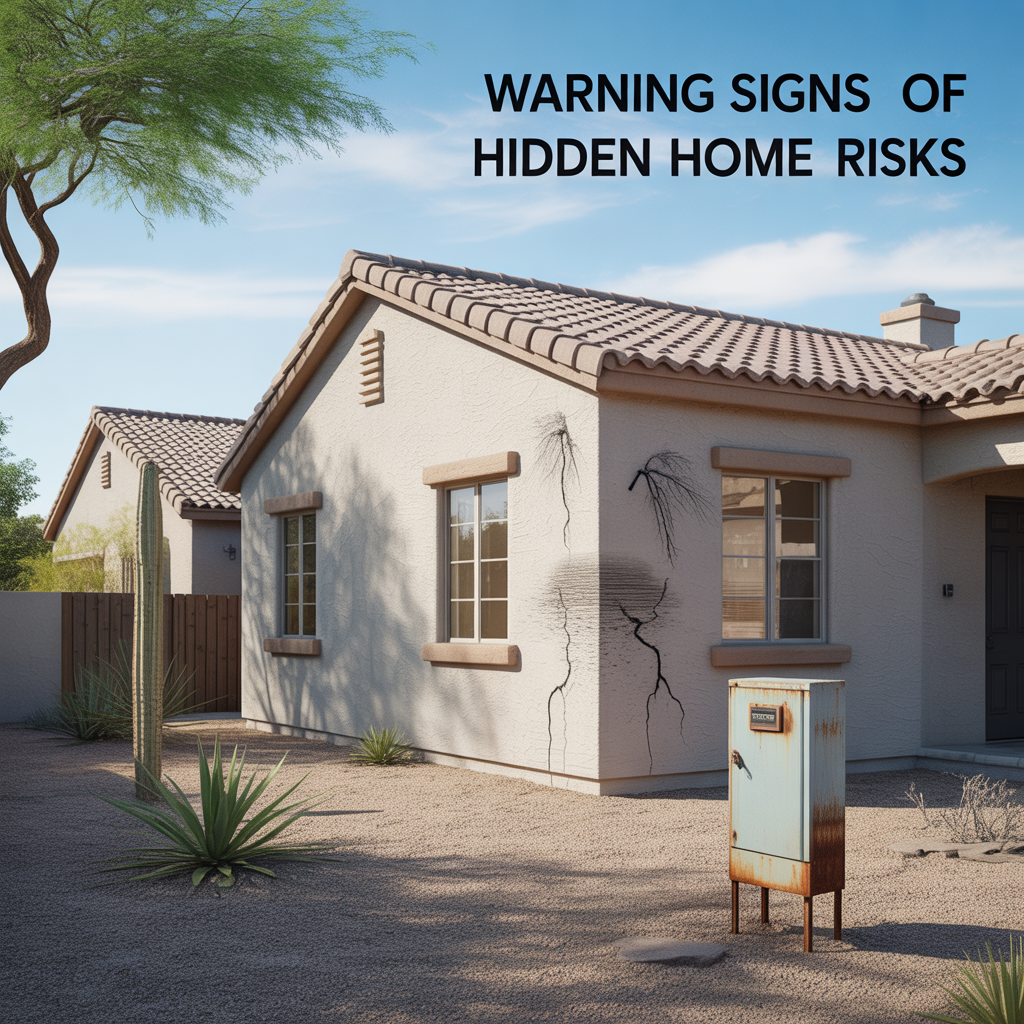
  • Alt Text: Photorealistic Phoenix Arizona stucco home with subtle warning signs like roof tile damage, small foundation crack, and water stains representing hidden risks homeowners may overlook.

    Warning Signs of Hidden Home Risks

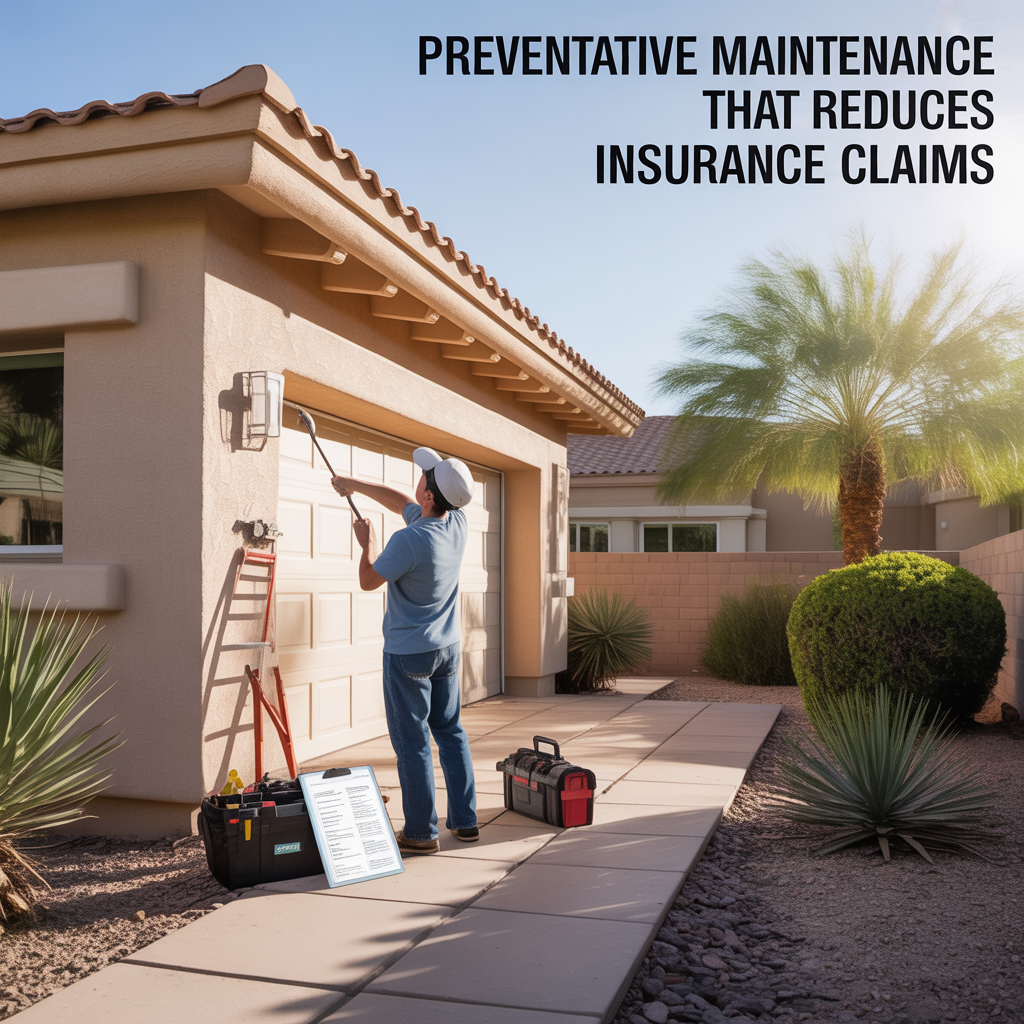
  • Alt Text Phoenix homeowner inspecting roof tiles and clearing drainage areas around a desert landscaped home to perform preventative maintenance and reduce insurance claim risks.

    Preventative Maintenance That Reduces Insurance Claims

  • Alt Text Phoenix homeowner and insurance advisor inspecting pool fencing, walkways, and patio steps around a desert landscaped property to reduce liability risks.

    Reducing Liability Exposure Around Your Property

  • Alt Text Phoenix homeowner reviewing liability coverage limits with an insurance advisor using documents and a tablet inside a sunlit living room with desert landscaping outside.

    Liability Coverage Limits Explained

  • Alt Text Phoenix homeowner meeting with an insurance advisor in a bright home office reviewing umbrella insurance coverage documents and liability protection options.

    When Umbrella Insurance Makes Sense

  • Alt Text Phoenix backyard gathering where a homeowner reviews liability insurance paperwork with an advisor while guests socialize on a patio with a pool and desert landscaping.

    Protecting Yourself From Guest Injury Claims

More from Denver

Most recent posts
    Loading…

    Discover more from Lairio — Real Estate Intelligence

    Subscribe now to keep reading and get access to the full archive.

    Continue reading