



Seller Fears→ [Seller Fears] & For more info on other fears Phoenix Real Estate → [Phoenix Real Estate Fears Guide]
Written by: Renee Burke
In Phoenix, where the morning sun climbs fast and freeways hum with purpose, the direction of your drive can whisper as much about a home as its square footage. Reverse commutes—heading against the flow of typical rush hour—often feel like a secret gift here in the Valley, but not every path delivers that ease. I’ve walked buyers through enough test drives to know: what feels effortless from Goodyear toward downtown can drain the life out of a Scottsdale trek.
As your local guide, I’ve seen how these patterns shape choices. A listing’s true comfort lies not just in miles, but in how the road cradles your routine—calm and predictable, or tense and unpredictable.
Decoding the Reverse Commute Edge
Most Valley traffic pulses inward toward Phoenix’s core in the a.m.—east from West Valley suburbs, south from North Phoenix, west from East Valley hubs. Reverse commuters swim upstream, dodging the worst backups on I-10 westbound or Loop 101 north. That flip can shave 15-20 minutes off a familiar slog, turning a 45-minute grind into a breezy 25.
Buyers sense this quickly during showings. They’ll pull up Waze from a Litchfield Park listing, grin at the green times heading east to Tempe offices, and linger longer inside. But head the wrong way against a stubborn surface-street crawl, and that same buyer shifts weight, eyes the clock. It’s emotional math: time reclaimed for coffee at home or kid drop-offs.
Easy Reverse Commutes: The Valley’s Sweet Spots
West Valley gems shine brightest for reverse morning warriors. From Avondale or Goodyear, I-10 eastbound flows freely while everyone else crawls west into the city. Picture slipping past Wigwam Creek preserves at 7:15 a.m., arriving at Chase Field offices with minutes to spare—no white-knuckled merges, just steady progress.
North Phoenix reverses effortlessly south on the 101 or I-17. Homes near Happy Valley or Deer Valley Road offer that rare calm: light traffic hugging Black Canyon, quick hops to Midtown via Cave Creek Road. Families love this—school runs to Madison District align perfectly, leaving evenings free for Anthem community trails.
East Valley flips west on US-60 or Loop 202 feel liberating too. A Mesa listing near Superstition Springs? You’re gliding against the Tempe-to-Chandler crawl, reaching Sky Harbor in under 30 minutes. These paths reward with predictability—minimal lights, wide shoulders, and that satisfying tailwind of empty lanes.
Draining Ones: Hidden Time Thieves
Not all reverses deliver bliss. South Phoenix or Laveen commutes north on I-10 or Loop 202 east slam into downtown feeders—reverse or not, construction near Sky Harbor or 7th Avenue’s infamous lanes add chaos. Those “Sevens” reverse lanes, flipping southbound mornings since the ’70s, help core traffic but frustrate cross-town hops with left-turn bans and sign confusion. Drivers weave unpredictably, turning a 20-minute promise into 35 minutes of honks.
Far Buckeye or Gila Bend stretches east feel endless against wind-swept dust on I-10—low density means no backups, but isolation amplifies boredom. And north-to-south on surface streets like 7th Street? Reverse helps, but signal timing and neighborhood cut-throughs drain energy, especially with kids asking “Are we there yet?”
Buyers I’ve guided often echo this: “It looked quick on the map, but the stops wore me down.”
Lifestyle Ripples: Beyond the Wheel
An easy reverse isn’t just faster—it’s freeing. West Valley reverse commuters reclaim mornings for Papago Park walks or Sprouts runs in Estrella. That extra half-hour means hybrid workers sync office days seamlessly, families sync school shuttles without stress.
Draining paths erode that. A draining Buckeye reverse might promise affordability but steal weekend recovery—fretting over evening returns when flows flip. Newcomers fear growth worsening this; locals know Loop 303 expansions help outer reverses but inner cores like the Sevens stay quirky.
Pets in tow? Easy paths mean less whining. Grocery hauls home? Predictability shines.
How Buyers Test and Decide
They don’t trust maps blindly. During showings, I hand them keys: “Drive it now—your route, your hours.” Waze or Google timelines get pulled up, three scenarios run: ideal, average, nightmare. Reverse perks glow—green waves on the 101 southbound seal love for a Surprise listing.
Fears bubble up: “Will new builds clog this?” I reassure with patterns—West Valley reverses hold steady, East stays fluid via 202 expansions. Decisions hinge here: easy feels like “home,” draining like “compromise.”
Seller Strategies: Spotlight the Flow
Listings that win highlight reverse reality. Note “Easy eastbound reverse to DTW—25 min to Chase Tower.” Stage with a dashboard mockup or app screenshot. Virtual tours embed drive cams—show that Goodyear-to-Phoenix tailwind.
Address drains head-on: “Quick alt via Dysart Rd if I-10 hiccups.” Transparency builds trust; buyers touring draining spots need comps showing nearby easy flips.
The Emotional Pull of Effortless Drives
Deep down, it’s about energy. Easy reverses whisper balance—more you-time in this sun-baked sprawl. Draining ones nag, turning dream homes into reluctant choices.
Phoenix rewards those who read the roads right. Listings in sweet-spot reverses don’t just sell; they feel right from the first drive.
If you’re scouting Valley homes and wondering if that listing’s commute will lift you up or wear you down, you don’t have to navigate it alone. These patterns are second nature to me, from Avondale’s gifts to the Sevens’ quirks.
Reach out when you’re ready—let’s find your easy path together. You’ve got this, and I’m here for the ride.
Get the full Phoenix Market Insights → [Market Insights]


-

How the Phoenix Desert Climate Shapes Everyday Life Inside the Home
-

How Phoenix Weather Patterns Shape Everyday Home Routines
-

Why Homes Often Feel More Comfortable After the First Year of Ownership
-

How Living in Phoenix Changes the Way Homeowners Use Their Homes
-

What New Phoenix Homeowners Learn During Their First Year of Ownership
-

How Daily Life Changes After the First Year of Living in a Phoenix Home
-
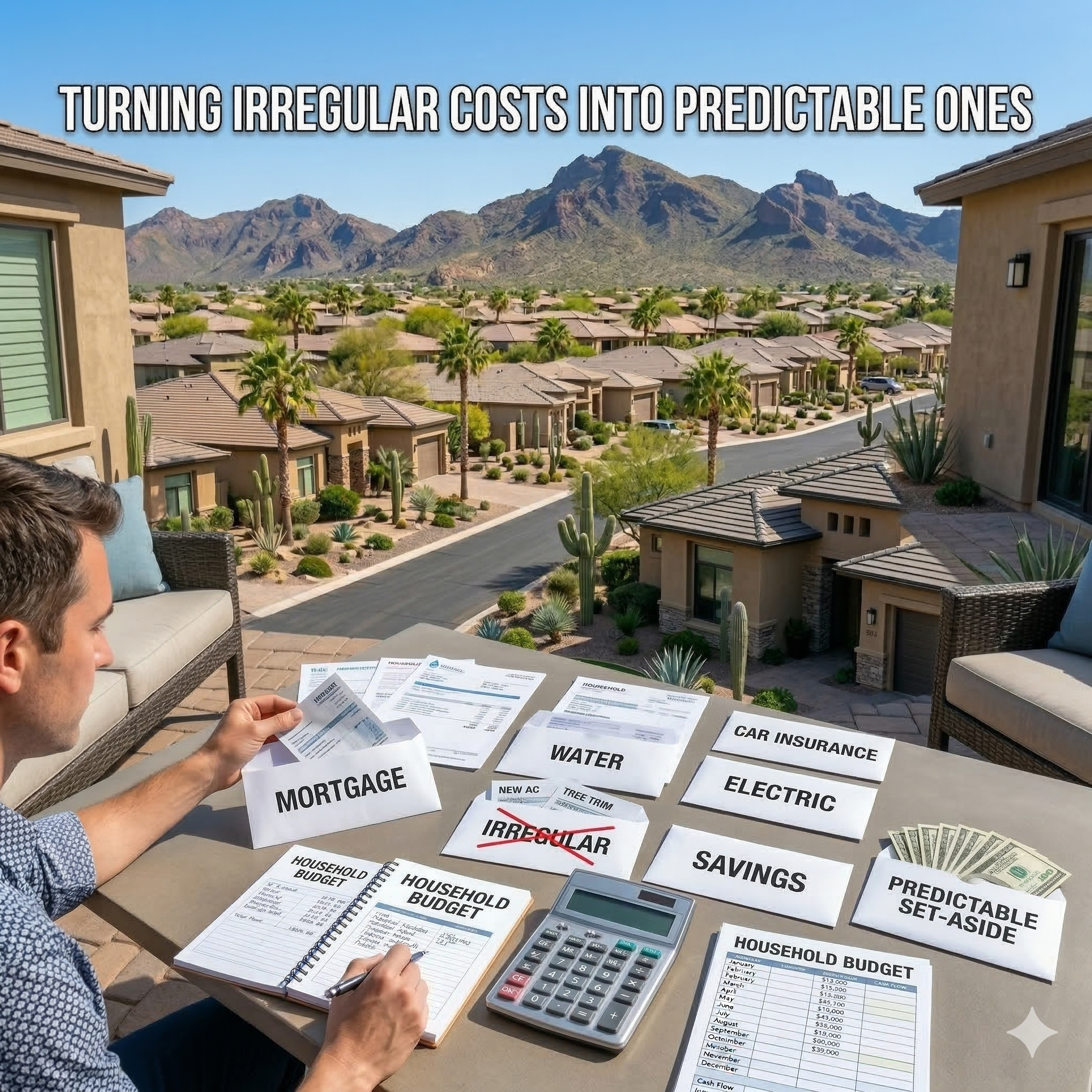
Turning Irregular Costs Into Predictable Ones
-

Budgeting for Ongoing Ownership
-

Repair vs Replace vs Defer Decisions
-

Planning Homeownership Like a Long-Term Asset
-

What Home Expenses You Can Safely Delay
-

Stopping Cost Creep Early
-

Cash Flow vs Net Worth Stress
-

Why “It’s Not That Much” Adds Up
-

Warning Signs Your Ownership Budget Is Tightening
-

The Cumulative Cost of Small Home Repairs
-

Designing Budgets Around Local Conditions
-

Utility Costs Over Time in Desert Climates
-

Insurance Increases Explained for Arizona Homeowners
-

How Inflation Impacts Phoenix Homeownership Costs
-

Avoiding Debt-Driven Homeownership Decisions
-

Replacing Systems on Your Timeline
-

Why Emergency Repairs Cost More
-

Timing Major Expenses Without Financial Shock
-

How Much to Keep in a Phoenix Home Reserve Fund