



Buyer Fears→ [Buyer Fears] & For more info on other fears Phoenix Real Estate → [Phoenix Real Estate Fears Guide]
Written by: Renee Burke
Phoenix sellers are smart, hardworking folks who care deeply about their homes and their families’ futures. But even the savviest among us can stumble into mindset traps that turn what should be a smooth process into something stressful and second-guessing.
These traps aren’t about a lack of information—they’re about how our emotions and assumptions quietly shape our decisions in this unique Valley market.
Trap 1: Anchoring to Your Neighbor’s Sale
It’s human nature. You hear your neighbor down the street sold their house last spring for a number that made your eyes widen, and suddenly that becomes the benchmark.
But Phoenix neighborhoods aren’t static. The home next door might have hit the market during a mini-peak, had a rare feature like a pool or RV gate that buyers craved right then, or benefited from a different staging approach.
When you anchor too hard to that one data point:
- You price higher than today’s reality, leading to crickets in showings.
- You feel personally insulted when feedback doesn’t match your expectations.
- You delay adjustments, letting your listing age and lose momentum.
How to step out: Look at the full picture of recent sales in your specific area—three to five comparables, not just the shiny outlier. Ask your agent for the “net sheets” from those sales, factoring in concessions and carrying costs. Your home deserves its own fresh evaluation, not a shadow of someone else’s moment.
Trap 2: Chasing the “Perfect” Market Timing
“I’ll wait until rates drop” or “Spring is always better” or “Let’s see if inventory tightens up.” Sound familiar?
Phoenix’s market moves with jobs, transplants, school calendars, and even monsoon season moods—not a predictable calendar. By the time headlines confirm a shift, you’re often already late to it.
This trap keeps you:
- Frozen on the sidelines while life changes (job offers, family needs) wait.
- Reacting to rumors instead of acting on your actual timeline.
- Trading real equity today for an uncertain “maybe” tomorrow.
How to step out: Flip the question. Instead of “Is this the perfect time?” ask “Does selling now serve my life and finances better than waiting?” Life rarely pauses for market cycles. Clarity about your “why” often reveals that moving forward feels better than waiting for stars to align.
Trap 3: Thinking “Condition Doesn’t Matter Anymore”
In the craziest boom years, sure—dusty garages and dated carpet still sold. But Phoenix buyers today, with more choices, notice everything.
You might think: “It’s priced right, so they’ll overlook the yard or the popcorn ceilings.” But in a showings trickle rather than a rush, each flaw whispers “higher maintenance” to buyers who can afford to be choosy.
This shows up as:
- Buyers mentally deducting $10K–$20K for fixes you planned to ignore.
- Competing homes stealing attention because they feel turnkey.
- Your “good enough” becoming “not quite” next to staged neighbors.
How to step out: Pretend every showing is a first date. Fresh paint in neutral tones, deep cleaning, curb appeal basics, and minor updates like new fixtures signal “cared-for home” without breaking the bank. In Phoenix’s sun-drenched market, a crisp exterior and bright interiors make buyers linger—and offer.
Trap 4: Treating Price as Your Only Leverage
Price gets all the attention, but it’s just one lever. Sellers fixate on “Will we get our number?” and overlook the full negotiation toolkit.
Phoenix deals often hinge on:
- Closing timelines that fit the buyer’s move.
- Leasebacks so you don’t rush your next place.
- Repair credits versus full fixes.
- Even small inclusions like appliances or blinds.
When price eclipses everything:
- You leave equity on the table by rejecting solid offers over minor terms.
- Buyers walk because the full package doesn’t fit their puzzle.
- You burn energy haggling dollars instead of crafting win-wins.
How to step out: Think “total value package.” Before listing, map your must-haves versus nice-to-haves. In negotiations, prioritize net proceeds after costs, plus peace of mind. Phoenix buyers appreciate flexibility—it often unlocks better outcomes than a rigid line in the sand.
Trap 5: Emotional Attachment to “My Home’s Story”
Your house holds memories—kids’ first steps, holiday gatherings, that backyard citrus tree you planted. It’s not just walls; it’s your story.
But buyers see a house, not your history. They imagine their story, and clinging to yours can cloud judgment:
- Pricing based on “what we’ve invested” instead of market value.
- Defensiveness when feedback notes wear-and-tear.
- Reluctance to depersonalize, making it hard for buyers to envision themselves.
This trap quietly erodes confidence and prolongs the process.
How to step out: Reframe it as “passing the torch.” Stage to highlight universal appeal—clear counters, neutral decor, open spaces ready for new memories. Visit your home as a buyer would: What story does it tell them? When you detach just enough, you invite the right family to write the next chapter.
Trap 6: Panic-Comparing to the Headlines
One day it’s “Phoenix crash incoming!” Another, “Market rebounding!” Sellers scroll Zillow, Reddit, or news feeds and spiral: “Is my home next?”
Phoenix’s micro-markets defy one-size-fits-all drama. Your street in Gilbert family tracts behaves differently from Ahwatukee empty-nesters or Central Phoenix condos.
This fuels:
- Premature price slashes from fear.
- Overreactions to one stale listing nearby.
- Doubt in your agent’s steady counsel.
How to step out: Tune into your ZIP code’s pulse, not national noise. Track hyper-local metrics—your neighborhood’s absorption rate, price-per-square-foot trends, buyer profiles. Trust data over drama, and lean on someone who filters headlines through Valley reality.
Why These Traps Hit Phoenix Sellers Hard
Our market’s blend of transplants, job growth, and weather-driven lifestyle creates fast shifts. Booms inflate egos quickly; cool-downs trigger “what ifs” just as fast. Add Valley sprawl—where Gilbert feels worlds from Glendale—and it’s easy to misread your spot in the bigger picture.
But here’s the reassuring truth: Awareness alone sidesteps 80% of these pitfalls. Sellers who pause, reframe, and focus on controllable actions—pricing, prep, mindset—navigate any cycle with grace.
Quick Trap-Avoidance Checklist
Before listing (or relisting):
- Gather 4–5 true comps from the last 30–60 days in your area.
- Walk your home as a picky buyer—what needs love? Budget $2K–$5K for impact fixes.
- Write your top three “musts” and three “flexibles” for negotiations.
- Agree on a 2-week “watch period” to adjust without emotion.
- Depersonalize: Box up 60% of personal items, neutralize bold colors.
Small shifts, big peace of mind.
A Warm Next Step
You’ve poured heart into your Phoenix home, and selling it deserves the same care—not reactive stumbles or second-guessing.
If any of these traps feel familiar, or you just want a steady voice to help you spot them before they slow you down, I’m here. Let’s sit down over coffee (or Zoom), look at your home through clear eyes, and build a plan that honors your story while setting you up for a confident close.
You don’t have to navigate Phoenix selling solo. When you’re ready, reach out—I’d love to guide you through, step by thoughtful step.
Get the full Phoenix Market Insights → [Market Insights]


-

How the Phoenix Desert Climate Shapes Everyday Life Inside the Home
-

How Phoenix Weather Patterns Shape Everyday Home Routines
-

Why Homes Often Feel More Comfortable After the First Year of Ownership
-

How Living in Phoenix Changes the Way Homeowners Use Their Homes
-

What New Phoenix Homeowners Learn During Their First Year of Ownership
-

How Daily Life Changes After the First Year of Living in a Phoenix Home
-
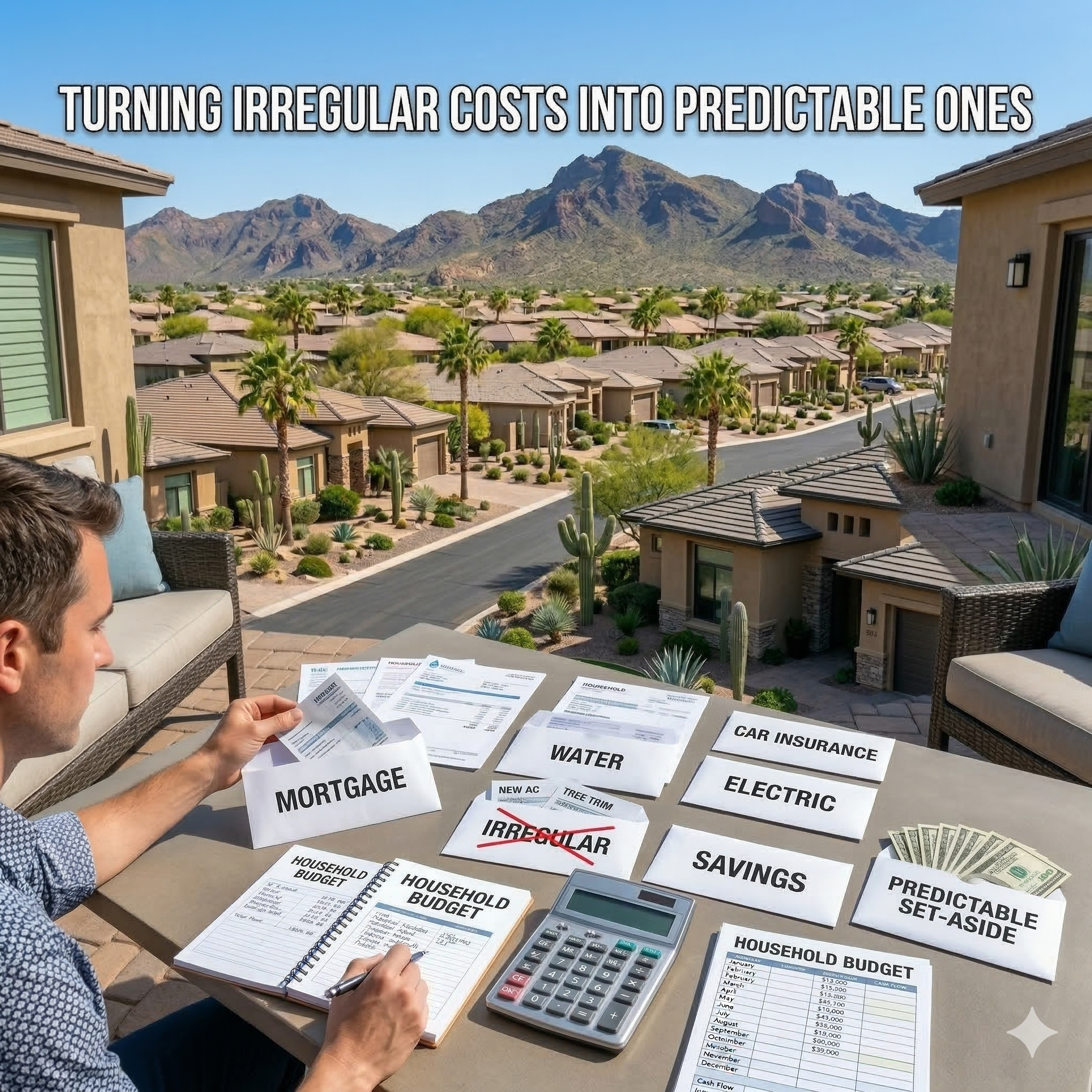
Turning Irregular Costs Into Predictable Ones
-

Budgeting for Ongoing Ownership
-

Repair vs Replace vs Defer Decisions
-

Planning Homeownership Like a Long-Term Asset
-

What Home Expenses You Can Safely Delay
-

Stopping Cost Creep Early
-

Cash Flow vs Net Worth Stress
-

Why “It’s Not That Much” Adds Up
-

Warning Signs Your Ownership Budget Is Tightening
-

The Cumulative Cost of Small Home Repairs
-

Designing Budgets Around Local Conditions
-

Utility Costs Over Time in Desert Climates
-

Insurance Increases Explained for Arizona Homeowners
-

How Inflation Impacts Phoenix Homeownership Costs
-

Avoiding Debt-Driven Homeownership Decisions
-

Replacing Systems on Your Timeline
-

Why Emergency Repairs Cost More
-

Timing Major Expenses Without Financial Shock
-

How Much to Keep in a Phoenix Home Reserve Fund