


This guide is part of our Phoenix Home Buying Process→ [Phoenix Home Buying Process] & for information on selling visit Phoenix Home Selling Process→ [Phoenix Home Selling Process]
Written by: Renee Burke
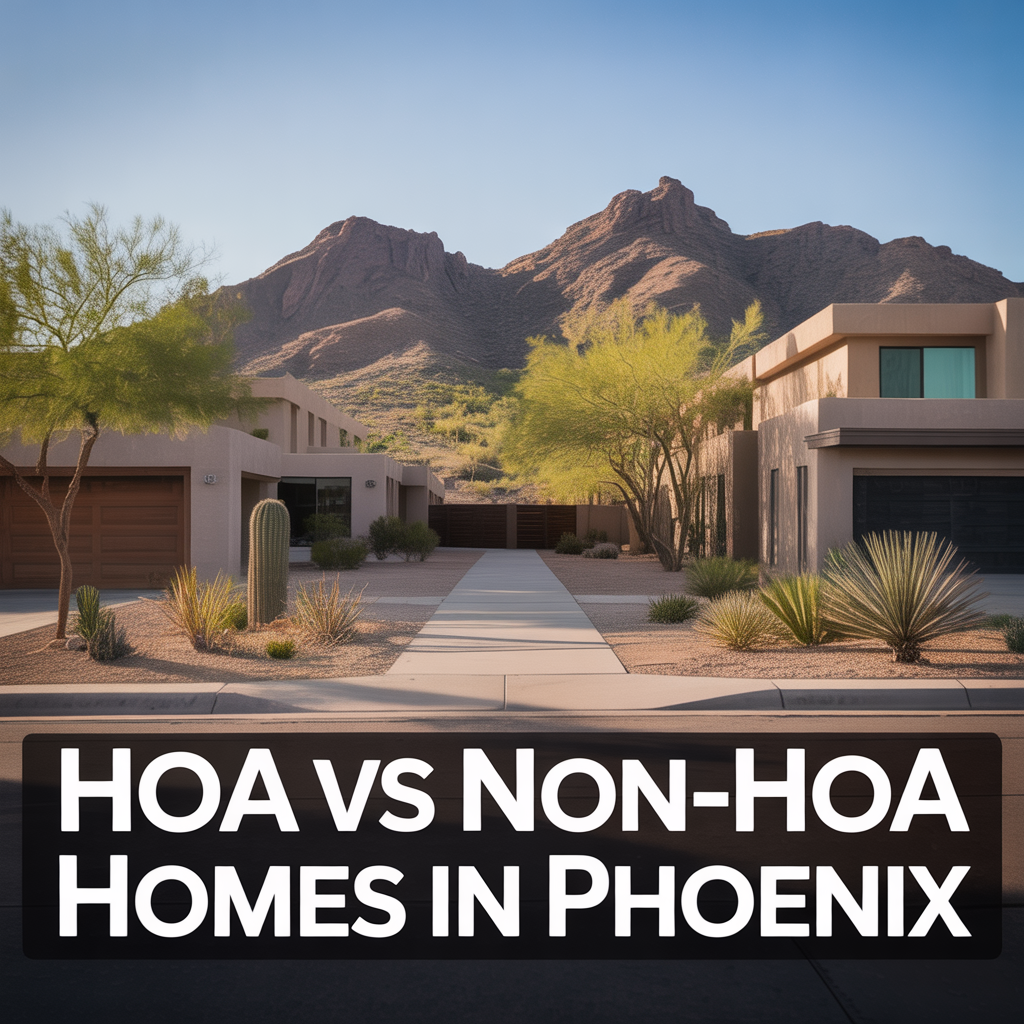
If you’ve been exploring homes around Phoenix—whether in Gilbert, Peoria, Chandler, or up toward Cave Creek—you’ve likely noticed something: most neighborhoods mention an HOA (Homeowners Association). But just as common, there are those quiet pockets of non-HOA communities, often tucked behind mature desert landscaping or older tree-lined streets that feel a little freer, a little more independent.
Understanding which type of home truly fits your lifestyle here means looking beyond the price tag and into how you actually want to live day to day. It’s not about one being better than the other—it’s about what kind of environment helps you feel comfortable, protected, and at ease once you’ve moved in.
The Role of HOAs in the Phoenix Metro
Phoenix’s housing landscape is unique because of how quickly it expanded over the past 30 years. Many of today’s master-planned communities—places like Power Ranch in Gilbert, McDowell Mountain Ranch in Scottsdale, or Verrado in Buckeye—were built with HOAs from the start.
An HOA’s main job is to maintain community standards and protect property values. In practice, that often means enforcing exterior maintenance rules, preserving neighborhood aesthetics, and managing shared amenities such as:
- Community pools, clubhouses, or fitness centers
- Landscaping of common areas and entryways
- Street and lighting maintenance
- Hosted neighborhood events or security patrols
Monthly fees vary widely, from around $30 per month in smaller subdivisions to over $150 in resort-style communities with extensive amenities. Generally, the higher the fee, the more neighborhood perks you’ll find.
For many Phoenix-area homeowners, these costs are viewed as a manageable trade-off for peace of mind. They like the consistency. They like that their neighbor can’t paint the garage door lime green or let a dead saguaro stand for months. The result? A clean, cohesive, resort-style feeling that appeals to many.
Why Some Buyers Prefer HOA Communities
There’s a certain reassurance in an HOA community—especially for those who value neat surroundings and predictability.
If you travel often, an HOA can also mean less daily worry. Many associations manage front yard landscaping or have neighborhood patrol services that keep watch on vacant homes. It’s a comfort to know that someone’s keeping an extra eye on things while you’re away.
HOAs also tend to attract neighbors who want to preserve a certain standard of living. Whether you’re raising a family in Eastmark or downsizing in Sun Lakes, that shared mindset can make for a harmonious neighborhood dynamic.
Still, buyers should review each HOA’s Covenants, Conditions, and Restrictions (CC&Rs) before moving forward. Some rules are lighter—focused mainly on exterior paint colors and tree trimming—while others reach deeper into personal preferences. For instance, some communities restrict short-term rentals, RV parking, or even the types of holiday decorations you can display.
The Case for Non-HOA Living
On the other side of the coin lies non-HOA living—a world of independence, flexibility, and a touch of old-school Arizona character. You’ll find these neighborhoods sprinkled across Phoenix’s older cores, areas like Central Phoenix, the north side of Glendale, west Mesa, or parts of Tempe, where homes were built before HOAs became standard.
For many longtime locals, that freedom is priceless. You can park your boat in your driveway, plant a pollinator garden that overflows onto the sidewalk, or paint your door turquoise without filing a committee request.
Non-HOA homes often attract creative types, entrepreneurs, or anyone who values autonomy. Investors also appreciate them—especially if they plan to use the property as a short-term rental or modify the structure down the road.
That said, freedom requires diligence. Without an HOA, no one’s stepping in to handle shared maintenance or dispute a messy neighbor’s yard. Neighborhood quality becomes a collective effort. In well-kept non-HOA pockets, cohesive pride of ownership still shines through, but it’s up to every homeowner to uphold it.
Cost Considerations Beyond Fees
It’s tempting to focus only on the monthly HOA dues when comparing options, but the financial reality goes deeper.
Non-HOA homeowners might save a few hundred dollars per quarter on fees, but they also shoulder maintenance costs directly. That means paying for any front landscaping, exterior repainting, or alley cleanups out of pocket.
In contrast, owners in HOA communities may not realize how much value they’re getting for their dues until something goes wrong elsewhere—like when a retaining wall crumbles or a neighbor’s untrimmed tree obstructs the sidewalk. Those small maintenance savings can add up to big differences over time.
From a resale perspective, homes within well-managed HOAs tend to retain value steadily because of the uniform upkeep and neighborhood appeal. Non-HOA homes, however, can command premium pricing when they’re rare in high-demand areas—especially near downtown Phoenix or Arcadia, where space and independence are at a premium.
Lifestyle Alignment Matters More Than Rules
When helping clients choose between HOA and non-HOA homes, I always come back to lifestyle fit. Ask yourself:
- Do you enjoy structure and shared guidelines that keep everything in order?
- Or do you find joy in personalizing your space exactly how you like it, without seeking permission?
- Do you value community events and neighborhood amenities—or prefer privacy and personal space?
Neither answer is wrong. What matters is finding the rhythm that supports how you live.
For some, there’s comfort in a neighborhood where everyone’s mailbox, driveway, and entry lighting match. For others, that sameness can feel restrictive. Phoenix gives you both options in abundance—you just need to know where to look.
The Phoenix Balance: Where Each Type Thrives
Here’s how this choice often plays out across the Valley:
- East Valley (Gilbert, Mesa, Queen Creek): Most newer developments come with HOAs, offering manicured landscapes and family-friendly amenities. Non-HOA homes here tend to be older, more affordable, and often richer in personality.
- Central Phoenix and Tempe: You’ll find mid-century homes and historic neighborhoods that proudly remain HOA-free, ideal for buyers who love architectural character and individuality.
- West Valley (Peoria, Surprise, Buckeye): A strong mix of both. New master-planned communities like Vistancia feature robust HOAs, while older corners of Peoria and Glendale maintain plenty of non-HOA options.
- North Scottsdale and Cave Creek: Here, the divide can be striking—luxury HOA enclaves with gated entries sit just minutes from sprawling desert estates with wide-open freedom.
Each area brings its own flavor. What ties them together is choice—Phoenix’s vast range of neighborhoods ensures that whether you crave order or independence, there’s a place that fits your story.
Addressing Common Concerns
It’s completely normal to feel uneasy about HOAs if you’ve heard stories about overzealous boards or restrictive rules. The truth is, most associations in the Valley are well-run and transparent, often staffed by volunteer residents who truly care about their neighborhoods. And if issues arise, HOAs must still operate under Arizona law, which gives homeowners clear channels for communication and resolution.
On the flip side, some buyers assume that a non-HOA area means lower quality or neglected properties—but that’s often not the case. In many older Phoenix neighborhoods, pride of ownership runs deep. You’ll see desert xeriscape gardens lovingly maintained by hand, or vintage ranch homes kept in pristine condition for decades.
The key is local knowledge—understanding each pocket’s personality, maintenance habits, and resale trends before you commit.
Making the Right Choice for You
Ultimately, deciding between an HOA and non-HOA home isn’t just a real estate choice—it’s a lifestyle one. It’s about how you want to feel when you pull into your driveway at the end of the day.
If you picture yourself decompressing by a neighborhood pool, joining Friday night food truck gatherings, and never worrying about common-area upkeep, an HOA community may be a perfect match.
If, however, you love a little independence—being able to remodel your front gate, host outdoor art nights, or turn your backyard into your personal desert retreat—a non-HOA neighborhood might better reflect your Arizona spirit.
A Warm Word of Guidance
Every home and neighborhood in Phoenix tells a slightly different story. Having helped countless families and individuals buy and sell across the Valley, I’ve seen how meaningful it is to find not just a home, but a community that fits the pace and comfort of your life.
If you’re thinking about making a move in Phoenix, you don’t have to figure it out alone. Whether you’re drawn to the structure of an HOA or the independence of a non-HOA home, I’m here to help you weigh the details, understand the trade-offs, and feel fully confident in your decision.
Because in a city as diverse and sunlit as ours, there’s truly a place—and a lifestyle—that feels like home for everyone.
Get the full Phoenix Market Insights → [Market Insights]


-

Pool Liability and Insurance in Phoenix
-

Protecting Outdoor Structures and Shade Systems
-

HVAC Failures and Insurance Coverage
-

Roof Maintenance for Phoenix Climate Conditions
-

Preventing Water Damage in Desert Landscapes
-

How Monsoon Storms Affect Phoenix Homes
-

Why Policy Structure Matters More Than Premium
-

Understanding Coverage Limits and Exclusions
-

What Personal Property Coverage Actually Includes
-

How Liability Coverage Protects Homeowners
-

Replacement Cost vs Market Value in Phoenix Insurance
-

Understanding Deductibles Before You Need Them
-

How Renovations Affect Insurance Coverage
-

When to Review Your Home Insurance Policy
-

Why Replacement Cost Matters in Phoenix Insurance Policies
-

When a House Truly Starts to Feel Like Home
-
How Phoenix Neighborhood Living Builds a Sense of Belonging
-

Why Stability Plays a Major Role in Long-Term Home Satisfaction
-

How Familiarity Changes the Experience of Living in a Home
-
Renovate or Move? Deciding What to Do When Your Phoenix Home No Longer Fits
-
How Lifestyle Changes Affect Space Needs in Phoenix Homes
-
Why Some Phoenix Homes Begin to Feel Too Large After Children Move Out
-
When Homeowners Begin Considering Moving to a Larger Phoenix Home
-

Signs Your Phoenix Home Is Starting to Feel Too Small for Your Family
-

How Desert Landscaping Evolves Over Years of Phoenix Homeownership