


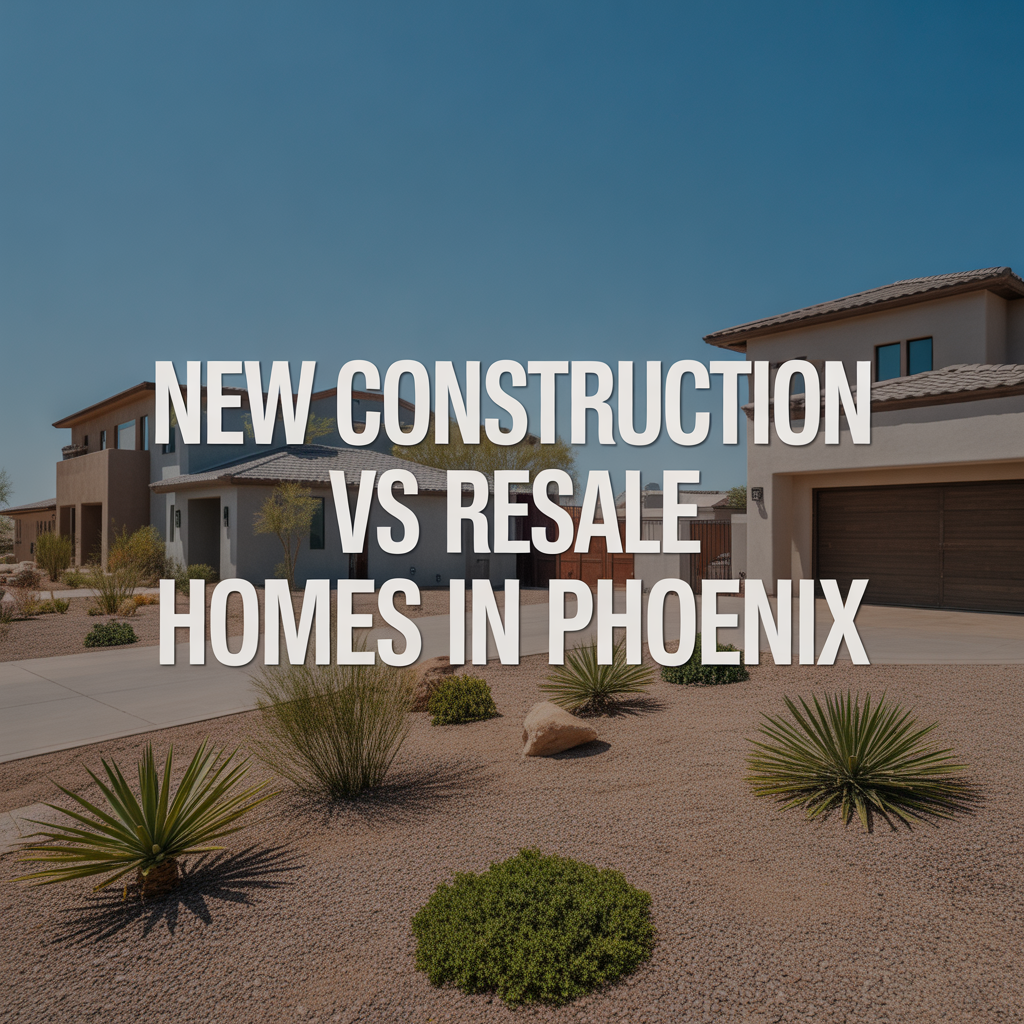
This guide is part of our Phoenix Home Buying Process→ [Phoenix Home Buying Process] & for information on selling visit Phoenix Home Selling Process→ [Phoenix Home Selling Process]
Written by: Renee Burke
When you’re dreaming of your next home in the Phoenix metro—maybe a sun-drenched patio in Gilbert, a quiet retreat in Peoria, or something with mountain views up in Cave Creek—one of the first paths you’ll cross is this: new construction or resale? It’s a choice that shapes not just your purchase, but your daily life in our Valley for years to come.
I’ve guided so many families through this exact crossroads, and I know the swirl of worries: Will a new build leave me waiting forever? Does resale mean hidden repair bills in our intense desert sun? Breathe easy—there’s no one-size-fits-all here. Let’s walk through it together, with the real Phoenix details that matter.
The Allure of New Construction in the Valley
New construction thrives in Phoenix’s growth corridors, from the booming East Valley edges in Queen Creek and Southeast Mesa to West Valley master-plans like Verrado in Buckeye or Vistancia in Peoria. Builders like Taylor Morrison, Toll Brothers, and Richmond American are pouring energy into open-concept layouts with 10-foot ceilings, smart home wiring, and tankless water heaters built for our long summers.
What draws buyers? Modernity from day one. Energy-efficient windows and foam insulation keep those AC bills in check during 110-degree peaks. You pick countertops, flooring—even some floor plans let you tweak room sizes. And warranties? Typically 1-2 years on systems like HVAC and plumbing, up to 10 years structural, easing that new-homeowner jitters.
In 2026, incentives sweeten the deal amid softening demand: mid-3% to mid-4% rate buydowns, $20K-$50K in closing credits, even free blinds or appliances. New closings dipped last year, so builders are flexible—especially on “build from dirt” where you lock in pricing early for equity as the community fills out.
Why Resale Homes Still Steal the Show
Resale homes anchor the heart of Phoenix living—think tree-lined streets in Central Phoenix, mature citrus groves in Chandler’s Ocotillo, or block after block of updated ranchos in Glendale. These aren’t just houses; they’re established nests with character: vaulted beam ceilings, pebble tec pools already shimmering, backyards shaded by decades-old mesquites.
Move-in ready often means yesterday. Close in 30-45 days versus 6-12 months for new builds, perfect if life’s timeline is tight. Lots run larger too—room for that casita or RV gate without subdivision cookie-cutter vibes. And in prime spots like Arcadia or South Gilbert, you’re minutes from top schools, freeways, and spots like Top Golf or the SanTan 202.
Pricing edges resale ahead now: softer values mean negotiation room, especially post-updates like solar panels or foam roofs tailored to our monsoon flashes. No construction dust, no builder change-order surprises—just unpack and enjoy the neighborhood rhythm that’s already humming.
Costs Side-by-Side: What You’ll Really Pay
Numbers tell a story, but context breathes life into them. Here’s a clear Phoenix-focused comparison:
New wins on warranties, resale on speed and established value. Factor our heat: new insulation saves $200-400/year on utilities; resales shine with pre-added misters or pavers.
Lifestyle Fit: Where Phoenix Shines for Each
East Valley families flock to new builds in Power Ranch or Eastmark for tot lots, walking trails, and Friday markets—resort-style without the resort price. West Valley offers similar in Surprise, but with bigger lots for toys.
Crave centrality? Resale rules: Scottsdale’s Gainey Ranch for golf proximity, Tempe’s Daley Park for ASU energy, or Mesa’s Red Mountain Ranch for hiking escapes. Resales here mean no construction noise, just neighbors who’ve weathered a few haboobs together.
Travel much? New’s low maintenance suits snowbird runs to Prescott. Empty-nesters? Resale’s move-in ease and character (think Saltillo tile floors) feel like home faster.
Navigating Concerns and Realities
I hear the fears: “New builds all look alike.” True in some tracts, but communities like Alamar in North Phoenix mix modern with desert flair. “Resales hide issues.” That’s why inspections matter—our sun ages roofs fast; budget $10K-20K for refreshers on 15+ year homes.
HOA tilt? New communities layer them thick (pools, gates); resales vary from light-touch in Peoria to none in older Glendale.
Market shift: 2026 favors buyers—resales outsell new, builders discount, but don’t sleep on prime resales vanishing quick.
Making Your Choice with Confidence
Picture your mornings: Sipping coffee on a new back patio overlooking fresh turf, or under a mature palo verde with birdsong from years of growth? Both paths lead to joy—new for fresh starts, resale for rooted comfort.
In Phoenix, it’s about your chapter: Growing family? New amenities beckon. Seeking character near freeways? Resale delivers.
A Gentle Invitation Forward
Phoenix’s blend of innovation and heritage means options abound for every vision. I’ve walked these paths with buyers from every walk, turning questions into keys that unlock the right door.
If you’re thinking about making a move in Phoenix, you don’t have to figure it out alone. Let’s talk specifics—tour a few East Valley specs or Gilbert gems—and craft a plan that feels just right. You’re in steady hands here.
Get the full Phoenix Market Insights → [Market Insights]


-

Shade Coverage and Tree Canopy Differences by Corridor
-

Summer Walkability Reality Near ASU and Mill Avenue
-

Choosing Proximity Based on Personality and Routine
-

How Tempe Town Lake Changes Social Routines
-

Family-Friendly Lake Events vs Adult Nightlife Patterns
-

Parking Structures and Rideshare Realities on Peak Nights
-
Mill Avenue Late-Night Hotspots vs Residential Calm
-

ASU Game Days and Event Calendar Impacts
-

Cross-Valley Trip Efficiency From Tempe
-

Micro-Mobility and Bike Utility by Corridor
-

Park-And-Ride, Game Day, and Event Access Patterns
-

Airport Timing Strategy Around ASU and Rush Hour Traffic
-

Light Rail Use Cases That Actually Improve Daily Life
-
Freeway vs Arterial Routing During Peak Windows
-

Real-World Drive Times to Sky Harbor From Different Tempe Pockets
-

How Traffic and Commute Direction Affect Daily Life in North vs South Tempe
-

Bike Paths, Walkability, and Short-Distance Transportation in Tempe
-

Driving Access From Tempe to Phoenix Sky Harbor Airport
-

Light Rail Access Between Tempe, Downtown Phoenix, and Mesa
-

Major Tempe Arterial Roads Including Rural Road, McClintock Drive, and Baseline Road
-

ASU Traffic Patterns and Peak Congestion Near Campus
-

Typical Commute Times From Tempe to Phoenix, Scottsdale, and Chandler
-

Tempe Freeway Access to US-60, Loop 101, and Loop 202
-

Shade, Tree Coverage, and Summer Outdoor Usability in Tempe
-

Outdoor Recreation Near Downtown Tempe and ASU