



Market and Timing Fears→ [Market and Timing Fears] & For more info on other fears Phoenix Real Estate → [Phoenix Real Estate Fears Guide]
Written by: Renee Burke
The difference between market speed and market strength is subtle but incredibly important—especially here in the Phoenix metro area, where different neighborhoods can “feel” hot for completely different reasons. Let’s unpack it in a calm, practical way you can actually use when making decisions.
What “Market Speed” Really Means
Market speed is simply how fast homes are going under contract.
In Phoenix terms, it’s questions like:
- How many days on market (DOM) before a well-priced home gets an accepted offer?
- How quickly new listings in a particular price band get absorbed by buyers?
- Are showings heavy in the first week, or do they trickle in over time?
When you hear people say, “Homes are flying off the shelves in north Central,” they’re talking about speed — how quickly the inventory is turning over once it hits the MLS.
A few everyday examples in our valley:
- A nicely updated Arcadia Lite bungalow listed on a Thursday and under contract by Monday: high speed.
- A luxury home in Paradise Valley taking 90–120 days to find the right buyer: slower speed, but that can be completely normal for that segment.
- A brand-new build in the outer edges of the Southeast Valley that sits for 60 days but then goes pending with strong terms: moderate speed, not necessarily weak.
Speed is about tempo, not power. It tells you how fast the dance is going, not who’s leading.
What “Market Strength” Really Means
Market strength is about who has the power and how resilient values are.
Instead of asking, “How fast is it selling?” strength asks:
- Are prices holding, rising, or being negotiated down?
- How much inventory is available relative to demand?
- How much leverage do buyers or sellers really have?
- Do we see price reductions, seller concessions, or bidding wars?
A strong market can show up in Phoenix in different ways:
- In-demand neighborhoods (like parts of Arcadia, North Central, or McCormick Ranch) where prices stay firm even if days on market stretch a bit.
- A community where appraisals consistently support contract prices.
- An area where, even in a slower season, buyers are still willing to pay close to list for the right home.
Strength is about underlying demand and bargaining power, not just speed.
You can have:
- Fast but weak markets.
- Slow but strong markets.
- And everything in between.
Fast Doesn’t Always Mean Strong
This is where a lot of headlines and quick takes mislead people.
There are times when Phoenix feels “fast” but not truly strong:
- Lower-priced homes or aggressively underpriced listings anywhere in the Valley may get multiple offers quickly, but that doesn’t mean the entire market is surging. Often, they were simply listed below where they should have been.
- In some outer-ring communities, investors may create speed by snapping up entry-level homes, but if they’re sensitive to rates or rental demand, that segment can cool fast when conditions change.
A market can look “hot” on Instagram—lots of “Just Sold in 3 Days!” posts—but underneath, you might see:
- Heavy seller concessions
- Buyers asking for repairs and getting them
- Appraisals coming in light and forcing price adjustments
That’s fast, but not necessarily strong.
Slow Doesn’t Always Mean Weak
On the other side, many Phoenix sellers get nervous when they hear, “Luxury is taking longer to move.” But some segments are supposed to move slower.
For example:
- A $3M custom home in Paradise Valley with a niche architectural style and a very specific buyer profile might sit 120+ days and still be in a very healthy niche market.
- Certain guard-gated golf communities in North Scottsdale may have longer average days on market simply because there are fewer qualified, truly motivated buyers at any given moment.
Here, speed is slower, but strength can still be solid because:
- There’s limited, special inventory
- Buyers who do show up are serious and well-qualified
- Prices don’t need to be slashed just to get activity
This is why comparing a 45-day sale in Gilbert to a 120-day sale in DC Ranch without context is so misleading. Different price points, different buyer pools, different expected speed—but both can be strong in their own way.
The Two Questions to Ask in Phoenix
Whenever you’re trying to understand what’s really happening—whether as an investor, homeowner, or future buyer—look at your specific area and ask:
- How fast are well-priced homes going under contract?
- That’s your market speed.
- Look at days on market and how quickly showings convert into offers.
- How much leverage do buyers and sellers actually have?
- That’s your market strength.
- Look at price reductions, concessions, sale-to-list ratios, and inventory levels.
You might find, for example:
- In parts of the East Valley, homes under a certain price point are moving quickly (high speed), but sellers are offering closing cost credits and repairs (mixed strength).
- In premium pockets of Arcadia or hillside properties with views, things might take longer to sell (moderate speed), but sellers rarely slash prices and buyers compete when something truly special hits (strong strength).
How This Shows Up in Real Life Decisions
For you, understanding the difference shapes strategy, not just expectations.
If you’re selling:
- In a fast but weak submarket, you may get quick interest but need to be realistic about appraisals, concessions, and buyer requests.
- In a slower but strong submarket, your priority is patience and precise pricing—not panicking at day 30 or 45 and chasing the market down with unnecessary reductions.
If you’re buying:
- In a fast, strong pocket (think highly walkable, amenity-rich, low-inventory neighborhoods), you must be prepared to act quickly and write clean, compelling offers.
- In a slower, softer pocket, you can take a breath, negotiate more confidently, and be choosier about condition and terms.
When you separate speed from strength, you stop reacting emotionally to “homes are selling in X days” and start asking, “What does this actually mean for my negotiation, my timing, and my risk?”
Why This Matters So Much in Phoenix
Our valley is a patchwork of micro-markets. Averages hide more than they reveal.
On any given week, I might see:
- A sharp, fast-moving entry-level segment in one suburb
- A steady, resilient mid-range in another
- A patient but strong luxury niche in a third
If you only look at average days on market for the entire metro, everything blurs together and feels either too scary or too good to be true. When we untangle speed from strength at the neighborhood and price-band level, the path forward becomes much clearer.
If you’re thinking about buying, selling, or investing anywhere in the Phoenix metro, you don’t have to decode all of this on your own. I’m here to help you understand not just how fast your part of the market is moving, but how strong it truly is—and what that means for your next step. When you’re ready to talk through your neighborhood, your price point, and your timing, I’ll be right here to walk through it with you, at your pace.
Get the full Phoenix Market Insights → [Market Insights]


-

Seasonal Home Maintenance Checklist for Phoenix Homeowners
-
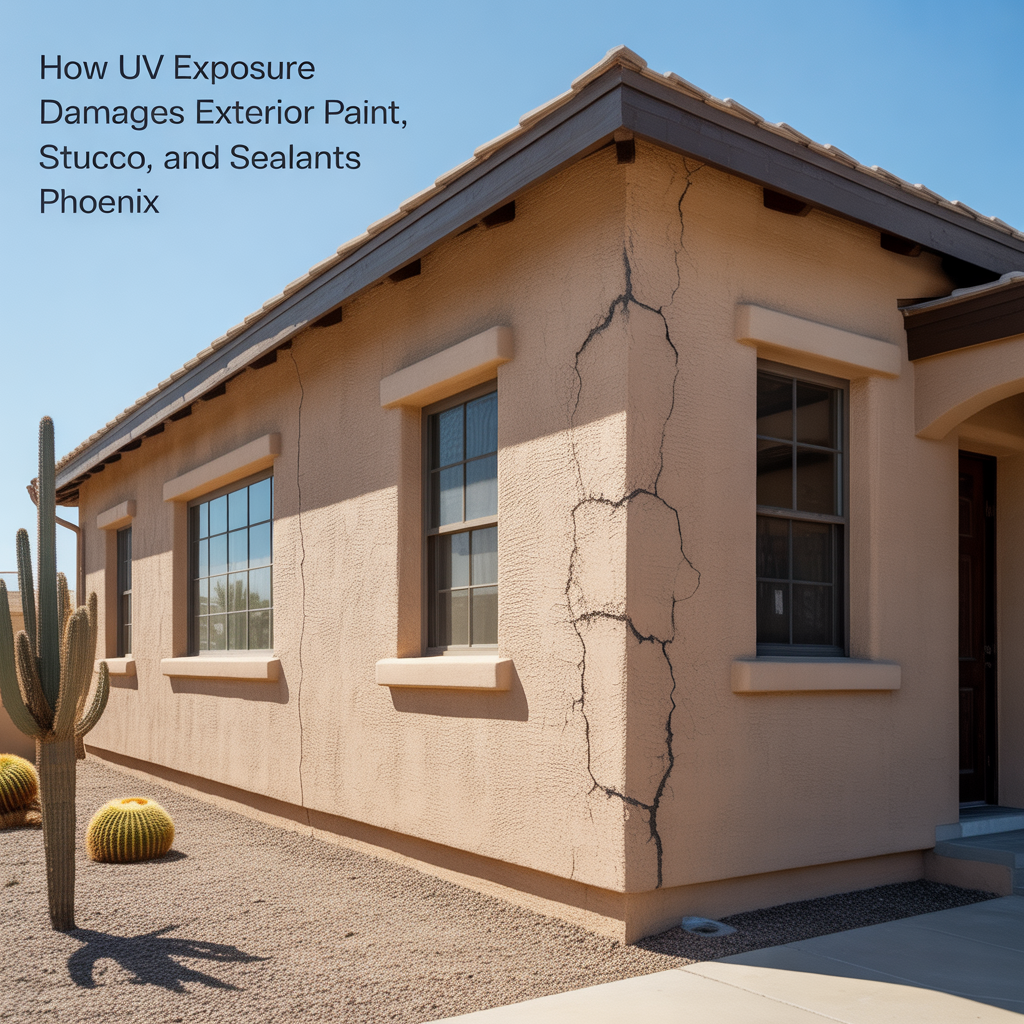
How UV Exposure Damages Exterior Paint, Stucco, and Sealants
-

How Extreme Heat Shortens the Lifespan of Home Systems