


Local Politics and Housing→ [Local Politics and Housing] & For more info on National Politics and Housing → [National Politics and Housing]
Written by: Renee Burke
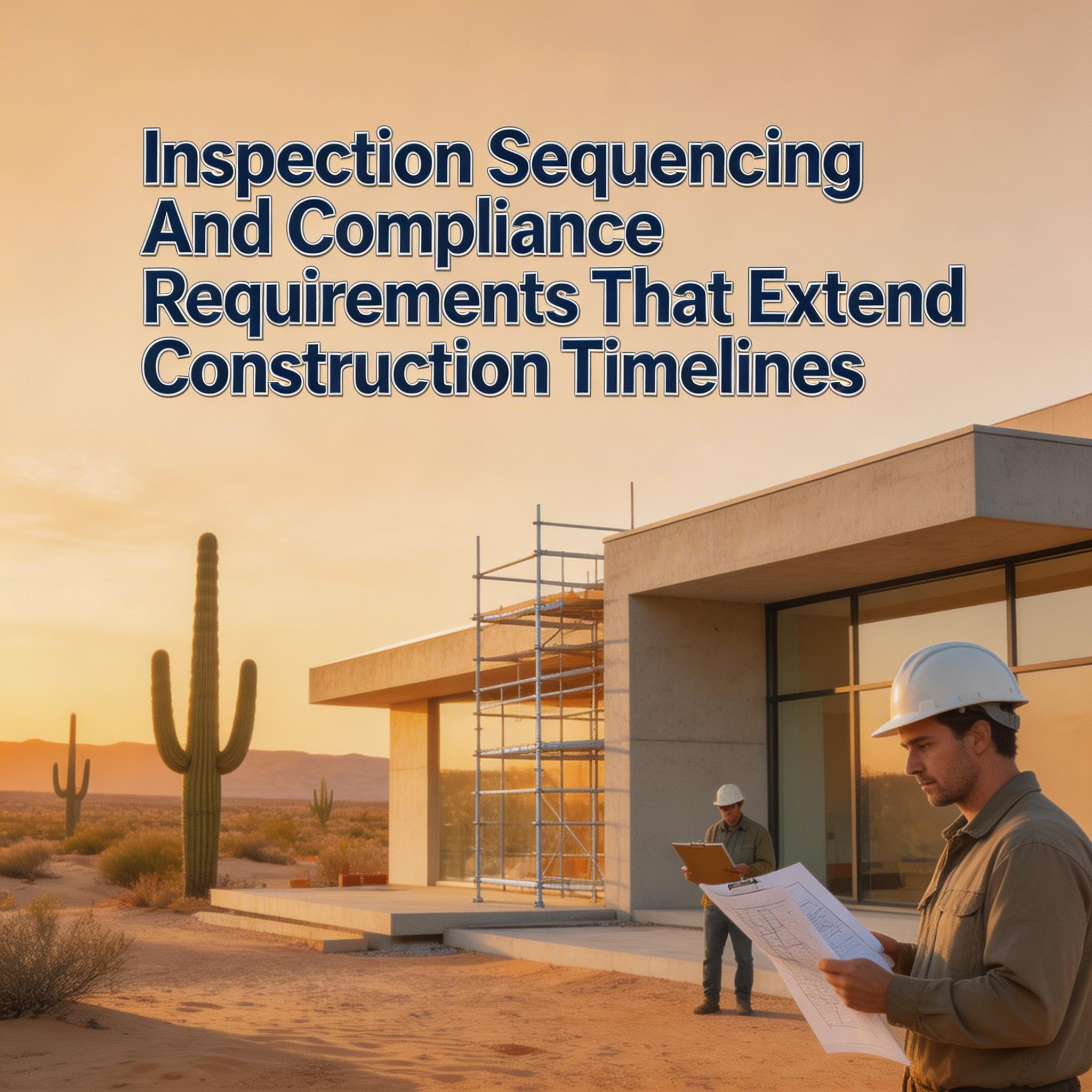
Inspection sequencing in Phoenix is built around critical “checkpoints” in the code, and each one can pause your schedule if anything is missing, out of order, or not ready when the inspector arrives. The more complex the project, the more those pauses add up and stretch timelines.
How Inspection Sequencing Actually Works
Phoenix won’t finalize a building permit—or allow permanent occupancy—until all required inspections have been completed and approved.
For typical ground‑up residential construction, there’s a predictable sequence:
- Before concrete is poured
- After rough framing (“strap & brace”)
- Before insulation and drywall (pre‑drywall)
Civil/site inspections run in parallel for grading, drainage, off‑site work in the right‑of‑way, and on‑site zoning items like parking, landscaping, shade, and ADA routes.
At each stage, work cannot be concealed until the inspection is passed. If you miss the sequence—pouring concrete or closing walls before an inspection—you risk having to expose or redo work, which can blow up a schedule.
Why Failed Inspections Add More Than a Day or Two
When a stage fails, Phoenix issues a “red tag” listing the deficiencies, and builders must correct the issues and call for re‑inspection before moving on.
Each failure can:
- Push the schedule at least one inspection cycle (often a day or more), especially if trades must return and materials re‑ordered.
- Trigger cascading delays: framing can’t start until footings pass; insulation and drywall can’t go in until rough MEP passes; final inspection waits on both building and site sign‑offs.
- Increase costs as trades stack up or get re‑scheduled, and as carrying and financing time grows.
On larger commercial and multifamily projects, multiple inspection types—structural, fire, electrical, mechanical, civil, and sometimes special inspections—have to be coordinated in the right order, so one failure can create a chain reaction.
New Code Cycles and Compliance Complexity
Phoenix adopted the 2024 Phoenix Building Construction Code (PBCC), aligning with newer international codes plus local amendments starting August 1, 2025.
That matters because:
- Plan reviewers now check submittals against 2024 code requirements, including updated structural loads, energy standards, and accessibility details.
- If plans use outdated code references or sizing methods, reviewers issue comments and require resubmittals, adding time before the first inspection ever happens.
- In the field, inspectors are enforcing new checklists; if teams are still building to old habits, they’re more likely to fail inspections and need rework.
In short, every code update raises the bar for documentation and execution. Teams that don’t adjust up front often pay for it later in the inspection sequence.
Civil/Site Inspections: The Often‑Forgotten Delay
Even when the building is ready, civil and site inspections can hold up final sign‑off:
- On‑site: parking counts and layouts, landscape and shade requirements, building placement, ADA routes, and screening must match the approved plans.
- Off‑site: curb, gutter, sidewalks, drive approaches, and any work in the right‑of‑way need their own permits and inspections.
If a project misses site details—incorrect striping, missing trees, improper slopes, incomplete ADA ramps—final inspections can’t clear, and certificates of occupancy are delayed until corrections are inspected and approved.
How All This Extends Construction Timelines
In practice, inspection sequencing and compliance extend timelines when:
- Inspections aren’t scheduled promptly at each stage, causing idle days.
- Work gets ahead of approvals (covering up items before inspection) and must be uncovered or redone.
- Plans don’t fully reflect current code, forcing redesign or field fixes.
- Civil/site work lags the building schedule, so final approvals stall even when interiors are done.
For developers and builders, that translates to:
- Longer carry periods on land and construction loans.
- Higher soft costs (design, engineering, legal, management).
- Compressed timelines at the end to meet sales or lease commitments, which can increase stress and risk.
For buyers and investors, it shows up as:
- Slipping delivery dates for new homes or units.
- Last‑minute closing delays when a final or site inspection doesn’t pass on the first try.
- In some cases, higher prices over time as builders price in these delays and compliance risks across their pipeline.
A Warm Closing From Renee
If you’re watching a new build in Phoenix and wondering why completion dates feel so fluid, a lot of the answer lives in those inspection checkpoints and the code details behind them. It’s not just “slow construction”—it’s a carefully sequenced process where each box has to be checked in the right order before you get your keys.
You don’t have to track all of that by yourself. This is exactly the kind of behind‑the‑scenes reality I walk clients through—what stage the build is actually in, which inspections are coming up, and how realistic a promised timeline feels.
If you’re thinking about making a move in Phoenix, you don’t have to figure it out alone. Reach out anytime, and we’ll look at specific projects together so you understand where they are in the inspection sequence and what that really means for your move‑in date.
Get the full Phoenix Market Insights → [Market Insights]


-

Repair vs Replace Decisions for Phoenix HVAC Systems
-
Creating a Long-Term Home Maintenance Plan
-

How Often Phoenix Homes Should Be Professionally Inspected