


National Politics and Housing → [National Politics and Housing] & For more info on Local Politics and Housing→ [Local Politics and Housing]
Written by: Renee Burke
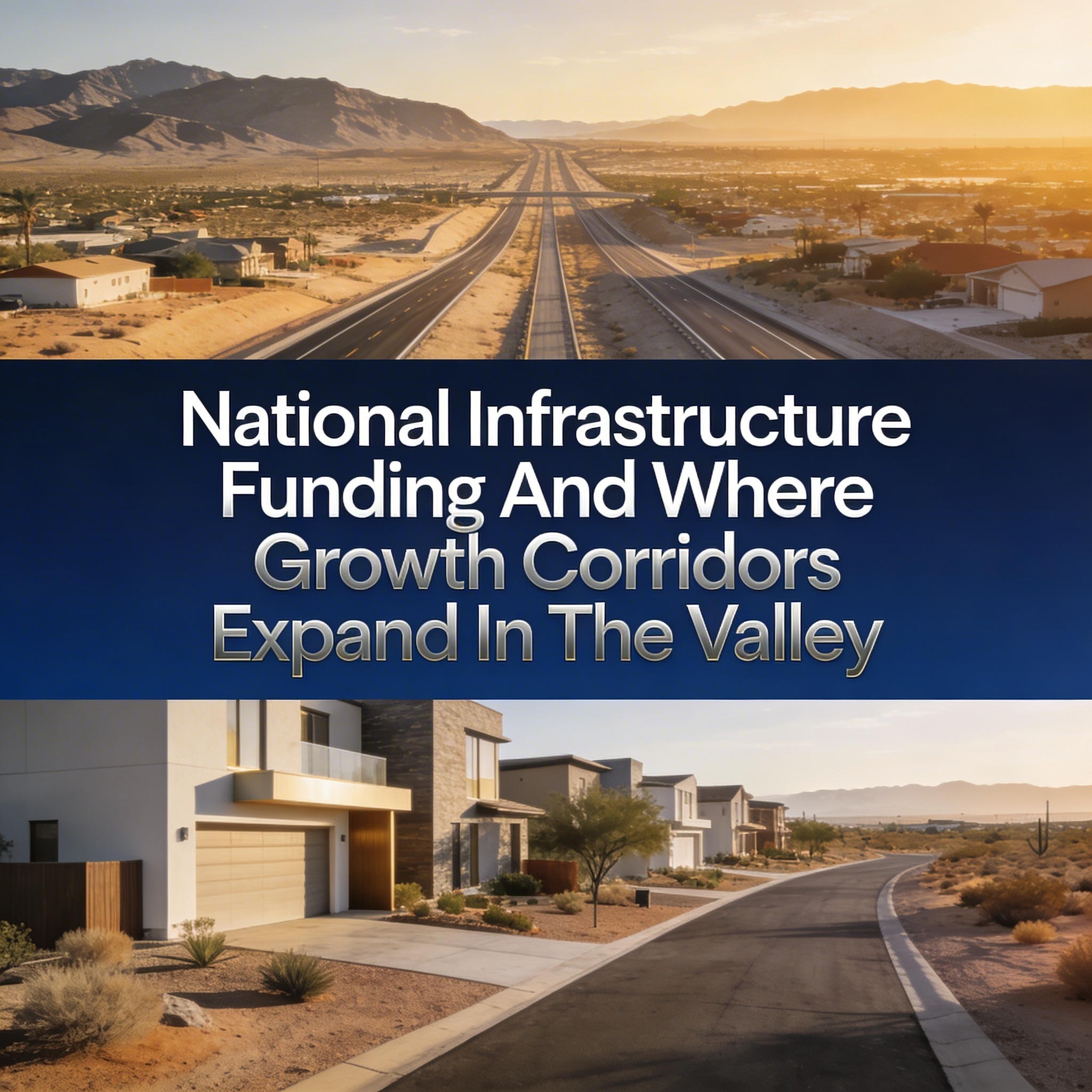
Phoenix thrives when the roads, rails, and utilities keep pace with our sun-soaked ambition. National infrastructure funding—poured through bills like the Bipartisan Infrastructure Law—is fueling targeted expansions that define where the Valley grows next, from I-10 widenings to water projects sustaining new neighborhoods.
I’ve driven these corridors with clients, watching federal dollars turn plans into pavement. Understanding where they’re flowing helps you see not just market shifts, but where your family’s lifestyle fits best amid the expansion.
Federal Funding Streams Into Arizona
Billions flow from Washington via DOT, EPA, and HUD grants: $2.2 billion proposed for Capital Investment Grants, plus water infrastructure tackling our $15 billion backlog. Sky Harbor upgrades—$292 million for Taxiway Uniform, Terminal 4 modernizations—bolster tourism and jobs, indirectly lifting housing around the airport.
ADOT’s $12.7 billion five-year plan leverages this for highways, with Phoenix CIP allocating hundreds of millions for enabling projects like the West Terminal. These aren’t distant; they pave literal paths for development.
Prime Growth Corridors Emerging
West Valley Boom (I-10 & Beyond): $137 million widens I-10 south of Phoenix to Gas Line Road, unlocking Buckeye, Goodyear, and Litchfield Park. New homes cluster here—Verrado expansions, BTR communities—drawn by commuter ease to TSMC jobs.
North Valley Tech Spine: Funds speed SR 303 loops and water purification ($180 million federal for Phoenix facility), fueling North Gateway master-plans near Intel. Growth radiates to Happy Valley and Norterra, blending homes with employment hubs.
East Valley Connectivity: SR 260 and US 93 upgrades indirectly support Queen Creek and San Tan corridors, where reclaimed water pipelines ($3.38 million Tempe grant) enable sustainable tracts.
Light rail CAPEX eyes 10WEST extensions, knitting Downtown to South Phoenix revitalization.
How This Shapes Housing Patterns
Infrastructure chases demand but sparks it too. West Valley inventory swells with 5,000+ new units, easing starter-home pressure while values hold in established Surprise pockets. North sees luxury spec homes rise near data centers—$800K+ medians firming.
These corridors create “sweet spots”: Goodyear townhomes for families, Cave Creek ranches buffered by highway buffers. Sellers in path zones gain equity; buyers snag pre-infrastructure pricing.
Addressing the Everyday Concerns
You might wonder: “Renee, will construction chaos disrupt my move?” Or “Does growth mean overcrowding?” Fair points—dust flies, timelines slip.
Reality: phased projects minimize pain, with EV infrastructure ($15 million recovered for Phoenix) and fire station upgrades enhancing livability. Growth feels organic here—jobs precede homes, unlike rushed coastal builds.
Lifestyle Wins Along the Corridors
Valley life elevates where infrastructure lands. West Valley trails link to White Tanks hikes; North offers quick Phoenix access for urban escapes. Water security means worry-free pools year-round, EV-ready garages for Scottsdale golf runs.
Relocators love this: seamless commutes to Amazon warehouses or Mayo Clinic, neighborhoods blending suburb and wild Sonoran beauty.
Challenges Amid the Momentum
Labor and materials strain budgets—Governor’s plan adds $5.2 million for maintenance—but federal matches stretch dollars. Environmental reviews slow some, yet grants prioritize drought-resilient designs fitting our AMA rules.
2026 horizon: corridors solidify, pushing inventory toward 4.5 months, balancing buyer leverage with seller stability.
Positioning for Corridor Growth
These funds redraw opportunity maps: buy ahead in Goodyear for appreciation, list in saturated Ahwatukee for quick closes. Families thrive where roads and rails converge with schools and saguaros.
Let’s Follow the Funding to Your Future
Infrastructure isn’t just concrete—it’s the backbone of Phoenix dreams taking shape. If these growth corridors have you envisioning your next home—West Valley value or North tech enclave—I’m here with the local lens you trust.
If you’re thinking about making a move in Phoenix, you don’t have to figure it out alone. Reach out—we’ll trace the paths together and find where your Valley story unfolds best.
Get the full Phoenix Market Insights → [Market Insights]


-
Cost of Living in Rhode Island: Housing, Taxes, Utilities, and Everyday Expenses
-

What If My Commute Becomes Worse Than Expected?
-

How Aging Home Systems Affect Property Value