


National Politics and Housing → [National Politics and Housing] & For more info on Local Politics and Housing→ [Local Politics and Housing]
Written by: Renee Burke
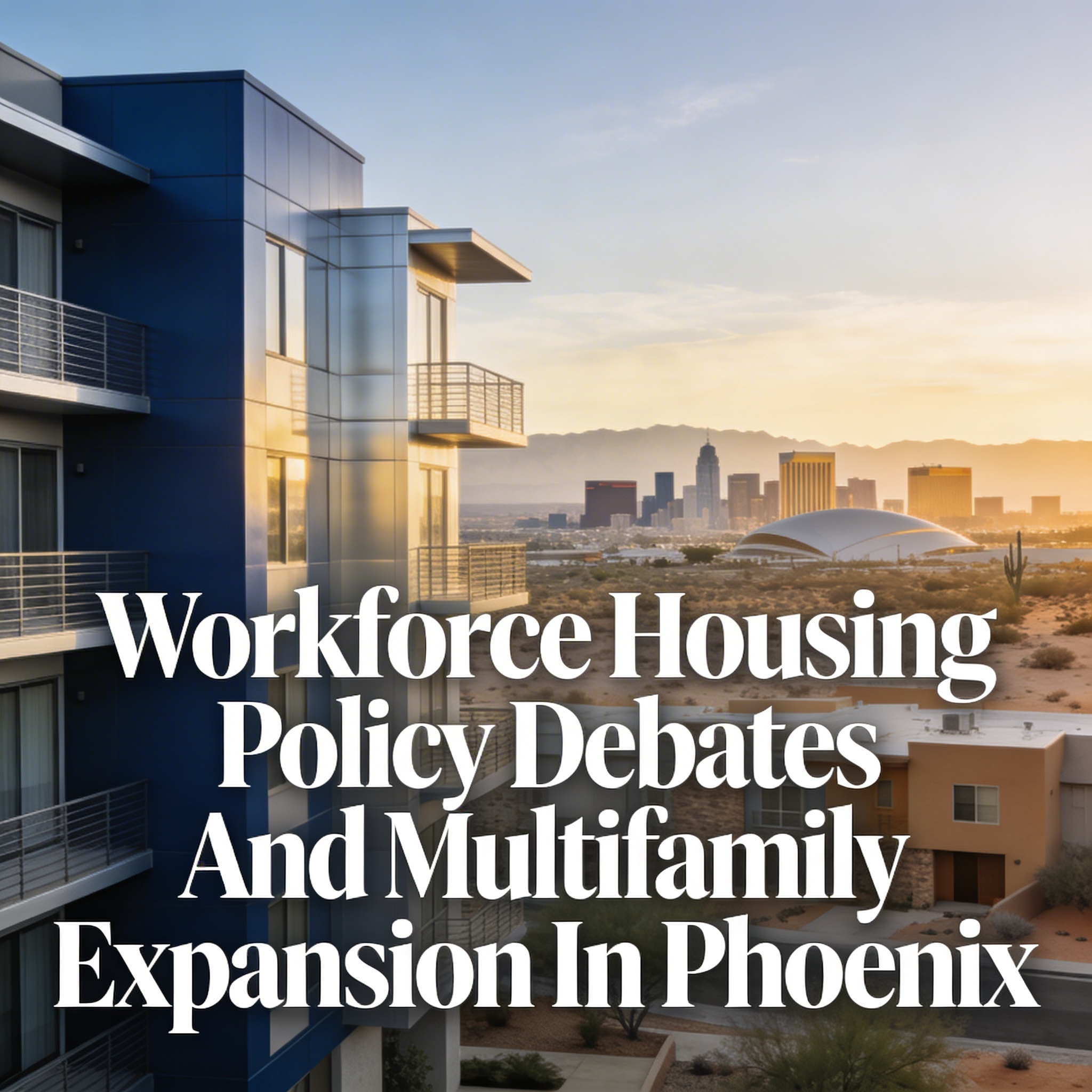
Phoenix families know the pinch of rising rents and elusive ownership—especially those working hard in our hospitals, schools, and tech hubs. Workforce housing policy debates, from city trust funds to state tax breaks, are sparking real multifamily expansion across the Valley, aiming to bridge that gap without upending neighborhoods.
Having guided clients through these shifts for years, I see the balance: more apartments near jobs, thoughtfully placed to support the lives we love here. Let’s walk through the debates and where they’re taking shape, with the calm insight of someone who calls Phoenix home.
The Core of Workforce Housing Debates
Workforce housing targets incomes at 60-120% of area median—teachers, nurses, mid-level pros priced out of single-family tracts. Phoenix’s Housing Phoenix Plan pushes for 50,000 units by 2030 (already exceeded), prioritizing multifamily via scoring matrices that favor transit-adjacent sites with amenities.
State bills like HB2926 offer tax exemptions on construction sales tax, fast-track permitting, and early vertical builds—slashing costs to make projects pencil out. Debates rage over incentives: do they favor developers enough, or risk over-density in family zones? Consensus leans yes, with safeguards like green certifications.
Multifamily Momentum Building
City Housing Trust Fund ($3.48M+ growing) funds preservation and new builds, backing projects like The Moreland—237 units downtown blending affordable and workforce tiers. Phoenix IDA notes like Helen Drake Village (80 senior units) and Horizon on Villa (109 family homes, 76 affordable) show scale, with vouchers and LIHTC layering in.
Ground breaks in Alhambra, Downtown, and South Phoenix replace aging stock with modern complexes—Head Start centers, clinics, parks included. These aren’t high-rises dominating skylines; they’re 3-5 story walks fitting our low-rise vibe, near light rail for South Mountain commuters.
Valley Hotspots for Expansion
Downtown and Roosevelt Row absorb urban workforce lofts for young pros. West Valley—Glendale, Peoria—sees family-oriented complexes near Amazon warehouses. East Valley multifamily clusters in Tempe and Mesa, supporting ASU staff and airport workers.
North Gateway ties to TSMC with transit-linked builds; Ahwatukee edges toward townhomes for downsizers. Result: rental inventory up 15%, easing pressure on $1,500-$2,500/month units while single-family holds steady.
Easing Fears in the Conversation
Buyers worry: “Renee, will apartments tank nearby values?” Sellers ask: “Does this flood the rental pool?” Debates address this—place-based scoring ensures quality, avoiding sprawl.
Truth: multifamily stabilizes neighborhoods, drawing stable renters who become buyers. Oversupply fears miss Phoenix’s demand—jobs pull people here relentlessly.
Lifestyle Harmony with New Builds
These projects enhance Valley living: shared pools for summer relief, EV spots, proximity to trails. Workforce residents thrive near Mayo Clinic or Intel, biking to work, kids in on-site programs. It’s not charity—it’s infrastructure for our service economy.
Families test roots via affordable leases before upsizing to Gilbert homes, blending rental stability with ownership paths.
Policy Hurdles and Path Forward
Challenges persist: NIMBY resistance, water rules, construction costs ($128M for 1,183 units signals scale). Governor Hobbs’ Affordability Fund aids utilities, easing tenant burdens. Legislative unity—bipartisan housing summits—pushes momentum.
2026 outlook: 10,000+ multifamily units, softening rents 3-5%, creating buyer runway amid single-family tightness.
Your Role in This Evolution
Debates yield practical wins: more choices without chaos, supporting the workforce keeping Phoenix golden.
Let’s Align Policy with Your Plans
Workforce policies are reshaping rentals thoughtfully, opening doors for your next step. If debates spark timing questions—from leasing in Glendale to buying amid expansion—I’m your reassuring guide.
If you’re thinking about making a move in Phoenix, you don’t have to figure it out alone. Reach out—we’ll sort the policies into your personal path forward.
Get the full Phoenix Market Insights → [Market Insights]


-
Cost of Living in Rhode Island: Housing, Taxes, Utilities, and Everyday Expenses
-

What If My Commute Becomes Worse Than Expected?
-
How Aging Home Systems Affect Property Value