


National Politics and Housing → [National Politics and Housing] & For more info on Local Politics and Housing→ [Local Politics and Housing]
Written by: Renee Burke
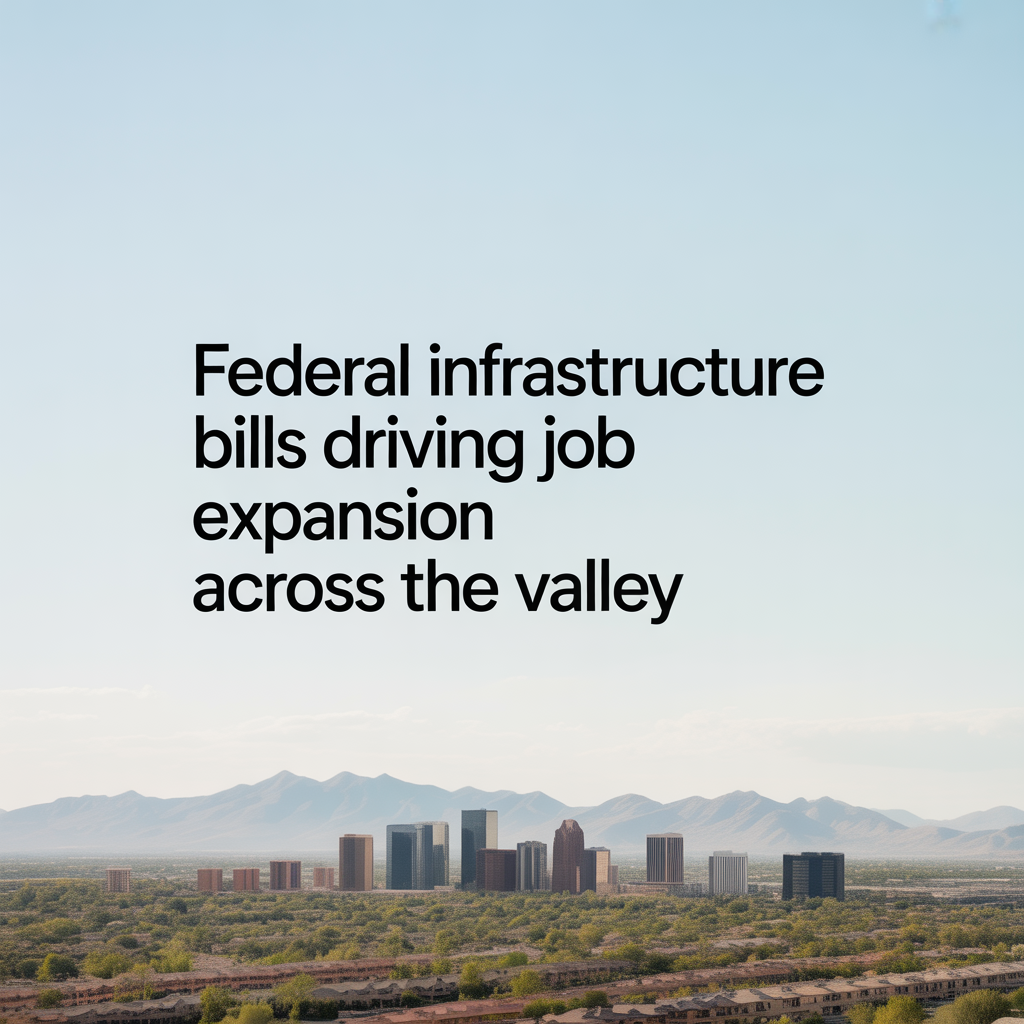
Watching the steady hum of construction cranes along the Loop 303 corridor or the bustle of new hires at job fairs in Goodyear, it’s clear that Phoenix’s growth isn’t just about new rooftops — it’s about the jobs fueling them. Families here often wonder how federal infrastructure dollars will translate to real opportunities in their backyard, steady paychecks that make homeownership feel within reach again.
As your local guide through the Valley’s evolution, I see these federal bills not as line items in Washington budgets, but as the engines powering workforce expansion from Buckeye to Scottsdale. Proposition 400 and 479, layered with IIJA funds, are already sparking thousands of construction, engineering, and support roles — reshaping commutes, neighborhoods, and market confidence across Maricopa County.
Freeways as Economic Lifelines
Arizona’s transportation infrastructure has long been the backbone of our economy, and 2026 marks a pivotal ramp-up. The $129 million Loop 303 Improvement Project — kicking off late January between I-17 and 51st Avenue — is the first big win from Proposition 479, Maricopa County’s half-cent sales tax approved in 2024. Widening to three lanes each way, plus direct ramps, means hundreds of jobs in paving, bridging, and safety upgrades through 2028.
Fall brings more: Loop 303 expansion from 51st Avenue to Lake Pleasant Parkway, creating smoother paths for north Phoenix commuters and TSMC workers. These aren’t isolated fixes; they tie into ongoing Loop 101 widenings in Scottsdale (Shea to Princess, wrapping early 2026) and the Agua Fria Freeway stretch to 75th Avenue, injecting steady employment into Northwest Valley families. Federal IIJA matching funds amplify local taxes, ensuring projects like the I-10/Loop 101 interchange — with its new HOV bridge starting this spring — sustain crews for years.
Beyond Roads: The Full Jobs Cascade
Infrastructure bills spark more than hard hats. The Loop 303 Cotton Lane project (Van Buren to MC 85), mid-2026 start, will build four miles of new freeway, employing engineers, utility relocators, and environmental specialists while boosting adjacent commercial zones. Loop 202 Santan Freeway widening in Chandler and Gilbert — adding lanes to Val Vista — supports 200+ jobs annually through 2027, drawing suppliers and logistics firms to the Southeast Valley.
TSMC’s NorthPark expansion off Loop 303, rezoned in December 2025, layers 15,000 homes with commercial and schools on 900 acres — but only after infrastructure paves the way. Federal grants fund semiconductor-adjacent roads, creating skilled trades positions that ripple to PulteGroup builders and local contractors. Pure Innovation Corridor’s 7,000 acres near Amkor? Similar story: highway upgrades precede factories, employing thousands in construction before high-tech hires dominate.
Neighborhoods Feeling the Lift
West Valley booms loudest. Buckeye’s growth, tied to I-10 extensions and Gilaoothills (1,200+ phased homes, hospital, auto mall), needs infrastructure to thrive — and jobs follow. Goodyear sees Halo Vista and Discovery Oasis biotech campus draw crews for roads, utilities, and rail extensions, stabilizing families who rent today but buy tomorrow.
East Valley isn’t sleeping: SR 24’s $350 million widening to Queen Creek — fall 2026 start with bridges, diverging diamonds, noise walls — eases San Tan traffic while funding 265 million in construction roles. Scottsdale Quarter refresh and Gilbert’s Ranch project benefit from Loop 101 upgrades, blending lifestyle amenities with job growth at Banner and Intel. Midtown’s Metrocenter evolution to The Metropolitan adds light rail access, employing urban planners and laborers through 2027.
Addressing the Real Concerns
I hear the worries: “Will traffic worsen before it improves?” or “How do I hire reliable crews for my flip?” Valid points amid dust and detours. Yet these projects prioritize off-peak work and frontage road fixes, minimizing disruptions in Peoria or Mesa. Job expansion brings skilled workers home to Laveen or El Mirage, easing labor shortages for private remodels.
For investors, it’s gold: infrastructure signals appreciation. Homes near Loop 303 interchanges in Surprise hold 5-7% premiums; post-project, expect double. Rental demand surges too — tradespeople need housing near Goodyear sites, pushing yields in Avondale.
Lifestyle and Long-Term Stability
These bills weave jobs into daily life. Shorter commutes from Verrado to Phoenix mean more family dinners, less road rage. Schools in Eastmark expand with infrastructure taxes, drawing young professionals who stay. Retirees in Sun City gain easier access to healthcare hubs via Loop 101 HOV lanes.
By 2027, thousands of direct jobs (construction: 5,000+; indirect: 15,000+) stabilize our market, curbing volatility. Federal commitments ensure multi-year pipelines, unlike boom-bust cycles of old.
Investor and Homebuyer Opportunities
Buyers: Target pre-infrastructure pockets like north Buckeye — values climb 10-15% post-widening. Sellers: Time listings around project milestones; “new Loop access” sells in Queen Creek. Investors: Multi-family near SR 24 or single-family flips along Loop 202 frontages yield quickest.
Phoenix’s job engine hums stronger, underpinning $450K-$600K medians with wage growth.
A Personal Note
If you’re thinking about making a move in Phoenix — positioning for infrastructure-driven appreciation, hiring amid job booms, or finding work-life balance near expanding corridors — you don’t have to figure it out alone.
I’ve tracked these projects block by block for years, helping neighbors turn public investments into private wins. My role isn’t to rush a transaction; it’s to guide you thoughtfully through opportunities only locals see.
Reach out with questions on job-hot neighborhoods, timing your buy or sell, or how freeways reshape your commute. Together, we’ll map a path that fits your life, with steady confidence every step.
Because in the Valley, infrastructure isn’t just concrete — it’s the foundation of opportunity we build our futures on.
Get the full Phoenix Market Insights → [Market Insights]


-
Cost of Living in Rhode Island: Housing, Taxes, Utilities, and Everyday Expenses
-

What If My Commute Becomes Worse Than Expected?
-
How Aging Home Systems Affect Property Value