


Tempe Lifestyle Guide → [Tempe Lifestyle Guide] & Tempe Real Estate Guide→ [Tempe Real Estate Guide]
Written by: Renee Burke
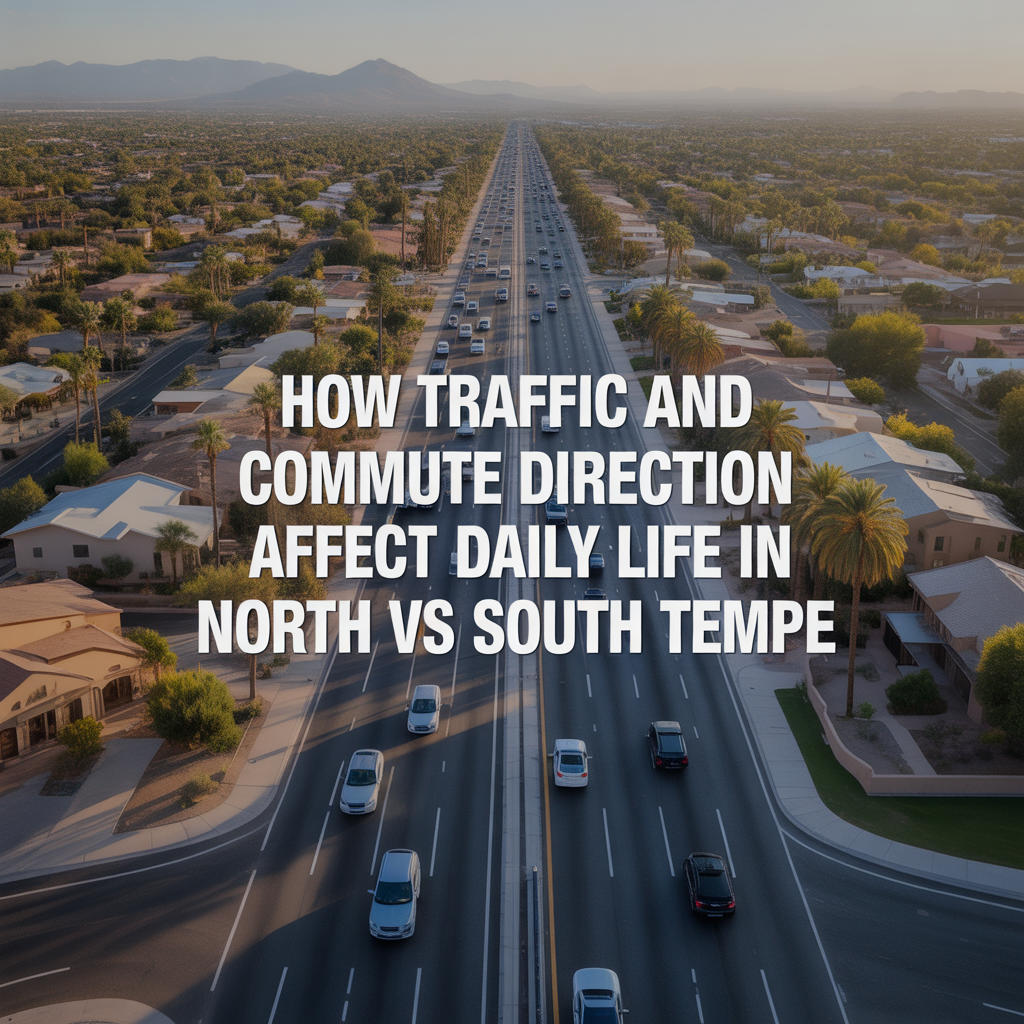
Tempe’s north-south divide shapes more than just maps—it colors the pace of your mornings, evenings, and everything in between. North Tempe pulses with ASU’s rhythm and downtown energy, while South Tempe offers a steadier, more residential breath. Understanding how traffic flows along key arterials like Rural Road, McClintock Drive, and Baseline Road helps you choose a home that matches your daily flow, not fights it.
I’ve guided so many families through this decision, watching how a short commute can make or break the joy of coming home. Whether you’re heading to Phoenix jobs or Mesa errands, let’s gently unpack how these patterns play out.
North Tempe: The Morning Rush and Evening Unwind
North Tempe—think University Drive to Apache Boulevard—wakes up with purpose. Mornings see heavy outbound flow west on University and Apache toward I-10 and Sky Harbor, as students, faculty, and professionals funnel into Phoenix. Rural Road northbound clogs around 7-9 a.m., with pedestrians, scooters, and the streetcar adding layers near Mill Avenue.
By afternoon, it flips: eastbound swells as everyone returns from downtown offices or light rail hops. McClintock Drive stays brisk too, linking to the 101 for Scottsdale commutes. This energy means lively evenings—quick walks to local spots—but can stretch a 10-minute drive to 25 during Sun Devil game days or peak hours.
Daily life here suits active singles or hybrid workers who embrace the buzz. Groceries at Fry’s on Rural feel seamless on foot, but families might time school drop-offs carefully to dodge the pedestrian pulse.
South Tempe: Predictable Paths and Quieter Returns
Cross Baseline Road southward, and the tempo shifts noticeably. Neighborhoods like Knoell Tempe or those near Ponderosa Park enjoy lighter residential traffic—mornings flow smoothly east on Baseline to the 202 or south into Chandler. Fewer signals and less foot traffic make McClintock south of Baseline a gentle cruise, ideal for school runs to McClintock High.
Evenings reverse predictably: northbound on Rural or Priest to home, often quicker than northside counterparts since you’re bypassing ASU spillover. Baseline west to I-10 stays steady without downtown backups, clocking airport runs in under 15 minutes flat.
This steadiness fosters relaxed routines—weekend bike paths to Kiwanis Park without honks, evening walks under mature trees. It’s where long-term families thrive, with commutes that leave energy for backyard barbecues rather than frayed nerves.
Commute Directions: East-West vs North-South Realities
Tempe’s grid amplifies directional quirks. Westbound mornings (to Phoenix) hit hardest in the north, where Apache and University merge into I-10 bottlenecks near Priest Drive. Southsiders slip onto Baseline first, dodging that squeeze.
Eastbound evenings reverse it: north Tempe clears faster via light rail alternatives, while south sees Mesa-bound flow on the 60 or 202. North-south hops—like Rural to Baseline—stay balanced but peak at Southern Avenue intersections.
For cross-Valley workers, north offers light rail escapes (20 minutes to downtown), while south leans on car predictability. Hybrid schedules benefit everywhere, but south’s lower density means fewer surprises.
Lifestyle Impacts: Family, Work, and Weekend Flow
Traffic isn’t just time—it’s temperament. North Tempe’s vibrancy means spontaneous dinners post-commute, but patience for scooters on sidewalks. South’s calm supports carpools and park playdates, with less stress for after-school activities.
Weekends level the field: both sides enjoy canal paths and Marketplace jaunts, but north adds game-day crowds. Retirees favor south for serene drives; young pros claim north for walkable energy. Both counter Valley sprawl fears—Tempe’s scale keeps everything intimate.
Market Insights: Value Tied to Traffic Tolerance
Real estate mirrors these rhythms. Northside homes near Rural command premiums for urban access (10-15% over south), appealing to renters and investors chasing ASU demand. South offers value—larger lots, quicker sales to families prioritizing peace, with appreciation from 202 expansions.
Buyers worry about “endless drives,” but Tempe’s core shrinks that reality: even south to north errands rarely exceed 15 minutes off-peak. Sellers highlight light rail north or Baseline access south to ease concerns.
North Tempe energizes; South Tempe steadies—both weaving traffic into livable patterns unique to our city. Choose based on your heartbeat, and the roads feel like allies, not adversaries.
If you’re thinking about making a move in Tempe, you don’t have to figure it out alone. Let’s talk through your goals, neighborhoods, and next steps—together we can find the space that truly fits your life.
Get the full Phoenix Market Insights → [Market Insights]


-
Cost of Living in Rhode Island: Housing, Taxes, Utilities, and Everyday Expenses
-

What If My Commute Becomes Worse Than Expected?
-

How Aging Home Systems Affect Property Value