


Tempe Lifestyle Guide → [Tempe Lifestyle Guide] & Tempe Real Estate Guide→ [Tempe Real Estate Guide]
Written by: Renee Burke
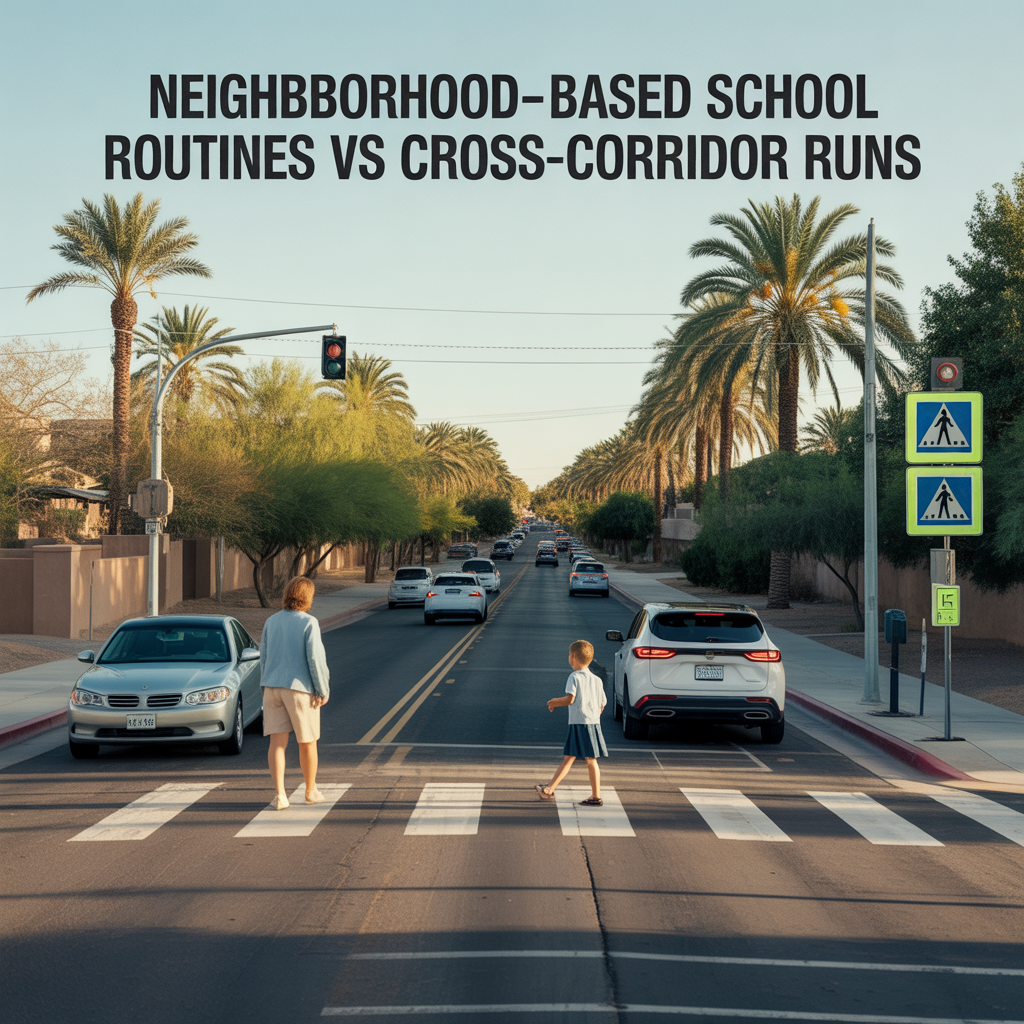
In Tempe, the way families handle school mornings reveals so much about how we choose to live. Some stick to neighborhood-based routines — short walks or quick drives to the assigned elementary down the block. Others opt for cross-corridor runs, crossing Rural or McClintock to chase a preferred magnet program or better-rated middle school. Both paths work here, but understanding their rhythms can ease the daily dance and help you pick a home that fits your family’s flow.
I’ve guided so many parents through this decision over the years, right here in South Tempe where boundaries from Tempe Elementary and Kyrene districts weave tightly around our streets. It’s not about right or wrong — it’s about what brings calm to your mornings and peace to your evenings.
Neighborhood-Based Routines: The Gentle Local Flow
Neighborhood schools form the backbone of Tempe life, especially in established pockets like Broadmor, Shalimar, or the Lakes near Baseline. These routines feel almost effortless — kids from Broadmor Elementary spill out onto Rural sidewalks at 7:45 a.m., backpacks bouncing as they walk the three blocks home after school. Parents linger at crosswalks near Connolly Middle, chatting over coffee from the corner Dutch Bros while waiting for the 2:50 dismissal.
The appeal lies in simplicity. Drop-offs take five minutes max, often on foot or bike along shaded canals. No freeway merges, no circling lots — just a familiar loop that lets you linger for playground hellos before heading to work. In Kyrene zones south of Baseline, like del Cielo or Altadena, yellow buses hum quietly down residential streets, picking up clusters of kids within a half-mile radius.
Traffic stays whisper-light. McClintock sees maybe a 5-minute slowdown at Guadalupe during peak, but side streets like Hardy or Lakeshore absorb the rest. For working parents, this means reclaiming 30-45 minutes daily — time for an extra yoga class at CorePower or breakfast at The Mission on Mill.
From a homebuyer’s view, these areas shine. Single-family homes in the $600K-$900K range hold steady value because families stay put, feeding strong PTAs and neighborhood watches. It’s the kind of rootedness that turns houses into legacies.
Cross-Corridor Runs: The Intentional Choice
Then there are the cross-corridor families — thoughtful parents prioritizing Fees College Prep’s STEM focus or Arredondo’s gifted ASPIRE Academy over the neighborhood default. These runs cross Rural from west Tempe to Kyrene boundaries or hop McClintock southbound to snag a spot at McClintock High feeders. It’s common around Baseline, where district lines blur near Priest and Diablo.
Mornings start earlier here, around 6:45 a.m., with cars pooling two or three deep onto arterials. Rural northbound clogs predictably at University and Southern — 10-15 minutes if you hit the wave wrong. McClintock fares better, with its wider medians and school-zone flashers keeping speeds steady past Waggoner Elementary. Baseline east-west shuttles blend both, peaking as Chandler families merge from 202.
Afternoons reverse the flow. Pickups at 3:00 p.m. send streams back across corridors, easing by 4:15 once sports practices pull kids to Diablo Stadium fields. Navigation apps help, but locals swear by backcuts: Southern to Priest for westbound, or Guadalupe under I-10 to dodge ASU spillover.
I hear the concerns — the gas, the stress, the “what if we miss open enrollment?” But here’s the reassurance: Tempe districts approve 80% of cross-boundary requests if you plan ahead, and carpool groups turn runs into social hours. Many families I work with choose this for the long game — top test scores at Corona del Sol or Mountain Pointe justify the extra miles.
Daily Impacts: Time, Stress, and Family Bonds
Neighborhood routines gift spontaneity. Picture walking your child to class, then strolling home for remote work in a backyard office — pure Tempe ease. Stress levels stay low; studies from local PTAs show these families report 20% less morning anxiety. Community bonds deepen too — block parties spring from shared school stories at Kiwanis Park picnics.
Cross-corridor runs build resilience and networks. Kids meet peers from across the East Valley, prepping them for ASU’s diversity. Parents connect at specialty program events, swapping tips on private tutors or summer camps at Tempe Sports Complex. The trade-off? About 12-18 extra annual drive hours, offset by carpools and district shuttles in denser zones.
Traffic tells the tale. Neighborhood areas hum gently 7:00-8:00 a.m.; cross-corridor spikes Rural signals by 25% those hours. Evenings flip: local pickups fade fast, while longer hauls linger until 4:30. Yet Tempe’s grid — with light rail hops and canal trails — softens it all.
Buyers often fear resale risks with boundary quirks, but data comforts: Homes near top cross-boundary schools like Fees command 8-12% premiums, per recent East Valley closings. Neighborhood stalwarts like Tempe High zones hold firm too, buoyed by walkability.
| Aspect | Neighborhood Routines | Cross-Corridor Runs |
|---|---|---|
| Morning Time | 5-10 min | 15-25 min |
| Stress Level | Low (walks common) | Moderate (arterial flow) |
| Flexibility | High (spontaneous) | Planned (enrollment apps) |
| Social Ties | Block-deep | Program-wide |
| Home Value Boost | Stable walkability | 8-12% school premium |
| Best For | Young families, remotes | Academic focus, networks |
Lifestyle Trade-Offs in Tempe Context
Tempe lets you choose without regret. Neighborhood lovers thrive in Alta Mira’s mid-century charm, grilling post-drop-off at community ramadas. Cross-runners favor South Tempe’s modern ranches, near I-10 for Chandler jobs.
Misconceptions linger — “cross-boundary means chaos” or “neighborhood schools lack rigor.” Truth: Both deliver; Tempe Elementary’s recent boundary tweaks for 2025-26 enhance options at Carminati and Arredondo, blending access seamlessly. Kyrene’s southern stretch prioritizes equity, approving transport for longer runs.
For investors, mix matters. Neighborhood zones suit rentals to young pros; cross-access boosts family flips. I’ve seen both soar — $750K Shalimar specials and $1M Priest-adjacent academies.
Practical Guidance for Your Routine
Whichever path calls, a few habits smooth it:
- Map first: Use Versatrans for exact boundaries — enter your address for bus stops and zones.
- Carpool clusters: Neighborhood groups via Nextdoor; cross-runners through school apps.
- Buffer wisely: 10 minutes for local, 20 for corridors — beat the 7:20 wave.
- Enroll early: Tempe districts open August; Kyrene follows suit for choice programs.
- Test drives: Walk or drive sample routes at rush hour before buying.
These steps turn logistics into lifestyle wins.
Finding Your Family’s Rhythm
Tempe’s beauty lies in options — neighborhood coziness or corridor ambition, both nurturing the next generation amid palms and sunsets. Whether chatting fences at Broadmor or celebrating at Connolly events, our routines reflect what we value most: connection over convenience alone.
A Warm Invitation
If school routines factor into your Tempe home search — neighborhood ease or cross-corridor strategy — let’s map it together. I’ll pull current boundaries, tour sample drives, and align it all with your family’s dreams.
If you’re thinking about making a move in Phoenix, you don’t have to figure it out alone. I’m here as your steady guide, ready to listen and light the way forward.
Get the full Phoenix Market Insights → [Market Insights]


-
Cost of Living in Rhode Island: Housing, Taxes, Utilities, and Everyday Expenses
-

What If My Commute Becomes Worse Than Expected?
-

How Aging Home Systems Affect Property Value