


Tempe Lifestyle Guide → [Tempe Lifestyle Guide] & Tempe Real Estate Guide→ [Tempe Real Estate Guide]
Written by: Renee Burke
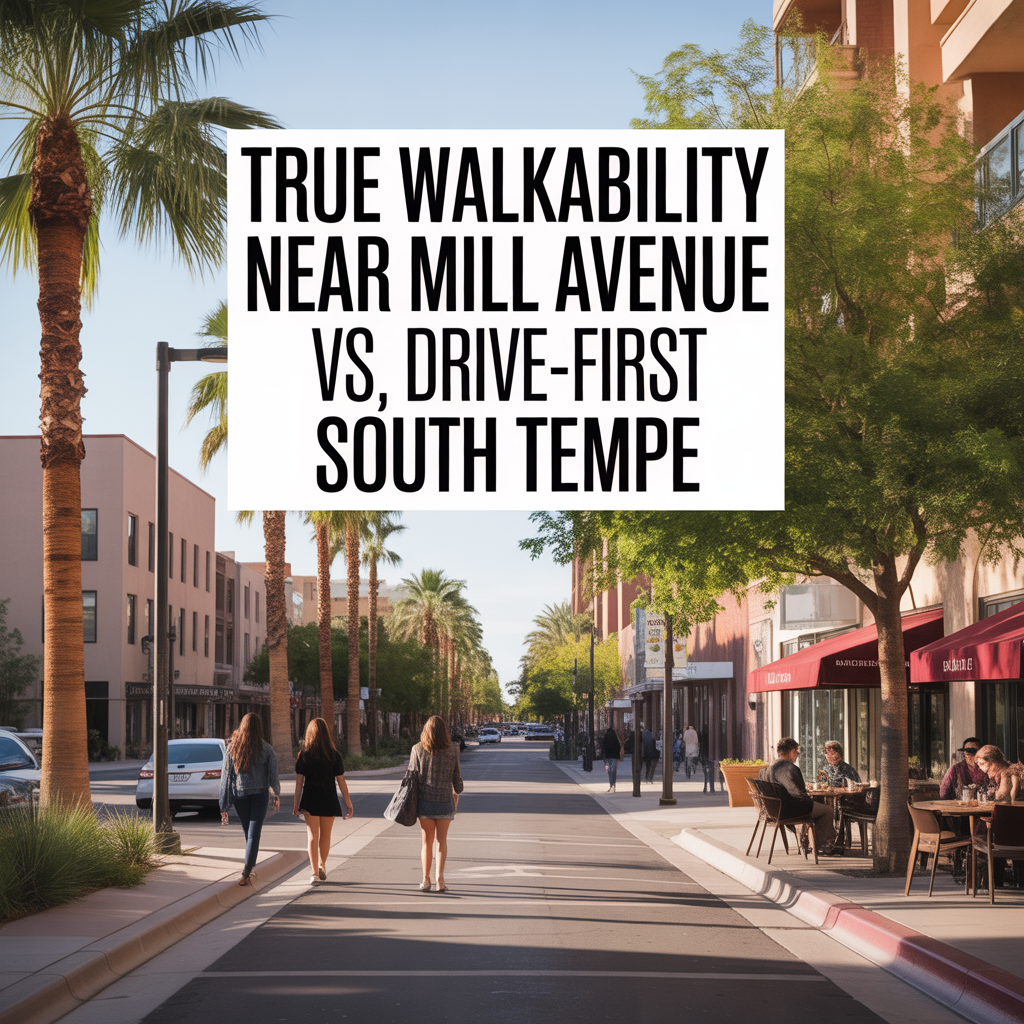
When someone tells me they “want walkability in Tempe,” my first question is always, “What does walkable actually mean to you?” For some people, it’s stepping out the door and being on Mill Avenue in five minutes. For others, it’s being able to walk the dog around a quiet block, then hop in the car for everything else. Those are very different lifestyles, and Tempe offers both — often within the same ZIP code.
Today I want to walk you through the contrast between true walkability around Mill Avenue and the more drive-first lifestyle in South Tempe, so you can see which rhythm actually fits your day-to-day life, not just your Pinterest board.
What “True Walkability” Really Feels Like Near Mill
Near Mill Avenue and the ASU core, walkability is not a buzzword — it’s your default mode of living. This is where you can genuinely leave the car parked for days at a time and still feel connected and functional.
- Addresses right on or near Mill often score in the “Very Walkable” to “Walker’s Paradise” range, meaning most daily errands can be done on foot.
- You’re surrounded by restaurants, coffee shops, gym options, Tempe Town Lake, and light rail or streetcar stops within a short walk.
If you’re in one of the denser pockets near 6th Street and Mill, you’re typically a minute or two from the streetcar and a quick walk from campus and downtown amenities. This is what I call functional car-optional living — you may still have a car, but you don’t need it for your everyday routine.
Lifestyle example:
Imagine a Wednesday evening. You walk to grab sushi, stop by a pharmacy on the way back, catch a streetcar to meet friends by the lake, and never think about parking once. That’s the everyday privilege that true Mill-area walkability buys you.
The Tradeoffs of Living in a Truly Walkable Mill Pocket
That kind of access comes with its own set of tradeoffs, and it’s important to be honest about them.
- Noise and activity: You’re living in the middle of a college city’s social core; weekends, game days, and late nights will be lively. Reviews frequently mention heavy traffic, crowds, and some visible homelessness in the Mill district.
- Parking and congestion: With construction projects and street closures, cars move slowly and parking can be more hassle than luxury.
- Vertical and high-density living: Many options are condos or apartments. You’ll trade a big backyard for elevators, shared amenities, and proximity.
For some people, this is exactly the energy they crave. For others — especially those who want a quiet, early-to-bed environment — the constant movement can feel draining. The key is being honest with yourself about how you recharge.
South Tempe: Comfortable, Convenient, and Mostly Car-First
Once you head south — beyond roughly Broadway, Southern, and Baseline — Tempe starts to feel more like a conventional suburban pattern. Sidewalks exist, but daily life is organized around the car.
- Areas along South Mill and south of the 60 often show “Somewhat Walkable” scores — you can walk to a few things, but the assumption is still that you’ll drive for most errands.
- Intersections like Baseline & Mill can be “Very Walkable” on paper, but the walk usually means navigating wide arterials and strip-center parking lots, not shaded urban streets.
Practically speaking, this means your home base might be peaceful and leafy, but getting to your favorite restaurant, kid’s activities, or even a quick grocery run usually involves a drive.
Lifestyle example:
In South Tempe, you’re more likely to decide, “Let’s hop in the car and grab dinner at our favorite spot off Ray or Elliot,” instead of strolling to something on the corner. You may still walk the dog or jog the canal trails, but errands and social life are car-centered.
How It Feels Day-to-Day: Mill vs South Tempe
Here’s a simple way to think about the emotional difference between these two worlds:
- Near Mill Avenue:
- You feel plugged in, spontaneous, and light on your feet.
- You’re exposed to more noise, nightlife, and foot traffic.
- You get “city living” in a very Tempe-specific way — ASU energy, events, streetcar, and Town Lake at your fingertips.
- South Tempe:
- You feel calmer, more insulated, and home-centric.
- You rely on your car for variety — dining, shopping, entertainment.
- You get traditional neighborhood comforts: garages, yards, cul-de-sacs, and more separation from the campus core.
Neither is right or wrong; they’re just different operating systems. One runs on feet and transit; the other runs on keys and driveways.
Get the full Phoenix Market Insights → [Market Insights]


-
Cost of Living in Rhode Island: Housing, Taxes, Utilities, and Everyday Expenses
-
What If My Commute Becomes Worse Than Expected?
-
How Aging Home Systems Affect Property Value