


Tempe Lifestyle Guide → [Tempe Lifestyle Guide] & Tempe Real Estate Guide→ [Tempe Real Estate Guide]
Written by: Renee Burke
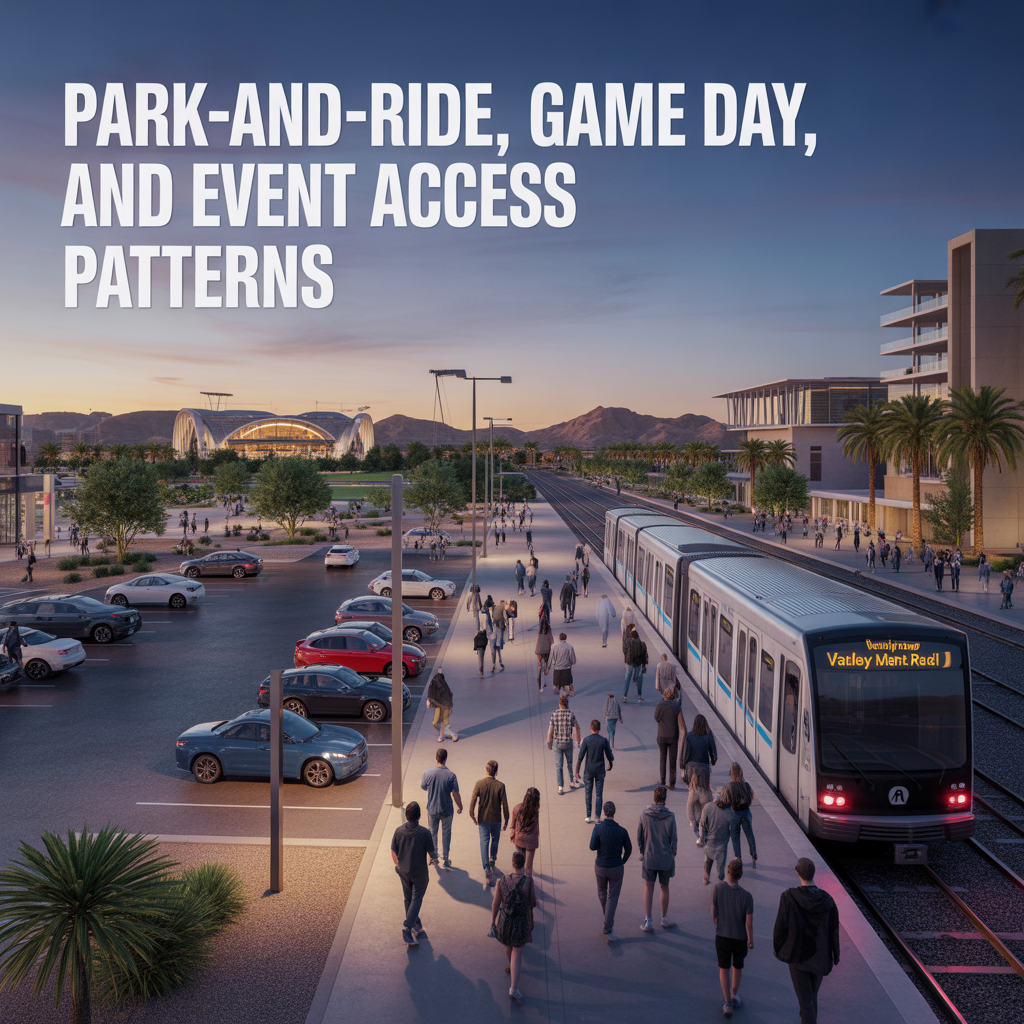
Living in Tempe means game days, concerts, and big events at Sun Devil Stadium, Tempe Beach Park, or nearby venues aren’t just occasional outings—they’re part of the heartbeat of daily life. But anyone who’s tried to drive in, park, and escape afterward knows the real challenge isn’t getting there; it’s getting out without losing half your evening to traffic.
That’s where Valley Metro’s Park-and-Ride lots, combined with smart light rail access, step in as genuine lifestyle upgrades. Let’s look at how residents actually use these patterns to make event days smoother, less stressful, and even a little more enjoyable.
Valley Metro Park-and-Ride: Tempe’s Strategic Hubs
Tempe sits right in the middle of the Valley Metro Rail A Line, with stations that double as Park-and-Ride spots designed for exactly these scenarios. Key ones for locals include:
- Priest/44th Street Station (near 44th St and Washington): Large lot, direct PHX Sky Train connection for airport trips, and a straight shot to downtown Phoenix or Mesa events.
- University/Rural Station (near ASU campus): Smaller lot but perfect for blending game days with campus access.
- Mill Avenue/3rd Street Station (downtown Tempe core): Walkable to Mill nightlife, with easy hops east to Town Lake or west toward Phoenix arenas.
These aren’t just “transit stops”—they’re pressure valves for when I-10, Loop 202, and US-60 turn into parking lots around big crowds. Park early, ride in, and let the rail handle the exodus while you debrief the game over a drink.
Game Day Patterns: Sun Devil Stadium and Beyond
ASU football Saturdays—or even midweek softball and baseball—create mini-migrations unlike anywhere else in the Valley. Rural Road, Priest Drive, and the Loop 202 interchange near Tempe Town Lake become a sea of brake lights two hours before kickoff and for 90 minutes after.
Smart Park-and-Ride Strategy:
- Pre-game arrival: Park at Priest/44th or University/Rural by game time minus 3 hours. Lots fill fast, but you’ll beat the inbound rush on 202 and I-10.
- Post-game escape: Trains run extra service on game days, pulling you out toward Phoenix or Mesa while drivers crawl along Rio Salado Parkway. From Priest/44th, you’re back home (or at a post-game spot on Mill) in under 30 minutes total.
- Tailgate twist: Park once at a rail lot, then shuttle friends or family who want to tailgate closer in. One car handles the group.
For non-football events like spring games or band performances, the same logic holds: the rail absorbs the crowd surge, leaving surface streets quieter for those who do drive all the way in.
Tempe Beach Park and Town Lake Events
Concerts, festivals, and Ironman events at Tempe Beach Park spike traffic differently—more concentrated around Mill Avenue, Rio Salado, and the 202/Rural curve. The downtown Tempe stations shine here.
Event Access Flow:
- Park-and-Ride from afar: Use Priest/44th (free parking, quick ride west to Mill/3rd) or even Mesa Drive station if you live east Tempe.
- Timing sweet spot: Arrive at the lot 90 minutes before gates open; trains run every 15 minutes during peaks.
- Post-event: Head back to your car while the post-concert rideshare crush hits Mill. You’re sipping coffee at home while others wait 45 minutes for an Uber surge to drop.
What makes this practical for families or groups: no one’s circling for $40 event parking, and you avoid the “who drives?” negotiation. Plus, kids can enjoy the ride without melting down in a hot car.
Bigger Valley Events: Suns, Cardinals, and Downtown Phoenix
When the action spills beyond Tempe—to Footprint Center for Suns games, Chase Field for Diamondbacks, or State Farm Stadium for Cardinals—you’re still covered. The rail’s A Line runs straight west from Tempe stations into downtown Phoenix, linking stadiums, arenas, and convention center events.
Cross-Valley Patterns:
- Footprint Center (Suns, concerts): Park at Priest/44th in Tempe, ride 25–30 minutes west. Post-game trains prioritize outbound flow.
- Chase Field or convention events: Mill/3rd Street station puts you one quick ride away, with no I-10 slog.
- Cardinals or big festivals: Combine Park-and-Ride with a short rideshare from a Phoenix station if needed—still cheaper and calmer than driving Glendale straight from Tempe.
For households splitting time between Tempe life and Valley-wide entertainment, this connectivity means you say “yes” to more outings without the usual dread of traffic and parking.
Daily Life Wins Beyond Big Events
Park-and-Ride isn’t just for game days—it fits smaller routines too:
- Midweek ASU parents: Drop off near University/Rural for a lecture or recital, avoiding campus parking chaos.
- Carpoolers: One person parks the family car at Priest/44th; everyone rides separately to work or school downtown.
- Spontaneous nights: Weeknight trivia or dinner on Mill? Park once, rail in, rail back—no drinking-and-driving second thoughts.
Over time, this flexibility adds up: fewer cars needed per household, lower gas and maintenance bills, and more evenings that feel effortless.
Neighborhood Impacts: Where This Really Pays Off
Not every Tempe pocket benefits equally:
- North Tempe/ASU core: Walk or bike to Mill/3rd or University stations—Park-and-Ride less critical, but great for guests.
- Southwest Tempe (Priest, Warner): Minutes from Priest/44th lot—ideal for families wanting event access without downtown premiums.
- East Tempe (Rural, Baseline): Use Mesa Drive or Guadalupe stations to hop west for games or east for Mesa events.
When I tour homes with clients, we map their event habits against station proximity. A $50,000 price difference between a rail-adjacent condo and a car-dependent house often flips when you factor in years of parking savings and stress-free outings.
Making It Your Rhythm
The beauty of Tempe’s Park-and-Ride and rail access is how it turns “event days” from obligations into simple choices. You park smart, ride easy, and reclaim time—whether that’s an extra inning at the bar or sleep before a Monday meeting.
It works because locals treat it like a habit, not a backup plan. Test it once or twice, and it becomes your default for anything drawing 10,000+ people.
A Warm Invitation to Make It Yours
If game days, concerts, or Valley events are part of what draws you to Tempe living, let’s layer that into your home search—or your current neighborhood evaluation. I can walk you through station distances, lot capacities, and how specific addresses fit your family’s or group’s event rhythm.
If you’re thinking about making a move in Phoenix, you don’t have to figure it out alone. Reach out with your favorite teams, your go-to events, or even those “we never go because parking is a nightmare” frustrations. I’m here as your long-term advisor—ready to connect the dots so your Tempe life feels connected, convenient, and truly yours.
Get the full Phoenix Market Insights → [Market Insights]


-
Cost of Living in Rhode Island: Housing, Taxes, Utilities, and Everyday Expenses
-

What If My Commute Becomes Worse Than Expected?
-
How Aging Home Systems Affect Property Value