


Tempe Lifestyle Guide → [Tempe Lifestyle Guide] & Tempe Real Estate Guide→ [Tempe Real Estate Guide]
Written by: Renee Burke
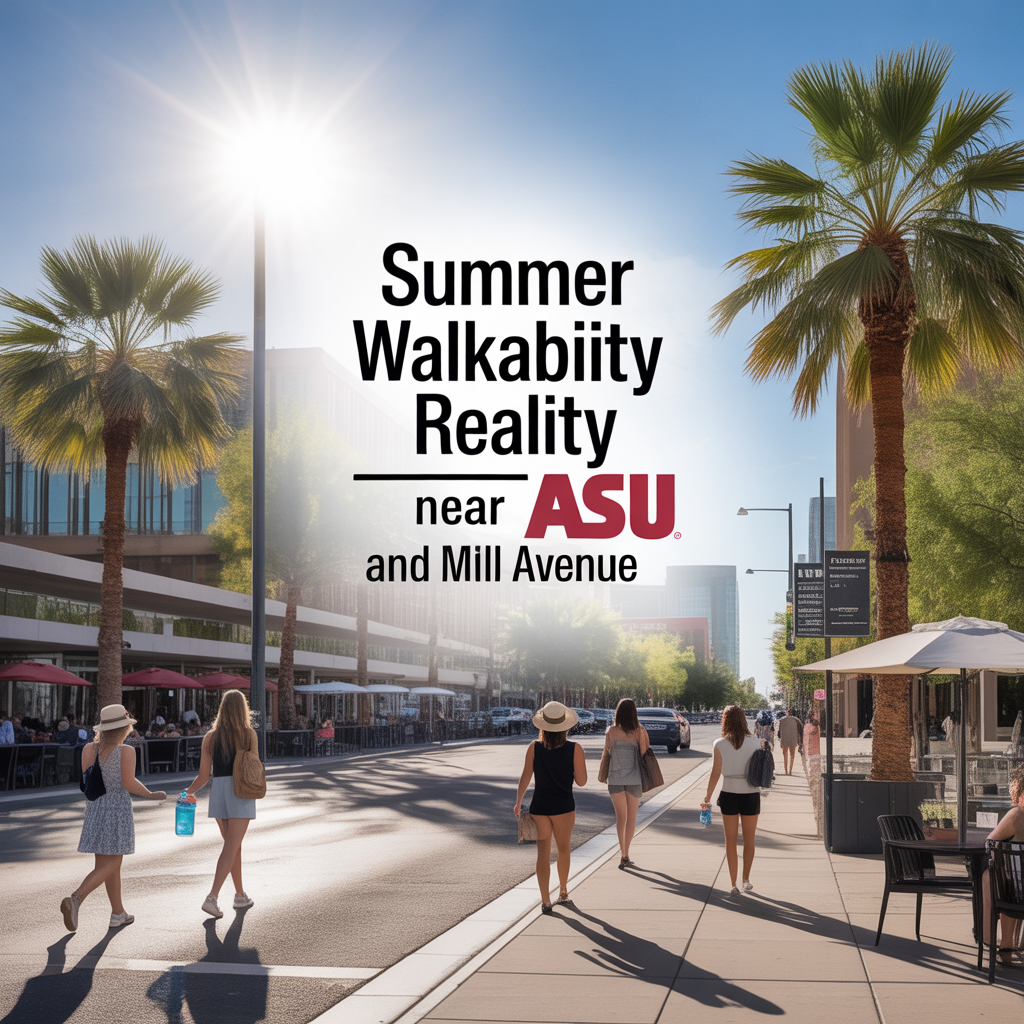
Summer in Tempe tests walkability like nothing else—110°F days turn casual strolls into strategic missions near ASU and Mill Avenue. The area’s shaded paths, misting stations, and early-morning windows make it doable for determined locals, but midday becomes car-or-rail territory. North Tempe residents adapt with 5–7 a.m. lake loops and post-8 p.m. dinners; understanding heat realities helps match homes to your summer rhythm.
The Heat Equation: Tempe Summer Realities
June through August averages 105–112°F daytime highs, with asphalt radiating extra 10–20° and low humidity amplifying fatigue. Paths near ASU and Mill stay busier than suburbs—students, tourists, joggers—but hydration stations and ramadas cluster here.
Daily Windows:
- Safe zone: 5–8 a.m. and 7–10 p.m. Paths feel pleasant (80–95°F), perfect for Town Lake loops or Mill coffee runs.
- Marginal: 9 a.m.–6 p.m. Direct sun exposure drains fast; even shaded Mill feels oppressive by noon.
- Night peak: 8–10 p.m. breeze revives walkability for dinners or light rail hops.
North Tempe’s density means more awnings and public misters, but concrete traps heat longer than south yards.
North Tempe Core: Early Bird Walkability, Midday Retreat
University Park, Maple-Ash, and ASU-adjacent blocks offer summer walkability if you time it right. Mill Avenue’s awnings and Town Lake’s 5-mile shaded path (Priest to Rural) stay viable pre-9 a.m.
Morning Reality:
- 6 a.m. lake loops draw walkers dodging heat—coffee at Cartel, then home by 8.
- Paths connect seamlessly: Mill Bridge to Beach Park, misting stations en route.
Midday Truth: Walking to lunch wilts most—AC shops and light rail (every 15 minutes) bridge gaps. E-scooters shade-hop to Rok N Ramen.
Evening Revival: Post-8 p.m., Mill patios fill without sweat. Walk home from Pedal Haus buzzed and cooled.
Who It Suits: Determined fitness buffs, night owls, students with AC breaks.
Priest/Rural Corridor: Shaded Arterials Hold Up Better
Priest Drive’s buffered lanes and Rural’s tree canopy create Tempe’s strongest summer walking spine from Apache to Warner. Canal shade adds relief southbound.
Practical Patterns:
- Morning errands: 7 a.m. Fry’s runs or gym walks—sidewalks wide, crossings timed.
- Lake access: Priest path to Town Lake (15 minutes), shaded enough for 8:30 a.m. paddleboard watches.
- Midday workaround: Orbit shuttle or e-bikes cover hot stretches; rail stations air-conditioned.
Summer Edge: Less concrete than core, more breeze. Warner coffee shops offer AC respites.
Mill Avenue Specifics: Tourist Heat Trap
Mill’s charm fades midday—exposed sidewalks between University and 3rd bake relentlessly. Awnings help north end; south tightens into furnace.
Viable Times:
- Pre-9 a.m.: Peaceful coffee strolls to Cartel or Short Leash.
- Post-sunset: Perfect—breezes carry lake mist, patios thrive.
- Avoid: Noon–5 p.m. unless bar-hopping AC blocks.
Locals drive or rail here summer weekdays, walk weekends when energy offsets heat.
Town Lake Paths: Summer’s Saving Grace
The 5-mile loop shines if timed right—north shore shade trees, south side misters, Beach Park ramadas. Paths open 5 a.m.–midnight, busiest 6–8 a.m./7–9 p.m.
Heat-Smart Use:
- Sunrise jogs: 77°F feels balmy; birdwatchers claim benches.
- Evening decompression: Sunset paddleboard views without melting.
- Hydration reality: Carry water—stations sporadic but coolers reliable.
South shore stays shadier; avoid exposed Mill Bridge midday.
South Tempe: Car-First Summer, Walkable Mornings
Warner/Elliot neighborhoods prioritize yards over paths—summer walkability bows to AC homes. Priest access keeps lake viable mornings.
Routine Shift:
- Mornings: Short neighborhood loops, then drive lake-bound.
- Midday: Car to AC everywhere—15 minutes covers Mill or ASU.
- Evenings: Suburban strolls cooler than urban concrete.
Better for heat-averse families; lake becomes weekend destination.
Adaptation Strategies That Work
Local Habits:
- 6 a.m. lake walks, 8 p.m. Mill dinners.
- E-bikes/scooters for 1–2 mile hops (shade rotation).
- Light rail bridges hottest stretches—Priest/44th to Mill (10 minutes, AC bliss).
- Hydro-flasks mandatory; misting stations at key nodes.
North residents lean social (group sunrise jogs); south prioritizes survival (dawn dog walks).
Summer Walkability by Lifestyle
Fitness-Driven: North lake paths—early commitment pays scenic dividends.
Casual Stroller: Priest corridor mornings, rail midday.
Heat Sensitive: South yards + car access.
Night Owl: Evening Mill revival perfect.
North tests tolerance; south eliminates it.
A Warm Invitation to Test Your Summer Fit
Summer walkability reveals true neighborhood character—north demands adaptation, south offers escape. Walk a 7 a.m. lake loop with me from your target home; heat realities clarify fast.
If you’re thinking about making a move in Phoenix, you don’t have to figure it out alone. Reach out with your heat tolerance and morning habits. I’m here as your long-term advisor, matching you to a Tempe pocket where summer enhances—not defeats—your daily flow.
Get the full Phoenix Market Insights → [Market Insights]


-
Cost of Living in Rhode Island: Housing, Taxes, Utilities, and Everyday Expenses
-

What If My Commute Becomes Worse Than Expected?
-

How Aging Home Systems Affect Property Value