


Tempe Lifestyle Guide → [Tempe Lifestyle Guide] & Tempe Real Estate Guide→ [Tempe Real Estate Guide]
Written by: Renee Burke
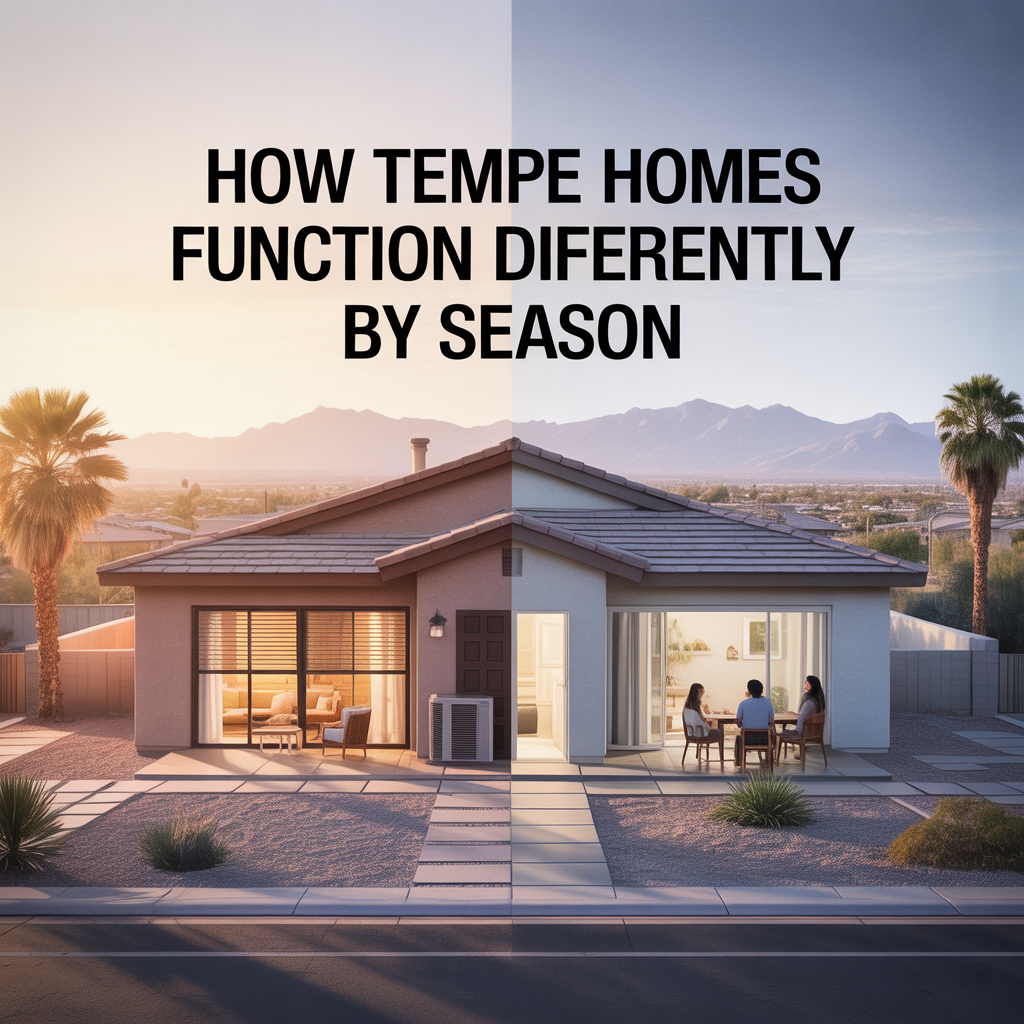
Tempe homes don’t just sit in the desert; they work with it—and they do it differently in June than they do in January. As you live here longer, you start to feel how each season “turns on” a different side of your home.
Below is how I’d explain that to a friend who’s thinking about buying, selling, or just understanding their Tempe home a little better.
Summer: Defense Mode
In summer, your home’s main job is to reject heat and keep indoor life as smooth and predictable as possible for you, your kids, and your pets.
- AC runs longer and in smarter cycles, not just colder. Many Tempe households set a realistic target (often 76–80 degrees) and use ceiling fans to make it feel cooler instead of forcing the system to chase 72 all day.
- Sun orientation matters more. South- and west-facing windows become the most critical, and things like shade screens, low‑E glass, film, and deep overhangs do a lot of heavy lifting.
- Outdoor spaces shift into “early and late” use. Covered patios, pergolas, misters, and shade from trees or patio roofs make backyards usable for coffee at sunrise and dinners after sunset, even when midday is off-limits.
- Flooring and finishes help buffer the heat. Tile and LVP stay cooler underfoot, darker surfaces outside (like pavers) can radiate heat, and lighter exterior colors reflect more of the sun.
Well-designed Tempe homes almost feel like they “tighten up” in summer—blinds angled, doors kept closed, interior zones managed so kids’ rooms, home offices, and pet areas stay stable and comfortable.
Monsoon Season: Drainage, Wind, and Dust
Late summer storms flip your home into a different mode, even though it’s still hot.
- Roof and drainage suddenly matter. Flat or low-slope roofs common in Tempe need good scuppers and clean gutters so heavy downpours don’t pond and cause leaks.
- Yards work like storm systems. Proper grading, rock beds, and swales help move water away from the foundation when we get those quick, intense bursts of rain.
- Doors, windows, and seals get tested. Habos (dust storms) push fine dust into any gap they can find, so good weatherstripping and solid windows make a noticeable difference indoors.
- Backyards become short‑term oases. Temperatures drop after a storm, so covered patios, ramadas, and pools get a few magical evenings that make the whole summer feel more bearable.
If you’re buying in Tempe, this is where inspections and roof/yard design really matter. Two homes can look identical on paper but behave very differently in a monsoon.
Fall: Reset and Transition
Fall in Tempe feels like a collective exhale. Your home goes from “defensive” to “balanced.”
- AC gets a break. You may still run cooling in the afternoon, but mornings and evenings start to cooperate, and utility bills soften.
- Windows and doors start to open. Many homes are laid out to capture cross‑breezes in October/November—especially single-level plans with good window placement and sliding doors to the backyard.
- Outdoor spaces become extensions of the house. Covered patios and north/south exposure lots really shine here; families eat outside more, and pets spend more time in the yard without you worrying about heat stress.
- Natural light becomes an asset again. You’re less focused on blocking sun and more on letting soft fall light in for warmth and brightness, especially in living rooms and kitchens.
Fall is often when people see their home with “clear eyes”—you feel what’s working and what you’d like to improve before the next summer rolls around.
Winter: Gentle Heating and Light Management
Winters in Tempe are mild, but your home still behaves differently—and a good floor plan helps you take advantage of that.
- South-facing glass becomes your friend. Lower-angle winter sun can warm tile floors and main living areas during the day, acting like passive solar heat if your home is oriented well.
- Heating is lighter but still important. Many homes use heat pumps, and you’ll notice how quickly they can warm a well-insulated home versus one with older windows or poor sealing.
- Outdoor living flips to “all day.” Covered patios, courtyards, and even uncovered decks are usable pretty much from late morning to sunset, especially if you have a fire pit or built-in heater.
- Materials age better with smart exposure. Stucco, paint, and roofing that have been chosen with intense summers in mind feel almost overbuilt in winter—in a good way—so the house coasts.
This is also the time when buyers really fall in love with Tempe properties: showings on a sunny January afternoon feel almost unfair compared to what the home has to handle in July.
Spring: Testing Comfort Before the Heat
Spring is the “truth serum” season. You get a preview of how your home will behave when temperatures climb.
- You feel the first hot afternoons. Homes with good insulation, radiant barriers, or newer windows stay comfortable later in the day before the AC kicks in.
- Shade planning becomes obvious. You notice where the sun hits your patio, pool, or kids’ rooms and can decide whether to add an awning, pergola, shade sail, or new plantings.
- Indoor–outdoor connection is at its best. Sliding doors stay open, and great room layouts with easy backyard access really show their value for families and pets.
- Maintenance becomes preventative. Spring is when smart homeowners service HVAC systems, check weatherstripping, clean up landscaping, and make small adjustments that pay off big in summer.
If you’re evaluating a Tempe home in spring, pay attention to how it feels in the late afternoon. That will tell you a lot about your summer comfort.
What This Means If You’re Buying or Selling
Because Tempe homes function so differently by season, timing and design matter more here than in many other places.
When you’re buying, it helps to look beyond the pretty listing photos and ask:
- How does this home manage summer sun on its main living spaces?
- Where will the kids and pets actually spend time during the hottest months?
- Are the big-ticket systems (roof, HVAC, windows, insulation) set up for our climate, or will they need upgrading?
When you’re selling, the goal is to show how your home performs through the year:
- Highlight shade, outdoor living, and cooling features for summer-focused buyers.
- Use fall/winter showings to emphasize natural light, outdoor usability, and low-maintenance landscaping that looks good year-round.
A Warm Invitation
If you’re looking at Tempe and wondering how a particular home will really live through all four seasons, you don’t have to figure that out alone. This is where a local eye makes all the difference—someone who can walk through a house with you and quietly point out, “This room will be hot at 4 p.m. in July,” or “This backyard will feel amazing in October.”
I’m here to be that steady, long-term advisor for you—whether you’re just starting to explore, getting ready to list, or thinking about how to make your current Tempe home more season-proof for your kids and pets.
If you’re thinking about making a move in Phoenix, you don’t have to figure it out alone.
Get the full Phoenix Market Insights → [Market Insights]


-
Cost of Living in Rhode Island: Housing, Taxes, Utilities, and Everyday Expenses
-

What If My Commute Becomes Worse Than Expected?
-

How Aging Home Systems Affect Property Value