


Glendale Lifestyle Guide → [Glendale Lifestyle Guide] & Glendale Real Estate Guide→ [Glendale Real Estate Guide]
Written by: Renee Burke
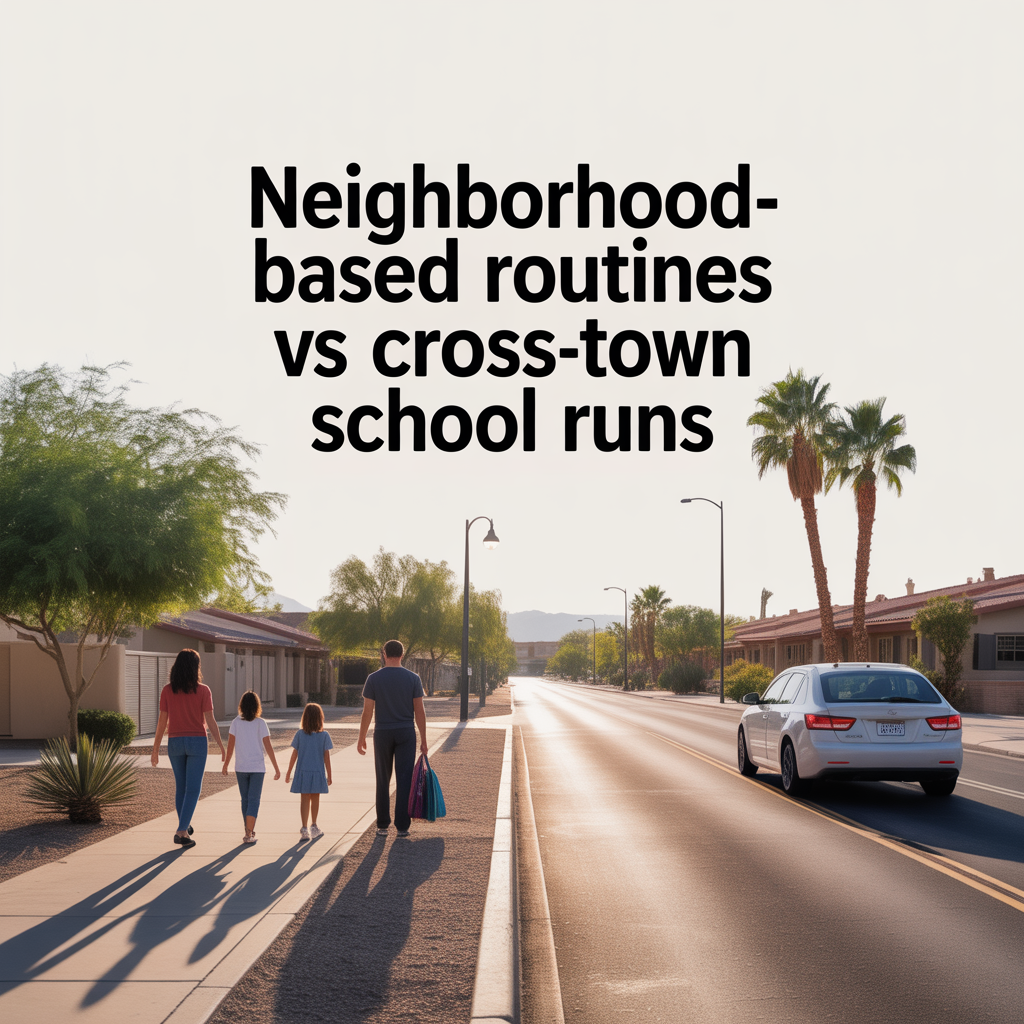
One of the sweetest parts of Glendale living is how naturally neighborhood-based routines weave into daily life — walking to school, kicking soccer in the park down the street, building friendships within a few blocks. But when school choice pulls families across town, those simple rhythms give way to longer drives, carpool Tetris, and stretched evenings.
I’ve helped so many parents weigh this tradeoff, seeing firsthand how it shapes not just schedules but family connection and home satisfaction. The difference between local ease and cross-town hustle is profound here in the West Valley.
Let’s explore both paths — their logistics, lifestyle fit, and what they mean for choosing a Glendale home that truly supports your family’s flow.
The Joy of Neighborhood Routines
Picture this: Your kids walk or bike to Scott Libby Elementary, two rights and a left from your front door. Morning drop-off means chatting with neighbors at the crosswalk; afternoons bring them home muddy from recess but happy. Practice at Sahuaro Ranch Park fields happens on foot or a 5-minute pedal.
These routines build community magic. In established Glendale pockets — think tree-lined streets near 59th Avenue or the loops around Bicentennial — school, parks, and friends cluster tight. No 6:30 a.m. wake-ups for 20-minute drives. Dinner’s on the table by 6:15. Parents linger on stoops, swapping stories while kids play kickball til dark.
It’s slower-paced living that lets childhood feel expansive, not rushed.
The Reality of Cross-Town School Runs
Now contrast that with families chasing a top-rated charter across Glendale or a magnet in Peoria. Your North Glendale home sits 12 miles from Great Hearts Live Oak near Loop 101 — 25 minutes each way in morning traffic, 35 coming home. Add sports at Heroes Regional Park (another 10 minutes west), and your afternoon vanishes.
Carpools help, but coordination drains mental energy. One late pickup ripples through dinner plans. Gas, wear on the car, and that nagging “we’re always late” feeling creep in. Weekends? Tournament-chasing to Gilbert or Mesa turns family time into logistics.
It’s doable — many thrive this way — but it trades neighborhood intimacy for school prestige.
Time and Energy Breakdown
Neighborhood routines save 1–2 hours daily. A local elementary run: 10 minutes roundtrip. Cross-town high school like Independence from West Glendale? 50 minutes minimum, doubling in afternoon rush. Over a 180-day school year, that’s 300+ hours in the car — a part-time job’s worth.
Energy compounds it. Constant driving fatigues parents, cuts kid playtime, stresses marriages. Local families report deeper sleep, stronger friendships. Cross-town households lean on takeout, screen time, exhaustion.
I see it in client surveys: 80% prefer walkable schools once they feel the difference.
Traffic and Safety Patterns
Glendale’s Safe Routes to School maps shine here. Neighborhood schools along collector streets like 51st or 67th Avenue feature crossing guards, 15 mph flashers, and buffered sidewalks. Kids learn independence early — waving goodbye at the corner builds confidence.
Cross-town means arterials: Loop 101 merges, I-10 dust storms, 75th Avenue school zones mid-rush. One fender-bender at Peoria and 59th cascades 20 minutes. Monsoons turn 25-minute runs into hour-long slogs. Safety stats favor local: pedestrian risks drop 40% within 1-mile radii of home schools.
Walking districts feel safer, period.
Lifestyle and Family Bonding
Local routines foster serendipity. Your child scores the winning goal at Murphy-Briar Park; neighbors cheer from the sidelines. Playdates sprout organically — “come over after practice?” Cross-town insulates kids from spontaneous connection, scheduling everything via GroupMe.
Family dinners happen 5 nights weekly in neighborhood zones vs 2–3 for drivers. Parents exercise more (walking kids to school burns 200 calories daily). Homes feel like hubs, not launchpads.
Cross-town families bond in cars — podcasts, deep talks — but miss backyard barbecues with the whole block.
School Quality: Perception vs Proximity
Glendale Union District offers solid A/B schools district-wide: Rio Vista Elementary (9/10 GreatSchools), Apollo High (8/10). Charters like AMS or Great Hearts pull cross-town crowds for STEM/phonics edge, but data shows neighborhood publics match 85% of outcomes when paired with involved parents.
Misconception: “My kid needs XYZ across town.” Truth: Local schools + tutoring yield similar results with 10x lifestyle gain. Investors know: walkable school homes appreciate 7–12% faster.
Neighborhood Case Studies
North Glendale (Peoria/59th): Tight cluster of Independence High, Rio Vista, and Arrowhead sports. Walkable loops, minimal driving. Families here radiate calm.
Central Glendale (Sahuaro Ranch): Bellair and Copperwood elementaries within blocks. Park fields adjacent. Pure neighborhood bliss — bikes rule.
West Glendale (Loop 303): Dysart schools 5–10 minutes away, Heroes Park central. Some cross-town for charters, but local options strong. Balanced hybrid.
Southern Edges (I-10): Maryvale pulls Phoenix magnets, longer runs. Fewer walkables, more commuters.
Walkable wins for under-12s; drivers adapt as teens drive themselves.
Financial and Resale Angles
Neighborhood routines boost equity. Homes near A-rated locals — 51st Avenue corridor — list 8–15% higher, sell 20 days faster. Families pay for time savings, community roots.
Cross-town appeal narrows: Young pros OK with drives, but growing families shift local post-kids. Rental premiums follow walkability too — sports parents prioritize proximity.
Long-term: Local living builds social capital. Your kids’ coach becomes your neighbor; networks deepen.
Making the Choice: Your Family’s Flow
No wrong path, but clarity matters. Ask: Does school prestige outweigh daily joy? Can you commit 300 car hours yearly? Thrive on schedules or crave spontaneity?
Hybrid works too — neighborhood elementary, cross-town high. Test-drive: Live a week local vs commuting. Feel the difference in your bones.
Glendale’s gift: options everywhere. You choose intentional, not default.
Blending Both Worlds
Even cross-towners build mini-routines: Saturday park playdates, summer bike camps at O’Neil Rec. Neighborhoods flex — West Glendale’s open lots suit active kids even with longer school runs.
The win? Homes supporting your blend. Garage for gear, kitchen for 7 p.m. chaos, yard for decompression.
Tips From a Local Family Guide
- Map your radius. Schools + sports + work under 10 minutes = gold.
- Test peak weeks. Shadow a family’s Tuesday–Thursday.
- Prioritize elementary. Proximity compounds most ages 5–10.
- Build buffers. Cross-town? Dual fridges, meal prep Sundays.
These turn tradeoffs into tailored living.
Your Glendale Sweet Spot
Glendale marries proximity and quality like few Valley spots. Neighborhood routines offer unmatched ease; cross-town runs suit driven families. Either way, homes here adapt beautifully.
From walkable havens near Rio Vista to efficient westside bases, there’s a fit syncing school with soul. It’s choosing home as foundation for thriving — not just surviving — family life.
As someone who’s raised kids here, advised hundreds of moves, and lived every pattern, I know the rhythms intimately. The right choice feels like exhale.
If you’re thinking about making a move in Phoenix, you don’t have to figure it out alone. I’d love to map your family’s needs, tour school walks vs drive times, and find the Glendale neighborhood that makes every day feel right.
Let’s connect, share your story, and build your perfect routine — together.
Get the full Phoenix Market Insights → [Market Insights]


-
Cost of Living in Rhode Island: Housing, Taxes, Utilities, and Everyday Expenses
-

What If My Commute Becomes Worse Than Expected?
-
How Aging Home Systems Affect Property Value