


This is part of the Ownership Costs & Budget Planning Guide → [Ownership Costs & Budget Planning Guide] & the larger Homeownership 101 Guide→ [Homeownership 101]
Written by: Renee Burke
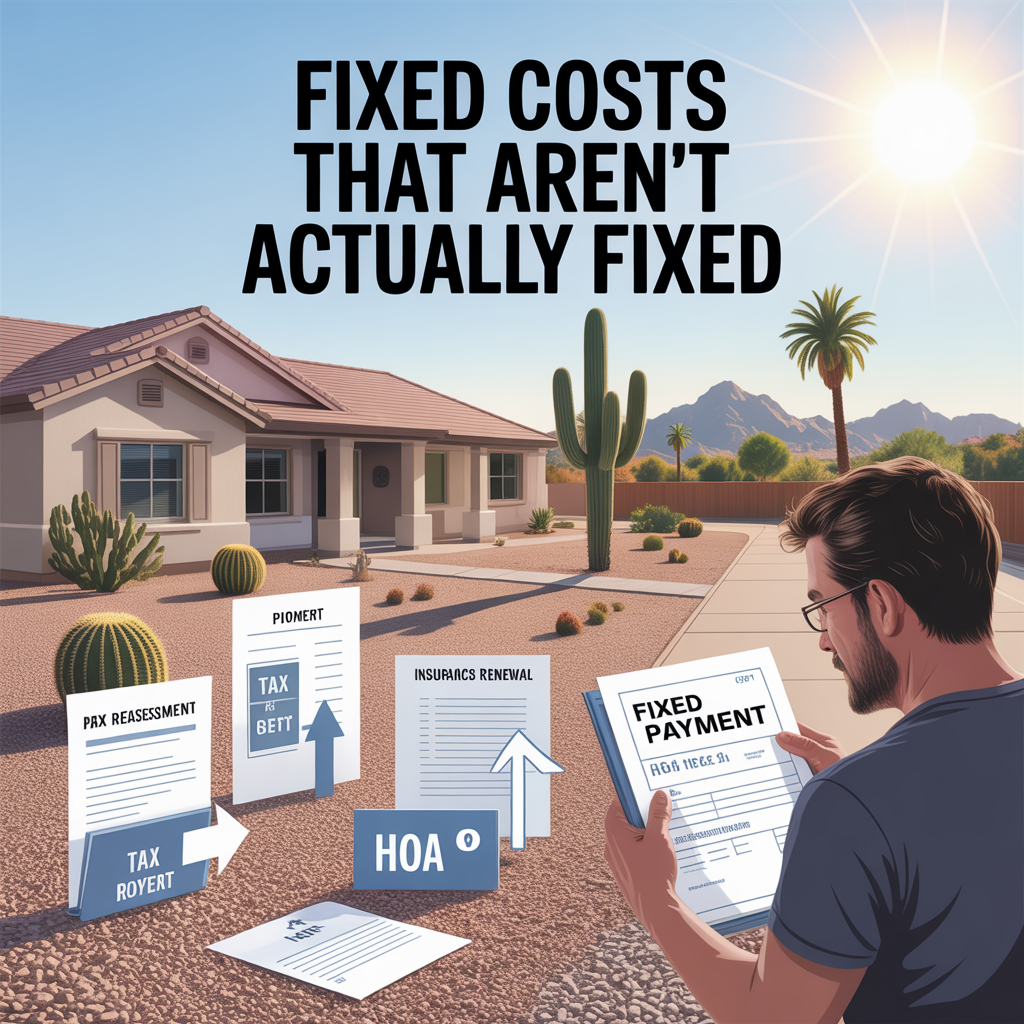
You’ve likely heard it before: “My mortgage is fixed, so my housing costs are locked in.” It’s a comforting thought when you sign the papers at closing. But after a few years in a Phoenix home, many owners notice those “fixed” numbers starting to shift — quietly, steadily, and sometimes surprisingly.
I’ve walked dozens of Valley families through this realization. It’s not about broken promises; it’s about the real rhythm of homeownership here in Maricopa County. Let’s unpack why these costs evolve, how to anticipate them, and what you can do to stay in control.
1. Property Taxes: The Steady Creep You Can Predict
Phoenix homeowners often assume property taxes stay flat after purchase. Not quite. Arizona law caps Limited Property Value (LPV) increases at 5% annually for primary residences, which helps. But rising home values still push assessed values up within that limit, and small city or county levy adjustments add more.
In Maricopa County, recent Truth in Taxation hearings show primary tax bumps around 1-2% yearly for the average owner — like Phoenix’s 1.22% proposed increase or the county’s 1.81%. On a $500,000 home, that’s $50–$100 more per month over time. School bonds and infrastructure for our growing Valley nudge it higher.
Check your county assessor notice each fall. It’s your early warning — and often, you can appeal if values seem off for your neighborhood.
2. HOA Fees: Community Costs That Climb With Demand
Over 70% of Phoenix metro homes carry HOA fees, from $50/month in Surprise single-family neighborhoods to $300+ in Scottsdale resort-style communities. These aren’t truly fixed; they rise with insurance premiums, reserve needs, and shared expenses like landscaping in our relentless sun.
I’ve seen fees jump 10–20% in a single year for roof replacements or legal fees from amenity disputes. Gilbert’s master-planned spots and East Valley townhomes often budget aggressively for pools and gates, reflecting our family-focused lifestyle.
Request the latest reserve study before buying — it reveals upcoming “special assessments” that could hit your wallet hard.
3. Homeowners Insurance: Weather and Reinsurance Realities
Your policy renews annually, and premiums have climbed steadily in Arizona. Heat, monsoon winds, and hail — all Valley staples — drive claims, while national reinsurance hikes pass costs to us. A $400,000 policy might go from $2,000 to $3,000 yearly in just a few cycles.
Phoenix-area rates average $150–$300/month, higher near washes or with pools. Deductibles for wind/hail often start at 1–2% of dwelling coverage now, up from older policies. Shop carriers yearly; some like State Farm or AAA still compete well locally.
Bundle with auto for savings, but never skip wind mitigation upgrades like impact-resistant tiles.
4. Utilities: Seasonal Swings in a Desert Climate
SRP and APS bills feel variable, but base rates inch up too. Recent adjustments added 5–10% over a few years, and our A/C-heavy summers amplify it. Expect $250–$400/month year-round, spiking to $500+ June–September for a 2,000 sq ft home.
Hard water deposits, pool pumps, and evaporative coolers add hidden layers unique to Phoenix. Time-of-use plans help if you’re home during peak hours, but they require lifestyle tweaks. Track a year’s bills to baseline — it’s eye-opening.
5. The Mortgage Escrow Adjustment Trap
Even fixed-rate mortgages aren’t immune. Your escrow account holds taxes and insurance, recalculated annually. If those rise (as they often do), your lender bumps the monthly payment to cover projected shortfalls.
A $3,000 annual tax/insurance increase means $250 more per month — no refinancing needed, just a new escrow analysis. I advise clients to review their annual statement closely; overages get refunded, but underages demand immediate payment.
Keep personal reserves for these surprises — escrow isn’t a full buffer.
6. Maintenance Reserves: Proactive Isn’t Optional
That “fixed” maintenance budget? Desert wear accelerates it. A/C units strain under 110°F days, foam roofs need recoating every 7–10 years, and stucco cracks from soil shifts. Budget 1% of home value yearly ($400–$700/month for mid-range homes).
Early years feel light; later ones cluster with HVAC ($10,000) or irrigation overhauls ($2,000). Phoenix’s dust and scorpions mean pest control and filters aren’t optional either.
Start a sinking fund now — it turns “emergencies” into planned line items.
7. Lifestyle and Service Creep
Small choices add up: upgrading to smart thermostats, weekly pool service, or drought-resistant turf. These enhance Valley living but inflate “fixed” costs over time. A $100/month pool guy becomes $150 with inflation; subscriptions for security systems layer on.
It’s not wasteful — it’s adapting to our outdoor-centric life. Track via apps to spot drifts before they squeeze.
8. Policy and Market Shifts in the Valley
Phoenix grows fast: new TSMC plants in north Phoenix, light rail extensions to Tempe, school bonds in Chandler. These fund progress but trickle into taxes and fees. Secondary taxes for bonds stay steady, but primary levies evolve with voter approvals.
West Valley like Buckeye sees rapid infrastructure costs; Central Phoenix feels gentrification pressures. Stay local: Maricopa County Assessor updates and city council agendas predict shifts.
9. How to Lock In More Predictability
You can’t freeze everything, but smart steps help:
- Annual audits: Review tax assessments, insurance quotes, HOA statements.
- Shop competitively: Taxes via appeals; insurance through independents.
- Reserve aggressively: $300–500/month into high-yield for escrow buffers.
- Buy with eyes open: Prioritize low-HOA neighborhoods or older homes with paid-off reserves.
- Refi strategically: If rates drop, lower payments offset rising taxes.
These keep you ahead of the curve, not reacting to it.
10. Embracing Ownership’s True Rhythm
In Phoenix, “fixed costs” evolve because our market and climate do. Recognizing this empowers you — turning unease into strategy. You’re not just paying bills; you’re investing in a life here, with equity building quietly alongside.
I’ve helped families recalibrate budgets from Avondale tract homes to Paradise Valley estates. The peace comes from preparation, not perfection.
If these shifts are weighing on you — or you’re eyeing a home where costs feel more contained — reach out. Let’s review your numbers together, neighborhood by neighborhood.
You don’t have to navigate the Valley’s changes alone. I’m here as your guide, every step.
If you’re thinking about making a move in Phoenix, you don’t have to figure it out alone.
Get the full Phoenix Market Insights → [Market Insights]


-

Real Outdoor Access by Chandler Area
-
Commute Corridors and Directions in Chandler
-

School District Lines in Chandler