


This is part of the Ownership Costs & Budget Planning Guide → [Ownership Costs & Budget Planning Guide] & the larger Homeownership 101 Guide→ [Homeownership 101]
Written by: Renee Burke
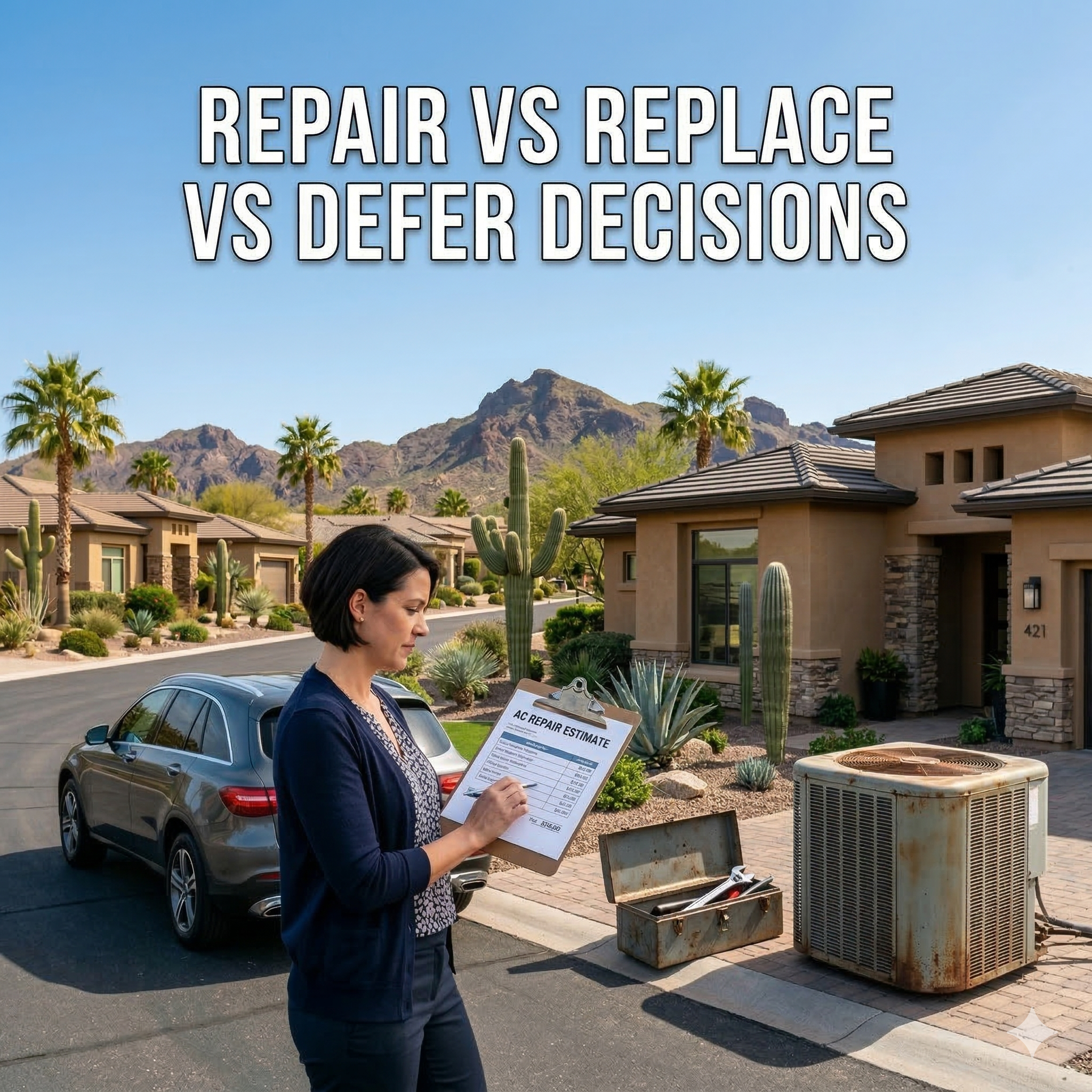
One of the toughest calls Phoenix homeowners face is staring at a glitchy AC unit, a cracked roof section, or aging kitchen cabinets and deciding: fix it now, replace it entirely, or let it ride a bit longer? It’s not just about cost — it’s about our desert climate, your budget rhythm, and protecting long-term equity. I’ve helped so many Valley families weigh these choices calmly, turning potential stress into confident decisions.
The right path depends on age, condition, and local realities like relentless sun and monsoon risks. Here’s how to think it through clearly.
The Decision Framework: Three Questions to Ask
Every choice boils down to these:
- Safety or function at risk? No deferral — act. Leaky pipes or electrical shorts demand repair or replace immediately.
- Repair cost >50% of replacement? Lean toward replace, especially if the item’s near end-of-life.
- Low risk, cosmetic impact? Defer works, but set a timeline and reserve funds.
In Phoenix, heat accelerates wear — an AC repair might buy a year, but replacement future-proofs against 115° summers.
Common Phoenix Scenarios: Repair, Replace, or Defer?
Here’s how it plays out for our most frequent dilemmas, with typical Valley costs and climate considerations:
| Item | Repair Cost | Replace Cost | When to Repair | When to Replace | When to Defer |
|---|---|---|---|---|---|
| AC Unit (5-10 tons) | $300–$1,500 (tune-up, coils) | $6,000–$12,000 | Minor issues, unit <10 years old | >15 years, frequent breakdowns, poor efficiency | Winter only, if cooling adequate |
| Roof Section (hail/storm) | $1,000–$3,000 (patches) | $10,000–$25,000 (full) | <25% damaged, recent roof | Widespread damage, >20 years old | Cosmetic dents if no leaks |
| Water Heater | $200–$800 (elements, valves) | $1,200–$2,500 | Recent install, simple fix | Rust, leaks, >10 years | 6-12 months if functioning |
| Pool Equipment | $300–$1,000 (pump, filter) | $2,000–$5,000 | Single component failure | Multiple failures, >7 years | Off-season if pool usable |
| Kitchen (mid-grade) | $5,000–$15,000 (cabs, counters) | $25,000–$60,000 | Functional but dated | Layout issues, inefficiency | Indefinite if no urgency |
| Electrical Panel | $500–$2,000 (breakers) | $2,000–$5,000 (200-amp upgrade) | Isolated faults | Frequent trips, old wiring | Never — safety risk |
Repair shines for localized, low-cost fixes on newer systems. Replace wins when inefficiency or age compounds future bills — our energy costs make this math stark. Defer suits aesthetics or seasonal items, but cap at 12-18 months to avoid escalation.
Phoenix Climate: Why Timing Matters
Our extremes tip scales:
- Summer urgency: AC or pool? Replace over repair — downtime costs more in heat.
- Monsoon prep: Roofs and drainage — repair or replace pre-July, never defer leaks.
- Sun degradation: Stucco, paint, seals wear 2x faster — repair small cracks, replace failing sections.
Pro tip: Get 2-3 bids always. Winter pricing saves 15-25%; insurance often sways roof/HVAC calls.
The Long-Term Ownership Lens
Think 5-10 years out. Repair buys time cheaply but repeats. Replace resets the clock with efficiency gains (new AC cuts bills 20-30%). Defer frees cash now but risks surprises — balance with your 1-2% annual reserve.
Run simple math: Total cost over lifespan. A $1,000 repair + $1,000 in two years might exceed a $2,500 replace with warranty.
Avoid Common Pitfalls
- Band-Aid traps: Patching an old roof twice costs more than replacing once.
- Over-deferral: Cosmetic skips erode curb appeal, slowing equity.
- Solo decisions: Pros spot hidden issues — $200 inspection saves thousands.
Phoenix homes reward proactive balance: repair smartly, replace strategically, defer selectively.
If you’re facing one of these choices — AC humming weirdly, roof post-hail, or kitchen fatigue — you don’t have to weigh it alone. Share the details, and we’ll map costs, timelines, and best paths for your Valley home.
If you’re thinking about making a move in Phoenix, you don’t have to figure it out alone. Reach out — I’m here to guide you to decisions that protect your investment and peace of mind.
Get the full Phoenix Market Insights → [Market Insights]


-
Cost of Living in Rhode Island: Housing, Taxes, Utilities, and Everyday Expenses
-

What If My Commute Becomes Worse Than Expected?
-

How Aging Home Systems Affect Property Value