


This is part of the Ownership Costs & Budget Planning Guide → [Ownership Costs & Budget Planning Guide] & the larger Homeownership 101 Guide→ [Homeownership 101]
Written by: Renee Burke
When you live in the Valley, you come to understand the sun in a very personal way. It’s part of our rhythm—the golden glow at dawn, the central presence of our afternoons, and the deep amber light that softens the desert at sunset. But as much as we love our Phoenix sunshine, there’s an unspoken rule every homeowner learns quickly: shade isn’t a luxury here. It’s essential.
Whether you’re new to the area or you’ve been in the Valley for decades, shade structures and covered patios have become almost synonymous with comfortable desert living. They influence how we use our homes, how we entertain, and even how we think about property value and long-term maintenance.
The Practical Side of Living in the Sun
Let’s start with the basics. Phoenix averages more than 300 days of sunshine each year. Summers can bring extended stretches well over 100 degrees, and even the most beautiful fall days still carry enough UV exposure to heat up a home faster than you might expect.
Shade—and how well your property provides it—affects your home’s energy efficiency, maintenance needs, and overall livability. Homes with thoughtfully designed patios, pergolas, or shade sails can be noticeably cooler and more energy-efficient than those without them. A covered area helps shield your interior spaces from direct sunlight, particularly if placed on western or southern exposures. Over time, that translates to lower cooling costs, less fading on flooring and furniture, and extended life for exterior finishes.
For many Phoenix homeowners, especially those planning to stay in their homes long-term, a well-designed shade structure isn’t just an add-on—it’s an investment in comfort and sustainability.
Designing for the Desert
Not all shade is created equal. In the Valley, there’s a real art to designing outdoor spaces that make sense for our climate and lifestyle.
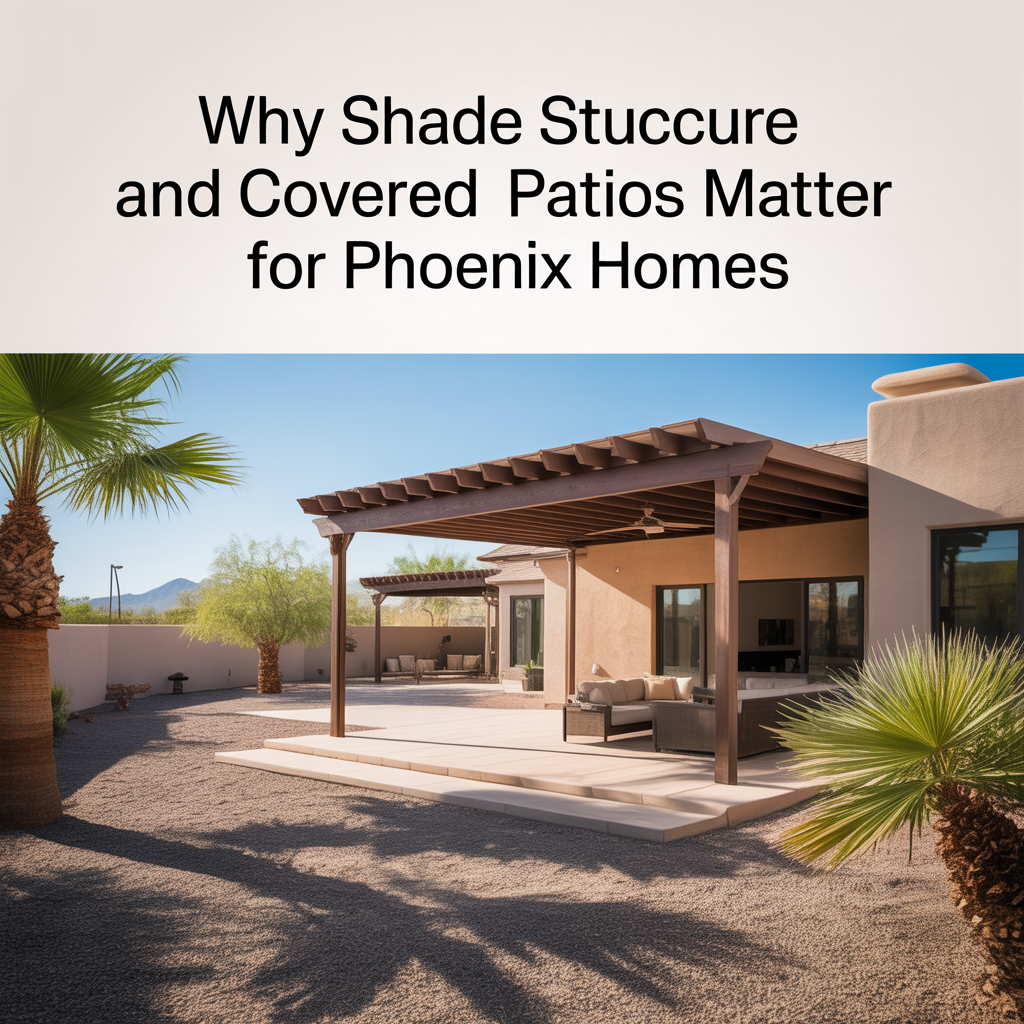
A covered patio with a solid roof can provide full protection from the sun and summer monsoons. Pergolas and ramadas allow filtered light while still offering relief from direct heat. Many homeowners are blending materials—adding slatted or adjustable roofs that can open in winter and close during glaring summer months. In neighborhoods across Scottsdale, Ahwatukee, and north Phoenix, you’ll find shade designs that tie seamlessly into both the home’s architecture and the natural desert landscape.
And while aesthetics certainly matter, the functional side is equally important. You want to work with materials that perform well in our high heat and low humidity. Aluminum or treated wood can withstand temperature swings without cracking or warping. Lighter roof colors and insulated patio panels can reflect heat rather than absorb it.
Good design in Phoenix doesn’t just look beautiful—it works with the sun, not against it.
Outdoor Living as an Extension of Home
A big part of what makes Phoenix living so special is how easily the indoors and outdoors blend together. In the evenings, when the air finally softens, most of us naturally step outside—to grill, read, or simply exhale at the end of the day.
That’s where covered patios truly shine. They allow you to enjoy your backyard year-round, offering a shaded retreat in summer and a cozy gathering spot in winter. Adding ceiling fans, misters, or even an outdoor fireplace can turn that space into one of the most used “rooms” in your home.
Homebuyers in the Valley notice these details. A property with a shaded patio feels move-in ready in a way an uncovered lot doesn’t. It signals thoughtfulness—not just in design, but in how the home supports the local lifestyle.
If you ever plan to sell, that built-in shade can become a quiet but powerful advantage. It’s not an upgrade that screams for attention, but one that makes people instantly imagine themselves living comfortably there.
Protecting What You’ve Built
There’s also a protective aspect many homeowners don’t think about at first. Constant exposure to sun and heat can degrade paint, stucco, decking, and window seals over time. A shaded area extends the life of outdoor finishes—and can significantly reduce the frequency and cost of maintenance.
For example, patios with proper overhead coverage shield door frames and sliders from UV damage. Pool equipment and outdoor kitchens can also last longer under partial shade. Even your landscaping benefits—plants thrive when given relief from afternoon exposure, reducing water use and keeping your yard looking lush through the summer.
These are small efficiencies that add up quietly, year after year, particularly when you’re thinking about staying in your home for the long haul.
Common Concerns and Misconceptions
A lot of Phoenix homeowners worry about whether adding shade structures will overwhelm their yard or clash with their home’s style. The good news is that the design options today are incredibly flexible. Modern aluminum pergolas can mirror the lines of a contemporary home, while stucco-covered ramadas blend seamlessly with more traditional desert architecture.
Another common concern is whether these additions truly “pay for themselves.” While exact ROI figures vary, shade structures tend to hold their value well because they improve functionality rather than just appearance. They can enhance appraisal value in practical terms—energy efficiency, extended use of space, and overall property appeal.
I often remind clients that in Phoenix, what we call “outdoor living space” isn’t separate from the home—it’s part of it. When potential buyers tour properties, they’re envisioning those shaded dining areas, quiet morning coffee spots, and family gatherings under misters or string lights. That vision has real market power.
How Neighborhoods Reflect This Shift
If you look across newer communities in places like Desert Ridge, Eastmark, or Verrado, you’ll notice that shade design isn’t an afterthought—it’s built in. Homes come with extended patios, exterior fans, or pre-wiring for drop shades. Builders understand that these elements aren’t optional anymore. They reflect how Phoenix families actually live, work, and relax.
Even older properties are evolving toward more covered outdoor use. Homeowners who remodel tend to prioritize extending their patios and upgrading their rooflines to include outdoor shelters. This shift says a lot about where the Valley’s housing lifestyle is headed: toward smarter, more livable spaces that adapt to our desert rhythm.
Choosing the Right Shade for Your Home
If you’re considering an addition, start by observing how the sun moves across your property during the day. The direction your yard faces makes all the difference. North-facing patios tend to stay cooler, while south- and west-facing areas benefit most from extended coverage or roll-down shades.
It also helps to think about long-term usability:
- Do you plan to entertain or simply create a quiet retreat?
- Would you like integrated lighting, fans, or heaters for year-round comfort?
- Is your goal aesthetic harmony or maximum coverage?
Local regulations and HOA guidelines can influence your options, so it’s always worth discussing plans with a trusted local professional before starting construction.
When done well, a covered patio doesn’t just provide shade—it redefines how you experience your home. It turns heat into comfort, exposure into ease, and a house into a refuge perfectly suited to life in the Valley.
Living Well, Long-Term
One of the quiet joys of living in Phoenix is that our outdoor spaces stay usable longer than almost anywhere else in the country. Even in July, when it feels impossible to imagine being outside, the right design can create a slice of comfort—a shaded spot where you can still enjoy the hum of cicadas, the scent of mesquite, and the glow of twilight.
That’s really what these structures offer: not just shade, but time. More days of use. More comfort with less strain. More moments that remind you why you chose to live here in the first place.
If you plan to make your home a long-term investment—financially and emotionally—thoughtful shading belongs at the top of your priority list.
A Word from Renee
If you’re thinking about ways to make your current home more livable—or if you’re searching for a new place that fits the Phoenix lifestyle—it helps to have someone who truly understands how these choices play out locally.
I’ve spent years helping clients across the Valley strike the right balance between design, comfort, and long-term value. Shade structures and covered patios may seem like small details at first glance, but here in Phoenix, they shape the heart of how we live.
If you’re thinking about making a move in Phoenix, you don’t have to figure it out alone. I’d love to help you make confident, informed choices about what matters most—so your home feels just right, inside and out.
Get the full Phoenix Market Insights → [Market Insights]


-

Electrical Safety Inspections for Older Phoenix Homes
-
Why Whole-Home Surge Protection Matters in Arizona
-
Preparing a Phoenix Home for Electric Vehicle Charging