


This is part of the Insurance, Risk and Protection Guide →[Home Maintenance and Systems] & the larger Homeownership 101 Guide→ [Homeownership 101]
Written by: Renee Burke
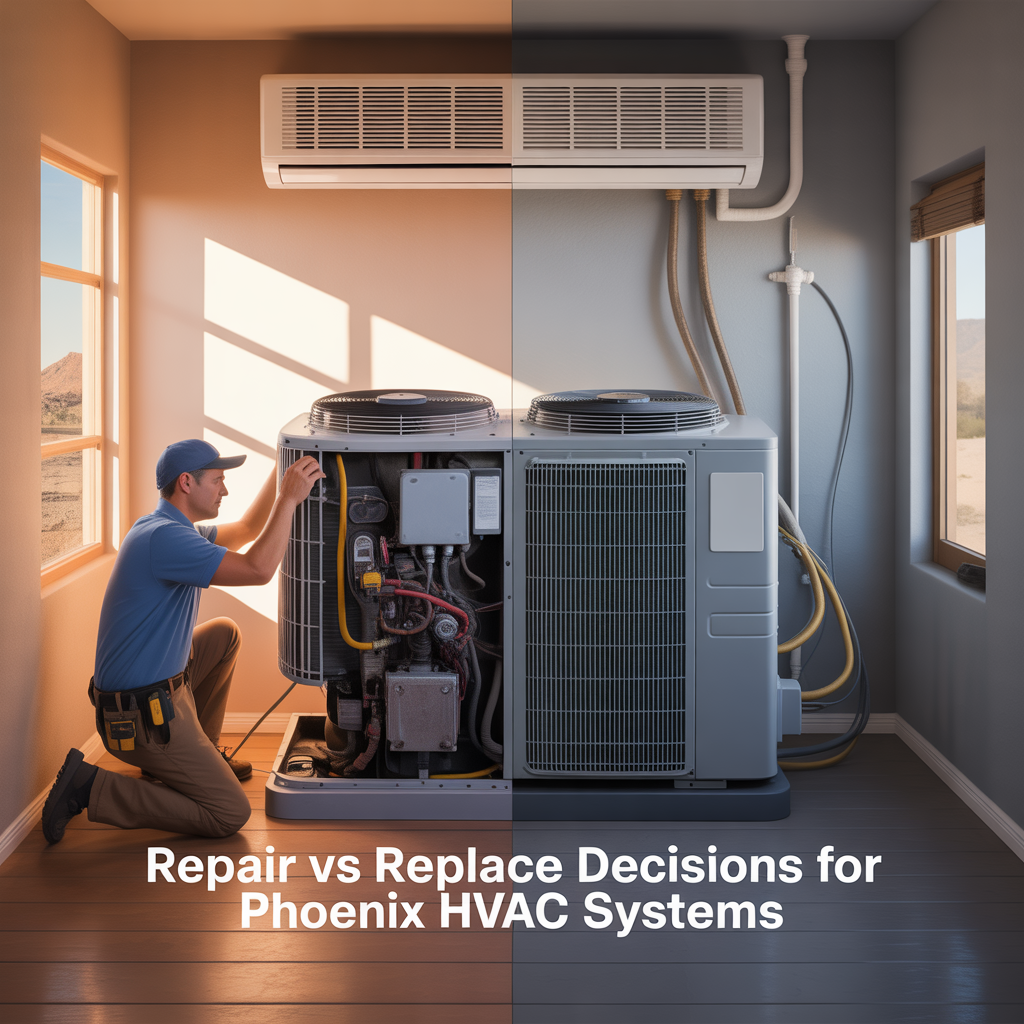
In Phoenix, your HVAC system isn’t just a convenience — it’s a necessity. When that first costly repair message shows up, the question that echoes in most homes is: “Do we fix this, or do we bite the bullet and replace it?” The answer is rarely the same for every house, but there are clear, practical ways to decide — especially in our desert climate.
After walking through hundreds of Phoenix homes, I’ve watched owners wrestle with this decision many times. The most peaceful choices come from understanding your system’s age, your comfort level, and the long‑term math — not from reacting to the panic of a 110‑degree day with no cooling.
1. Know the Lifespan: When Age Matters
In Phoenix, most central‑air systems last roughly 12–15 years, and units beyond 15 are often living on borrowed time. Some well‑maintained systems can stretch a bit further, but the odds of frequent breakdowns and costly repairs rise steeply after that mark.
Key age‑related guidelines:
- Under 10 years: A single major repair (like a new compressor or blower motor) is often worth doing, provided the rest of the system is in good shape.
- 10–15 years: Think of this as “replacement territory.” If a repair is large or you’re starting to see multiple issues, replacement is often the smarter long‑term move.
- Over 15 years: Most local experts recommend replacement rather than large repairs, because the system is more likely to fail again soon.
Your system’s age alone won’t tell the whole story, but it’s the first piece of your repair‑vs‑replace puzzle.
2. The Math: Simple Rules That Help You Decide
Two simple rules are widely used by Phoenix HVAC professionals and can help you talk through the decision calmly with your technician.
Rule 1: The 50% Rule (and Why Phoenix Changes It)
The traditional rule is: if repair costs exceed about 50% of what it would cost to replace the system, replacement usually makes more sense.
In Phoenix, many local contractors tighten that: if your system is 10 years or older and repairs are approaching 30–40% of replacement cost, it’s worth seriously considering a new unit. That’s because older systems in our heat are more likely to need another repair soon.
Rule 2: The $5,000 Rule
Multiply your system’s age (in years) by the quoted repair cost (parts + labor). If the result is over $5,000, replacement often makes more sense in the long run. If it’s under $5,000, a repair is often reasonable — especially on a younger, well‑maintained system.
For example:
- A 7‑year‑old system with a $400 repair → 7 × 400 = 2,800 → repair often makes sense.
- A 12‑year‑old system with a $600 repair → 12 × 600 = 7,200 → replacement is usually the smarter choice.
These rules aren’t magic, but they help you avoid pouring big money into an aging system that may betray you again in a year.
3. Comfort and Efficiency: The Hidden Price of Patching It
Beyond the immediate repair bill, think about comfort and energy use. Older systems in Phoenix often:
- Struggle to keep the house cool on the hottest days
- Run longer and louder to reach the desired temperature
- Use more electricity, which you see in your SRP or APS bills
Newer, high‑efficiency units (14–16+ SEER2) can significantly reduce operating costs and improve comfort, especially in our intense heat. If your current AC frequently can’t keep up, or your cooling bills have climbed steadily, that’s a comfort‑and‑cost argument in favor of replacement.
4. How Much Does Replacement Really Cost in Phoenix?
For most Phoenix homes, a full central‑air replacement today runs roughly $6,500–$12,000+ installed, depending on system size, efficiency, and whether ductwork or electrical upgrades are needed. Bigger homes and higher‑efficiency units naturally sit at the upper end of that range.
Labor rates in Phoenix are also higher than the national average, since technicians are in high demand during the cooling season. Replacement is usually easiest and sometimes slightly less expensive when scheduled during the “off‑season” — late fall or early spring — when demand is lower.
If you’re facing a large repair bill anyway, it’s worth asking your contractor to run two numbers:
- The cost of the repair plus an estimate of future repairs over the next few years.
- The cost of a new system versus the energy savings over that same period.
Sometimes, the replacement cost pencils out more favorably than you expect, especially when you factor in comfort and reliability.
5. When Repair Usually Makes Sense
There are situations where a repair is the right, responsible choice:
- A single, isolated failure on a relatively young system (for example, a bad capacitor or a faulty thermostat) on a unit under 8–10 years old.
- A system that has been regularly maintained and doesn’t have a history of frequent breakdowns.
- Repairs that are well below the 30–50%‑of‑replacement threshold and don’t signal a major internal failure.
In these cases, you can often get several more years of reliable service from your HVAC with a clear plan for future inspections.
6. When It’s Time to Replace
There are also clear signs that it’s time to let your current system go and invest in a new one:
- The system is 12–15+ years old and starting to break down more often.
- You’ve had multiple major repairs in the last 2–3 years or the current repair is large and expensive.
- You notice uneven cooling, strange noises, or a noticeable jump in energy bills.
- Your unit uses phased‑out refrigerants like R‑22, which are harder to source and more expensive to recharge.
In Phoenix, where downtime is not an option, replacing a tired system before it leaves you in the heat avoids stress and often saves money over time.
7. A Balanced Approach That Fits Your Life
The most thoughtful decision usually balances:
- Your system’s age and past repair history
- The size of the current repair versus the cost and efficiency of a new system
- Your timeline — whether you plan to stay in the home for several more years or are preparing to sell
If you’re planning to keep your Phoenix home long term, spending to upgrade to a more efficient, reliable system often feels like an investment in comfort and peace of mind. If you’re closer to selling, you may choose the path that keeps the home market‑ready without overspending.
You Don’t Have to Decide in a Panic
If you’re staring at a big HVAC repair estimate right now and wondering whether to fix it or replace it, I’m here to help you talk through it.
If you’re thinking about making a move in Phoenix, you don’t have to figure it out alone. Whether you’re weighing repair vs replacement, trying to understand how your HVAC health might affect your home’s value, or simply want to make sure your home is comfortable and efficient, I’m happy to walk through it with you — calmly, honestly, and without pressure.
Together, we can look at the age, your budget, and your plans, and decide what feels right for your home and your life in Phoenix.
Get the full Phoenix Market Insights → [Market Insights]


-

District vs Charter Tradeoffs in Chandler
-

Weekend Events Around Chandler Schools
-

After‑School Sports and Activities Chandler