


This is part of Real Estate Fears in Denver→ [Real Estate Fears in Denver] also research Denver Buyer Fears → [Denver Buyer Fears] and Denver Seller Fears → [Denver Seller Fears]
Written by: Chad Cabalka
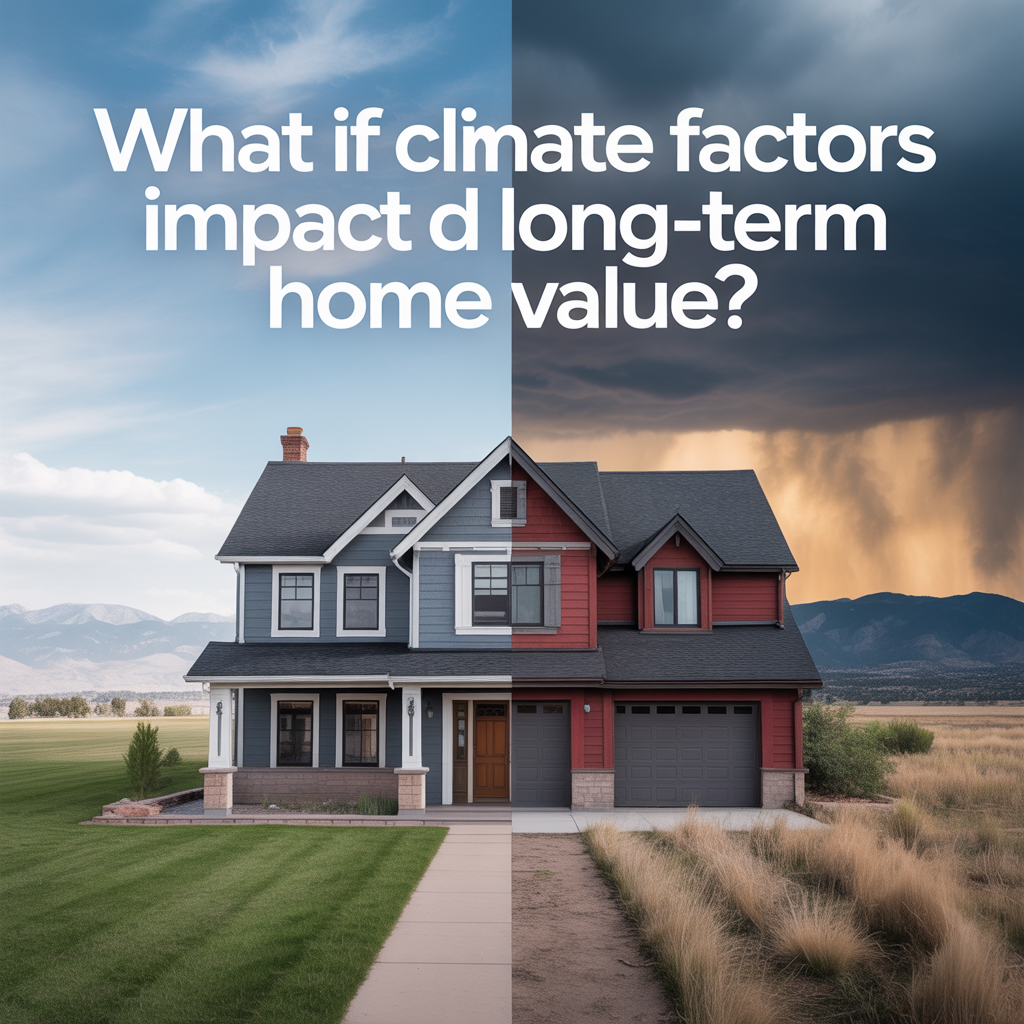
For many Denver homeowners and buyers, a quiet question hangs in the background of every real estate decision: what if climate change eventually affects the value of my home? It’s not irrational. We’ve all watched footage of wildfires, drought conditions, and record-breaking temperature swings across the West. Denver might feel buffered compared to coastal markets, but uncertainty about water resources, severe weather, and long-term livability lingers.
That question—how much climate actually matters to long-term real estate value—has started showing up not just in academic reports, but around the kitchen table. And it’s especially relevant in Denver, where population growth intersects with an already strained infrastructure and environmental volatility unique to the Front Range. This isn’t a distant concern. It’s part of how people now define “risk” when they think about buying or holding property here.
What’s Driving This Fear in Denver
Unlike Phoenix or California’s coastal cities, Denver’s climate concerns look less like disaster risk and more like system risk—incremental stress on water, weather, and urban ecosystems that shape quality of life over time.
The first driver is perception. In the past three years, Denver has seen increasing media coverage around wildfire smoke drifting down from the foothills, water conservation measures, and declining snowpack in the upper Colorado River Basin. While Denver Water is relatively secure due to diversified sourcing, buyers are starting to process that “secure” no longer means “limitless.”
Second, cost-of-living pressures amplify the sensitivity to these concerns. With median home prices hovering near or just under $700,000 in early 2026, even modest shifts in perceived long-term desirability can change local migration patterns. If one area feels hotter, drier, or riskier, buyers have plenty of suburban or mountain-adjacent alternatives. We’re already seeing small signs of this in buyer traffic: pockets east of I-25 with less mature landscaping or fewer tree canopies tend to cool faster in buyer activity during the hottest summer months.
Third, investors and institutional players—who once ignored climate modeling—are quietly pulling data into acquisition decisions. Insurance carriers now underwrite differently in parts of Jefferson, Boulder, and Douglas counties, particularly near wildland interfaces. Lenders follow that lead. As those underwriting standards tighten, even well-insulated submarkets start to price in risk through cost of ownership, not just list price.
Who This Impacts Most
The most exposed group—psychologically and financially—tends to be long-term hold buyers rather than flippers or short-term investors. A young family purchasing a southeast Denver home with plans to stay for 15 to 20 years has every reason to ask: what if rising temperatures, higher insurance premiums, or water restrictions slowly erode neighborhood appeal?
Move-up buyers, especially those upgrading from central Denver to the foothills or outer suburbs, face another layer of calculation. They’re often moving toward tree-lined neighborhoods, open space, or larger lots—all features adjacent to higher wildfire zones. That means weighing scenic value against exposure and insurance cost, a mental balancing act that didn’t exist a decade ago.
Even relocators—especially those moving from California or Texas—bring learned vigilance. Many ask early in their home search: “Has this area ever been impacted by wildfire smoke?” or “How does this neighborhood handle water conservation?” They’re not alarmists. They’re simply accustomed to environmental volatility influencing price trends, and they’re bringing that mindset to the Denver housing market.
Sellers, meanwhile, notice the subtle shifts. Homes with mature trees, cooler microclimates, or proximity to parks and shaded walking corridors increasingly attract premiums. The market is rewarding environmental comfort before most people even label it that way.
Why This Fear Persists
Climate fear in real estate persists because it’s not about catastrophe—it’s about ambiguity. People can price structural risk, but they can’t easily price future adaptability.
The Denver market operates at the intersection of microconfidence and macro uncertainty. On one hand, inventory remains constrained, population inflows continue, and Denver’s diversified economy underpins demand. On the other, buyers intuitively feel that the 30-year horizon of a mortgage may collide with decades of climate transition. Even rational, data-driven people struggle to reconcile those timeframes.
There’s also the power of anecdote. When a wildfire burns thirty miles from the metro fringe, headlines can make readers in Wash Park or Stapleton feel personally exposed. The human mind doesn’t separate risk by zip code; it generalizes. That’s why you’ll occasionally see abrupt, short-term market slowdowns followed by perfectly normal recoveries. The fear isn’t that Denver will be unlivable—it’s that change might outpace adaptation.
Finally, financial systems reinforce the unease. Insurance carriers, rather than city planners, often become the first to send signals about climate risk. When premiums quietly jump 20% in certain ZIP codes, people notice. And they extrapolate, sometimes more strongly than data justifies.
The Reality (What’s Actually True)
Here’s the grounded truth: Denver’s real estate value is not under existential threat from climate change—but certain dynamics are evolving, and smart homeowners notice them.
Denver remains one of the most resilient inland metros in the U.S. Its geography, elevation, and infrastructure make it less vulnerable to sea-level rise, extreme humidity, or widespread flood events that define risk in other cities. Water constraints exist, but Denver’s management systems and regional cooperation with Front Range cities are among the most advanced in the West. There will be restrictions and rising costs, yes—but not collapse or exodus.
Wildfire remains the outlier. Edge communities in Boulder, Golden, Morrison, and the southern foothills will continue to face premium pricing pressure. That doesn’t mean those homes lose value; they simply recalibrate based on insurance risk and ongoing mitigation investment. It’s similar to how coastal insurance costs shape value curves near hurricane zones. Owners adapt, premiums adjust, and pricing stabilizes at a new normal.
Perhaps most importantly, the Denver housing market has shown extraordinary durability through volatility—interest rate shocks, pandemic migration booms, inventory swings. The undercurrent of demand tied to recreation access, workforce opportunity, and overall lifestyle typically offsets transitory fear cycles. For every buyer hesitating over environmental volatility, another moves in precisely because Denver feels comparatively climate-safe versus the rest of the country.
How to Think About It Strategically
For homeowners and buyers, the key isn’t to fear climate risk but to factor it intelligently into long-term strategy. That means understanding relative risk rather than absolute risk.
If you plan to hold property for a decade or more, focus on neighborhood resilience indicators. Tree canopy coverage, heat mitigation through landscaping, and local stormwater management all influence future habitability and desirability. Buyers who quietly prioritize these features today are likely securing value against future perception shifts—even if they never phrase it that way.
It also means thinking in terms of adaptability rather than vulnerability. Neighborhoods that demonstrate proactive environmental planning—like Denver’s Green Roof Initiative influence on new builds, updated energy codes in metro infill zones, or xeriscaping standards in newer subdivisions—signal long-term alignment with policy and infrastructure evolution. Those signals matter. When cities and HOA communities plan for environmental durability, property values tend to rise in smoother, less volatile arcs.
For investors, the calculus is even more direct. Climate-resilient properties tend to hold tenants longer, command lower turnover costs, and attract institutional-grade financing. It’s less about the risk of loss and more about reducing maintenance and friction over time.
Strategic buyers are shifting the lens from “what might go wrong” to “what environmental features drive livability.” Proximity to parks, access to shade, efficient irrigation systems, and north-facing exposure are subtle but powerful differentiators. In a market as structurally competitive as Denver’s, those micro-factors often determine which homes appreciate faster when macro factors fluctuate.
Final Perspective
The quiet truth about climate and the Denver real estate market is that fear often outruns reality—but it also points to what buyers value most: long-term livability, not short-term speculation.
Climate awareness isn’t a reason to pull back from housing decisions in Denver; it’s a reason to evaluate homes and neighborhoods with sharper, more future-focused eyes. The metro area’s growth has always been tied to its environment—its sunshine, elevation, and access to nature. Those same elements, managed responsibly, continue to make Denver one of the most sought-after and resilient housing markets in the country.
In the end, the smartest move isn’t to ask if climate factors will impact value—it’s to understand how they shape demand, cost, and perception. Homeowners who grasp that early don’t just protect their investments; they help define how Denver continues to grow, adapt, and thrive in the decades ahead.
Get the full Denver Market Insights → [Market Insights]



Littleton’s Ken Caryl for Lockheed Relocations
This is part of Lockheed Martin Relocation → [Lockheed Martin Relocation Hub] & the larger Denver Relocation Hub → [Denver Relocation Hub] Written by: Chad Cabalka Ken Caryl is one of the best-kept “family first” relocation options for Lockheed Martin employees who want foothills scenery, strong neighborhood appeal, and a real suburban lifestyle that still feels connected…


Centennial & Parker for Lockheed Relocations
This is part of Lockheed Martin Relocation → [Lockheed Martin Relocation Hub] & the larger Denver Relocation Hub → [Denver Relocation Hub] Written by: Chad Cabalka Centennial and Parker are two of the smartest suburban choices for Lockheed Martin employees relocating with families because they give you a strong balance of commute flexibility, good neighborhood variety, and…

Highlands Ranch for Family-Friendly Lockheed Relocations
This is part of Lockheed Martin Relocation → [Lockheed Martin Relocation Hub] & the larger Denver Relocation Hub → [Denver Relocation Hub] Written by: Chad Cabalka Highlands Ranch is one of the strongest choices for Lockheed Martin employees relocating with families because it delivers exactly what most parents want after a big move: stable neighborhoods, strong community…