


This is part of the RI Market Insights Hub → [RI Market Insights Hub] also research RI Home Buying Process→ [RI Home Buying Process] and RI Home Selling Process → [RI Home Selling Process]
Written by: Hilary Marshall
I’ve been working with buyers and sellers across Rhode Island for over 20 years now, and one thing I’ve learned is that this market doesn’t move like a rollercoaster. It’s more like the tides along our coast—steady, predictable in their patterns, but always shifting with the seasons and the weather. People often ask me about the next big boom or bust, especially after seeing national headlines. But here in Rhode Island, it’s cycles—not crashes—that define how we buy, sell, and hold homes.
What I see every day from Providence to Westerly tells me we’re in a familiar phase right now. Inventory is tight, rates are higher than the pandemic lows, and sales have slowed from their peak. Does that mean trouble? Not at all. It means we’re cycling back to balance, and understanding that rhythm is what helps my clients make smart moves.
Rhode Island’s Cycles Aren’t Like California or Florida
First off, let’s get one thing straight: Rhode Island real estate doesn’t follow the same script as those high-flying Sunbelt markets. We’re a small state with finite land, a stable local economy tied to healthcare, education, and tourism, and a buyer pool that’s mostly regional—families moving within the state or commuting from Boston and Connecticut.
Our cycles tend to run 5-7 years from peak to trough, driven by local factors like job growth in Providence, second-home demand along the coast, and the endless underbuilding that’s plagued us since the 1970s. Take the early 2000s: we had a mini-boom fueled by easy credit, then a sharper correction after 2008 because of overleveraged speculators. But recovery here was methodical—Providence multifamily led the way, followed by suburban family homes in places like North Kingstown and Coventry.
Contrast that with 2020-2022. Low rates and remote work brought a surge, especially to coastal towns like Narragansett and Watch Hill. Prices jumped 20-30% in hot spots, but we didn’t see the frenzy of all-cash investor bids you read about in Austin or Boise. Now, as we hit 2026, sales are down year-over-year—Providence hit a 15-year low for January closings—but median prices are holding flat or ticking up slightly in desirable areas. That’s classic cycle behavior: volume dips, values stabilize.
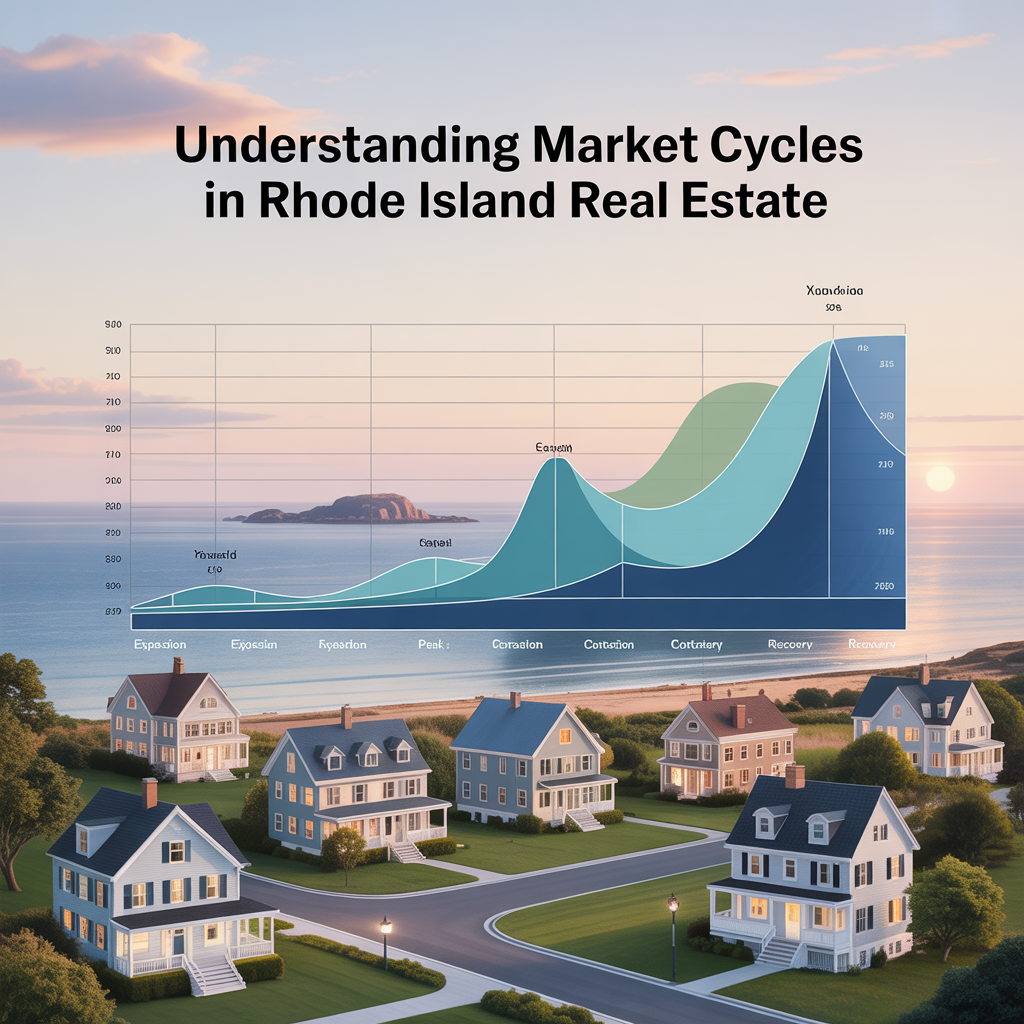
The Four Phases I Watch Closely
Every market cycle here has four clear phases, and I track them weekly through MLS data, client feedback, and chats with other agents at the Rhode Island Association of Realtors meetings. Right now, we’re sliding from the late “expansion” phase into early “contraction.”
Phase 1: Recovery and Build-Up
This is post-downturn, when buyers who sat on the sidelines jump back in. Inventory starts low, days on market shrink, and prices creep up 3-5% annually. We saw this from 2012-2015—bargain hunters in Providence’s Elmwood snapped up foreclosures, flipping them into rentals that stabilized neighborhoods.
Phase 2: Expansion and Peak Demand
Homes fly off the market in days. Multiple offers become routine, especially in spring. Coastal properties in Jamestown or Little Compton see 10-15% appreciation. That was 2020-2022 here—my clients in Barrington traded up to bigger colonials without blinking, thanks to 3% mortgage rates.
Phase 3: Contraction and Adjustment
What we’re in now. Rates climb to 6-7%, sellers test high prices but pull back, and sales volume drops 15-20%. Price cuts emerge on overpriced listings, but medians hold because supply stays under 3 months. Buyers get picky, focusing on move-in-ready homes in Cumberland or East Greenwich.
Phase 4: Bottoming Out and Stabilization
The quiet before recovery. Inventory might hit 4-6 months, prices flatten for 12-18 months. We don’t crash here—2008 was our worst, with 25% drops in hard-hit areas like Cranston—but we stabilize faster thanks to low delinquency rates and owner-occupant dominance.
Local Drivers That Shape Our Rhythm
What sets Rhode Island apart is how hyper-local these cycles play out. Providence’s urban core—think Federal Hill condos or Jewelry District lofts—moves with young professionals and investors. When Brown University expands or Hasbro hires, demand spikes there first.
Coastal markets like Newport and South County lag a bit, tied to seasonal tourism and affluent buyers from New York. They peak in late summer, when vacationers decide to lock in a second home. Inland suburbs—Warwick, Johnston, Scituate—follow family migration patterns, accelerating when Boston prices push commuters south.
Then there’s supply. Zoning laws and wetlands protections mean we add maybe 1,500 new units a year statewide, against 10,000+ household formations. That scarcity keeps cycles from going off the rails. Even in contraction, well-maintained capes in Smithfield or ranches in Exeter hold value because there’s nowhere else to build.
What People Get Wrong About “Crashes”
Clients come to me rattled by national forecasts—recession fears, rate hikes, office vacancies. They think Rhode Island will mirror that. But crashes need three things we lack: loose lending, speculative overbuilding, and panic selling. Our banks are conservative post-2008, construction is minimal, and most homeowners have equity cushions from the pandemic gains. Locked-in at 3% rates, they’re not dumping properties.
Misconception one: High rates kill demand. Not here—qualified buyers in healthcare or state jobs keep coming. I closed three Providence rowhomes last month, all to first-timers stretching for location over size.
Misconception two: Slow sales mean falling prices. Nope. In February 2026, statewide sales were down 18% from last year, but median price hit $465,000—up 2%. Coastal homes averaged $1.2 million, barely budging.
What actually matters? Job stability at Lifespan or Citizens Bank. In-migration from high-tax states. And lifestyle—Rhode Island’s beaches, food scene, and 45-minute Boston drive keep us desirable. Cycles turn on those fundamentals, not Fed announcements.
Reading the Signs Right Now in 2026
Spring 2026 feels cautious. Open houses are busier than winter but not packed. Sellers in Middletown are pricing realistically after a few weeks of “let’s see” listings. Buyers are negotiating inspections harder, walking from flood-risk properties post-Helene worries.
Bright spots: Multifamily in Pawtucket and Central Falls is hot—cash-flow positive even at 7% rates. East Bay towns like Bristol hold firm with hybrid workers. Watch South County for softening if tourism dips, but history says it rebounds by Memorial Day.
I’m advising clients: If you’re selling, stage aggressively and price to comps—my last East Providence colonial went 5% over ask in 9 days. Buyers, target turnkeys under $600k; waiting for a dip risks missing inventory upticks.
What Actually Matters vs. What People Think Matters
Headlines scream “bubble!” or “buy now!” People fixate on mortgage rates or Zillow indices. But in Rhode Island, it’s boots-on-the-ground stuff:
- Local employment beats national GDP. Providence metro unemployment is 3.2%—tech, biotech, and ports buffer us.
- Neighborhood micro-trends over statewide stats. Lincoln’s new developments pull families from slumping Woonsocket.
- Long-term ownership costs over short-term flips. HOA fees, flood insurance, and septic systems dictate viability here.
Ignore the noise. Track days on market (now 35 statewide), absorption rate (1.8 months), and vendor price cuts (12% of listings). Those signal phase shifts better than any economist.
Practical Guidance: A Decision Framework
Here’s how I guide clients through cycles—no crystal ball, just a clear framework.
For Buyers:
- Get pre-approved today—rates may ease but won’t plummet.
- Focus on “needs now” properties: 3 beds, updated systems, low flood risk.
- Use contraction phases like now for leverage—offer 3-5% under with solid terms.
- Think 5-7 years out; cycles reward patient holders.
For Sellers:
- Time spring or fall—avoid January lulls.
- Price to 90-day comps, not dreams.
- Prep like it’s Phase 2: fresh paint, curb appeal, disclosures upfront.
- If equity-rich, consider trades to dodge double moves.
Renters eyeing purchase: Save aggressively; first-time programs through RIHousing cover down payments. Enter at cycle bottoms for max equity build.
Rent vs. buy? At $465k median and 6.8% rates, owning pencils out over renting $2,800/month in Providence after year three.
Timing Moves Around the Cycle
I’ve helped families time upgrades through three full cycles. Best buys: Early contraction, like Q2 2026. Best sells: Peak expansion or stabilization. Avoid trough selling unless relocating.
One client waited out 2018’s flat market, bought a Warwick split-level in 2019, sold for 40% gain in 2022. Another traded a Providence condo for a Narragansett cottage mid-cycle—lifestyle win despite flat appreciation.
The Grounded Reality
Rhode Island real estate cycles are our friend, not foe. They filter out speculators, reward fundamentals, and keep values climbing long-term—average 4.2% annually since 2000.
We’re not crashing; we’re contracting normally. By late 2027, expect recovery as rates dip and millennials hit peak earning. My advice? Act on your timeline, lean on local data, and ignore the hype.
I’m here for Providence rowhomes, South County beachers, or suburban trades—let’s talk your next cycle move.
Get the full Rhode Island Market Insights → [Market Insights]

Littleton’s Ken Caryl for Lockheed Relocations
This is part of Lockheed Martin Relocation → [Lockheed Martin Relocation Hub] & the larger Denver Relocation Hub → [Denver Relocation Hub] Written by: Chad Cabalka Ken Caryl is one of the best-kept “family first” relocation options for Lockheed Martin employees who want foothills scenery, strong neighborhood appeal, and a real suburban lifestyle that still feels connected…


Centennial & Parker for Lockheed Relocations
This is part of Lockheed Martin Relocation → [Lockheed Martin Relocation Hub] & the larger Denver Relocation Hub → [Denver Relocation Hub] Written by: Chad Cabalka Centennial and Parker are two of the smartest suburban choices for Lockheed Martin employees relocating with families because they give you a strong balance of commute flexibility, good neighborhood variety, and…

Highlands Ranch for Family-Friendly Lockheed Relocations
This is part of Lockheed Martin Relocation → [Lockheed Martin Relocation Hub] & the larger Denver Relocation Hub → [Denver Relocation Hub] Written by: Chad Cabalka Highlands Ranch is one of the strongest choices for Lockheed Martin employees relocating with families because it delivers exactly what most parents want after a big move: stable neighborhoods, strong community…