


This is part of Homeownership 101→ [Homeownership 101]
Written by: Chad Cabalka
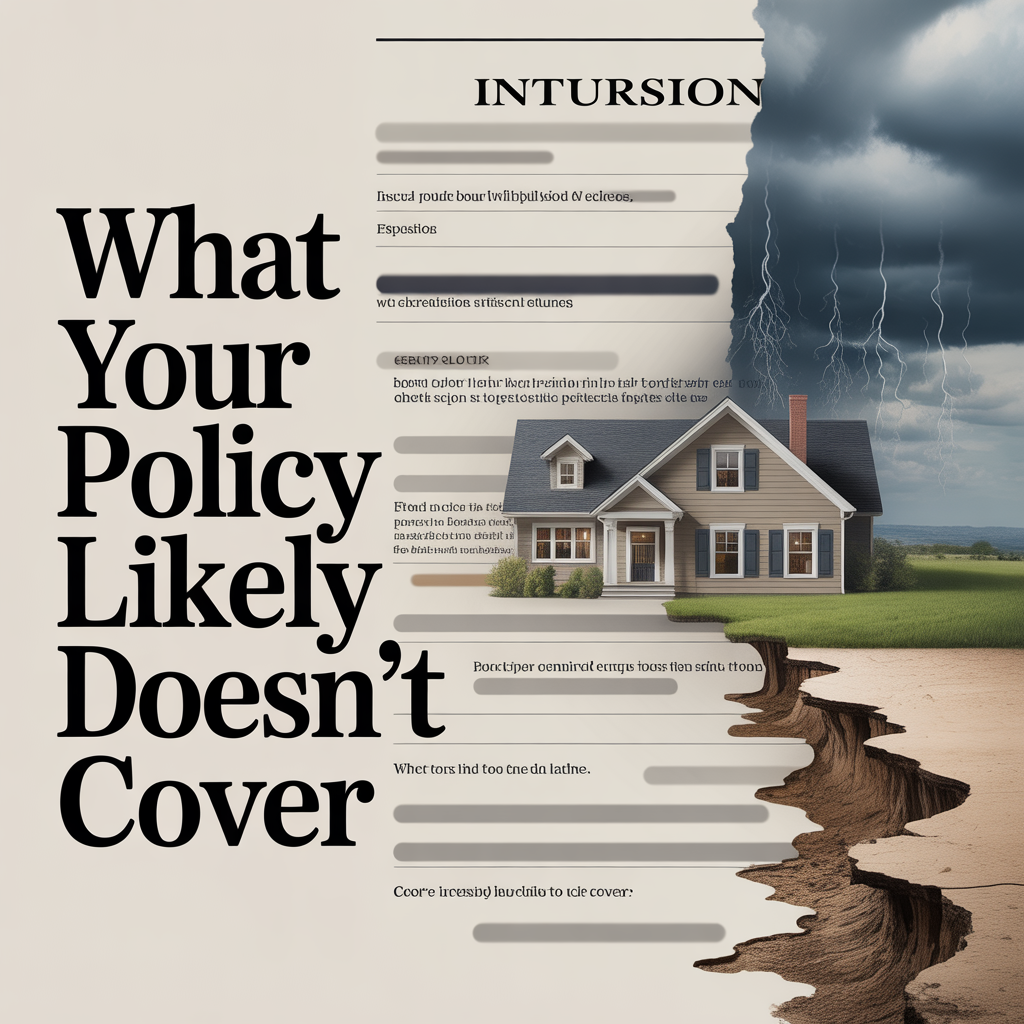
Your homeowners insurance policy likely excludes a range of common and costly problems, focusing instead on sudden and accidental losses rather than gradual deterioration or preventable issues. Key gaps include floods, earthquakes, normal wear and tear, mold from humidity, pest damage, and neglect-related failures, leaving many homeowners to cover these out-of-pocket despite paying premiums faithfully. These exclusions exist because insurers view them as foreseeable risks manageable through maintenance or separate policies, not the “acts of God” central policies target.
Standard HO-3 policies—the most common type—cover dwelling, personal property, and liability for named perils like fire or theft, but explicitly carve out high-frequency or catastrophic events. Floods alone account for billions in annual claims, explaining their standalone requirement through the National Flood Insurance Program. Understanding these limits prevents reliance on a safety net that often proves full of holes, ensuring you plan reserves for what insurance won’t touch.
In Colorado’s hail-prone and clay-soil environment, these gaps hit harder—wind deductibles climb to 2-5%, while wear exclusions deny roof claims showing prior granule loss.
How This Shows Up in Real Homes
A basement floods from heavy rain seeping through the ground, damaging drywall and stored items after a storm. The policy denies coverage because it is surface water or groundwater intrusion, not sudden pipe burst, forcing a $15,000 payout from savings despite comprehensive limits.
An older roof fails during wind, with shingles missing and leaks widespread. Inspectors note prior wear and tear—granule loss and curling—excluding it as gradual deterioration rather than sudden storm damage, leaving owners to replace at $20,000 out-of-pocket.
Mold blooms in walls from chronic high humidity and poor ventilation, costing $5,000 to remediate. The claim denies unless tied to a covered peril like burst pipes; otherwise, it is maintenance neglect, capping any incidental coverage at $10,000 sub-limits. Termite damage to joists or sewer backups without endorsements add similar surprises, turning “covered” assumptions into full personal liability.
Common Misunderstandings Homeowners Have
Homeowners often assume “comprehensive” means all risks, overlooking that even open-peril policies exclude wear and tear, floods, and earthquakes explicitly. They expect coverage for rusting pipes or aging roofs as “damages,” not realizing insurers classify gradual failures as owner responsibility.
Another pitfall is believing water damage covers all leaks, but only sudden bursts qualify—slow drips or backups fall under exclusions unless endorsed. Pests like termites damaging joists also surprise, as infestations count as preventable maintenance, not accidents. Ordinance or law coverage often caps low too, leaving code upgrades post-fire uninsured.
Many underestimate sub-limits and deductibles: jewelry caps at $1,500 without schedulers, wind/hail deductibles hit 2-5% in hail-prone areas, turning “covered” into minimal payouts after high outlays.
Why These Assumptions Create Problems Over Time
Flood exclusions leave unprepared owners facing $30,000+ losses, as standard policies ignore rising waters that ruin basements nationwide annually. Without NFIP, FEMA loans at low rates become the only recourse, straining finances long-term.
Wear-and-tear denials compound as roofs or HVAC fail predictably, with repeated claims raising premiums 20-50% or non-renewals for “poor risk.” Mold exclusions escalate to health issues and $50,000 full remediations when unchecked humidity fosters colonies. Pest damage silently erodes equity, while sewer backups flood without warning, hitting unprepared budgets hard.
In resale, appraisers dock 5-15% for visible gaps, as buyers factor uncovered risks into low offers.
How Thoughtful Homeowners Handle This Differently
These owners review declarations pages annually, noting exclusions and adding endorsements like water backup ($250/year) or service line protection for sewers. They purchase flood/earthquake via NFIP or private markets for high-risk zones, scheduling valuables for full coverage.
Maintenance logs prove “duty to mitigate,” countering neglect claims with receipts for tune-ups and inspections. Reserves cover gaps at 1-2% home value yearly, while high deductibles lower premiums without skimping coverage.
They shop carriers for hail endorsements in Colorado, bundling auto/home for discounts, ensuring limits match replacement costs via annual appraisals. This layered approach—policy plus prevention—delivers real security.
What to Keep in Mind Moving Forward
Expect exclusions for floods, quakes, wear/tear, mold, pests, war/nuclear, and government acts—add endorsements for backups or service lines as needed. Verify limits against rebuild costs, document upkeep rigorously.
Pair policies with reserves and routines for true protection. No single policy covers everything; smart ownership bridges the gaps.
To reach out to me directly for a personalized policy gap analysis tailored to your Denver-area home—including exclusion reviews, endorsement recommendations, coverage optimization, and maintenance-insurance alignment—contact me today for your free custom audit. Don’t risk thousands in uncovered surprises; secure your home’s full protection now.
Get the full Denver Market Insights → [Market Insights]



Littleton’s Ken Caryl for Lockheed Relocations
This is part of Lockheed Martin Relocation → [Lockheed Martin Relocation Hub] & the larger Denver Relocation Hub → [Denver Relocation Hub] Written by: Chad Cabalka Ken Caryl is one of the best-kept “family first” relocation options for Lockheed Martin employees who want foothills scenery, strong neighborhood appeal, and a real suburban lifestyle that still feels connected…


Centennial & Parker for Lockheed Relocations
This is part of Lockheed Martin Relocation → [Lockheed Martin Relocation Hub] & the larger Denver Relocation Hub → [Denver Relocation Hub] Written by: Chad Cabalka Centennial and Parker are two of the smartest suburban choices for Lockheed Martin employees relocating with families because they give you a strong balance of commute flexibility, good neighborhood variety, and…

Highlands Ranch for Family-Friendly Lockheed Relocations
This is part of Lockheed Martin Relocation → [Lockheed Martin Relocation Hub] & the larger Denver Relocation Hub → [Denver Relocation Hub] Written by: Chad Cabalka Highlands Ranch is one of the strongest choices for Lockheed Martin employees relocating with families because it delivers exactly what most parents want after a big move: stable neighborhoods, strong community…