


This is part of Arvada Lifestyle Hub → [Arvada Lifestyle Hub] & Arvada Real Estate Guide → [Arvada Real Estate Guide]
Written by: Chad Cabalka
After decades in Denver real estate, I’ve found that one of the most underrated factors affecting comfort, maintenance, and even resale value is not the roofline, the square footage, or the appliances. It’s sunlight — especially in winter. In Arvada, where elevation shifts and open western exposure meet the flatness of the Front Range, the way your home sits on the street can make a surprising difference in everything from ice formation to energy use to how you feel inside your own house on a January afternoon.
Homeowners often overlook just how much the sun’s angle and their street’s orientation interact during the cold months. But the truth is, winter sunlight in Arvada behaves very differently than in summer, and not all homes catch it equally. Understanding this pattern can save time, protect property, and make day-to-day living more comfortable through every winter season.
How the Sun Moves Differently in Winter
In Colorado, the seasonal contrast in sunlight angles is especially pronounced. During the summer, the sun passes high overhead, and most homes receive balanced exposure on both sides. By December, however, the sun’s arc sits low in the southern sky — rising in the southeast and setting in the southwest — which drastically changes how light hits streets, roofs, and driveways.
At our latitude, around 39.8° N, that means the midday sun hovers only about 30° above the horizon in midwinter. South-facing walls soak up light and warmth, while north sides may sit in shadow nearly all day. For a homeowner, that difference can determine whether your driveway melts snow naturally by lunchtime or remains icy until March.
In Arvada, those small physical details — the slope of a lot, a row of established trees, or how a cul-de-sac bends toward the foothills — can amplify or soften these effects. Together, they shape what daily winter life actually feels like.
How Arvada’s Layout and Topography Shape the Sunlight Experience
Arvada’s geography complicates sun patterns in interesting ways. The city stretches from about 5,100 feet in eastern neighborhoods near Sheridan Boulevard up to over 5,700 feet along its western edge near Highway 93, Leyden Rock, and Candelas. The gradual rise toward the foothills may not seem steep, but it changes how the land receives and holds sunlight through short winter days.
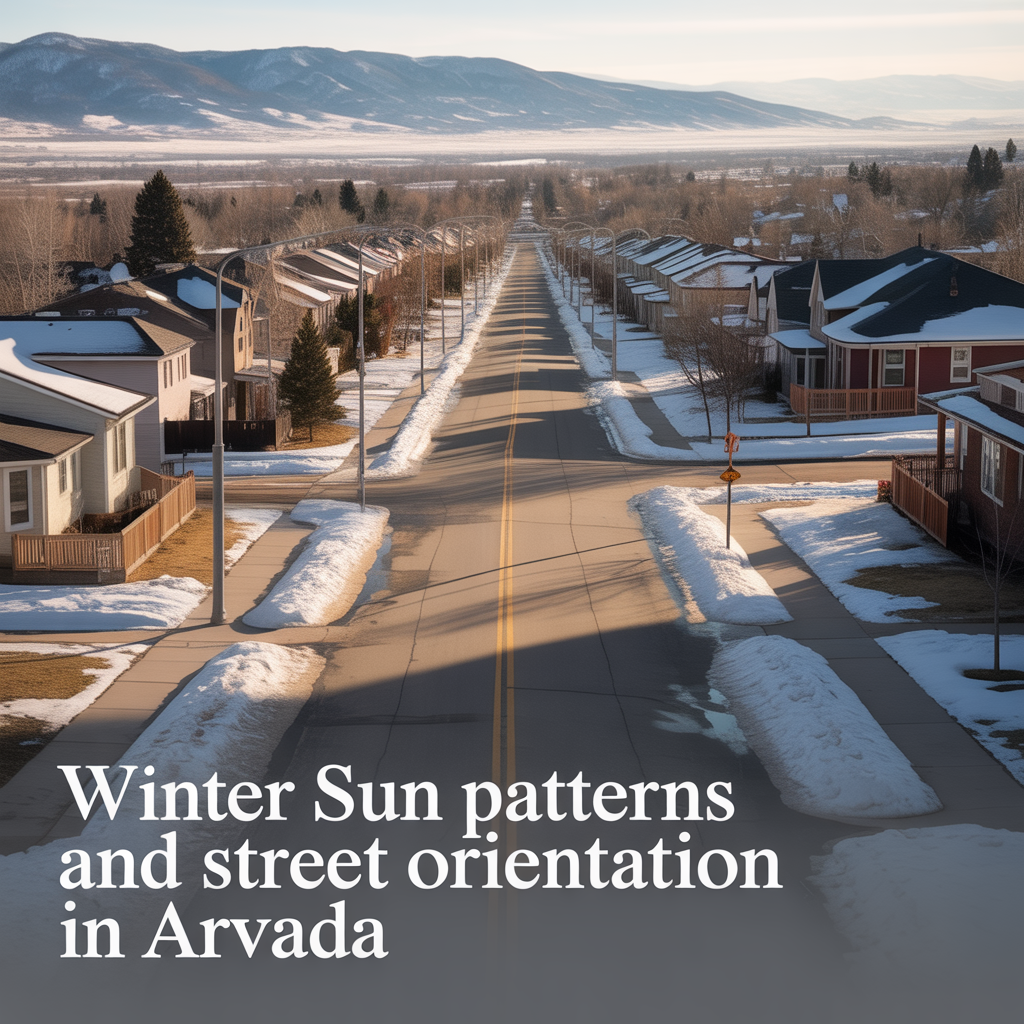
In lower-lying, older neighborhoods like Alta Vista, Lamar Heights, or Olde Town, the terrain sits relatively flat. Snow builds up more evenly, and sunlight exposure is largely determined by the street grid. Streets running east to west tend to host homes with north- and south-facing front doors — a pairing that makes all the difference in winter. South-facing driveways in these areas stay mostly dry and clear within a day or two after snowfall, while their north-facing counterparts can stay slick for weeks.
By contrast, in the higher and hillier terrain west of Indiana Street, subtle slopes combine with elevation to accentuate those differences. Homes tucked into the northern face of a hill may lose several extra hours of sunshine each day. Entire blocks can stay shaded until midday, creating persistent icy patches long after other parts of town have dried out.
This is one of the quietly defining features of living in western Arvada: the tradeoff between views and winter warmth. Those panoramic mountain vistas often come with morning shade and cooler winter temperatures.
Why Street Orientation Matters So Much in Winter
Street orientation determines not just how much daylight your property receives, but how that light interacts with snow, ice, and the materials around your home.
On a sunny January afternoon in Arvada, direct sunlight can raise surface temperatures on dark concrete or asphalt by 20°F compared to shaded areas. This is why a south-facing driveway can clear naturally after a light snow, while the identical one across the street remains frozen over.
Similarly, sun exposure influences how often you need to shovel, when you can safely walk your sidewalk, and even how much passive solar heat streams into your main living spaces. If you’ve ever visited a friend’s home in Whisper Creek on a clear winter morning and noticed how warm their living room felt without the furnace running, chances are their main windows face south — catching that low, consistent sunlight throughout the day.
That’s not luck; it’s architecture meeting geography in the right way.
The Small, Everyday Differences Homeowners Notice
For long-time residents, the orientation effect becomes second nature. But for buyers who are new to Colorado’s winter rhythms, it often comes as a surprise. I’ve walked through countless showings where buyers admire a shaded driveway in July — only to revisit that same property in January and find an inch-thick ice sheet from constant shadow and runoff.
These differences surface in predictable ways:
Driveways and Sidewalks
North-facing driveways see little to no direct sun in December and January. Even a thin snow layer can compact into ice, especially after overnight melt-refreeze cycles. Meanwhile, a south-facing counterpart often needs half the effort to maintain — sunlight does most of the work.
Roofs and Ice Dams
Roof slopes facing north accumulate more snow, which melts slowly and can create ice dams near eaves and gutters. South-facing slopes shed snow more readily, although that accelerated melting sometimes contributes to heavier gutter flow. Regular gutter cleaning and heat cable use often depend on which way your house faces, not just how old it is.
Interior Light and Temperature
Homes oriented toward the south enjoy natural light and passive heating all winter long. Those with primary windows to the north may feel cooler and require more daytime heating, especially in open-plan designs. You notice it most in places like west Arvada, where temperatures already run lower by elevation.
Snowmelt and Drainage
Where snow melts faster, it also runs sooner — and in heavy storms, that runoff can collect near sidewalks or entryways. On sloped lots, how a lot drains often ties back to which way it faces. Sun helps melt snow, but gravity determines where it goes.
Over time, these subtle differences shape the rhythm of winter maintenance — which matters when you’re balancing daily life, property preservation, and safety.
How Sun Orientation Affects Long-Term Home Comfort and Energy Use
During the winter, homes with more southern exposure can benefit from passive solar gain — the simple, natural effect of sunlight warming interior spaces. In Arvada’s sunny climate, even with average daytime highs in the 40s, this can meaningfully reduce heating needs.
Older homes built in the 1950s and 60s around central Arvada often feature long picture windows on their southern walls — a quiet nod to mid-century design that favored natural light over complex energy systems. Many of those homeowners still appreciate the comfort and lower energy bills that come with it.
Newer homes, especially in master-planned communities like Candelas or Leyden Rock, often incorporate high window placement or clerestory designs to maximize light without overheating in summer. But even with improved efficiency and insulation, a well-oriented lot still feels different in winter. It’s not just a matter of temperature — it’s about livability. A bright home feels welcoming during short, cold days, while a chronically shaded one can feel dim or chilly no matter how new the furnace is.
Buyers often don’t realize how much seasonal sun impact matters until they live through their first Colorado winter.
Balancing View, Layout, and Orientation in West Arvada
The draw of western Arvada is undeniable — wide sky views, open foothill backdrops, modern design, and distance from the urban density closer to Sheridan. But those same benefits come with unique exposure conditions.
Many hillside lots angle northward toward Leyden Lake or northwest toward the Flatirons. These orientations provide beautiful vistas, but they also catch less direct sun through late fall and winter. For homeowners here, it’s often about balance — building or buying a home that still captures southern light in main living areas, even if the broader lot faces another direction.
Architectural layout plays a big role. Large south- or west-facing windows paired with thermal mass materials (stone, tile, or concrete inside floors) can store heat efficiently. Smart landscaping — such as placing evergreens to buffer prevailing winds or pruning deciduous trees to allow winter light — also complements the home’s natural exposure.
If you’re planning to buy in west Arvada, it’s worth visiting potential homes during different times of day, or even revisiting on a sunny winter afternoon. You’ll immediately feel the contrast between homes that welcome the sun and those that sit shaded even under blue skies.
Common Misunderstandings About Sun Exposure
A few myths about Colorado winter sunlight come up often in my conversations with homeowners and buyers:
- “Every house gets plenty of sun in Colorado.”
True, we enjoy more than 300 sunny days a year, but that doesn’t mean every home receives equal warmth. The low winter sun casts long shadows that can block sunlight completely on certain orientations or hilly lots. - “Shaded yards are better for summer, so I’ll save on cooling.”
That’s only half the story. In Arvada’s dry climate, trees and shade can help in July, but orientation often affects year-round comfort more. You can manage summer heat with shade trees; you can’t invite winter sun where shadows already dominate. - “It’s just an aesthetic factor.”
Not quite. Orientation directly affects concrete aging, roofing wear, and frost patterns that impact both short- and long-term maintenance costs. Over time, that translates into real differences in how your home performs.
Recognizing these patterns helps you plan better. It’s about working with Colorado’s environment, not against it.
What Buyers Should Consider During a Winter Tour
If you’re touring homes in Arvada between December and March, use that seasonal light to your advantage. Step out onto the driveway at noon — is it in full sun or full shade? Peek into the main living space: does natural light pour in, or does it feel dim even on a clear afternoon?
Look at where snow still lingers along sidewalks or eaves. Those clues often tell you more about comfort and upkeep than any staged lighting or thermostat setting can. I’ve seen many buyers overlook a home’s potential because they visited on a summer day when everything looked balanced; by winter, the difference becomes obvious.
When you understand how the sun interacts with elevation, slope, and street layout, you can make smarter, longer-term choices — selecting not just a home, but a lifestyle suited to Arvada’s climate year-round.
Building and Remodeling with Sun in Mind
For homeowners planning renovations or additions, sun exposure can be an ally rather than a design challenge. Adding or enlarging south-facing windows can brighten interior spaces through the coldest months. Upgrading older double-pane windows to modern low-E glass can capture warmth without sacrificing efficiency.
When planning decks or landscaping, consider how much winter sunlight each area receives. A back patio blazing in July might sit frozen until noon in January. Thoughtful grading and plant placement help extend outdoor usability throughout more of the year.
For roof replacements, material color and slope angle interact with winter light as well. Darker shingles absorb more sun and can encourage faster snowmelt in south-facing positions, while lighter roofs may better reflect heat in high-sun areas.
The Long Game: Sunlight as a Quality-of-Life Factor
Arvada’s shifting light patterns are part of what makes living here distinctive. They illustrate how climate, geography, and design meet in subtle ways that go far beyond the closing table. While buyers often focus on upgrades and finishes, long-term comfort often comes down to the fundamentals: how the home sits on the land, which way it faces, and how well it works with — not against — Colorado’s winter sun.
Over time, that orientation shows up in lower maintenance costs, more comfortable living spaces, and even intangible factors like mood and energy through the darker months. In the end, it’s not just a technical detail — it’s part of what makes a home livable in the Denver area.
A Neighbor’s Perspective
After decades helping clients buy and sell homes across Arvada, I’ve seen how much difference orientation makes in daily experience. Two nearly identical homes can live very differently through winter simply because one faces the sun and the other hides from it.
If you’re curious how sun patterns and street orientation might shape your experience — whether you’re choosing a new home or looking to better understand the one you already own — I’d be glad to talk it through. I live this climate every day, and I’ve helped homeowners across Arvada plan around these exact conditions.
No pressure, no pitch — just an informed, neighborly conversation about how the Colorado sun really shapes the way we live.
Get the full Denver Market Insights → [Market Insights]



Littleton’s Ken Caryl for Lockheed Relocations
This is part of Lockheed Martin Relocation → [Lockheed Martin Relocation Hub] & the larger Denver Relocation Hub → [Denver Relocation Hub] Written by: Chad Cabalka Ken Caryl is one of the best-kept “family first” relocation options for Lockheed Martin employees who want foothills scenery, strong neighborhood appeal, and a real suburban lifestyle that still feels connected…


Centennial & Parker for Lockheed Relocations
This is part of Lockheed Martin Relocation → [Lockheed Martin Relocation Hub] & the larger Denver Relocation Hub → [Denver Relocation Hub] Written by: Chad Cabalka Centennial and Parker are two of the smartest suburban choices for Lockheed Martin employees relocating with families because they give you a strong balance of commute flexibility, good neighborhood variety, and…

Highlands Ranch for Family-Friendly Lockheed Relocations
This is part of Lockheed Martin Relocation → [Lockheed Martin Relocation Hub] & the larger Denver Relocation Hub → [Denver Relocation Hub] Written by: Chad Cabalka Highlands Ranch is one of the strongest choices for Lockheed Martin employees relocating with families because it delivers exactly what most parents want after a big move: stable neighborhoods, strong community…