


Tempe Lifestyle Guide → [Tempe Lifestyle Guide] & Tempe Real Estate Guide→ [Tempe Real Estate Guide]
Written by: Renee Burke
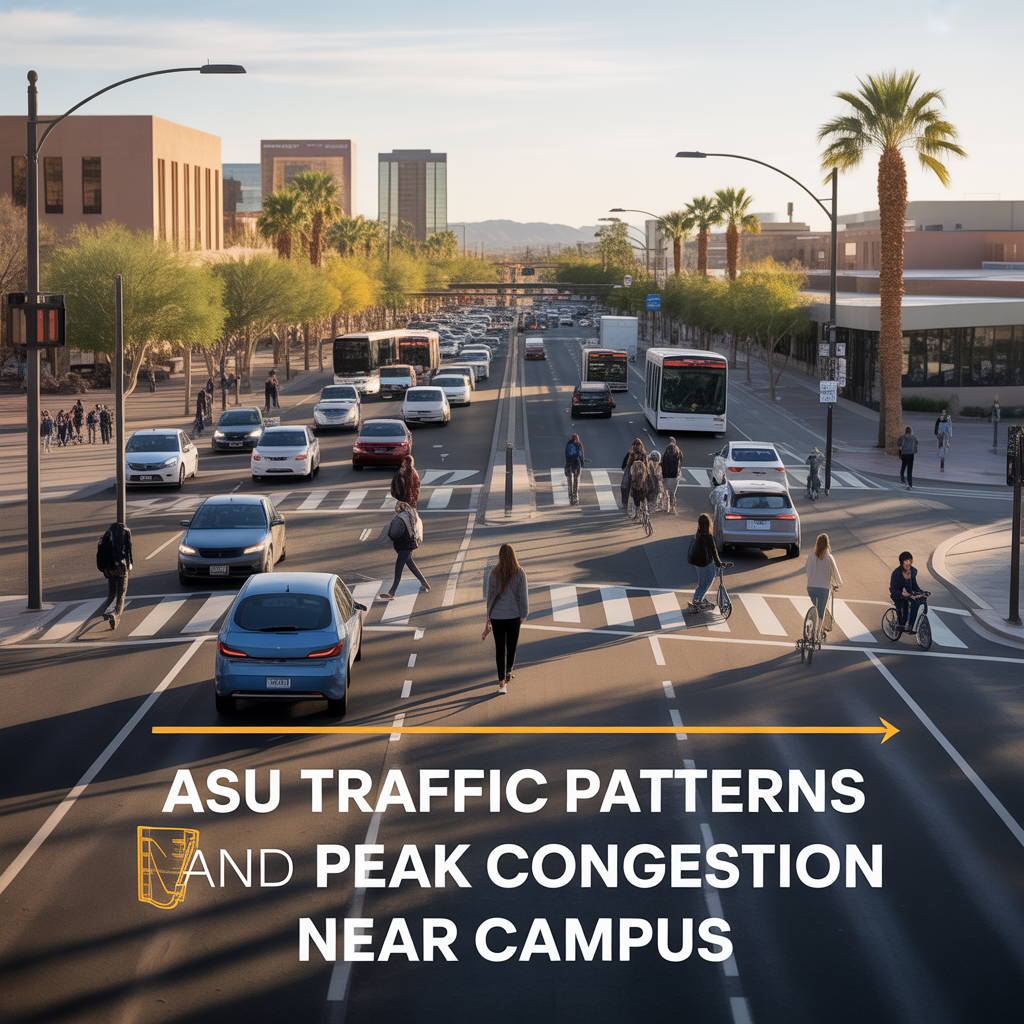
Tempe’s energy revolves around ASU, and with it comes traffic rhythms that locals learn to navigate with patience and a few smart shortcuts. Understanding these patterns around the Tempe campus can make all the difference for families with students, faculty spouses, or anyone living nearby — turning potential frustration into just another part of the day.
I’ve guided so many clients through this over the years, helping them choose homes that balance campus proximity with peaceful commutes.
Morning Rush: 7:30–9:30 AM
Peak congestion hits hardest as classes begin, with Rural Road, University Drive, and Mill Avenue turning into bottlenecks from students flooding in from off-campus housing. Expect 10-20 minute delays on approaches like Rio Salado Parkway or Apache Boulevard, especially near the Loop 202 interchange — where 74% of ASU’s Tempe students live off-campus, that volume adds up quickly.
Southbound Rural from the 202 often stalls at half-mile stretches, worsened by construction detours or shuttle merges. East-west on University Drive sees similar backups near Greek Row, but light rail drop-offs at the Rural/University station ease some pressure if you’re walking the last leg.
Evening Peaks: 3:30–6:30 PM
Afternoon exodus mirrors the morning but flips direction — northbound Rural and westbound Apache clog as students head to apartments in South Tempe or East Valley. Add game days or events at Desert Financial Arena, and Mill Avenue gridlock can double typical 15-minute campus exits to 30+.
Loop 101 access from campus edges stays reliable, but surface streets like Lemon or Forest suffer from pedestrian cross-traffic and delivery vans. Walk-only zones on Campus Mall (high-foot-traffic areas during peaks) help by limiting vehicles, pushing more flow to perimeter roads.
Weekend and Event Spikes
Saturdays bring game-day surges around Sun Devil Stadium, with University Drive and Packard becoming parking nightmares 2-3 hours pre- and post-kickoff. Non-football weekends are milder, but nightlife on Mill Avenue peaks 9 PM–midnight, slowing Apache to a crawl for late-night drivers.
Shuttle routes like Gold Line (Polytechnic-Tempe) run every 15 minutes weekdays but face delays in heavy congestion, taking up to 50 minutes campus-to-campus despite short distances.
Key Hotspots and Easing Tips
Common pain points cluster around main entries: Rural/University intersection, Rio Salado near Lot 58/59, and Sixth Street closures (ongoing impacts from Novus Corridor development). Construction amplifies everything, creating feedback loops of stress for drivers, bikes, and pedestrians alike.
Pro tips I share with clients: Use Waze for real-time alerts, especially near construction; park at light rail lots and Valley Metro in; time drop-offs post-9:30 AM. Bikes and e-scooters thrive here — respecting walk-only zones keeps everyone safer.
Lifestyle Impact Near Campus
For North Tempe buyers, this means vibrant energy with calculated calm — homes in Lakes or Maple Ash stay serene despite proximity, thanks to sound barriers and mature trees. Investors love the rental stability from steady student turnover, but families prioritize spots off-peak routes like Warner Road for smoother school runs.
It’s not about avoiding ASU’s pulse; it’s harmonizing with it. Construction will ease post-Novus (late 2026 projections), promising even better flow as Tempe grows smarter.
If you’re thinking about making a move in Tempe — or anywhere in the East Valley — you don’t have to figure it out alone. I’ve helped countless buyers and sellers navigate not only the neighborhoods and listings, but the nuances that truly define daily life here.
Whether you’re weighing ASU traffic patterns, comparing north versus south Tempe, or simply exploring what “convenience” really means for your lifestyle — I’d be happy to guide you through it all.
Reach out anytime. Let’s find a home that fits not just your needs, but your rhythm.
Get the full Phoenix Market Insights → [Market Insights]


-

Preventing Irrigation Leaks That Waste Water in Desert Landscapes
-

Signs of Hidden Plumbing Leaks in Phoenix Houses
-

How Long Water Heaters Last in Arizona Homes