


Tempe Lifestyle Guide → [Tempe Lifestyle Guide] & Tempe Real Estate Guide→ [Tempe Real Estate Guide]
Written by: Renee Burke
Living in Tempe means you’re at the very center of one of the Valley’s most practical lifelines—the Valley Metro Light Rail. It’s more than just transit; it’s a quiet thread connecting your daily routines across Phoenix, Tempe, and Mesa with ease and reliability. For those of us who’ve navigated these tracks for years, the light rail isn’t about speed alone—it’s about freedom from parking hassles, predictable commutes, and access to the best parts of our East Valley life.
I’ve ridden these lines countless times, from early morning runs to ASU games or late-night dinners downtown. If you’re considering a home near a station, or just curious how this system shapes Tempe’s neighborhoods, let me walk you through it gently. These routes reveal so much about where value is building and how daily life flows seamlessly between our cities.
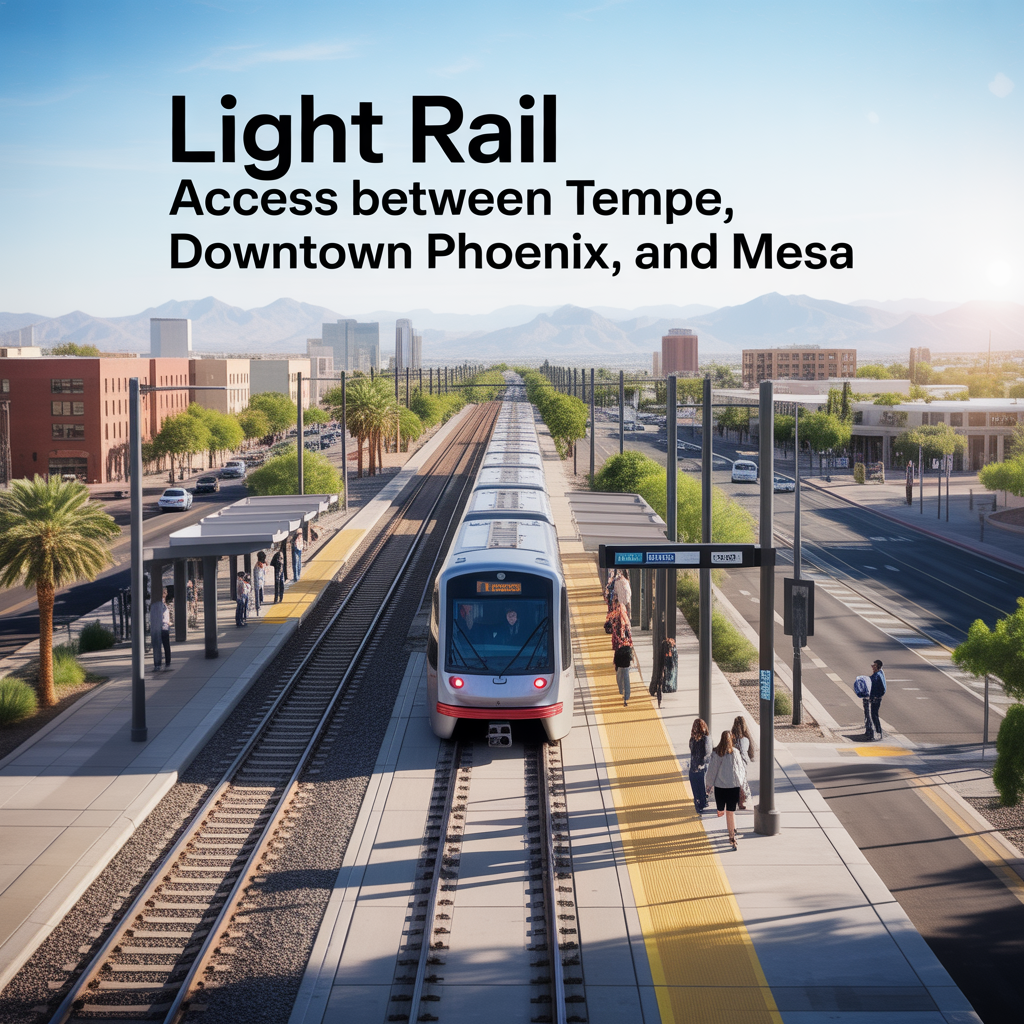
A purple Valley Metro Rail train pauses at a Tempe station, ready to glide toward downtown Phoenix or east to Mesa—capturing that familiar sense of connection.
The A Line: Tempe’s Gateway to Downtown Phoenix
The A Line is your direct path from Tempe into the heart of Downtown Phoenix, running east-west along some of our most familiar corridors. Starting from the Downtown Phoenix Hub, it heads east on Washington Street, skimming past Sky Harbor Airport before curving into Tempe over the striking bridge across Town Lake.
Key Tempe stops like 44th Street/Washington, Priest Drive, and Rural Road put you steps from campus life, Mill Avenue’s energy, and those shaded paths along the lake that locals love. From Rural, it continues via Apache Boulevard—right past McClintock and Smith-Martin stations—before pushing into Mesa. Riders tell me this line feels like Tempe’s extension cord to the urban core: 20-30 minutes to Phoenix’s theaters, arenas, or offices without the I-10 crawl.
For homeowners near these stations, it’s a subtle value booster. Neighborhoods like Maple Ash or the blocks around Apache see steady demand from professionals who work downtown but crave Tempe’s walkable vibe. Traffic worries fade when you can hop on at 8 a.m. and step off near Chase Field by 9. And yes, it’s safe—those well-lit platforms and frequent service ease the concerns many newcomers have about evening outings.
The B Line: North-South Access with Tempe Ties
Since the South Central Extension opened in June 2025, the B Line adds that crucial north-south layer, running from Metro Parkway down Central Avenue to Baseline/Central. It intersects the A Line at the Downtown Phoenix Hub, making transfers a breeze for Tempe folks heading further afield.
In Tempe’s sphere, the B Line brushes the southern edges—think connections near Baseline that link to east-west travel. From a Tempe station like University Drive or Main Street, you’re one quick switch from riding south through Midtown Phoenix or looping back east. It’s perfect for those split days: Tempe in the morning, Mesa errands midday, Phoenix evening plans.
This dual-line setup addresses a common fear I hear from buyers: feeling isolated in the sprawling Valley. With 38.5 miles of track and 50 stations total, you’re never far from a ride that bypasses rush hour on surface streets. Families appreciate it for school commutes to ASU or weekend trips to Mesa’s shops; investors note how it stabilizes rental yields near stops.
Seamless Connections: Tempe to Mesa and Beyond
East from Tempe, the A Line slips effortlessly into Mesa along Main Street, stopping at Alma School, Country Club Drive, Center Street, all the way to Gilbert Road. What was once a 2015 extension now feels like second nature—a 15-20 minute jaunt from Apache Boulevard to Downtown Mesa’s Riverview or Cubs Park.
Tempe’s position is golden here: central enough to reach Phoenix’s jobs (tech at Roosevelt Row, government hubs) or Mesa’s retail (Superstition Springs, Mesa Riverview) without owning multiple cars. The PHX Sky Train link at 44th Street means airport runs are painless, too.
I remember a client worried about resale value in a post-car world; light rail proximity bumped their home’s appeal for remote-hybrid workers. Stations like Price-101 or Dobson Road anchor neighborhoods with rising foot traffic—coffee spots, quick bites, even pop-up markets that make evenings lively but not overwhelming.
Lifestyle Lift: How Light Rail Shapes Tempe Living
These lines don’t just move you—they enhance how you live. Picture starting your day with a coffee from a Mill Avenue shop, rail to a Phoenix meeting, then back for an ASU event—all without circling lots. Tempe’s stations blend into green spaces: the lake views from Center Parkway, palm-lined platforms at McClintock, or Apache’s proximity to farmers markets.
For parents, it eases school shuttles to McClintock High or Corona del Sol. Retirees love car-free outings to Mesa’s arts scene or Phoenix’s symphony. And for investors, ridership hit 35,300 weekdays in late 2025—proof of demand that lifts nearby property values 10-20% over non-rail areas.
Misconceptions linger, though—like noise or crowds. Truth is, modern trains are quiet, schedules reliable (every 15 minutes peak), and platforms designed with shade and safety in mind for our intense sun. It’s not a replacement for driving Baseline or Rural; it’s the smart complement.
Market Intelligence: Real Estate Along the Rails
Proximity to light rail is reshaping Tempe’s map. North Tempe near University Drive commands premiums for student rentals; mid-corridors like Priest or Rural balance families and young pros. South near Baseline, values climb as the B Line opens southern options.
Buyers often fear “overpaying” for rail access, but data shows appreciation outpaces the broader market—fueled by infill development, like new condos at Apache or mixed-use at Main Street. Sellers benefit too: homes within a half-mile list faster, especially post-2025 expansions.
Tempe’s grid makes this intuitive—unlike knottier Valley spots. A home off McClintock might mean a 5-minute walk to a station, unlocking downtown without downtown prices. It’s patient investing: steady growth tied to real utility.
Navigating Concerns with Local Insight
I get the hesitations. “Will trains disrupt quiet streets?” Rarely—tracks hug arterials, not subdivisions. “Parking at stations?” Ample park-and-rides at ends like Gilbert Road or Metro Parkway. “Cost for riders?” Fares are reasonable, day passes flexible, and employer perks common.
As your local guide, I’ve helped families weigh these factors—finding rail-adjacent homes that fit budgets while future-proofing against rising gas or remote-work shifts. It’s about matching your life’s rhythm to Tempe’s pulse.
Tempe’s light rail weaves our cities into one effortless network, turning commutes into possibilities and neighborhoods into hubs of convenience. Whether you’re eyeing a spot near Rural Road or wondering how Mesa access fits your plans, these lines illuminate the best of East Valley living.
If you’re thinking about making a move in Tempe, you don’t have to figure it out alone. Let’s talk through your goals, neighborhoods, and next steps—together we can find the space that truly fits your life.
Get the full Phoenix Market Insights → [Market Insights]


-
Cost of Living in Rhode Island: Housing, Taxes, Utilities, and Everyday Expenses
-

What If My Commute Becomes Worse Than Expected?
-

How Aging Home Systems Affect Property Value