


Tempe Lifestyle Guide → [Tempe Lifestyle Guide] & Tempe Real Estate Guide→ [Tempe Real Estate Guide]
Written by: Renee Burke
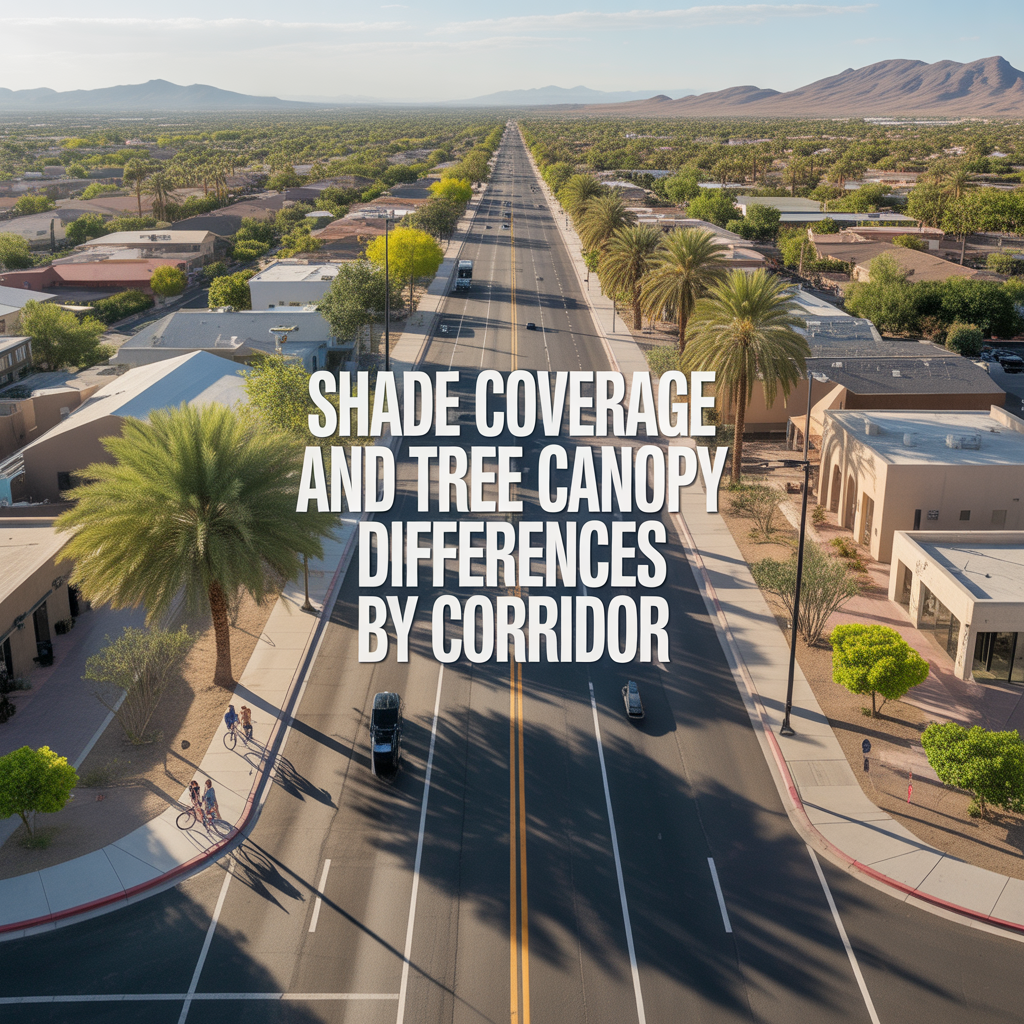
Tempe’s summer walkability—and daily comfort—hinges on shade coverage, which varies dramatically by corridor. City data shows most areas hover at 5–13% tree canopy, but ASU core and southern neighborhoods push 13–25% with mature trees and buffered paths. North Tempe benefits from institutional plantings; south corridors leverage decades-old yards. Understanding these differences helps you pick paths that stay tolerable when 110°F hits.
North Tempe Core: Institutional Shade, Patchy Coverage (13–20%)
ASU’s campus and adjacent University Park lead with higher canopy—mature mesquites, palms, and ironwoods along Rio Salado and Town Lake paths create reliable shade belts. Mill Avenue gains from awnings plus scattered trees, but sidewalks between University and 3rd stay exposed.
Reality Check:
- Town Lake north shore: Excellent shade coverage for 6–8 a.m. loops.
- Mill core: Awnings help, but midday sun scorches open stretches.
- Residential blocks (Maple-Ash): Spotty—older homes with yards outperform condos.
High foot traffic means paths stay cleared; institutional budgets maintain coverage.
Priest Drive Corridor: Buffered Reliability (9–17%)
Priest from Warner north to Apache stands out for consistent buffered lanes with developing tree rows. South sections near Warner boast stronger residential canopies; north ties into ASU’s plantings.
Walking Wins:
- Wide shoulders catch breeze; median trees shade crossings.
- Warner/Priest intersection: Ramadas and misters boost comfort.
- Summer viability: Holds 8:30 a.m. and 7:30 p.m. walks better than Mill.
City equity studies flag this corridor for targeted plantings—shade improving yearly.
Rural Road: East-West Tree Spine (13–17% Peaks)
Rural threads the strongest natural canopy east-west from 101 through ASU. South of Apache gains mature palo verdes; north campus sections mix institutional oaks with student-planted natives.
Corridor Strengths:
- Shaded multi-use paths link Lakes neighborhood to Town Lake.
- Baseline/Rural: Residential trees create tunnel effect mornings.
- Weak spots: Campus transitions expose sidewalks midday.
East Tempe’s Rural canopy scores high in equity metrics—mature neighborhoods deliver.
South Tempe: Residential Tree Legacy (17–25% Highest)
Warner, Elliot, McClintock neighborhoods lead citywide with established canopies—decades-old yards, HOA median trees, and park buffers. Circle G Ranches and Alta Mira feel forested compared to north concrete.
Shade Reality:
- Neighborhood loops stay viable until 9:30 a.m.; evenings extend later.
- Arterials buffered well—Warner to Priest offers continuous cover.
- Parks like Clark add deep shade respites.
Southern Tempe tops tree equity scores; mature trees cool streets 10–15°F.
Southwest Tempe: Canal Path Shade Network (9–13%)
Kyrene and Baseline gain from linear canal shade—cottonwoods and willows create natural tunnels paralleling arterials. Less street tree density, but green belts compensate.
Practical Coverage:
- Canal paths viable 7–9 a.m./7–9 p.m.—breezes amplify relief.
- Priest southbound: Spotty but improving with city plantings.
- Residential pockets: Yards create micro-oases.
Underrated for heat escape—green belts beat urban concrete.
Baseline Road: Suburban Workhorse (5–13%)
Tempe’s southern spine mixes wide arterials with neighborhood shade. Residential blocks east of Priest offer solid coverage; commercial stretches lag.
Summer Use:
- Morning errands shaded by mature ficus rows.
- Crossings buffered—fewer sun-blasted intersections.
- Less dense than north, so paths feel airier.
Steady improvement via equity zone plantings.
Citywide Patterns and Heat Equity
Tempe’s urban forest analysis reveals clear gradients:
- Highest canopy (17–25%): South Tempe established neighborhoods, ASU core.
- Medium (9–13%): Priest/Rural corridors, southwest canals.
- Lowest (5–9%): Central Mill commercial, east edge transitions.
Tree equity scores align—southern areas and ASU score 80–100; central commercial lags 40–63. City targets gaps with 25% canopy goal by 2040.
Summer Impact: Higher canopy drops pavement temps 15–20°F, extends viable walking 1–2 hours daily.
Choosing Shade for Your Routine
Morning Walker: North lake paths or south residential loops.
Midday Errands: Priest corridor or Baseline yards.
Heat Sensitive: South Tempe’s 20%+ canopy legacy.
Fitness Driven: Rural’s consistent spine.
South cools streets most; north offers engineered shade (misters, ramadas).
A Warm Invitation to Walk the Shade Difference
Tree canopy isn’t abstract—it’s morning coffee viability or evening stroll comfort. Let’s tour your target corridors at 8 a.m.; shade realities reveal neighborhood character instantly.
If you’re thinking about making a move in Phoenix, you don’t have to figure it out alone. Reach out with your walking habits and heat tolerance. I’m here as your long-term advisor, matching you to a Tempe corridor where shade supports your summer rhythm naturally.
Get the full Phoenix Market Insights → [Market Insights]


-
Real Outdoor Access by Chandler Area
-
Commute Corridors and Directions in Chandler
-

School District Lines in Chandler