


Glendale Lifestyle Guide → [Glendale Lifestyle Guide] & Glendale Real Estate Guide→ [Glendale Real Estate Guide]
Written by: Renee Burke
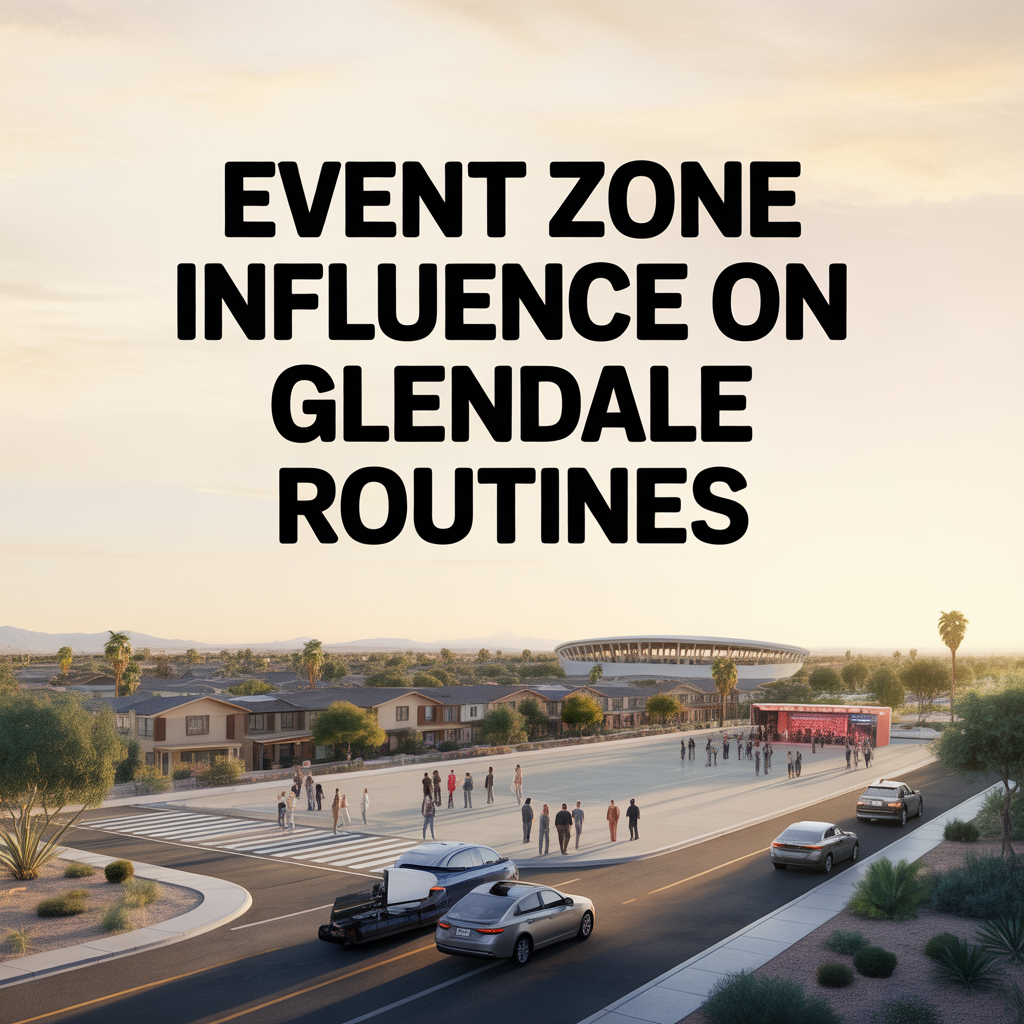
Living near Glendale’s stadium and entertainment core means your daily rhythm quietly syncs with the event calendar, whether you’re a sports fan or not. The “event zone” shapes when you drive, where you shop, and how you plan evenings in a way that’s very different from more purely residential parts of the West Valley.
What “Event Zone” Really Means
When I talk about the event zone in Glendale, I’m really talking about the neighborhoods that live in the orbit of State Farm Stadium, Desert Diamond Arena, and the Westgate Entertainment District. On paper, that sounds exciting: restaurants, concerts, football, festivals, all minutes away.
In day‑to‑day life, it also means your routines flex around game days and major shows. You become very aware of the Cardinals’ schedule, big concerts, and national events because they directly affect traffic patterns, noise levels, and even how crowded your favorite spots feel.
Traffic Patterns and Timing Your Day
On major event days, the Loop 101, Glendale Avenue, and the streets feeding into Westgate can feel completely different from a normal Tuesday.
Most locals who live nearby adapt in a few key ways:
- They avoid certain ramps and intersections during the inbound rush and again at event exit time, especially around Cardinals Way, 91st and 99th Avenues.
- Quick errands get shifted earlier in the day, before parking controls and heavy traffic kick in around the district.
- Families learn “back routes” through surface streets to bypass the thickest congestion, or they simply stay hyper‑local until the surge passes.
The city and stadium partners use special traffic plans on these days, including temporary lane changes and adaptive signal systems to move cars more efficiently, but you still feel the volume when 60,000 people pour in and out of one area.
Parking Rules and Everyday Convenience
Even if you’re not attending an event, parking policies at and around Westgate spill over into local routines.
Here’s how residents typically experience it:
- Certain lots around Westgate and the arenas switch to paid parking several hours before events, with higher rates and stricter time limits.
- Guests coming to your home may need clearer directions and extra time, since the usual “park and walk over” approach can be complicated by event pricing or closures.
- Locals often memorize which retail centers stay easy to access and which ones are best avoided on big nights.
For homeowners, this can subtly influence where you schedule playdates, dinners out, or even which grocery store becomes your “regular.”
Noise, Energy, and Nightlife Rhythms
The event zone doesn’t just change how the streets move; it changes how the area feels. On game days and concert nights, Westgate is packed with fans, live music, patios, and late‑night bar crowds.
For some people, that energy is part of the appeal:
- You can walk or take a short drive to restaurants, live music, and big events without planning a big “trip into town.”
- Guests from other parts of the Valley see your area as a destination, not just another neighborhood.
For others, the noise and crowds are something to manage. Windows closed a little earlier, pets kept inside during fireworks or post‑game celebrations, and a bit more care about letting teens drive through event traffic at peak times.
Weekdays vs. Big‑Event Weekends
A helpful way to think about life in the Glendale event zone is in “two modes”: normal days and event days.
On non‑event days:
- Westgate feels like a regular mixed‑use area: shops, restaurants, movies, some live music on weekends, but traffic is manageable.
- It’s easy to forget you live next to major venues until you catch sight of the stadium on the horizon.
On event days:
- Your local streets act like arteries to a regional destination, with police‑directed traffic and temporary restrictions or closures near the stadium.
- You plan departure and arrival times the way people in other cities plan around snowstorms or heavy rail delays.
Residents who thrive here lean into this rhythm instead of fighting it. They’ll host brunches before early games, walk to dinner and the show rather than drive, or simply treat big‑event weekends as great nights to stay home and enjoy the quieter pockets just outside the rush.
What This Means If You’re Considering the Area
If you’re thinking about buying near Glendale’s event core, it helps to ask not just, “Is this a nice house?” but “How will our routines shift on event days?”
Some thoughtful questions to consider:
- Are you excited by having restaurants and entertainment close by, or do you value quiet above all else?
- How comfortable are you with planning errands and commutes around a known event schedule?
- Do you see yourself walking to Westgate on cool nights, or mostly avoiding the crowds?
The right match isn’t about loving or hating the event zone—it’s about understanding its influence and choosing a home that fits your personality and daily life.
A Warm Invitation
If you’re curious how a specific Glendale neighborhood behaves when the stadium lights are on and Westgate is packed, you don’t have to guess from a map or a listing description. This is where local experience really matters—knowing which streets lock up, which stay surprisingly calm, and which pockets give you the best blend of energy and everyday ease.
I’m here to help you sort through that, patiently and honestly, so you can feel confident about how your routines will actually look once you move in. Whether you’re just exploring options or already have a few Glendale homes in mind, I’d be happy to walk through the lifestyle side with you.
If you’re thinking about making a move in Phoenix, you don’t have to figure it out alone.
Get the full Phoenix Market Insights → [Market Insights]


-
Signs Your Home’s Electrical System Is Overloaded
-
When Phoenix Homes Need Electrical Panel Upgrades
-

Water Pressure Problems in Phoenix Homes Explained